

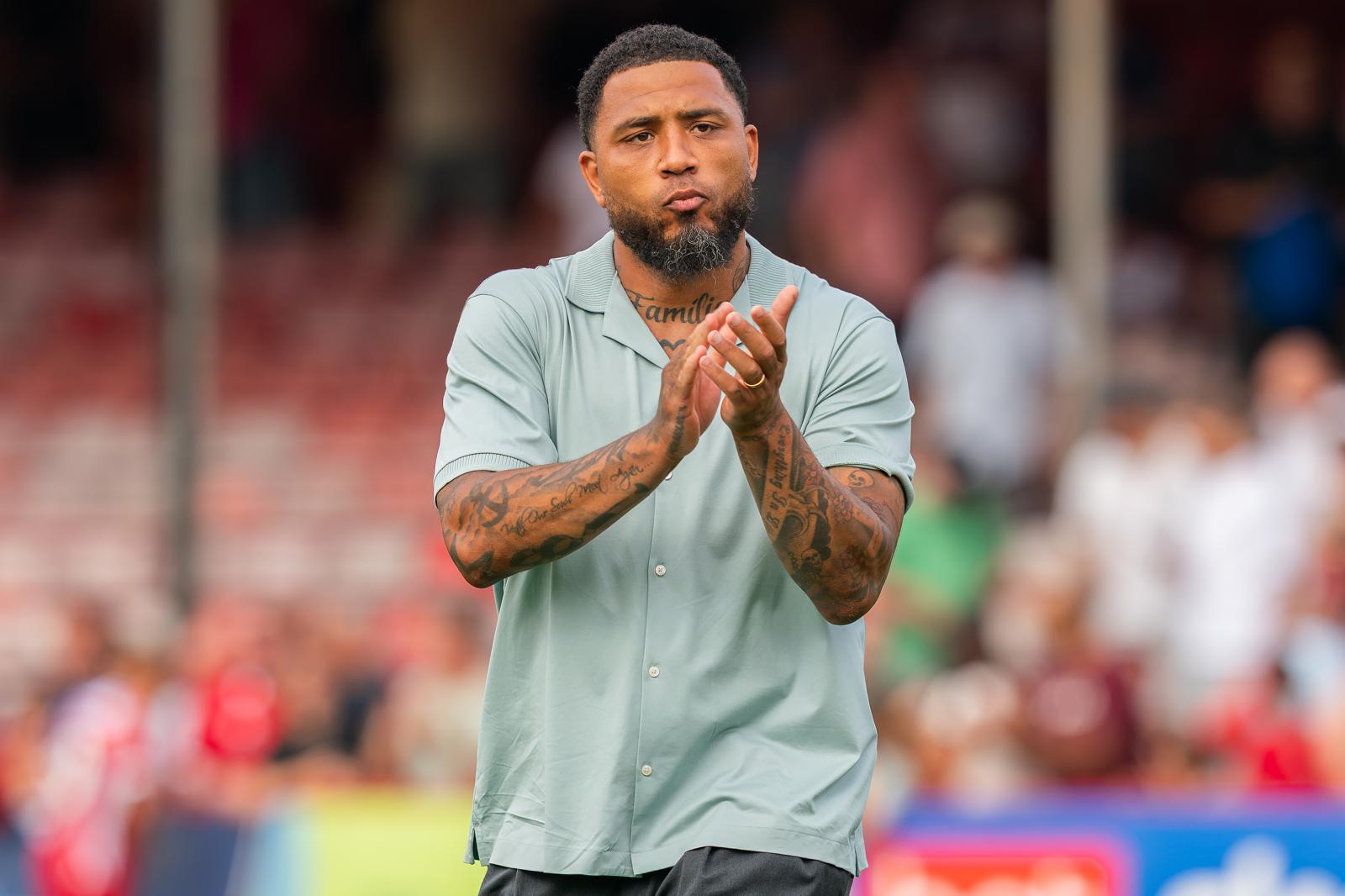
Profile
Role: Football Manager and Former Professional Forward
Specialisation: Coaching, Leadership and Player Development
Experience: Playing Across England, Türkiye, France, Greece, the Netherlands, Scotland, Brazil, and Mexico; 37 Senior Caps for Türkiye; Management with Crawley Town
Focus Areas: Communication, Trust, Player Strengths, Adaptability and Context in Performance Analysis
Introduction
Few footballers can claim to have experienced the game across as many countries, cultures, and footballing environments as Colin Kazım-Richards. Born in Leyton, East London, the former forward built a career that took him from the lower divisions of English football to some of the biggest clubs and most passionate footballing cities in the world. Over a professional journey that spanned nearly two decades, he represented many clubs including Bury, Brighton & Hove Albion, Sheffield United, Fenerbahçe, Galatasaray, Olympiacos, Blackburn Rovers, Bursaspor, Feyenoord, Celtic, Coritiba, Corinthians, Derby County, Pachuca and Fatih Karagümrük, playing across England, Türkiye, France, Greece, the Netherlands, Scotland, Brazil, and Mexico.
Following his unique move from Bury to Brighton, Kazım-Richards went on to carve out a career defined by adaptability, resilience, and a willingness to embrace new challenges. His journey saw him compete in the Premier League, the UEFA Champions League, and numerous title races across Europe and South America, while collecting major honors along the way, including league titles in Türkiye, Greece, Scotland, and Brazil.
Internationally, Kazım-Richards chose to represent Türkiye through his mother’s heritage, earning 37 senior caps between 2007 and 2015 and becoming part of a generation that further strengthened the connection between Turkish football and its diaspora communities. Throughout his playing career, he developed a reputation not only for his physical presence and versatility on the pitch, but also for his outspoken nature and willingness to challenge conventional thinking.
Following his retirement from playing in 2023, Kazım-Richards transitioned into coaching, bringing with him the perspective of someone who had experienced football under a wide range of managers, cultures, and leadership styles. That journey eventually led him into management with Crawley Town, where he began implementing a philosophy shaped by decades of experiences in dressing rooms across three continents.
Today, Kazım-Richards remains every bit as candid and thoughtful as he was during his playing days. In this wide-ranging conversation, he reflects on signing his first professional contract, the sacrifices made by previous generations of his family, the coaches who influenced him most, his views on leadership and player development, and why context matters far more than statistics alone when trying to understand the game.
Key Insights
- Family sacrifice, identity and experiences across different cultures shaped his approach to football and life.
- Effective coaching depends on communication, trust and giving players freedom within a clear structure.
- Player strengths and the context behind performance data should guide coaching decisions.
Our Exclusive Interview with Colin Kazım-Richards
Your first professional contract was with Brighton. As a young player, I imagine that must have felt like a dream becoming reality. Can you take us back to that moment? What do you remember about the feeling, the people around you, and what was going through your mind when you signed that first contract?
If I’m being completely honest, there wasn’t this huge emotional feeling that a lot of people might expect. It was more autopilot than anything else. When you’ve been working towards something for so long, it almost becomes the next step rather than some magical destination. A lot of people assume that the reason you start playing football is the same reason you continue playing football, but that wasn’t really my story. Growing up, I didn’t actually love football at first. It wasn’t something I was obsessed with. It was something I happened to be very good at. My dad pushed me into football because he understood the opportunities it could create.
I was born in 1986, so we’re talking about the early 1990s. For people from the culture, background, and circumstances I came from, there weren’t many obvious pathways to change your situation. Those weren’t circumstances we created ourselves; they were simply the realities of the time. My dad recognized that football might provide an opportunity, so he made sure I stayed focused on it. By the time I signed my first professional contract, I already understood it wasn’t the finish line. Financially, it was a massive jump. At Bury, during my apprenticeship, I earned £45 a week, then £50, and eventually around £90 a week. You learn very quickly how to survive on that sort of money. You learn discipline. You learn sacrifice. You learn why every training session matters.
After breaking into the first team and helping Bury avoid relegation, Brighton came in for me. Suddenly, I went from earning around £90 a week to approximately £2,500 a week before tax. Of course I was happy. Anyone would be. But my mindset wasn’t, “I’ve made it.” My mindset was, “I’ve made it to the first level.” That was the difference.
A lot of people reach that first milestone and think they’re done. For me, it felt like a curtain had opened slightly. There was finally a crack in the door. I could help my mum and dad a little more financially. I could improve our situation a little bit. But there was still so much more to achieve. So honestly, signing that first contract didn’t make me relax. It pushed me even harder.
When I ask similar questions to people, many describe that moment as the finish line. But you seemed to understand very early that it was only the start of another chapter. Where do you think that mentality came from?
It comes from how I was raised. Every move I’ve made throughout my life has been based on either improving my family’s situation or improving my own future. Whether those moves turned out to be right or wrong is another discussion, but they were always made with purpose. Growing up, I was surrounded by stories of sacrifice.
My mum came to Britain as a British evacuee after the conflict in Cyprus. She arrived with virtually nothing. She came on an evacuation flight carrying very little because that was the reality facing so many families during that period. On my father’s side, my family comes from Antigua. Several relatives arrived in Britain as part of the Windrush generation (The Windrush generation refers to people from Caribbean countries who immigrated to the United Kingdom between 1948 and 1971). In fact, I still have documentation showing how my great-grandmother arrived in the country. She worked, saved money, and eventually sent for the rest of the family. That’s how my grandmother came. That’s how my dad came.
So those stories were always present around me. My grandmother lived in England for more than fifty years and never spoke English fluently. All of those experiences were right in front of me growing up. They weren’t distant family stories. They were people I knew and loved.
Growing up, I was surrounded by stories of sacrifice.
Because of that, I always understood that football was about something bigger than me.
I felt like I had a responsibility. I felt like I had a destiny beyond simply signing one professional contract. So when that contract arrived, I didn’t start spending wildly. I never drank. I never smoked. I wasn’t interested in showing off. I simply saw it as the first phase of a much bigger journey.
Those early experiences clearly shaped who you became as both a player and a person, is that a true statement?
Without a doubt. I always say that if it wasn’t for both of my grandmothers, I wouldn’t be here. Their sacrifice created opportunities that I was able to build upon.
I think sometimes, especially as first-generation immigrants or children of immigrants, it’s easy to lose sight of that. You absolutely have to respect the country you live in and the opportunities it provides, but at the same time, I’ll never forget who I am or what my family fought through to create a better life for us.
That’s always stayed with me. What’s interesting is that everything came full circle when I was 19 years old. I had never actually owned a passport. Football eventually forced me to get one, and that’s when I discovered something I wasn’t expecting.
Because of the citizenship rules that existed when I was born, I wasn’t automatically entitled to a British passport. My mother wasn’t born in Britain and didn’t yet have British citizenship herself. So despite being born here, attending school here, and living my entire life here, I had to go through the naturalization process.
That experience had a huge effect on me. Growing up, I never completely felt English. It wasn’t political. It wasn’t about right or left. It was simply how I felt.
Then suddenly I found myself standing in a ceremony, pledging allegiance to the Crown in order to receive a passport. It made me think deeply about identity, belonging, and who I really was. The whole experience reinforced my connection to my family’s roots and the journey they had taken. At the same time, it made me appreciate the freedom that passport gave me. It genuinely became one of the reasons I embraced playing all over the world. I wanted to see different countries, different cultures, and different ways of life because I understood how fortunate I was to finally have that opportunity. Even today, I still have my naturalization certificate. You only get one. Lose it and you’re in trouble. That experience is a big reason why my career ended up taking the path it did.
You mentioned that your experiences also influenced how you raise your own children. Why is learning languages so important to you?
Because it’s one of the few things money can’t buy. I had a successful career. I’ve earned more money than the average person earns. But one thing I’ve learned is that no amount of money can buy you a new language overnight. You can’t walk into a shop and say, “I’d like Spanish, please,” and hand over a million pounds.
It doesn’t work like that. Languages require time, effort, commitment, and exposure. They’re earned. When I first moved abroad, I had to depend on other people to communicate for me. For somebody who values communication as much as I do, that wasn’t easy. Later, when I watched my wife communicate effortlessly with people from different countries and different cultures, it reinforced how valuable that skill is.
So I made a decision. I wanted my children to have opportunities that I didn’t have. Right now they speak English, French, Spanish, and Portuguese. They’ve also learned Turkish and Dutch at various stages. For me, that’s one of the greatest gifts you can give a child. Languages create freedom. They create confidence. They allow you to move through the world without relying on other people. And ultimately, that’s what life is about: giving your children opportunities that are even greater than the ones you had yourself.
Switching to another topic now, was there one coach who really stood out to you during your career, and what made that coach different?
I’ve worked under some incredible coaches and some very poor ones. What I’ve learned is that the difference is rarely football knowledge. Most coaches at the professional level understand tactics. For me, the biggest difference has always been communication.
I’m a logical person. I don’t have to like something to respect it, and I don’t have to agree with everything to understand why it needs to be done. The problem with some coaches is that they never explain the “why.” They rely on authority. It becomes, “Do this because I said so.” In football, especially at the highest level, players are people first. Too often the title of “football player” or “football manager” makes people forget that. Some of the best coaches I worked with knew how to build trust. Guus Hiddink was a good example. We were on a Turkish national team tour in the United States, and someone asked him about curfew before a training session the following morning. His response was simple: “You’re grown men. Training is at 10 o’clock. Be there on time.”
That level of trust changes everything. Suddenly you want to repay it. You’re not obeying because you’re afraid of punishment. You’re doing it because you respect the person asking. I remember thinking that it was probably a test. Some of us went back to the hotel relatively early. When we got there, Guus was sitting in reception and simply smiled and said, “You guys are back early. See you tomorrow.” There was no drama. No lecture. No need for one. That stayed with me because when a coach treats you like a responsible adult, players will run through walls for him. They’ll fight for him. They’ll push themselves because they genuinely believe in him. Another coach who had a massive impact on me was Fred Rutten at Feyenoord. What stood out about him was his lack of ego. We had experienced players in that dressing room, including Kenneth Vermeer, Karim El Ahmadi, Miquel Nelom and others. He understood that and empowered senior players to take ownership of the dressing room. He told us, “These are the standards. If young players break them, I’ll speak to you first.” That level of trust was powerful.
For me, the biggest difference has always been communication.
Then there are coaches like Fatih Terim. People see the public image and think he’s this larger-than-life personality who wants attention. The reality behind closed doors is very different. He was incredibly player-focused. He often absorbed pressure himself so that the media attention stayed on him rather than on the squad. That’s a skill in itself. And then there was Zico. He wasn’t always the loudest coach in the room, but when he spoke about football, everybody listened. His attention to detail was unbelievable. He could make one small technical adjustment and instantly improve your game. When I look back, the best coaches weren’t necessarily the best tacticians. They were the best communicators and the best leaders. One of my biggest beliefs is that players need to be taught how to think for themselves. Too many environments in football are built purely around compliance. The best players and teams I’ve been around had structure, but they also had freedom and responsibility.
You once said, “I hate losing more than I like winning.” Where does that mentality come from?
It comes from growing up the way I did. There were times when it felt like everything was stacked against you. You felt like you were born into circumstances where losing was almost expected. I hated that feeling. I hated it then, and I still hate it now.
Even as a manager, I struggle with excuse culture. I can’t stand hearing people say, “That’s just how it goes,” or “We’ll get them next time.” That’s not how I’m wired. Losing hurts me far more than winning satisfies me. A big part of that mentality came from grassroots football. When I was growing up, academy players still played grassroots football as well. It wasn’t all controlled environments and development programs. You went into different neighborhoods, different estates, different environments, and you competed.
There was no Instagram. No social media. Your reputation was built through word of mouth. If your team beat another local side, people knew about it. If you lost, people knew about that too. You’d hear about it in school the next day. There were bragging rights attached to every game. That environment teaches you competitiveness. It teaches you resilience. It teaches you to care. People misunderstand what I mean when I say I hate losing. It doesn’t mean I hate my opponent. I can respect you. I can even like you. But once the game starts, I want to win. If anything, if I know you personally, I want to beat you even more. I’ve always had that mentality. I don’t accept losing easily. I never have. That’s probably why I was able to survive in football as long as I did.
Recently, your time at Crawley Town came to an end. Looking back, how do you process performances that deserved more than the results suggested?
The first thing I’d say is that context matters. That’s not an excuse. I hate excuses. There’s a big difference between explaining something and excusing it.
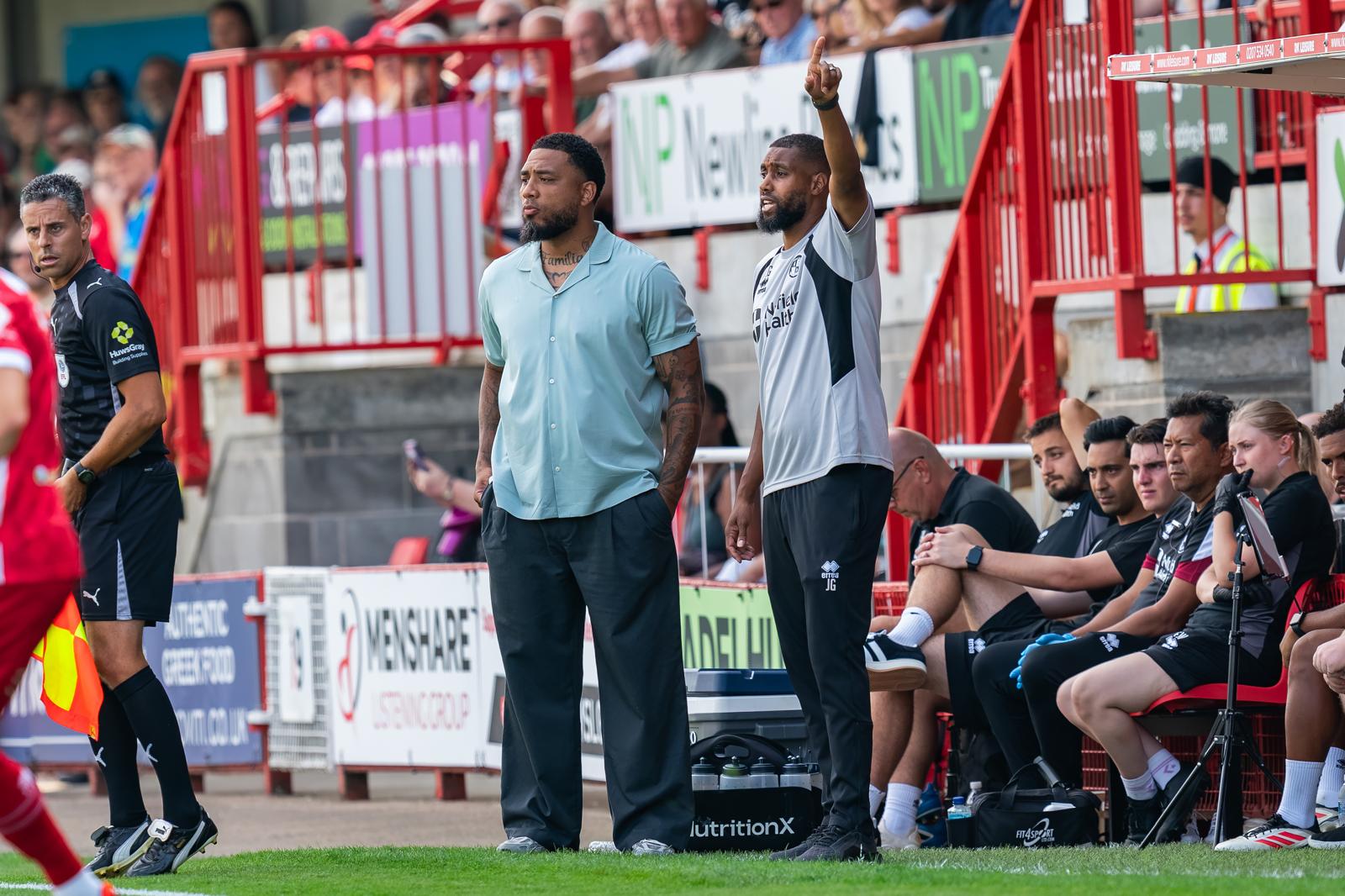
When people look at results, they often don’t see what was happening behind the scenes. Our first few games actually contained a lot of positives. We played excellent football against York City and Watford. The performances were strong and the players were growing in confidence. Then our league season started and everything seemed to happen at once.
Against Crewe Alexandra, our goalkeeper Vito Mannone broke his hand. Duke McKenna suffered a significant hamstring injury. We had two players sent off. Suddenly, in one match, we lost around 40 percent of our starting team.
That’s a huge challenge for any manager. At the same time, we were introducing a significant number of young players. Within a very short period, I handed out nine professional league debuts. That tells you how young and inexperienced parts of the squad were. One of the biggest lessons those players had to learn wasn’t about football ability. It was about managing mistakes. My philosophy is built around bravery. We’re going to play football. We’re going to take risks. If you’re trying to break lines and attack, mistakes are inevitable. Even Lionel Messi makes mistakes.
The problem wasn’t the mistakes. The problem was sometimes the reaction to those mistakes. Young players can make one error and mentally disappear from the game for fifteen or twenty minutes because they think it’s the end of the world. Experienced players don’t do that. They recover quickly. They move on to the next moment.
My grandmother used to tell me something that stayed with me. She’d say, “If you lose one lira, why would you throw another hundred on the floor as well?” In other words, don’t let one mistake become ten mistakes. I think that’s what we were dealing with at times. We were teaching players while simultaneously trying to win matches. There were plenty of games where we controlled possession, created opportunities, and played well. But football isn’t always fair. Sometimes the learning process is painful, especially with young players. That’s part of management.
You seem to have a strong eye for identifying where players can be most effective. I remember when Cherki’s transfer was announced people were speculating his position and you said very confidently he should play the 10 position at City. What are you looking for when you assess a player’s ideal position?
The first thing I look at is the player’s strengths. A lot of coaches start with a formation and then try to force players into it. I look at it the other way around. I want to understand what a player does exceptionally well, what he does adequately, and what areas aren’t his strengths. Once I know that, I start building the picture.
Take Rayan Cherki as an example since you’ve mentioned it. When people were debating whether he was an eight, a winger, a ten, or even a false nine, I always felt his best position was as a number ten. He has a unique ability to influence games around the penalty area. He can make the final pass, create chances, score goals, and slow the game down when necessary. That’s where his magic is. For me, football isn’t just about technical quality. It’s about understanding how a player interacts with the environment around him.
The Premier League, for example, isn’t necessarily the most physical league in the world. It’s the most relentless. You beat one player and another arrives. Then another. Then another. The intensity never stops. So when I evaluate someone like Cherki, I’m asking where he can have the greatest impact while minimizing the demands that might limit him.
I did something similar at Crawley with Ade Adeyemo. Many people viewed him as a winger or forward. I saw him differently. I felt he was more dangerous attacking from deeper positions because he could see the game develop in front of him. Once he started running with the game in front of him, his speed, athleticism, and decision-making became much more effective. After trying it himself, he loved the role. That’s why I don’t believe in becoming obsessed with systems. If you’re determined to play a certain formation but don’t have the players to make it work, you’re creating problems for yourself. The players have to influence the system as much as the system influences the players. This is like making a meal, you have to work with the ingredients you have available to make the best possible meal that mostly everyone can enjoy.
Football is becoming increasingly data-driven. What’s your view on analytics and statistics in the modern game?
I don’t dislike data. I dislike data without context. That’s an important distinction.
Data absolutely has value. Football would be foolish to ignore information. But what worries me is when people stop thinking and allow the numbers to tell the entire story. For me, expected goals, or xG, is one of the biggest examples. Let’s say Erling Haaland and Harry Maguire both shoot from exactly the same position. The model may assign a similar probability to the chance. But those aren’t the same situations. One player is one of the best finishers in world football. The other isn’t. The defender’s reaction is different. The pressure is different. The quality of execution is different.
Context matters. At Crawley, for example, people could look at our possession numbers, our pressing numbers, our expected goals against, and draw conclusions. But they needed context. We had some of the highest possession numbers in the league. We broke lines well and dominated the ball in many matches. Naturally, if you have more possession, your pressing metrics may look different. That’s not automatically a weakness.
I dislike data without context.
Similarly, we didn’t have a traditional target striker who was going to dominate aerial duels. So if we played longer balls, we knew we might lose the first contact. What mattered to us was winning the second ball. That’s where our strengths were.
If somebody looks only at the first number, they miss the entire story. Football has become obsessed with statistics, and sometimes people forget the eye test. Sometimes you watch a game and can clearly see something working, yet someone points to a spreadsheet and says it isn’t.
For me, the ideal approach combines both. Use the data, but understand the context. Use the numbers, but don’t ignore what your eyes are telling you. As my grandmother used to say, “The truth is in the perspective.”
What’s next for Colin Kazım-Richards?
Management. Definitely management. I’ve been fortunate enough to travel extensively throughout my playing and coaching career. I’ve experienced different cultures, different leagues, and different football philosophies. Because of that, I’m open-minded about where the next opportunity comes from. I don’t have a specific country in mind. I don’t have a particular league circled on a map. What matters to me is finding the right environment. Maybe I’ll come to your side of the world in the USA who knows. But in all seriousness, I’ve learned that it doesn’t matter what the manager wants if the club itself doesn’t truly understand where it wants to go. The first question I ask now is: where does the club see itself in the future? What’s the vision? What are people actually doing to achieve that vision? Not every club needs unlimited money. Not every club needs world-class facilities in every department. But every club needs alignment. Every club needs clarity. Every club needs to understand what is important and commit to those priorities.
Those are the things I look for now. Fortunately, I have an incredible support system around me. My wife and children allow me the freedom to consider opportunities all over the world. So we’ll see where the next chapter takes me.
Before we move to the rapid-fire section, is there anything you’d like readers to know that we haven’t touched on?
I’d simply ask people to be a little more open-minded when it comes to athletes.
Fans often see a player for ninety minutes and decide who that person is. They create an opinion based entirely on what happens during a match. The reality is that professional athletes are normal people. We’re fathers, husbands, sons, friends. We have responsibilities, insecurities, challenges, and lives outside football just like anyone else.
If you watched me play, there’s a good chance you might not have liked me. I was competitive. I was aggressive. I wanted to win. But if you met me away from the game, you might have had a very different impression. Football is a unique profession because there are people actively trying to stop you from doing your job every single week. There are people trying to take your place. There are supporters judging every performance. The pressure is constant. That’s why I’d encourage people to remember that behind every player and every manager is a human being. A little perspective and a little understanding can go a long way.
Rapid Fire
City life or country life?
Country life. These days I have a place in the Brazilian countryside, and I really appreciate the peace that comes with it.
Talent or mentality?
Mentality. Every time.
Sea or mountains?
The sea. Mountains are too cold for me.
Sunrise or sunset?
Sunset. My wife would make sure I gave that answer.
Summer or winter?
Summer. Easy. I’ve never understood paying money to go somewhere cold for a holiday.
Early bird or night owl?
Probably a night owl. I like winding down at night, but with kids you’re awake early either way.
Plan everything or go with the flow?
A bit of both. You need a plan, but you also need the flexibility to adapt when circumstances change.
Call or text?
Call. Some things deserve an actual conversation.
Win ugly or lose beautifully?
Win ugly. That’s not even close.
London or Istanbul?
Oh this is easy, Istanbul.
Galatasaray or Fenerbahçe?
People always ask me this, but I genuinely respect both clubs enormously. They’re two of the biggest institutions in world football. Unless you’ve experienced them firsthand, it’s difficult to understand just how massive they really are. They’re both giants of the game.
FAQ
Who is Colin Kazım-Richards?
Colin Kazım-Richards is a football manager and former professional forward from East London. His playing career took him across Europe and the Americas, and he earned 37 senior caps for Türkiye.
What is Colin Kazım-Richards’ coaching philosophy?
He emphasises communication, trust, bravery and understanding individual player strengths, with structure that also gives players freedom and responsibility.
What does Colin Kazım-Richards think about football data?
He values data when it is interpreted in context and combined with observation, rather than used alone to explain performances or guide decisions.