
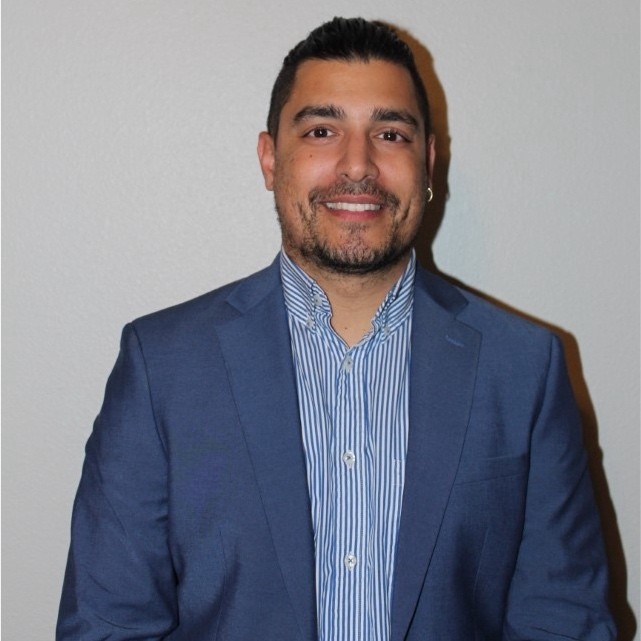
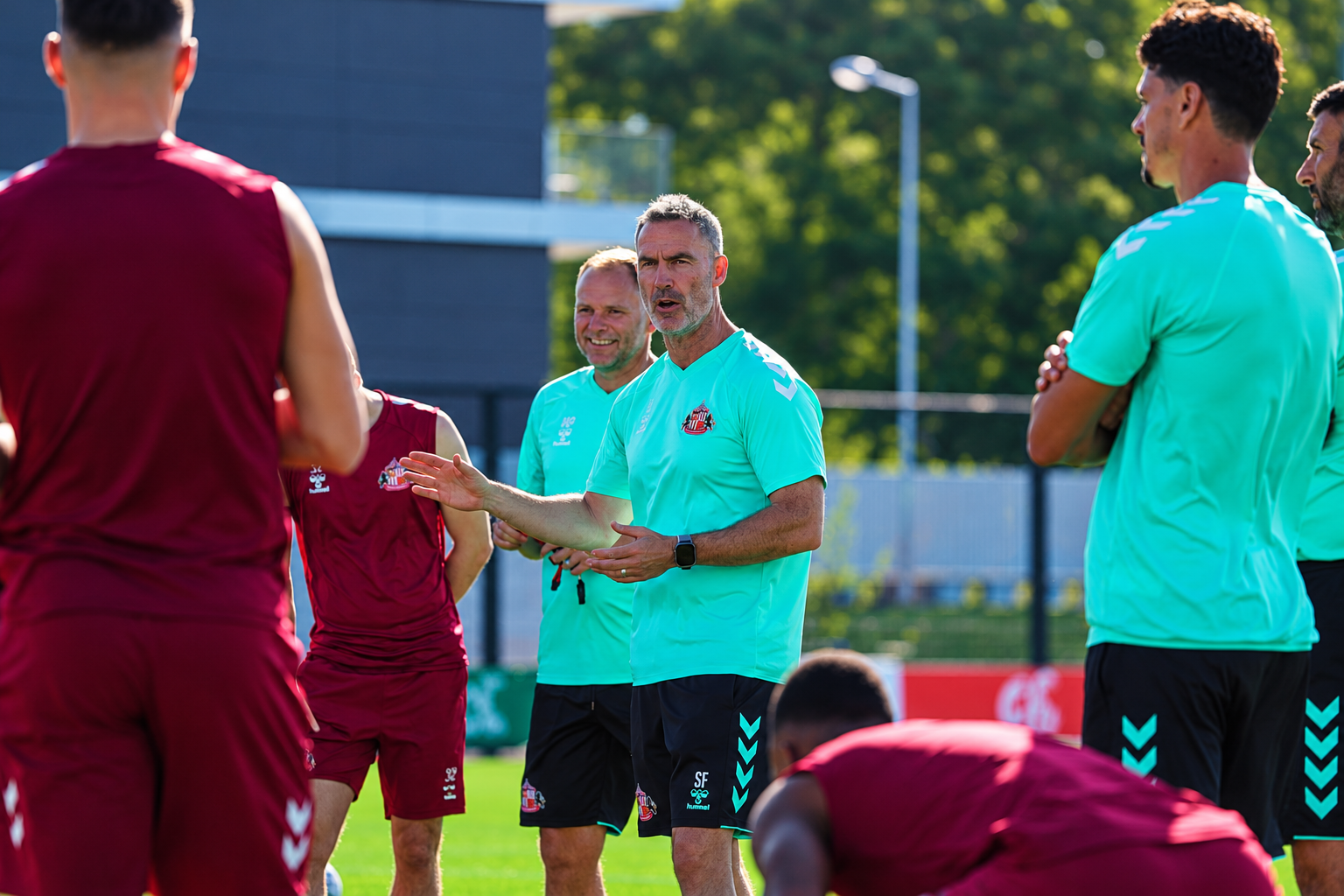
Profile
Role: Head of First Team Performance, Sunderland
Specialisation: Athletic Training, Sports Medicine and Performance
Experience: U.S. Olympic Training Center, University of Denver, Athletes’ Performance, LA Galaxy, German National Team, Arsenal and Borussia Dortmund
Focus Areas: Individual Athlete Development, Injury Prevention, Physical Preparation and Performance Department Cohesion
Shad Forsythe’s career in football began almost by accident. Growing up in a small town in Washington State, Forsythe was first drawn to American football and basketball, dreaming of one day quarterbacking the Los Angeles Rams or playing point guard for the Los Angeles Lakers. He eventually discovered that his future in sport would come not as an athlete, but through performance, medicine and human development.
From Sports Medicine to Performance
Forsythe attended Washington State University, initially studying pre-med with the ambition of becoming an orthopedic surgeon and working with sports teams. While working in the university’s athletic training room, however, he became increasingly interested in the day-to-day physical preparation of athletes. He later completed a master’s degree in athletic training at the University of Tennessee and went on to work at the U.S. Olympic Training Center before becoming Associate Director of Sports Medicine at the University of Denver.
It was during this period that Forsythe began to rethink the traditional approach to injury prevention. Rather than simply reacting to injuries, he became interested in screening athletes, identifying individual differences and addressing potential problems before they became injuries. That shift ultimately led him toward performance and into football.
Germany, Arsenal and Borussia Dortmund
Forsythe joined Mark Verstegen’s Athletes’ Performance, now known as EXOS, where his work with the LA Galaxy introduced him to Jürgen Klinsmann. That relationship became a defining moment in his career. When Klinsmann subsequently became head coach of the German national team, Forsythe joined the national-team environment and went on to spend nearly two decades working with Germany, including the team’s historic 2014 FIFA World Cup triumph. DFB records document Forsythe as part of the German national-team fitness staff, while contemporary DFB material identifies him as the national team’s fitness coach.
Following the 2014 World Cup, Forsythe joined Arsenal as Head of Performance, where he spent eight years. Arsenal’s official website documented his work within the club’s performance and medical environment, while reporting at the time described him as having been elevated to an even more senior performance role.
In 2022, Forsythe moved to Borussia Dortmund as Head of Performance, with the club specifically tasking him with further improving fitness and athletic performance while reducing injuries. He spent three seasons at Dortmund before joining Sunderland, where he became Head of First Team Performance in 2025.
A Performance Philosophy Built Around People
Today, Forsythe operates at the intersection of science, experience, technology and people. His philosophy is not simply about collecting more data or finding the latest training method. Instead, he emphasizes understanding the individual athlete, creating cohesion between the different performance disciplines and, perhaps most importantly, making sure the player actually believes in and follows the program.
In this conversation, Forsythe reflects on his unusual journey into football, the lessons he learned from working alongside leaders such as Jürgen Klinsmann, Joachim Löw and Arsène Wenger, how performance departments actually function behind the scenes, and why he believes the best performance program may simply be “the one that they’ll do.”
Key Insights
- Player belief and participation are essential to an effective performance program.
- Performance departments must connect different disciplines with the club’s vision and the coach’s playing style.
- Individual preparation should reflect each player’s career stage, experience and match demands.
Our Exclusive Interview with Shad Forsythe
Could you tell us about your journey, where everything started, and how we got to where you are today?
It’s been a little bit complex. As a kid, I grew up in a small town in Washington State, and I just knew that I loved sports. My dreams were to quarterback the Los Angeles Rams. I was an LA Rams fan. Or I wanted to play point guard for the Lakers, with Magic Johnson being my favorite player. As I got older, I realized I was actually a pretty good high school player in both sports, but I also realized that probably wasn’t going to be my journey.
I needed to find something that still connected me to my passion for sport. So I went to Washington State University and started in pre-med because I wanted to become an orthopedic surgeon and hopefully work with sports teams. During that journey, I also started working in the athletic training room, getting more experience from the physiotherapy and physical therapy side. I noticed that orthopedic surgeons were actually not around the team very much. They might be there one day a week or when somebody needed surgery, but they spent most of their time in an operating room.
So I ended up double majoring at Washington State, combining exercise science and athletic training with my pre-med studies. I then had a decision to make. I wanted to stay closer to performance and physiotherapy, so I applied for graduate assistantships in that area at the University of Tennessee. I completed a two-year master’s degree there in athletic training.
After that, I entered the world of athletic training. I worked at the Olympic Training Center and then became Associate Director of Sports Medicine at the University of Denver, where I worked as an athletic trainer and traveled with teams, including volleyball and hockey.
I needed to find something that still connected me to my passion for sport.
That was when I had a bit of a light-bulb moment.
In athletic training, the idea of prevention was often very reactive. Maybe you tape an ankle or respond to something after it happens. It wasn’t necessarily about screening players, looking at their individual differences and working on those areas to try to keep them healthy before something happened. That seemed more like a performance approach, and that’s where I switched paths and moved into the performance field.
I joined Mark Verstegen’s company, Athletes’ Performance, which is now known as EXOS. That was also where my introduction to football came. I worked with the LA Galaxy in Los Angeles under contract with Athletes’ Performance. There was also a young, very skilled German technical director there named Jürgen Klinsmann.
That’s how I was introduced to football. Within about six months, Jürgen was named head coach of Germany. He liked the way we worked, and specifically the way I worked, and wanted us involved with the German national team.
That relationship continued, and I ended up working with the German national team for nearly 20 years. During that journey, I went to Arsenal for eight years as Head of Performance, then to Borussia Dortmund in a similar role for three years, and now I’m in my second season at Sunderland. So it’s been a bit of a whirlwind, but hopefully that gives you a sense of the journey.
You’ve worked with some of football’s biggest personalities and under very different managers, from Jürgen Klinsmann and Joachim Löw to Arsène Wenger. What did working with those different leaders teach you about the kind of person you need to be when you’re not the person making the final decisions?
They all taught me a lot. I’ve been very fortunate that all of those leaders started by being great people. I also think they were great listeners. When we’re younger, we’re often eager to let players know how much we know. I think there’s a lot of value in taking a moment to let other people speak, being curious and actually listening to them. All of those leaders embodied that quality. At the same time, that doesn’t mean they weren’t clear about their strategy. So if I had to put it into a couple of words, I would say clarity and curiosity. Those are two big tools to have in your back pocket.
At the highest levels of football, the margins can become almost absurdly small. After all these years, what is something you used to believe was hugely important that you now realize isn’t? And what do you value much more today?
I think those come down to what and how.
When you’re younger, you learn a lot of the “whats.” You think, “We’re going to do this, this and this.” There is research that tells us which things may work better than others, and all of that is valuable. But I place much more importance on how you do those things, when you do them, how you are around them, how you demand them from the people who need to execute them, and the conversations you have along the way.
I was asked a question at a conference in Munich several years ago. It was a very loaded question: “What is the best program for a player?” That’s a big question. I thought about it for a moment, and my answer was, “The one that they’ll do.”
We can look at all the research and say, “Here is the best program for that player.” But if they don’t buy into it, then it isn’t the best program for that player.
You have to understand their previous experiences and be curious about whether they feel something helps them. If they believe in the program and actually follow it, that matters enormously. I think that’s one of the things you discover as you get older. You reach your 50s and realize that you really don’t know anything. You thought you knew everything and that you were an expert, and then suddenly you’re rediscovering everything again.
And that’s actually wonderful.
People hear “Head of Performance” and often think about gym work, GPS numbers and conditioning. What does your job actually look like on a Tuesday morning when no one is watching?
It’s exactly what I described earlier. Together with the sporting director, the club’s vision and the head coach’s style of play, we need to create the how, the when and the what that will prepare the players to perform at their best. That’s really the job of a Head of Performance.
We’re trying to connect all of our different tools, whether that’s nutrition, GPS, blood analysis or the other areas that contribute to performance. I often describe it as creating a big cake, with all of those different ingredients coming together in the best possible way.
It needs to reflect the way the club wants to be, the way the manager wants to play and the style of football the team wants to produce. So yes, GPS numbers and all of those things are part of it, but I look at the role more as one of cohesion.
It’s about creating cohesion between all of those different pieces so that the player can perform at their best on match day.
You were brought into Arsenal after Germany’s 2014 World Cup triumph with the challenge of helping reshape the club’s performance environment. At Dortmund, the objective also included improving fitness and reducing injuries. How do you build a performance system that improves the individual player without losing sight of the team, the coach’s demands and the realities of a football season?
That’s an important piece, and it’s a challenge because the game takes priority.
You might have older, experienced players, players who are in their prime and developmental players. So, you have to think about how all of those different stream’s progress through a weekly schedule based on the game.
The game is the game. You have to ask: Who is playing in that game? Take a developmental player who is very good. For example, think about Bukayo Saka when he was breaking through at Arsenal. He’s still going to play, but we may not want to overload him with additional physical work because we need him to be as fresh as possible.
So what else can we do? What can we do from a cognitive perspective? What can we do through video? How can we continue his development in other areas? His pathway is going to look different from that of a veteran player who has already played five years in the Premier League. Sometimes you have to look at what you shouldn’t do because you want to maximize freshness and physical readiness. Then you have to ask where else you can create development.
So sometimes it’s not about asking, “What can we do?” It’s about asking, “What should we not do?” and finding creative alternatives.
Exactly. The game is played primarily through the legs, so if we have a player whose legs are fresh but who may have some issues or opportunities to work on the upper body, shoulders or other areas, we can focus there.
That load doesn’t necessarily have to be physically greater. It can come through different areas. For all of those different player groups, you’re really managing where they are in their careers and what they need at that particular moment.
At the highest levels, you have data, technology, medical information, GPS, testing and years of scientific research. Ultimately, though, a human being still has to walk onto the pitch and perform. How do you decide when to trust the numbers, when to trust your experience and when to simply listen to the player?
You have to take into account the player’s career and their individual path.
If a teenager tells you they want to do something but they’ve only been playing the game for a year, you probably want to stay closer to what your experience tells you. Of course, you should still be curious about their experiences and how those things make them feel.
So yes, you absolutely need to listen. At the same time, you can be a little more firm in how you manage a young player compared with a veteran who has been doing something for 10 years. If a veteran player tells you, “You say this type of post-match therapy is not good for me, but I always feel better when I do it and I’ve done it for the last 10 years,” then you have to recognize that the placebo effect is still an effect. If it has always been part of his career and he consistently performs well, you don’t necessarily stop it.
You still try to educate the player, but you also have to understand when to trust your gut.
For me, it’s experience-led and research-backed.
You have to understand that research takes time. There are things we have learned over the years that illustrate this. For example, 15 or so years ago, we were thinking about the release of hormones, particularly testosterone, as part of recovery. We knew that targeted strength work could help stimulate testosterone, while testosterone release and reductions in cortisol can be beneficial during recovery.
So imagine a football player whose legs are tired. We don’t want to put more load through their legs, but perhaps they can do some targeted work elsewhere.
That can potentially help with recovery because those hormonal responses occur throughout the body. Then, five to 10 years later, research begins to demonstrate some of those concepts. We could either wait for the research to catch up, or we could take scientific concepts and carefully put them into practice when they make sense.
For me, it’s experience-led and research-backed.
That’s where experience has to lead a little bit. You have an idea that is backed by a scientific concept, and perhaps research is already being conducted, but the evidence isn’t fully established yet. That’s where we live in performance enhancement: if something is unlikely to hurt the player and it might help them, then sometimes we have to be willing to try it.
What’s next for Shad? You’ve already had such an interesting career. Where do you see yourself over the next five or 10 years, or even further into the future? What are your aspirations?
First of all, I have two teenagers, so I’m really enjoying watching them grow up. Our family has also really enjoyed returning to the UK, and specifically being in Sunderland.
We have goals here. Over the next two to three years at Sunderland, there is a lot we want to accomplish. For the first time in 53 years, we played away in Europe recently, so what a great experience and accomplishment for the entire club to be part of.
That’s first things first in the short term. For me personally, I see the next progression of my role being about having a little more influence beyond the day-to-day. Instead of looking at things from the 3,000-foot view, maybe it’s about having the 30,000-foot view over an organization and a team. Where are they headed? What is their direction? How can I help more with recruitment, long-term goals and strategy? Of course, the day-to-day challenges are still a lot of fun. Getting through a Europa League week is a great challenge, and I’ve really enjoyed that. But I’ve spent around 13 years working in England and Germany, plus the years before that with the national team and the Galaxy.
I’ve enjoyed being in the trenches and I’ve learned a lot. Ultimately, that strategic side is where I’d like to end up.
RAPID FIRE
Countryside or city life?
Countryside.
Beach or mountains?
Mountains.
Sunrise or sunset?
Sunset.
Summer or winter?
Summer.
Early bird or night owl?
Night owl.
Plan everything or go with the flow?
Plan everything.
Road trip by car or flying somewhere?
By car.
Call or text?
Call.
Win ugly or lose beautifully?
Win ugly.
Good food or good sleep?
Good food.
Strength training or cardio?
Strength training.
Ice bath or sauna?
Ice bath.
FAQ
Who is Shad Forsythe?
Shad Forsythe is Sunderland’s Head of First Team Performance. His career includes roles with the German national team, Arsenal and Borussia Dortmund, alongside a background in athletic training and sports medicine.
What does a Head of Performance do in football?
The role connects disciplines such as nutrition, physical preparation and performance analysis with the club’s vision and the head coach’s playing style to prepare players for matches.
What is Shad Forsythe’s performance philosophy?
He emphasizes understanding the individual player, combining experience with research and creating programs that players believe in and follow.