
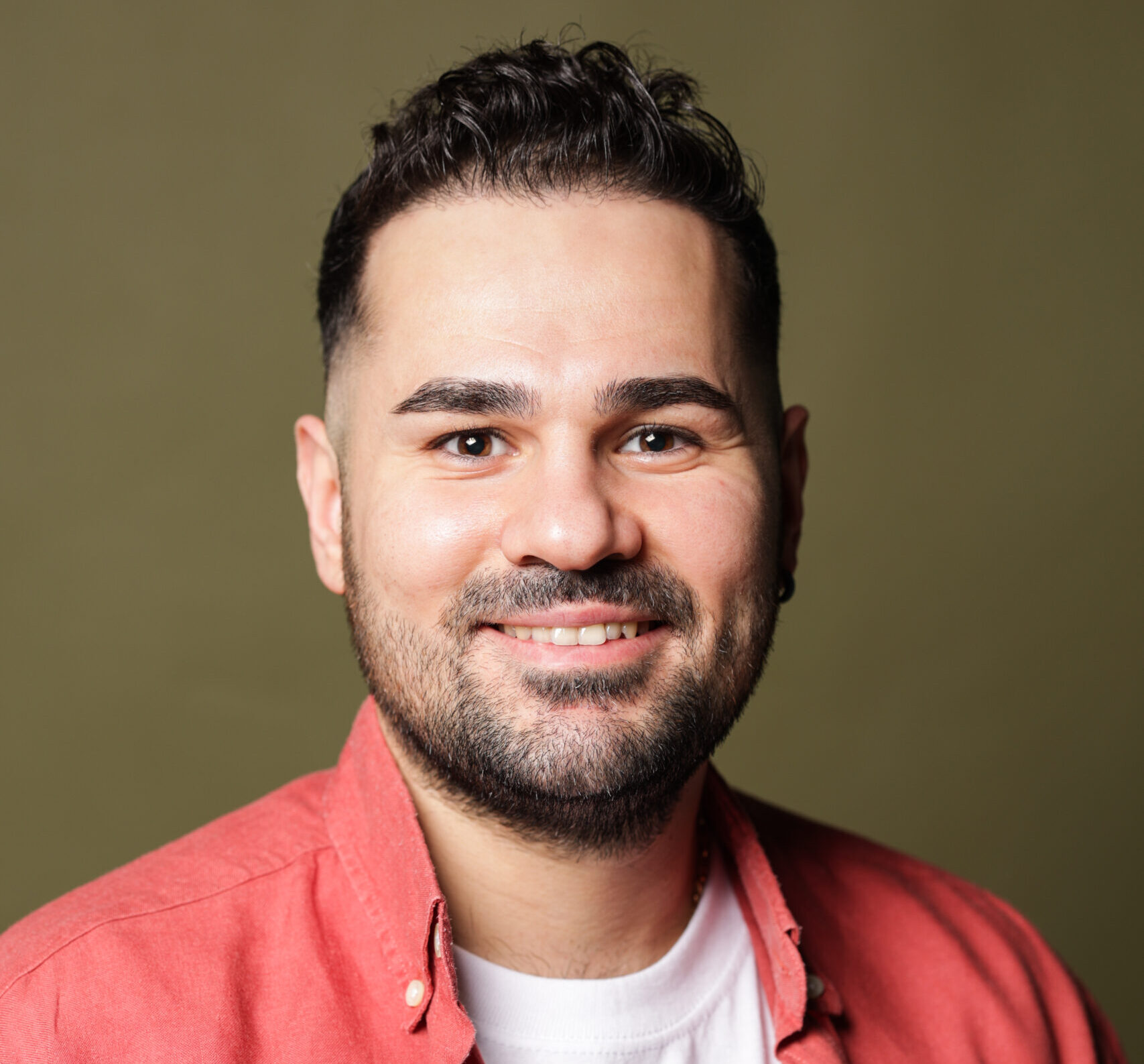
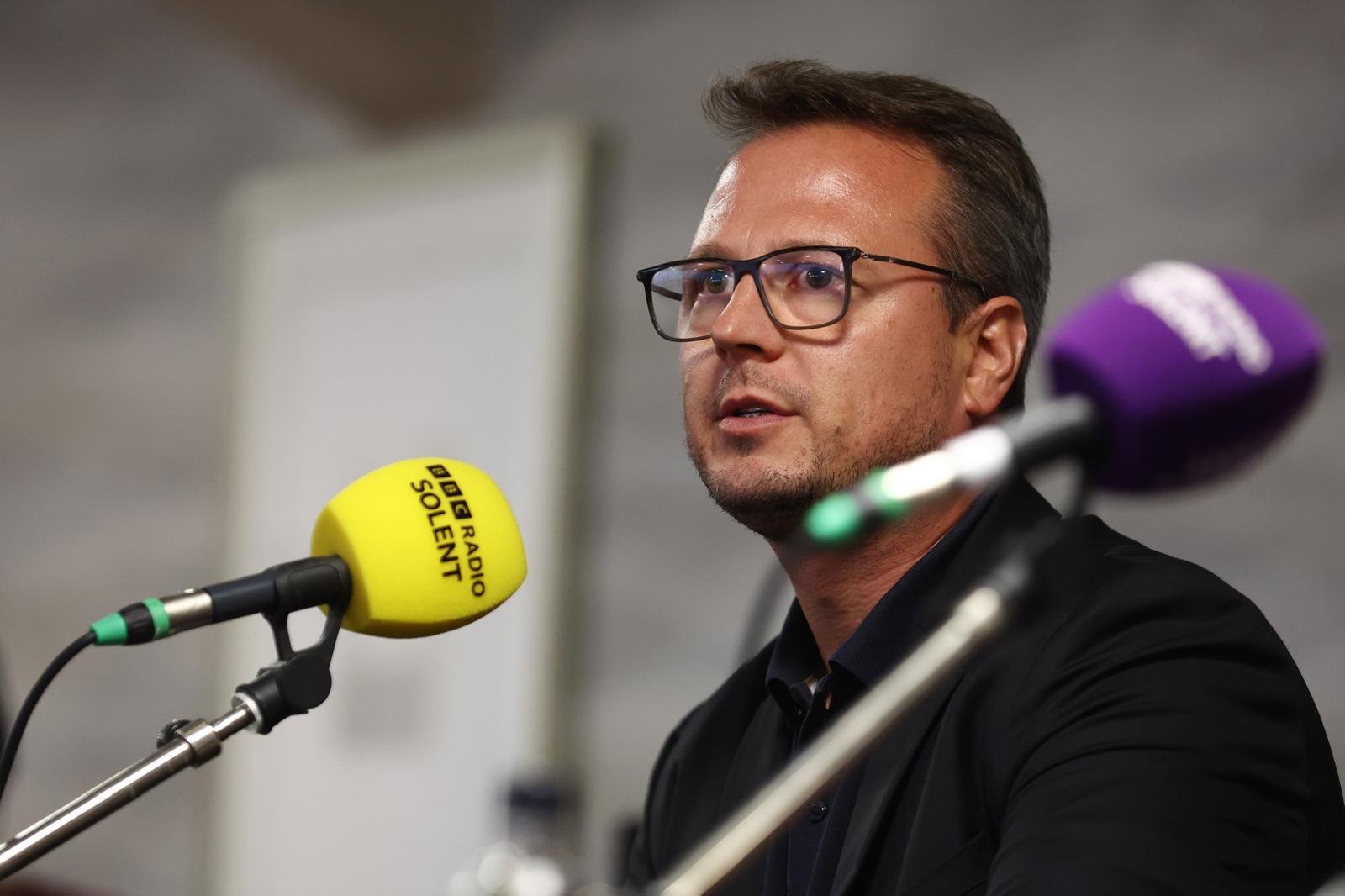
Profile
Role: Group Sporting Director, Sport Republic, leading football operations at Southampton
Specialisation: Football Operations, Scouting, Analysis and Club Development
Experience: TSG Hoffenheim, RB Leipzig, Hamburger SV, Vitesse Arnhem, Genoa and Southampton
Focus Areas: Player Development, Staff Development, Recruitment, Data, AI and Multi Club Structures
Johannes Spors has built one of the most respected careers in modern club management without ever having played the game professionally himself. Born in Heidelberg in 1982, his path breaks down into two clear phases, a formation spent entirely inside German football, followed by sporting director positions in the Netherlands, Italy and now England. Today he leads football operations at Southampton as Group Sporting Director for owners Sport Republic, a role that also sees him support the group’s other clubs, including Valenciennes in France. His path into the game is unusual by design, built entirely on analysis, scouting and an eye for talent long before it becomes obvious to everyone else, and it is that background that continues to define how he works.
From Analysis to Scouting
Spors originally set out to become a teacher, studying sport science and political science at Heidelberg University, but as he has put it himself, he never once set foot in a classroom. Instead, at 24, a university project brought him to then Regionalliga side TSG Hoffenheim, where his first job was walking around with a camera on his back filming matches, sitting in early meetings alongside figures such as Ralf Rangnick and Helmut Groß. His responsibilities grew steadily from there, from the club’s second team to Chief Analyst and then Head of Scouting of the Bundesliga side, a period during which he played a part in identifying and developing Roberto Firmino, whose journey from Brazil’s second division to a defining career at Liverpool remains one of German football’s most cited scouting stories. From there he moved into Chief Scout roles at RB Leipzig, where he contributed to the signings of players including Dayot Upamecano, Ibrahima Konate and Timo Werner, and later at Hamburger SV, tracing a clear line from student with a camera to chief scout, and finally into Sporting Director and General Manager, Football roles of his own.
Sporting Leadership at Vitesse and Genoa
In 2020 Spors took his first sporting director role at Vitesse Arnhem, becoming the youngest technical director in the history of the Eredivisie, and building loan pathways that brought in players such as Lois Openda and Armando Broja.
That reputation carried him to Genoa at the end of 2021, where at 39 he became the first German ever to hold a sporting director role in Serie A. After guiding the club back into the top flight, he then led what he still regards as one of the outstanding seasons of his career, a debut campaign back in Serie A that he points to as statistically the strongest of any newly promoted club anywhere across Europe’s top five leagues that year by points won per game. Genoa’s squad was partly sold on for more than one hundred million euros player trading profit during his time at the club, while Alberto Gilardino, whom Spors helped install as head coach, developed into one of Italian football’s most highly regarded young managers, an early example of the combination Spors has built his reputation on ever since, developing players, developing the staff and coaches around him, and building genuine financial strength.
In the same period Johannes led the transormation for Genoa CFC to integrate Data, AI and Innovation and modernise the structure in the Club.He worked, by his own account, in a converted villa dating back to the city’s Doge era throughout. It was also from Genoa that Spors extended his reach further, taking on the additional role of Global Sports Director across the club’s wider ownership group, overseeing football operations simultaneously at clubs including Vasco da Gama in Rio de Janeiro, Standard Liège, Red Star in Paris and Melbourne Victory. He has since described those years candidly as demanding, genuine hard graft built on constant travel from club to club, while insisting on a working principle he still holds to today, that every club in a network should be treated as first among equals, with no transfers ever forced from above.
Southampton and Sport Republic
Since February 2025 Spors has led football operations at Southampton as Group Sporting Director for Sport Republic, and the same combination has again come through clearly. Southampton’s squad has been sold on for around two hundred and fifty million euros across three transfer windows under his stewardship, while on the coaching side he backed his own judgement by promoting 32 year old Tonda Eckert, who had been brought in from Johannes to coaching the club’s under 21 side for barely four months, into the permanent head coach role in November 2025. It proved to be one of the clearer examples of Spors’ willingness to trust conviction over CV, as Eckert went on to lift Southampton into playoff contention and a run to the FA Cup semi final, developing into exactly the kind of coach Spors looks to build around him, in the same mould as Gilardino before him at Genoa. Spors remains one of the more sought after names in the industry, having been linked with vacancies at some of Europe’s biggest clubs, and continues to be invited as a speaker at major industry events including the FIFA Club Management Summit.
Key Insights
- Developing a club means developing its staff, coaches and players together.
- Clear communication and respect for each club’s culture underpin sporting leadership.
- There is no single route to becoming a sporting director, with pathways through scouting, academies, data and AI.
Interview – Johannes Spors
Our Exclusive Interview with Johannes Spors
Your first job in football was walking around with a camera on your back filming matches for Hoffenheim’s second team. What do you remember most about that period, and did you have any idea at the time where it would eventually lead?
I think that first job really sums up my whole career. Right at the start I was filming matches for ten euros an hour, and I worked my way up from there through hard work. I am grateful now that I get to lead clubs from the top, but in between I saw every single level that exists inside a club, and I think that has been important for my leadership, knowing exactly which layers and hierarchies exist within a club, because I learned this job from the ground up.
It was an exciting time.
What sounds simple twenty years later was genuine innovation back then, and that is really what those Hoffenheim years mean to me, being part of a genuinely innovative environment from day one.
I think that first job really sums up my whole career.
The topics have obviously shifted since then, today it is AI and everything that comes with it, but back then it was an innovative environment, and it was good to have been part of it.
You played a part in identifying and developing Roberto Firmino long before he became a star at Liverpool. What do you remember about the first time you saw him, and was there a specific moment you realised he was something special?
Firmino is a memory I have very clearly. I remember him from one of his very first days with us, when he played with the second team away at Waldhof Mannheim to get some match practice. There was snow on the pitch, and you could tell it was a real culture shock for him.
But what stood out about him was how he took everything Hoffenheim offered for player development and made full use of it. He had an incredible will, an incredible determination, an incredible resilience. The talent was visible from the start, but the level he eventually reached, he earned that himself, through this almost unbelievable resilience, constantly fighting to get his quality onto the pitch.
At Vitesse you became the youngest technical director the Eredivisie had ever seen. What was it actually like to suddenly carry full responsibility for a club at that age, after years of working mainly behind the scenes in scouting and analysis?
I honestly wasn’t even aware that I was the youngest. What I do know is that I was definitely the first German in Dutch football. It was also during Corona, and Vitesse was a huge step for me, one I am still incredibly grateful for today.
I deliberately took my time with that decision, because after Leipzig and Hamburg it was clear to me that I wanted to lead a club from the top, that I wanted to be the number one at a club, whether as general manager or sporting director. Vitesse gave me that platform, a club that as a first step wasn’t too big, but big enough to be genuinely successful. I have always sought out that kind of responsibility, and I have always embraced it.
I think we had a really good time in Arnhem. We built real value for the club, reached the cup final, played a fantastic European campaign, beat Tottenham, and above all gave the club a different identity during that period, an identity built on winning and development. That is a time I still look back on with very positive feelings today.
You became the first German ever to hold a sporting director role in Serie A when you joined Genoa. What is your favourite memory from your time in Italy, on or off the pitch?
Honestly, my time in Genoa cannot be summed up in three sentences. Italian football, and my time in Genoa specifically, was incredibly intense and incredibly special. Italian football is full of passion. I think during my time there we managed to build a really strong connection between the fans, the people of the city, and our club, even though we took over at a difficult moment, when the club had to go through Serie B.
We managed to bring real innovation to the club. I had a great team around me, and it was never just me, it was people like Marcel Klos, Marco Ottolini, Alberto Gilardino, and even Tonda Eckert, who was already an assistant coach there at the time. I think together, with a fantastic group of people, we built a really strong squad, and again always combined sporting success with development.
We developed a coach, we built a great squad, we brought Innovation into Italys oldest Football Club and we ended up as the best promoted team in Serie A that season. That promotion itself was obviously a very special moment, but honestly so was the whole first Serie A season. There are hundreds of moments from that time, and Italian football lives its own, completely unique calcio culture, which I deeply respect and find truly special.
The same ownership group gave you full responsibilty for clubs in Brazil, Belgium, Australia and beyond, all at once. What did a normal working week actually look like for you during that period?
The Genoa role was always there and ost present not only in the background, and then the other clubs came on top of that. I was lucky that at each of these clubs I got to choose a sporting director myself, someone who reported directly to me, and I obviously had an enormous amount of contact with them. It was always important to me to create a good mix between local expertise at each club and my own final decisions at the group level above that.
That period was defined by an enormous amount of travel. I have some wonderful memories, especially travelling with the team in Brazil, that was something completely different from just scouting a player somewhere, really living it together with the team and the staff. Every time I was there, it was genuinely special.
But above all, I think we managed to get the clubs to actually work together. A clear communication strategy lead to respect each other, and to exchange information with real transparency. That is how we managed to see ourselves as one unit, even though clubs are always competing with each other in some way. Through weekly meetings with the sporting directors we built a kind of unity that I think was exceptional, and that everyone involved still looks back on positively.
And of course, during that time we didn’t just get promoted in Genoa, we also got promoted in Brazil and in Paris. It was a very successful period, and one that, through player trading, was also genuinely profitable financially.
Beyond signing players, you have also helped shape the careers of coaches and directors around you, from Alberto Gilardino to Marco Ottolini at Genoa. How do you decide when to develop someone from within a club rather than bring in an experienced outsider?
For me personally, my career has always been about development. I want to develop clubs, and to develop a club you have to develop your staff. When you develop your staff, you develop your players. Development always comes first for me in every club, whether that was in Holland, in Italy, or now in England at Southampton.
And then it is about finding good people, people who have real competence and quality, but who above all also fit well with me and with each other on a human level. I think Alberto, Marco Ottolini, and now Tonda are very good examples of that.
I believe it is always about creating a culture within the club where teams genuinely work together, where teams are really interlinked with each other, where there is a high level of trust between people, including trust in each other’s quality, and where people’s quality is respected.
When you develop your staff, you develop your players.
I guide all of that, but I also need staff who bring their own quality to the table, who are not afraid to take on responsibility themselves. That is my job at every club, to create that culture. I think we have managed that especially well in Genoa, and now also in Southampton, and that is also how people like the ones I mentioned develop.
If young people today want to become a sporting director but, like you, have never played professionally themselves, what advice would you give them?
Football is obviously a special industry. You have to work on your own competence, and there are a lot of programmes for that these days. I think the good thing is you can always do something, you can always keep educating yourself. I still keep educating myself too, even now in England I am doing the highest possible licence. That has always been important to me, and I believe anyone can do that, no matter what level they are starting from.
And watch football, always get out there, meet people. Football is simply also a networking industry. Get to know people, stay in touch with people. I think those are the things you can do, the things you have to do. And somehow wait for your chance, and then find the area where you are actually best.
There is not one single path to becoming a sporting director. You can come through scouting, you can come through the youth academy, and there are also people now developing into these roles through data and AI. So that is, in a way, both good news and bad news for every young person out there, there is not one path you have to take, but there are an enormous number of paths, and you have to find your own way of developing.
One thing is clear though, during that time you should not prioritise the life side of work life balance too much. There is a lot of hard work behind all of this.
Looking back, what has been the most important lesson from your career so far, one that still helps you every day?
I think I would point mainly to my international experience. Of course I was shaped in Germany first and foremost, and I still follow German football extremely closely. But every football culture, whether it is Holland, Italy or England, or Brazil or France, has its own history, has its own completely unique culture, and that always has to be respected.
I think on the one hand you need very strong convictions, the way I have them, when it comes to development, when it comes to creating values, when it comes to bringing a clear playing identity into a club, developing a culture of high standards and communication, a focus on Innovation and development. Those are all convictions I always hold. But then it is about finding the right measures within whatever environment you are in.
It is not about pushing yourself through, it is about developing the club. And with the convictions you hold, you always have to find a way, find the right communication. Communication is the most important thing of all anyway, talking to people, bringing people together, being transparent within the club, and then managing to bring your convictions across in a way that gets accepted and actually implemented within that particular culture.
Because that is simply different in every country, and I would even say it is different at every single club in every country. I think you need a good instinct for that, for which culture you are operating in, which national culture, which club culture, which football culture. And of course you should never put your own convictions aside because of that, but push them forward in the right way, and find the right balance.
You have now worked inside a genuinely global, multi club structure, as you do again now with Sport Republic. Where do you think this way of running clubs is heading over the next few years, and what excites you most about it?
On the multi club question, sure, I have an enormous amount of experience with multi club structures, but what has always been important to me is engaging very intensively with each individual club. Similar to the previous question, it is about what actually works best inside that specific club, how can we become successful as quickly as possible, on the pitch and off it, within that club.
I think what is exciting is that there is simply a certain competition between different models. I would also never claim that one model is better than another. There are fantastic single clubs, there are good multi club groups, there are different models out there.
I think what matters is, and I have now worked with a lot of very different ownership structures, from German clubs to the Red Bull model, to single clubs, to multi club groups, different owners, owners from different cultures too, it is important to adapt to the different demands that come with different owners. And I believe every model that has a certain stringency to it is exciting.
The real question is always, if I have a single club or if I have a multi club group, what is the reason behind it, what is the actual goal? And you find good models everywhere, but also less good ones. I think every model deserves respect, and it simply has to be executed well in the details.
FAQ
Who is Johannes Spors?
Johannes Spors is Group Sporting Director for Sport Republic, leading football operations at Southampton and supporting other clubs within the group.
How did Johannes Spors begin his football career?
A university project took him to TSG Hoffenheim, where he began filming matches before progressing into analysis, scouting and sporting leadership.
What is Johannes Spors’ approach to club development?
He focuses on developing staff and players, building trust between departments and adapting his communication and methods to each club’s culture.