
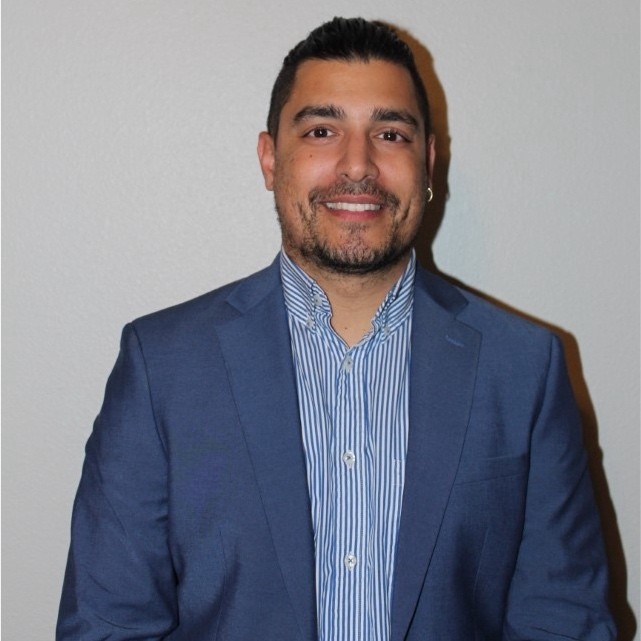
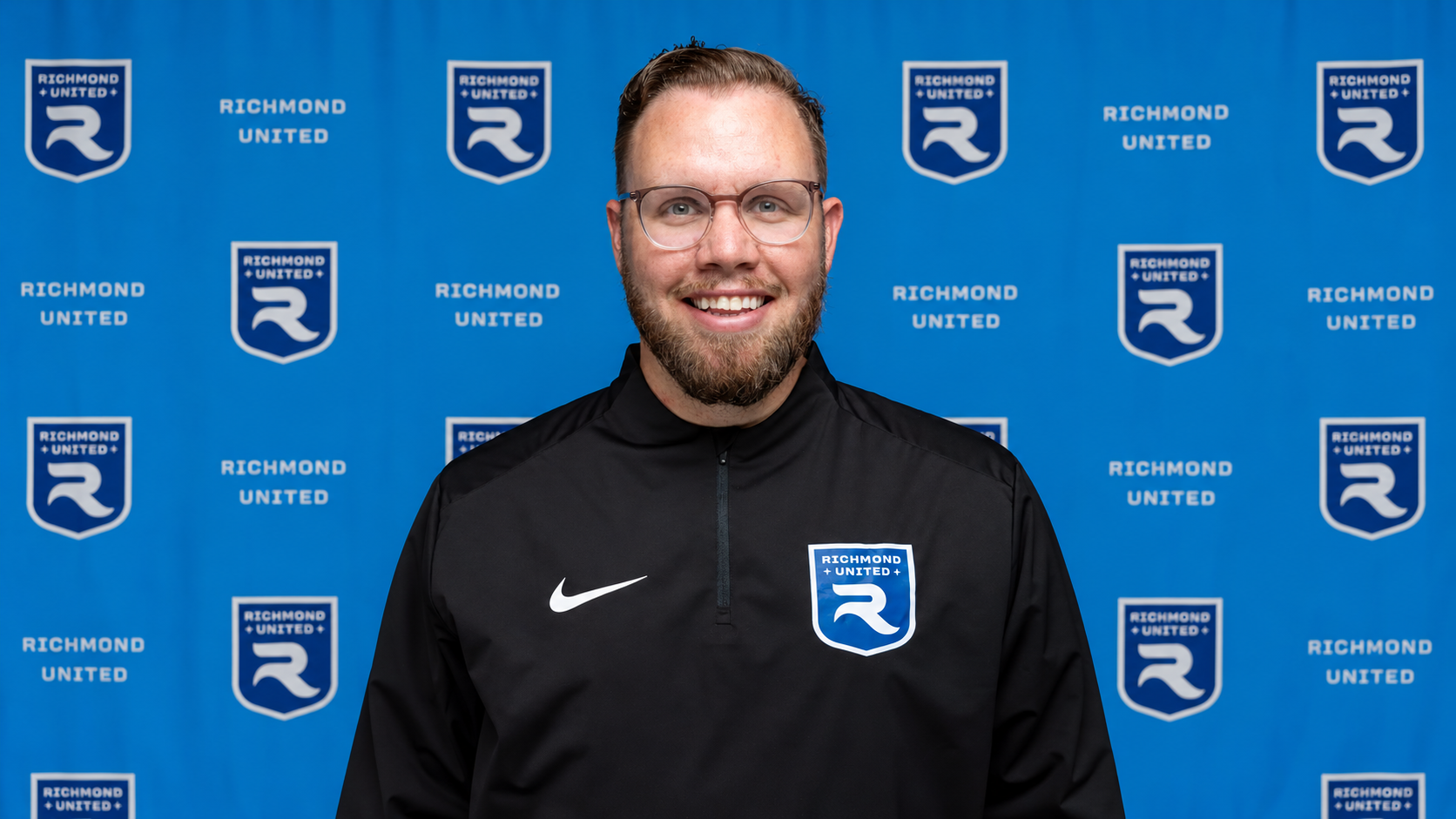
Profile
Role: ECNL Boys Director, Richmond United
Specialisation: Coaching and Player Development
Experience: Richmond United, Barça Residency Academy and El Paso Locomotive FC
Focus Areas: Player Adaptability, Problem-Solving and Pathways to College and Professional Soccer
Iván Militár has built his career around a simple idea: developing a player is about creating opportunities, solving problems and helping people reach a level they may not have imagined for themselves.
Originally from Szeged, Hungary, Militár moved to the United States in 2011 to play college soccer at Old Dominion University. A standout for the Monarchs, he earned First Team All-Conference USA honors in 2015, served as team captain and finished his collegiate career among the program’s all-time leaders in assists. He later continued playing with Lionsbridge FC in USL League Two before turning his focus toward coaching.
His coaching journey has taken him across the country, from Virginia Beach and Richmond to Arizona and El Paso, Texas. At Barça Residency Academy, he worked with players including Diego Luna, Brooklyn Raines (to name a few). While his time with El Paso Locomotive FC saw him help build a pathway connecting local talent to college and professional soccer. In 2025, he returned to Richmond United, where he now serves as ECNL Boys Director.
Yet the most revealing part of Militár ‘s story is not simply the list of players he has coached or the positions he has held. It is how he measures success. He is reluctant to claim ownership of a player’s achievements, recognizing that development is the result of many coaches, experiences and personal decisions. For him, a player’s ability to adapt, solve problems and perform when the level rises can be more telling than raw talent alone.
His three years in El Paso reinforced that philosophy. Working in a predominantly Mexican American community, Militár saw soccer as a way to create opportunities that extended well beyond the pitch, helping young players envision futures through college scholarships and professional contracts. He describes the work as life-changing, particularly for those who might never have considered those pathways possible.
Now back in Richmond, with a young family and a renewed focus on his own development as a coach, Militár is entering a different chapter. The ambition remains, but so does a growing appreciation for family, community and the legacy a coach leaves behind.
In this conversation with The Football Week, Militár reflects on his journey from Hungary to the United States, the lessons he took from El Paso, what separates talented players from those who can succeed at the next level, and why coaches should celebrate player success rather than claim it. He also shares his thoughts on identity, ambition and the place that will always feel like home.
Key Insights
- Adaptability and problem-solving help players succeed as the level rises.
- Soccer can create pathways to education and professional opportunities.
- Coaches contribute to player development and should celebrate success rather than claim ownership of it.
EXCLUSIVE INTERVIEW:
Our Exclusive Interview with Iván Militár
You grew up in Hungary and eventually found yourself thousands of miles away, playing college soccer at Old Dominion. When you think about the kid who left Hungary and the person sitting here today, what do you think has changed the most about you?
Almost everything has changed. I have now spent nearly all of my adult life in the United States. In three years, I will have lived here for as long as I lived in Europe, in Hungary.
I’m an American citizen now, three children, a wife, friends and a life here. At the same time, I have never cut my roots to Hungary. I always say that half of my brain still lives there.
I have always been ambitious, but my ambition has met reality here in a very positive way. In the United States, when people tell you something is going to happen, you generally have a much stronger sense that it will actually happen. In Hungary, sometimes you are less certain. That reliability and sense of possibility have been important for me.
My perspective on faith, family, professionalism and the global soccer industry has also changed. Living in the United States has exposed me to so many different cultures and ways of thinking. I cannot imagine a bigger transformation than the one I have experienced since leaving Hungary. But some things have remained the same: my ambition, my strong orientation toward family, and the fact that I am Hungarian.
Was there a moment when America stopped feeling like a foreign country and started feeling like home? Do you remember when that happened?
Not really. It changed gradually over time. The United States is home to me in so many ways, it is where I have built my life, my family, my career, and so much of who I am today. It will always be an incredibly important part of my identity. But I also don’t think you can ever completely change where home began. I was born and raised in the southern part of Hungary, and there is a connection to that place that will always be part of me, regardless of whether I ever live there again. So in a way, I have two homes, the United States is the home I built, while Hungary is the home I came from.
You went from being a college player and captain to coaching the next generation. Was there a particular player, coach or moment that made you realize, “This is what I am supposed to be doing now”?
My love for soccer is tremendous. Soccer is my number one source of peace and calmness. I am a different person when I am near a soccer pitch, and I feel that difference when I am away from it.
I always say there are a few levels to it. As long as I am involved in the game, I am happy.
The first level was wanting to become a professional player. I realized that I was not good enough to reach the level I wanted. I could probably have played in lower-level professional leagues, but that was not what I wanted to pursue.
So I wanted to become a coach. As a player, you can influence the game tremendously because you are directly involved in it. As a coach, you have a different kind of influence from the sideline, through your decisions, substitutions and the way you prepare the team.
If I am not good enough as a coach, then I will become a scout. You have less direct control over what happens on the field, but you are still contributing to the game in some way.
As long as I am involved in the game, I am happy.
And if I am not good enough to be a scout, I will find myself standing next to a grass field, watching football. I need to be close to the game and involved in it somehow.
You have lived in Virginia, Arizona and El Paso, and now you are back in Richmond. Each place has its own personality and soccer culture. Which place changed you the most as a person?
El Paso, without question.
El Paso has a predominantly Hispanic and Mexican American community. It is a border city between Mexico and the United States, and Mexican soccer culture is a major part of its identity. I encountered some amazing players and people there. The experience changed how I look at the game, how I train, how I behave and how I think about winning.
Because El Paso is geographically separated from many other major soccer markets, it also gave me the opportunity to find my own way and establish my leadership within that environment. It helped me understand myself better as a coach and leader.
El Paso changed me a lot. I love that place.
In El Paso, you were not simply coaching a team. You were helping build a pathway from the local community toward college and professional soccer. When you look at the players who earned professional opportunities or continued into college, what are you most proud of that the numbers do not capture?
We sometimes say it quite strongly, but we were saving lives in El Paso.
We had to convince people in the Hispanic and Mexican American communities that college was a viable route. There is a real concern around student debt and student loans. For many families, taking on that kind of debt is frightening, and they do not want to go down that path. We had to show them that pursuing an education and earning a college degree through soccer could be worthwhile. That can change lives.
We also created opportunities for players who might never have imagined becoming professionals. El Paso is one of those places where someone can come almost directly from the street and find a pathway into the professional game. Diego Garcia was an example of that. He came into the environment without having been part of that level of structure or professionalism. We helped develop him, and he eventually became a professional player with FC Dallas, playing against Lionel Messi in a preseason game.
That kind of journey is special. In El Paso, we were creating possibilities for people who might not previously have believed those possibilities existed. That is what I am most proud of.
You have coached players who have gone on to the professional game, including Diego Luna, Bryce Duke and Caden Clark. When you see a young player with that kind of potential, what do you notice that people watching from the outside might miss?
The way I describe it is adaptability, or adjustability. Any game, training exercise or problem I presented to Diego Luna, he was usually the first to solve it, and he solved it faster than anyone else. Sometimes I would make a mistake when dividing the players into teams. If I had 15 players but thought I had 16, I might put eight on one team and eight on the other. The teams would actually end up with seven and eight players.
Within the first couple of minutes, Diego would notice that his team was playing a player down. Everyone else would simply continue playing, but he would recognize the problem.
He was an incredible problem-solver, and I believe that is one of the defining characteristics of great players. Brooklyn Raines, another player I coached who has gone on to represent the United States at the senior international level, had that same quality. He was younger than Diego and played on the same team, but he also solved problems earlier than anybody else.
For me, it is about how quickly a player can adjust to the environment they are in.
You recently wrote about coaches claiming ownership of player success, arguing that success should be celebrated rather than claimed. Where do you think the industry gets player development wrong when it comes to ego, credit and the relationship between coach and player?
It is an important conversation. Did I contribute to Diego Luna’s development? Yes, a little bit, just as all the other coaches who worked with him did.
Ged Quinn was the Academy Director at Barça Residency Academy when Diego was there. I was an assistant coach, and Ged was the head coach. He contributed a great deal to Diego’s development, and it would be wrong to overlook that.
We cannot claim that Diego Luna is the product of our coaching. What we can say is that we helped him develop into the player he is today. We were part of that process.
Diego is clearly the best player I have ever coached, and he is also the most widely known. People ask me about him frequently, and I love that kid. There is no question about that.
But when I think about players I am genuinely proud of, I also think about someone like Diego Garcia or Emiliano Rodríguez.
Emiliano might not go on to have a ten-year professional career, but his story is just as meaningful to me. He was working double shifts at a taco restaurant in El Paso, and six months later, he was a professional player. He then signed with El Paso Locomotive as an academy player. What I look for in these players is how quickly they adjust to a higher level, particularly by making the most of their strengths and skill sets.
What we can say is that we helped him develop into the player he is today.
If you are a good passer at one level, can you still be a good passer at the next? If you are a good tackler, can you continue to tackle effectively when the level rises?
That is the difference. Can you do the same things you were doing at the level below? If you can, then you belong.
For you, Iván, what does the future look like? What are some of your aspirations and goals for the coming years?
Right now, my situation is a little different. I have three children, and my wife is from Richmond, which is why we moved back here. We are in a period of reorganization as a family. The professional route has always been my goal, but it is not always easy to pursue that path when you have a family and other responsibilities. For now, that ambition may be on pause. I also feel that I am going through a transition as a coach. I need to become better, reinvent myself and start again in some ways. I want to find new approaches and new ways of doing things, and I am looking forward to that process.
Richmond is a great place, and the club I work for is ambitious. It is a different kind of environment from El Paso, and there is no professional team above the club in the same way. What I want to do here is leave a legacy. I want people to remember me as a good person, but I also want them to remember that we developed some great players.
The last time I was in Richmond, Nick Simmonds, who was selected third overall in the MLS SuperDraft by FC Dallas, was one of my players. Everywhere I have gone, I have encountered special talents. I hope that, now that I am back in Richmond, we can identify and develop more of those players.
RAPID FIRE
City life or countryside?
City life.
Beaches or mountains?
Beaches.
Sunrise or sunset?
Sunrise.
Summer or winter?
Summer.
Early bird or night owl?
Early bird.
Steak or seafood?
Steak.
Call or text?
Call.
Win ugly or lose beautifully?
Win ugly.
Messi or Ronaldo?
Messi.
And last one, perhaps a personal one: Hungary or the USA?
Hungary.
FAQ
Who is Iván Militár?
Iván Militár is a Hungarian-born soccer coach and ECNL Boys Director at Richmond United. His coaching experience includes Barça Residency Academy and El Paso Locomotive FC.
What is Iván Militár’s approach to player development?
He emphasizes adaptability, problem-solving and helping players apply their strengths as they progress to higher levels.
Where did Iván Militár play college soccer?
He played at Old Dominion University, where he served as team captain and earned First Team All-Conference USA honors in 2015.