
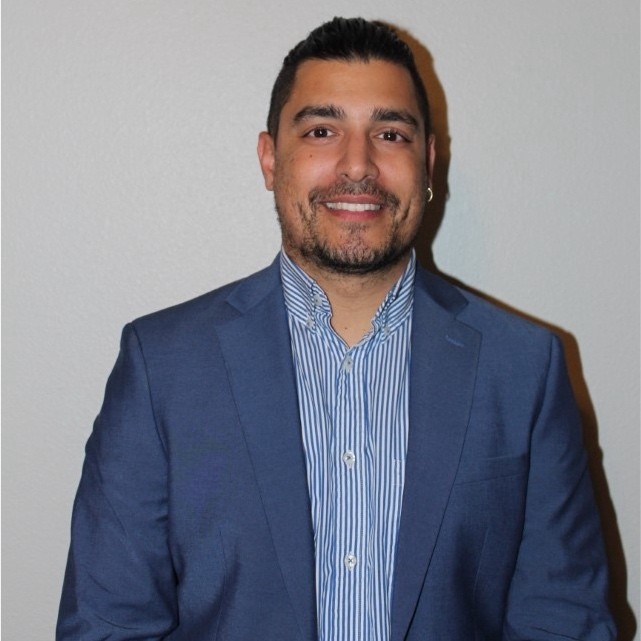
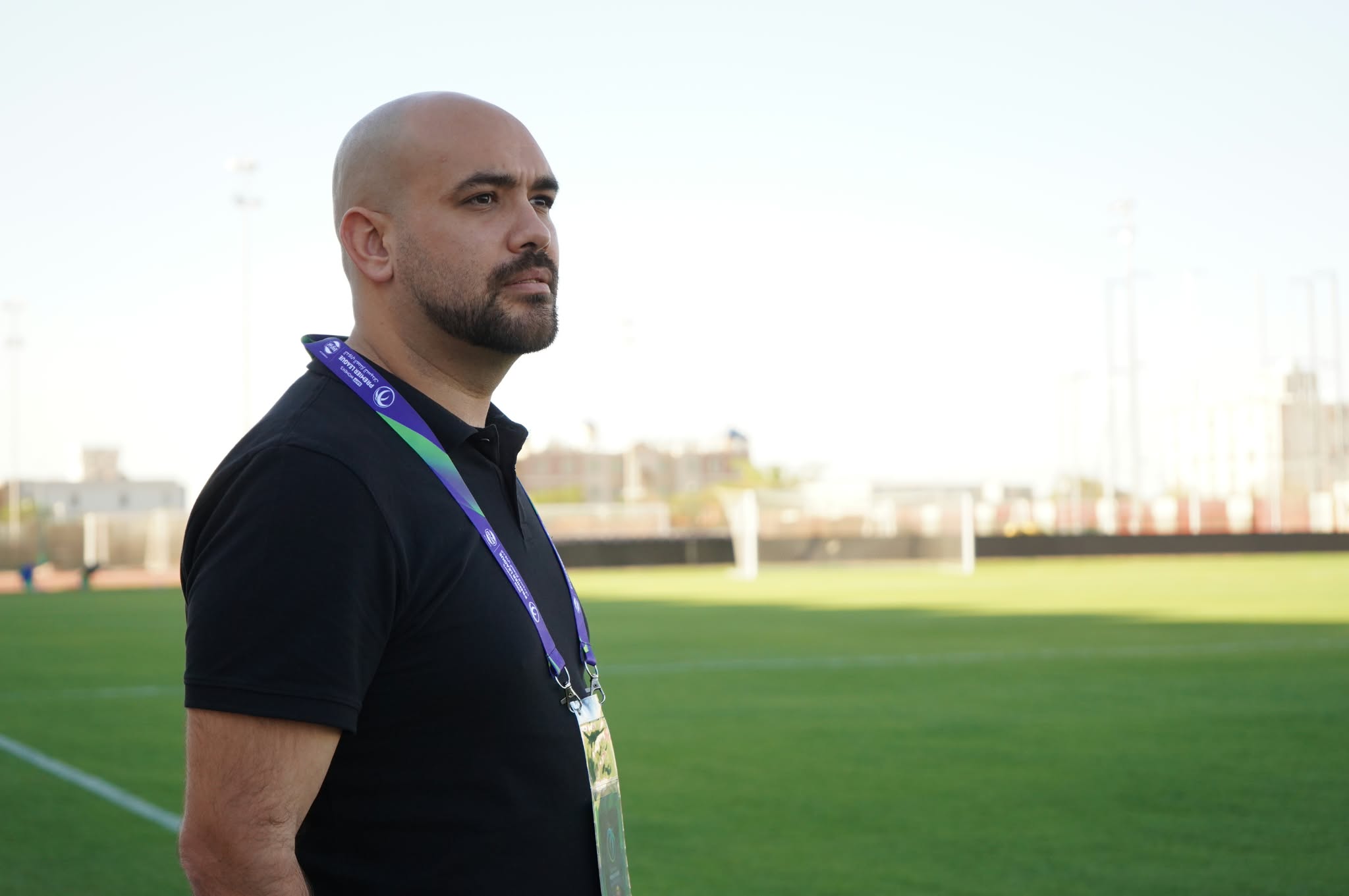
Profile
Role: UEFA Pro Licensed Coach, Läänemaa JK
Specialisation: Coaching, Youth Development and Professional Football
Experience: Spain, England, Colombia, Lebanon, Saudi Arabia, Cameroon, Libya and Estonia
Focus Areas: Player Development, Adaptability, Mentality, Competitiveness and Tactical Periodization
David Cabildo’s coaching journey is anything but conventional. A UEFA Pro Licensed coach from Spain, Cabildo has built his career across a remarkably diverse football map, working in Europe, South America, the Middle East and Africa, with experiences ranging from youth development and women’s football to first-team environments and technical-staff roles. His career has included stops in Spain, England, Colombia, Lebanon, Saudi Arabia, Cameroon and Libya, before his latest chapter in Estonia with Läänemaa JK.
What makes his story particularly interesting is how deliberately he chose to pursue coaching without the traditional foundation of a professional playing career. Inspired in part by coaches such as José Mourinho, Cabildo decided early that if he wanted a life in football, he had to create his own path, even if that meant leaving Spain, arriving in London without a club or strong English, and knocking on doors until someone gave him an opportunity.
That willingness to step into unfamiliar environments has become a defining part of his coaching identity. Cabildo describes himself as adaptable rather than tied to one rigid tactical formula. His philosophy is built around understanding the players and environment available to him, while maintaining an emphasis on mentality, competitiveness and training that reflects the demands of the actual game. His own writing similarly emphasizes an adaptable game model rather than forcing the same approach into every footballing context.
Now, with experience spanning very different football cultures and an ongoing focus on player development, Cabildo continues to build a career shaped as much by curiosity and resilience as by tactics. We sat down with David to talk about the journey, the lessons learned along the way, his coaching DNA, and what he is looking for in the next chapter.
Key Insights
- Coaching methods and tactics should adapt to the players, culture and environment.
- Trust, clear responsibility and support are essential within a coaching team.
- Developing players and helping a team grow matter alongside winning titles.
Our Exclusive Interview with David Cabildo
If you had 60 seconds to tell the world who David Cabildo is, what would you say?
I would say I’m a football coach who never had a professional playing career, but I always dreamed of building a career in football. José Mourinho was an inspiration to me because he showed that you can reach the highest levels of the game without having been a top professional player yourself. That inspired me to believe I could do it too.
I decided that if I never tried, I would regret it for the rest of my life. So I tried. I left Spain, traveled around the world, learned from different football cultures and environments, and gradually built my career one step at a time.
You’ve worked in countries with very different football cultures, from Spain and England to Colombia, Lebanon, Saudi Arabia, Cameroon and now Estonia. Looking back across that journey, was there a particular environment that challenged you personally more than you expected? And what did you take from those experiences?
Every country has presented a different challenge. Sometimes it was the language, sometimes the culture, religion, weather, or simply the way people communicate and work. Every environment has something different to teach you.
Colombia was probably the easiest and most enjoyable experience for me. The language was already familiar, the weather was great, the people were amazing, and there is an incredible passion for football. I was initially unsure whether I should go, but my intuition told me to do it. I listened to that feeling, and it turned out to be one of the best decisions I made. I spent almost three years there and honestly regretted leaving. The football environment, the people and the passion made it a very special experience for me.
Traveling has taught me that you have to be patient and adaptable. You can’t arrive somewhere expecting everything to work the way it did in your previous country. You have to understand the environment first and then find your way within it.
You talk about football being a long-term process and putting people first. Was that always your philosophy, or was there a particular moment, experience or person that changed the way you think about the human side of coaching?
I think I’m still improving in that area. Sometimes I still see the players too much as players rather than as human beings, and that’s something I’m working on. I’m not necessarily an overly friendly coach when I’m working. I’m a little more distant because, from my experience, I sometimes work better that way. But I know there is still a lot for me to improve when it comes to the human side of coaching. For me, coaching is a constant learning process, and that includes understanding the person behind the player.
Your career has included both head-coaching roles and positions within technical staffs. How has your understanding of leadership changed as you’ve moved between being the person making the final decision and being part of a larger coaching team?
The pressure is obviously very different. When you’re the assistant, the head coach carries the ultimate responsibility. When you’re the head coach, everything ultimately comes back to you.
I’ve often had to work without being able to bring my own assistant, and you really feel that. As a head coach, there can be a lot of loneliness because you’re carrying the responsibility yourself. When you have someone beside you who you trust, that support is incredibly important.
I also believe being a head coach is a 24-hour job. You can’t really switch it off after eight hours. You have to be completely committed.
And having been a head coach helps me when I’m an assistant because I understand what the head coach needs. The emotional side is very important. Sometimes a head coach doesn’t need another tactical opinion; they need someone beside them saying, “Come on, we’ll get through this. I’ll help you.” That experience has taught me how important support is within a coaching staff.
Every coach has their own DNA, the way they train, the way they prepare and the way they want their team to play. What is your football DNA? When someone watches your team, what do you want them to see?
Usually when people ask this question, they expect an answer about tactics. But tactics are very connected to the players you have.
You might arrive at a club wanting to play a certain style, but if you don’t have the players or the tools to execute it, you have to adapt. It’s like going into battle: your strategy depends on the soldiers you have. If I have fast players, I might use transitions and counter-attacking more. If I have technically strong players, I may look to dominate possession and control more of the game. So I adapt to the qualities available to me.
My DNA is more connected to mentality: fighting, aggression, competitiveness and personality. I like coaches such as Diego Simeone, José Mourinho and Antonio Conte because of that strong mentality and personality. My training methodology is also very connected to the game. I believe training should replicate the demands of football rather than just treating physical preparation as something completely separate from the game. That’s an important part of my approach to Tactical Periodization. I’m flexible in how I implement it. I don’t arrive at every club with the same book and say, “This is how we’re going to play.” I have to look at what I have and adapt.
But tactics are very connected to the players you have.
If I have players who are 1.60 meters tall, for example, I can’t build an entire philosophy around crossing the ball for them to win headers. You have to understand your players.
I’ve also learned that the environment matters. Weather, culture and the characteristics of the league can all influence how you play. In extremely hot conditions, for example, you may need to control the ball more because you can’t constantly play at maximum intensity.
You took over a team in Estonia that was in a very difficult position, wthas the immediate objective simply survival, with promotion becoming a longer-term goal?
When I arrived, the team had just one point and was very close to relegation. In 2 months, we grew significantly and reached 15 points.
We’re still in a difficult situation, but we’ve made progress. When I took the job, many people told me not to go because the team had only one point while the others had around ten.
But I said, “Okay, I’ll go.”
Now we’re much closer to safety. It’s still difficult, but we started taking points and gave ourselves a chance.
It seems like you’re someone who is naturally attracted to difficult challenges. When people tell you something can’t be done, does that motivate you?
Yes. Sometimes I’m the kind of person who goes in the opposite direction when everyone tells me not to. When somebody tells me, “You can’t do it,” it actually motivates me to try.
I think sometimes you have to believe in yourself, even when other people don’t see the same possibility that you see.
You’ve experienced success through league titles, promotions and national championships. At this stage of your career, what kind of project genuinely excites you, not just in terms of competition, but in terms of what you can build within a club?
I’ve also had success developing players. At almost every club I’ve worked with, I’ve helped players reach national teams or move to bigger clubs. I think that’s one of my strengths.
Of course, I love winning titles. I want to win leagues and championships. As someone who wasn’t a professional player, those results are especially important to me because they demonstrate what I’ve been able to achieve as a coach.
But developing players and helping a team grow are also very important to me. I want to build something that produces results and helps people move forward.
When the next opportunity comes, what are you looking for from an owner, sporting director or club that would make you say, “This is the right place for me to build something”?
The most important thing is trust. I want to work with people who trust my abilities and give me the responsibility to lead the team. Football is a collaborative environment, and I value the experience and perspective of owners, presidents and sporting directors. If someone gives me an opinion or a different perspective and, after considering it, I believe they’re right, I’m absolutely willing to change my decision. Ultimately, we’re all working toward the same goal: what is best for the team.
At the same time, I believe a coach needs to have a clear identity and the authority to make football decisions. There’s a difference between collaboration and being told exactly what to do. The coach is the person working with the players every day, watching training, understanding the dynamics of the group and seeing what is happening inside the team. That responsibility comes with accountability, but it also requires trust.
I remember hearing Arsène Wenger speak about how difficult it can be when decisions are made by committees. At some point, someone has to make the final decision. You can’t make everybody happy. For me, the ideal environment is one where there is open communication, healthy debate and a willingness to listen on all sides, but ultimately a clear understanding of who is responsible for the football decisions. Give the coach that responsibility, give him the trust to do the job.
Is there anything else about your journey that you feel is important to share?
I would like to explain how I started because I think it can inspire somebody, just as other people inspired me. When I was around 23 or 24, I decided that I was going to become a coach. I didn’t know exactly where it would take me, but I knew I wanted to try.
I started in Spain, but I realized that if I wanted to build something in football, I had to do something different. There were many coaches around me trying to do the same thing.
So I bought a cheap flight to London. I didn’t have a club, I didn’t have a job and I barely spoke English. I arrived at night and didn’t even know where I was going to stay. I ended up sleeping at the airport. The next day, I started looking for clubs. I would use a translator to prepare what I wanted to say, then take the train to different clubs and introduce myself. I was essentially saying, “I’m David, I’m a coach, I want to work, and I believe I can help develop your players.” I kept going, step by step. I spent a lot of time walking around London by myself, listening to music, thinking and visualizing where I wanted to go. Eventually, people started helping me, and I began working with Arsenal schools and then at Wingate.
I didn’t know exactly where it would take me, but I knew I wanted to try.
From there, the journey continued through Lebanon, Colombia, Saudi Arabia, Cameroon, Libya and eventually Estonia. Every country taught me something different, and not always about football. Working in difficult and unstable environments taught me about people, body language, awareness and how to read situations. Those lessons are valuable beyond football.
In Saudi Arabia, I also had the opportunity to coach women’s football during a period when the women’s game was still developing rapidly. That gave me a completely different perspective.
After COVID, I also experienced how unpredictable football can be. I signed with a club in Spain, but because of financial problems, I never actually started the job. That taught me about the business and legal side of football and how many things exist around the game that coaches don’t always see. I had opportunities in China and Oman that ultimately didn’t happen either. One of the biggest lessons I’ve learned is that until something is actually signed, nothing is guaranteed.
Then the opportunity in Estonia came. I liked the fact that it was in Europe, and I wanted to work. It’s been another good experience and another chapter in the journey.
You mentioned countries where there were significant levels of instability and danger. Did those experiences change you personally?
Yes. There were moments when I was very close to danger. Some countries we’ve had very difficult days because of the war and the instability around us. When you’re in a hotel and you can hear explosions and feel the building moving, you realize very quickly that you’re in a completely different environment.
Those experiences make you more aware. They teach you things that football can’t teach you. At the same time, I had many positive experiences with the people and the football communities in those countries. The difficult moments were only part of the overall experience.
Rapid Fire
City life or countryside?
City life.
Talent or mentality?
Mentality.
Beaches or mountains?
Beaches.
Sunrise or sunset?
Sunrise.
Summers or winters?
Winters.
Early bird or night owl?
Night owl.
Plan everything or go with the flow?
Go with the flow.
Dinner out or cooking at home?
Dinner out.
Road trip or flying somewhere?
Road trip.
Call or text?
Text.
Win ugly or lose beautifully?
Win.
Books or movies?
Books.
Five-star hotel or tent under the stars?
Tent under the stars.
FAQ
Who is David Cabildo?
David Cabildo is a UEFA Pro Licensed coach from Spain whose international coaching career includes a chapter with Läänemaa JK in Estonia.
What is David Cabildo’s coaching philosophy?
He adapts tactics to his players and environment while emphasizing mentality, competitiveness and training that reflects the demands of the game.
Where has David Cabildo worked?
His coaching experience spans Spain, England, Colombia, Lebanon, Saudi Arabia, Cameroon, Libya and Estonia.