

With progress on the pitch, major infrastructure investment and a growing connection to FC Lugano, Chicago Fire’s transformation reflects an ownership vision years in the making.
Chicago Fire’s transformation is becoming visible both on the pitch and across the city. As of October 15, 2026, the club sits fourth in the Eastern Conference with 48 points from 29 matches, well positioned for another playoff appearance. Behind that progress is a project that owner Joe Mansueto has been developing over several years.
Founded on October 8, 1997, the anniversary of the Great Chicago Fire, the franchise began playing in MLS in 1998 and immediately won both MLS Cup and the U.S. Open Cup. Today, a club with a proud early history is working to establish the foundations for sustained success.
A $100 million training center, Gregg Berhalter’s sporting leadership, Robert Lewandowski’s arrival and a new $750 million stadium form the most visible parts of that effort. Mansueto’s ownership of Switzerland’s FC Lugano adds a European dimension, with its own sporting achievements and upgraded infrastructure.
Taken together, these developments reveal an ambition that increasingly resembles the approach associated with established Premier League clubs: invest in the daily working environment, connect player development with the first team, establish clear sporting leadership and create a permanent home for supporters.
Chicago still has to translate those advantages into consistent results. But the scale, sequence and patience of Mansueto’s commitment deserve attention.
The Owner Behind the Project
Before entering football ownership, Joe Mansueto built one of Chicago’s most recognizable financial businesses. He founded Morningstar in 1984 with an initial investment of $80,000, developing it into a global investment research company. A University of Chicago graduate with both an undergraduate degree and an MBA, he became Morningstar’s executive chairman in 2017 after spending much of the company’s history as chief executive.
His connection to Chicago extends beyond business. Joe and his wife, Rika, donated $25 million toward the University of Chicago library that bears their names and another $35 million to establish the Mansueto Institute for Urban Innovation. They are also signatories to the Giving Pledge. The Fire sit within that broader commitment to the city.
That business discipline is also reflected in the Fire’s financial performance. From 2022 to 2025, the club’s operating income increased 152%, its highest level in club history. Revenue increased 22% over the same period, the third-highest growth rate in MLS.
Mansueto acquired a 49 percent stake in the club in July 2018 before taking full ownership in September 2019. An early priority was bringing matches back from suburban Bridgeview to Soldier Field for the 2020 season. In his message to supporters, he outlined the ambition to build a club that represented Chicago’s neighborhoods and people.
The Fire sit within that broader commitment to the city.
Returning to the city established the direction. Building a permanent training base and a dedicated stadium would give that commitment a much longer horizon.
An Owner Who Makes Time for the Team
One revealing detail comes from the Fire’s preseason in California.
MLSsoccer.com reported that Mansueto spent much of the team’s stay at the Coachella Valley Invitational on site, taking meetings on the back patio of the team hotel alongside other members of the front office.
Berhalter’s description of the owner was simple: “He’s one of the guys.” The coach also emphasized Mansueto’s humility, willingness to listen and readiness to support improvements in personnel and facilities. For the founder of a global business, making that time is a meaningful expression of interest in the people carrying out the project. Preseason is where coaches establish expectations, players build relationships and a squad begins preparing for the demands ahead.
An owner’s presence does not determine results. But being available during that work can strengthen the relationship between ownership and the sporting department. Berhalter’s account suggests that Mansueto’s involvement is felt by the people responsible for turning investment into performance. That adds a human dimension to the construction budgets. The long-term commitment is expressed through his time as well as his capital.
The First Foundation Was the Training Ground
Before breaking ground on the new stadium, Chicago completed the environment in which its footballers would work every day. The Endeavor Health Performance Center officially opened on March 3, 2025, on the Near West Side. The $100 million facility brought the first team, Chicago Fire II and academy into a shared training base within the city.
The order matters. A training center influences preparation, coaching, rehabilitation and development throughout the season. It is where much of the work behind a successful matchday takes place.
The complex includes five full-size pitches and an additional half pitch, with grass and synthetic surfaces. Players have access to fitness facilities, hydrotherapy pools and dedicated sports medicine spaces. Classrooms, a film room, dining areas, lounges and recovery resources including cryotherapy support the wider daily routine.
For senior professionals, that environment brings training and support services together. For academy players, it places education and development close to the professional game they are trying to reach. The shared campus also creates opportunities for closer coordination between coaches. Staff can observe players across different levels, communicate about their progression and prepare them for the expectations of the first team. Facilities alone cannot deliver an effective pathway. Decisions about coaching, opportunities and individual development remain essential. But a common base gives the club better conditions in which to make those decisions.
There is a recruitment benefit, too. MLS reporting described how Chicago’s recruitment staff use the facility to demonstrate what the club can offer prospective signings to help them improve. That proposition matters to both an established international considering his next move and a teenager evaluating his first professional opportunity. A player and his family can see the environment in which he will train, recover and develop.
The training center also carries commitments to its surrounding community. The Fire outlined an additional $8 million community investment and projected that the lease would generate $40 million for the Chicago Housing Authority over 40 years, alongside commitments including free youth programming and employment opportunities.
The sporting and community outcomes will need to be assessed over time. The investment establishes a permanent relationship with the neighborhood as well as a permanent working base for the club.
The Standards Extend to the Dining Room
Some of the most revealing details are found in the players’ daily routine.
At the Endeavor Health Performance Center, One Off Hospitality, the Chicago restaurant group behind venues including The Publican and avec, operates the kitchen. WTTW reported that chefs coordinate menus with the club’s nutrition staff, with meals shaped around individual goals and the demands of training and matchdays. The reporting also identified ingredient quality as a priority shared by Berhalter and Mansueto.
Food may attract less attention than pitches or recovery equipment, but players rely on it every day. Quality, variety and meals they enjoy help make nutrition part of a consistent routine.
The relevance extends beyond the first team. Chicago’s announced performance nutrition partnership with Epicured covers the senior squad, second team and academy, providing another indication of the attention given to nutrition across the organization.
These details make the broader investment tangible. Players experience the club’s standards through what happens between training sessions: the support available, the meals provided and the care taken over their preparation.
For an organization seeking sustained competitiveness, those daily standards are part of the work.
Berhalter Gives the Sporting Project a Clear Leader
Mansueto appointed Gregg Berhalter in October 2024 as Director of Football and Head Coach, with responsibility across the first team, Fire II and academy, reporting directly to ownership. Berhalter had already worked in a comparable dual role at Columbus Crew, where he served as head coach and sporting director and reached the 2015 MLS Cup final. His experience leading the United States national team added another perspective to the appointment.
The structure gives him authority over both the team on the field and the wider sporting direction. Recruitment, development and coaching can therefore be organized around a common plan. He also has specialist support. Gregg Broughton was appointed sporting director in November 2024, reporting to Berhalter, with responsibilities covering talent development and assistance with recruitment, negotiation and retention. Michael Stephens joined the leadership team as head of recruitment.
That combination provides a clear point of accountability while retaining expertise in distinct areas of the football operation. Its potential value is continuity. The next transfer window can be considered alongside the squad’s longer-term needs. Academy development can prepare players for the football the senior team intends to play.
Recruitment, development and coaching can therefore be organized around a common plan.
There has already been measurable progress. Chicago returned to the playoffs in 2025 and won its first postseason match since 2009. Its position in the 2026 table gives the club an opportunity to build on that recovery. The objective now is to make competitiveness repeatable over several seasons.
Lewandowski Connects Global Ambition with Chicago
On June 29, 2026, the Fire announced the signing of Robert Lewandowski from Barcelona as a Designated Player, with a contract running through the 2027–28 MLS season.
His arrival brings one of his generation’s most accomplished forwards to Chicago, with experience accumulated at Borussia Dortmund, Bayern Munich and Barcelona.
The timing connects his signing with the club’s next major milestone. His contract extends into the period when McDonald’s Park is expected to open, giving the Fire a globally recognized player around whom to build interest as they prepare for their new home.
His nationality makes the fit particularly compelling. Chicago’s Polish communities have shaped the city for generations, leaving a lasting presence in its neighborhoods, cultural institutions and public life. Poland’s record goalscorer offers a direct connection with that heritage. Lewandowski becomes the eighth Poland-born player in Fire history, building on an existing relationship between the club and Polish football.
The commercial opportunity is substantial. His profile can attract new attention, support conversations with partners and give more families a reason to follow the team. The Polish connection gives that international appeal a local foundation. The sporting challenge is equally important: integrate his qualities into a team capable of competing consistently. His experience and preparation offer teammates a close view of the standards required at the highest level. Chicago has invested in an environment intended to support that ambition.
McDonald’s Park Is the Next Step
The Fire broke ground on their new stadium on March 3, 2026, exactly one year after the performance center’s official opening.
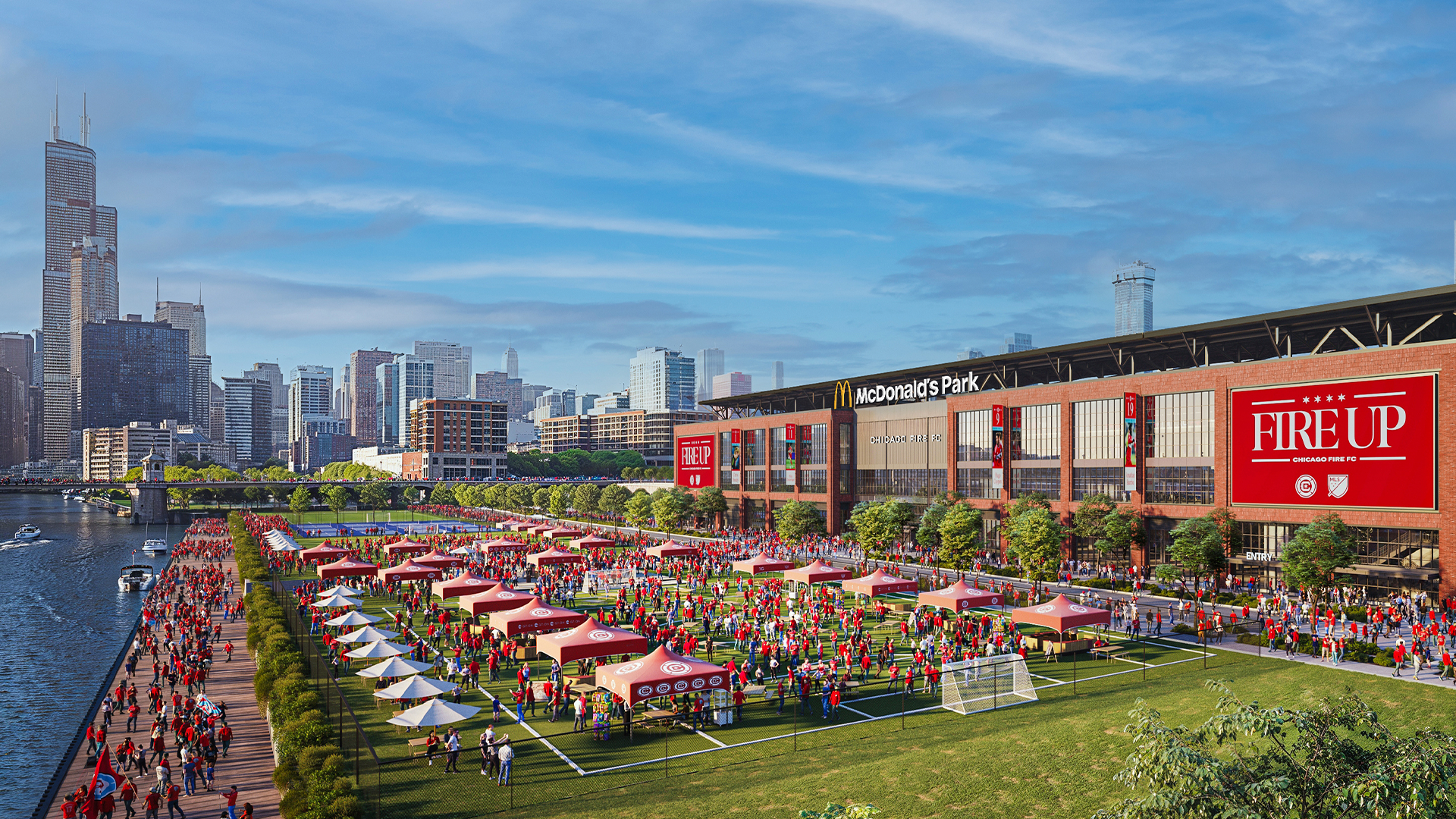
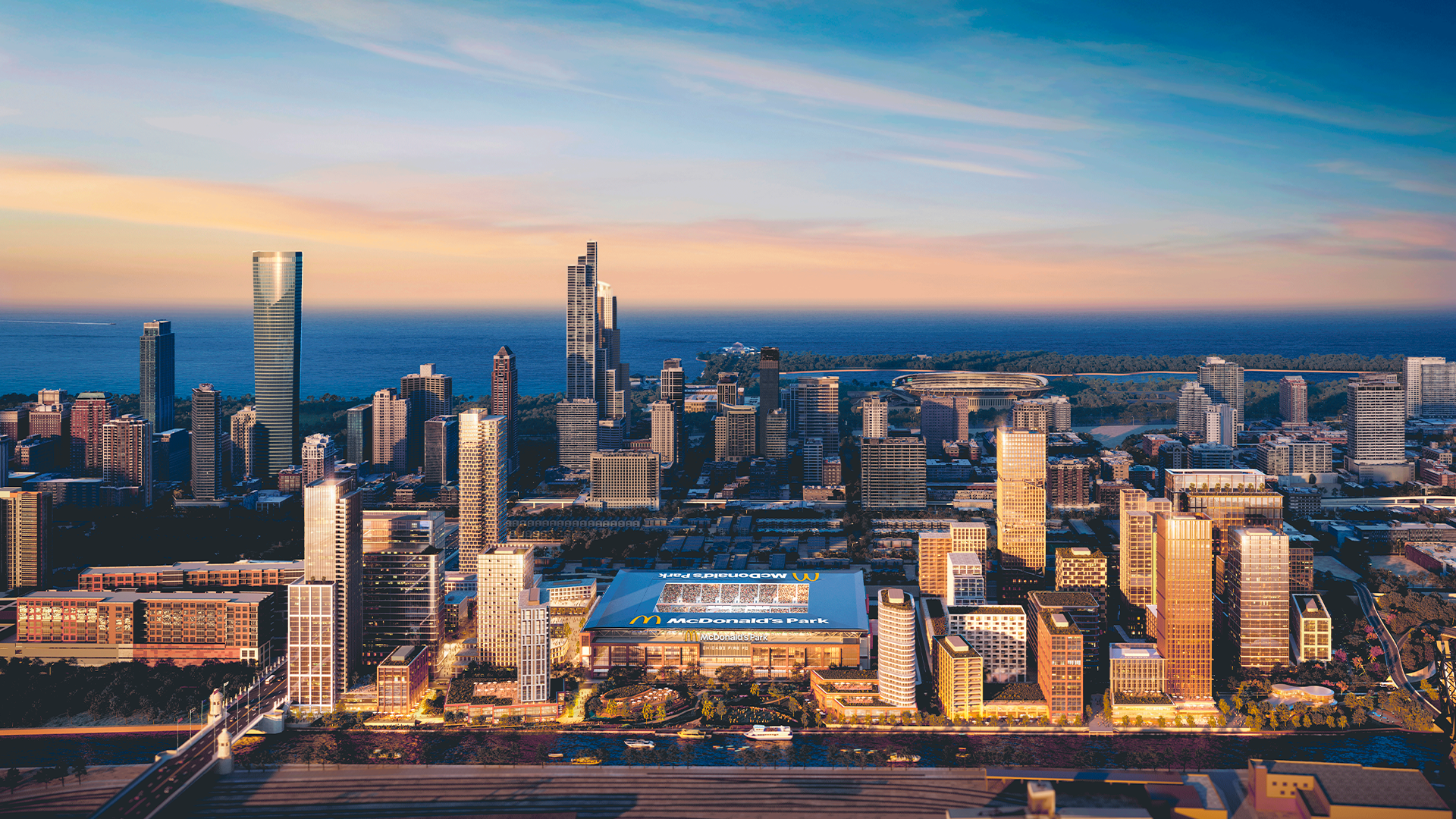
Located at The 78 in the South Loop, the planned 22,000-seat venue is expected to open ahead of the 2028 MLS season. Mansueto is financing the $750 million stadium construction privately. Designed by Gensler, the venue will include a natural grass pitch, a dedicated supporters’ section and premium hospitality. Its riverfront setting places the club within a wider development, with plans for public spaces and activity beyond matchdays.
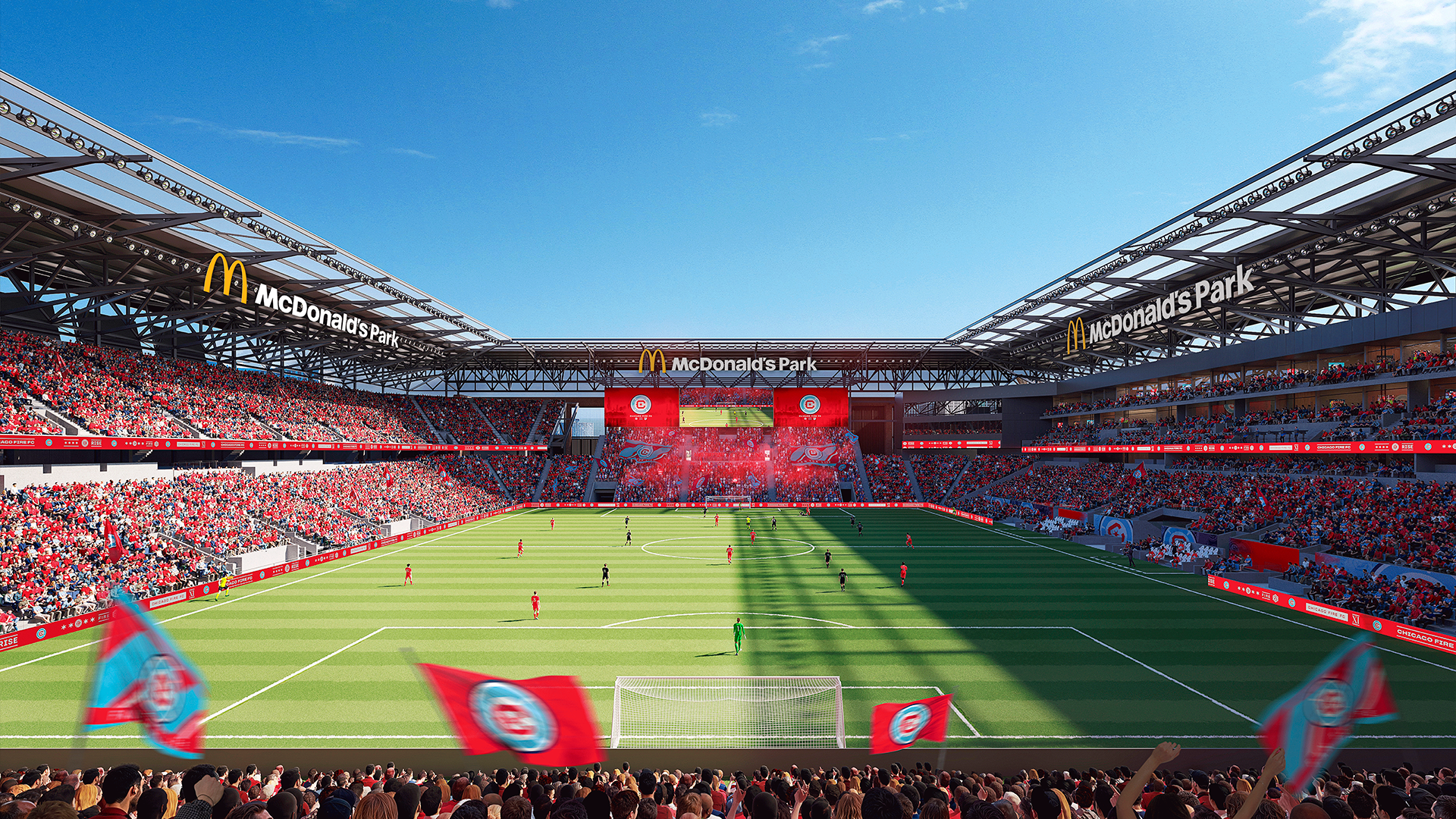
The latest plans also highlight the scale of the stadium’s premium hospitality offering. Chicago Fire has unveiled luxury seating options designed to compete with the leading experiences available across MLS and Chicago’s professional sports landscape. The range reinforces the club’s ambition to create more than a matchday venue, with hospitality designed to appeal to corporate partners, premium ticket holders and supporters seeking a different way to experience the game. Visit the website for latest stadium updates: https://www.chicagofirefc.com/news/chicago-fire-fc-sets-a-new-standard-for-luxury-sports-hospitality-at-mcdonald-s-park
The McDonald’s naming partnership, announced in May 2026, brings another business with deep Chicago roots into the project. It is the company’s first naming-rights agreement for a major professional sports stadium in the United States.
The McDonald’s agreement is part of a broader commercial expansion. Corporate partnership revenue has increased fourfold since 2023, giving the club a significantly larger commercial platform as it approaches the opening of its new stadium. The partnership also includes a planned expansion of the Fire Foundation’s school-based P.L.A.Y.S. program, from 70 schools to more than 280 over the life of the agreement.
Separately, the training center and stadium account for $850 million in stated facility costs. The club says Mansueto has committed more than $1 billion toward its transformation since taking full ownership, including additional sporting and organizational investment.
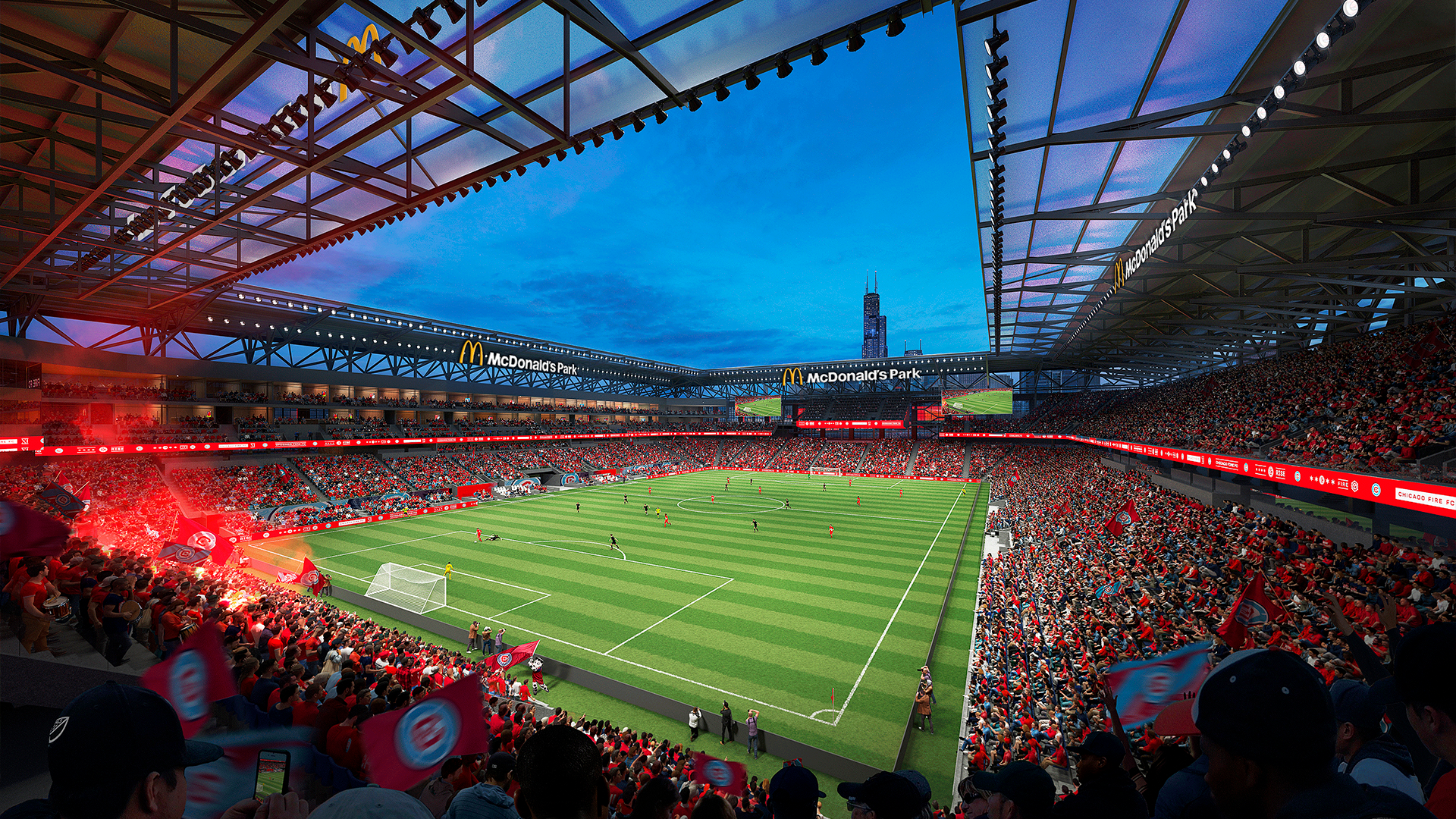
For supporters, the new stadium offers a permanent home designed around football. The demand is already there: the 2026 season will mark Chicago Fire’s fourth consecutive record-attendance season, while the club’s average attendance ranks third among all Chicago professional sports teams. For the organization, that growing support creates opportunities to develop matchday revenues, hospitality and relationships with commercial partners. Its long-term value will depend on the team and experience the club builds around it.
Lugano Gives the Vision a European Dimension
Mansueto acquired FC Lugano in August 2021, adding a Swiss Super League club to his football interests. At the time, he described opportunities for the two clubs to share expertise and move players between them where regulations permitted.
Lugano delivered an early sporting achievement under his ownership. In May 2022, it defeated St. Gallen 4–1 to win the Swiss Cup, its first victory in the competition since 1993.
One of the goalscorers was Maren Haile-Selassie, whose subsequent career illustrates the connection between the clubs. Chicago brought him from Lugano on loan for the 2023 season and later exercised its purchase option. Defender Allan Arigoni also moved from Lugano to Chicago on loan for 2024. Those transactions give the relationship an operating purpose. The ownership network provides another route through the player market, with opportunities to assess footballers already known to staff at the partner club.
Each move still needs to suit the player and the receiving team. Chicago and Lugano compete under different rules and must serve their own sporting objectives and supporters.
Their connection nevertheless broadens the resources available to both organizations and creates opportunities to exchange knowledge about recruitment, development and club operations.
A New Stadium in Switzerland as Well
Lugano’s infrastructure story is now substantial in its own right.
The AIL Arena became its new home for the 2026–27 season, following 75 years at the old Cornaredo stadium. The city lists capacity at 8,093 for UEFA matches and up to 8,793 for domestic fixtures with standing areas. The stadium is certified to UEFA Category 4 standards and includes stands close to the pitch and dedicated hospitality spaces. It forms part of Lugano’s wider Polo sportivo e degli eventi redevelopment, which combines sports infrastructure, public space and an urban park.
That creates a parallel with Chicago: a football venue serving as an important part of a larger urban development. The delivery model is different. The AIL Arena is owned by the City of Lugano and operated by FC Lugano. The club’s published figures identify CHF 100 million in costs covered by the city and CHF 18.4 million by F.C. Lugano SA.
The arena also includes a stitched hybrid grass pitch, modern hospitality areas and digital systems supporting the matchday experience.
The training environment is developing too. Lugano and the neighboring municipality of Canobbio officially inaugurated the new Centro sportivo al Maglio on September 19, 2026. The municipalities describe a facility designed for local sports clubs and youth development, while FC Lugano’s reporting identifies renovated pitches and a dedicated gym available to its under-21 team. Across both cities, the common thread is stronger infrastructure around the football operation. The facilities differ in scale and purpose, but they create better conditions for preparation, development and the experience of supporting the clubs.
An Investment That Strengthens MLS
The benefits of Chicago’s transformation extend beyond the city.
Clubs that invest in training environments, player development, sporting expertise and dedicated stadiums help strengthen MLS as a whole. Those commitments can make the league more attractive to players and commercial partners while giving supporters more reasons to engage with it. Under Mansueto, Chicago are contributing to that growth. The investment creates opportunities for local talent, brings internationally recognized players into the competition and establishes infrastructure intended to serve the club for years.
MLS’s long-term development depends on individual clubs building that depth. Expanding a league’s audience is easier when the football organizations within it provide compelling teams, strong player pathways and places supporters want to visit.
Chicago’s contribution can therefore be understood at two levels: strengthening its position as a football city and helping expand the quality and appeal of the wider competition.
Building for Lasting Success
The Premier League comparison describes Chicago’s ambition and approach to infrastructure. MLS has its own rules and economics, and the Fire must prove themselves within that environment. What Mansueto is assembling has the characteristics of a substantial football institution: a shared training campus, clear sporting leadership, a development pathway, international connections and a dedicated home.
His personal involvement gives those investments another dimension. The owner taking meetings at the preseason hotel is the same person committing capital to facilities designed to serve future generations of players. The next test is whether the different parts of the project reinforce one another. Recruitment needs to serve the team’s playing identity. Young players need meaningful opportunities. The training environment needs to support consistent preparation. The stadium needs a team that gives supporters reasons to return. Chicago’s current playoff position offers evidence of progress. The ambition is to sustain it through the opening of McDonald’s Park and the seasons beyond.

Mansueto has provided the resources and commitment for that work. The opportunity now is to build a Chicago Fire whose results, daily standards and relationship with its city match the scale of his vision.
What Mansueto is assembling has the characteristics of a substantial football institution: a shared training campus, clear sporting leadership, a development pathway, international connections and a dedicated home.
Perhaps the next glimpse of this project will come at the Coachella Valley Invitational in February: Joe Mansueto spending time with players and staff, then sitting down with the supporters who have travelled to watch their team.
It would be a fitting picture of what he is building in Chicago: a club whose owner invests in its people as much as its future. Because ultimately, that is what makes this project interesting. The stadium will be made of steel and concrete. The training center will be filled with pitches, equipment and technology. The balance sheets will record the investment.
But football clubs are not remembered for buildings alone. They are remembered for what happens inside them.
And in Chicago, the work of building that story is well underway.