

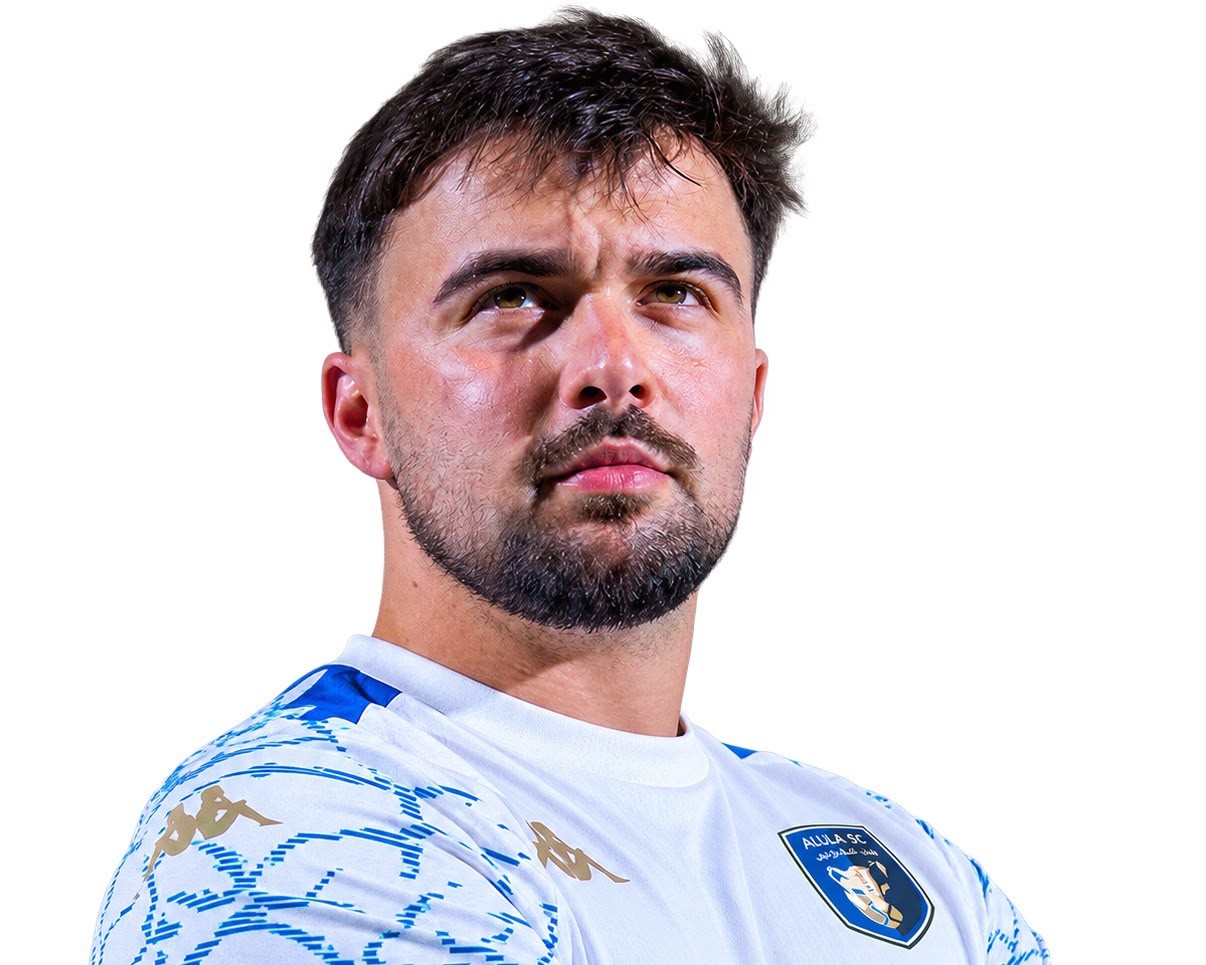
Profile
Role: Portuguese Football Coach
Specialisation: Coaching, Tactical Analysis, Scouting and Technical Coordination
Experience: Portugal, Camps in Poland, Remote Work in Indonesia and Coaching in Saudi Arabia
Focus Areas: Women’s Football, Youth Development, Tactical Development, Communication and Continuous Learning
Modern football increasingly rewards coaches who can connect different disciplines rather than operate within a single role. For Armando Costa, experience across coaching, tactical analysis, scouting and technical coordination has shaped a philosophy built around one principle: information only creates value when it improves people, decisions and performance.
Introduction
Armando Costa is a Portuguese football coach with experience across women’s football, youth development, tactical analysis, scouting and technical coordination. His career has taken him through different football environments and cultures, including work connected to Portugal, Poland, Indonesia and, most recently, Saudi Arabia. With an academic background in sports training and a strong focus on tactical development, Costa approaches coaching through continuous learning, collaboration and adaptability. In this interview, he discusses high performance environments, the relationship between analysis and coaching, player development, the evolution of women’s football and why the human side of the game remains fundamental.
Key Insights
- Coaching, analysis, scouting and technical coordination should work together to improve decisions and performance.
- Consistent player development depends on discipline, curiosity, resilience and openness to feedback.
- Technology can support coaching decisions, while leadership, communication and relationships remain fundamental.
Our Exclusive Interview with Armando Costa
Throughout your career, you have combined roles in coaching, tactical analysis, scouting and technical coordination. How has working across these different disciplines shaped the way you see modern football?
Working across these different areas has taught me that football has to be viewed as a whole. Coaching, analysis, scouting and technical coordination are not separate worlds. They should complement each other.
My experience has made me more attentive to detail, but at the same time, I have learned not to lose sight of the bigger picture. Analysis should help us understand the game, scouting should help us make better decisions, and coaching should turn those decisions into actions on the pitch.
For me, modern football is about connecting information with people and, ultimately, with performance.
You have spent most of your career in women’s football while also working in men’s academies. What lessons have you taken from both environments, and where do you believe each can still learn from the other?
Both environments have taught me a lot. Working in men’s academies gave me a strong understanding of player development, competition and the importance of building good habits from an early age. Women’s football, on the other hand, has taught me a great deal about communication, adaptability and understanding the individual behind the player.
I do not think the two environments should be compared simply in terms of which is better. There are valuable lessons on both sides.
Working across these different areas has taught me that football has to be viewed as a whole.
The most important lesson for me has been that coaching has to adapt to the players, rather than expecting every player to adapt to the same coaching approach.
As an assistant coach, tactical analyst and scout, you are constantly balancing detail with the bigger picture. How do you ensure that analysis actually improves performance rather than simply creating more information?
I always ask a simple question: “What are we going to do with this information?”
If an analysis does not lead to a decision, a training objective, a tactical adjustment or a clearer understanding of the opponent, then it probably does not need to be there.
The role of an analyst is not to show everything they have found. It is to identify what matters most and communicate it clearly to the coaching staff and the players.
Information is valuable, but information only becomes useful when it changes behaviour.
You have worked with players across different age groups, from youth development to senior football. In your experience, what separates talented players from those who eventually become consistent professionals?
Talent can open the door, but consistency is what keeps you there.
The players who develop into professionals are usually the ones who combine ability with discipline, curiosity, resilience and a willingness to improve every day. They understand that development is not always linear and that difficult periods are part of the process.
I also believe that the ability to receive feedback is extremely important. The best players are not necessarily the ones who know everything. They are often the ones who are willing to learn the most.
Portuguese football has developed a strong reputation for producing intelligent coaches and technically gifted players. What do you believe makes Portuguese coach education so distinctive, and how has it influenced your own methodology?
Portuguese football has a strong culture of tactical thinking. From coach education to the way football is discussed and analysed, there is a strong emphasis on understanding the game rather than simply teaching isolated techniques.
For me, that has been very influential. My methodology has been shaped by the idea that training should have a clear connection to the demands of the game.
At the same time, I believe education should never stop at the qualification itself. Courses give you a foundation, but your methodology continues to evolve through experience, observation, conversations with other coaches and constant learning.
Modern football demands close collaboration between coaches, analysts, recruitment staff and performance departments. From your perspective, what does an effective high performance environment look like behind the scenes?
For me, an effective high performance environment starts with a common vision.
Every department can have different responsibilities, but everyone needs to understand the same football objectives. Communication and trust are essential because the quality of the environment depends on how well people work together.
I also believe that hierarchy should not prevent good ideas from being shared. The best environments are ones where people can challenge each other respectfully, discuss different perspectives and ultimately make better decisions for the team.
For me, an effective high performance environment starts with a common vision.
Behind every good performance on the pitch, there is usually a lot of collaborative work that the public never sees.
You have experienced football in Portugal, Indonesia and Poland while working with different cultures and coaching environments. How have those international experiences challenged your own ideas about leadership and communication?
Working in different countries has taught me that there is no single formula for leadership.
My time in Poland was limited to camps, my work in Indonesia was remote, and I am now living and coaching in Saudi Arabia. For me, the key is to remain yourself while adapting to the context and culture.
The principles can remain the same: clarity, honesty, respect and accountability. But the way you communicate them sometimes has to change. Cultural differences can influence how players receive feedback, interact with staff and respond to authority.
Creating an environment where people feel at home is very important to me. When people feel comfortable and connected, they are more likely to perform at their best. That is a key principle in how I build relationships with others.
Alongside your coaching career, you have continued investing in education through sports science, talent identification and performance analysis. How important is continuous learning for coaches in today’s game, and where do you see the profession evolving over the next decade?
I think continuous learning is essential because football never stops evolving.
A coach who stops learning can very quickly become limited by the ideas that worked in the past. Today, we have access to more information, technology and scientific knowledge than ever before, but I believe the challenge is knowing how to use it intelligently.
Over the next decade, I expect football to become even more integrated between tactical coaching, data, sports science and technology. However, I do not think technology will replace the coach. It will give coaches better tools to make decisions.
The human side of coaching, including leadership, communication and relationships, will remain fundamental.
Women’s football is becoming increasingly tactical and data driven. Looking ahead, which areas of the game do you believe will evolve the fastest, and where do clubs still have the greatest opportunity to improve?
I believe tactical analysis, data integration, physical performance and recruitment will continue to evolve very quickly.
However, I also think there is still a significant opportunity for clubs to improve the structures surrounding player development. Better integration between the academy, first team, recruitment, analysis and performance departments can create a much clearer development pathway.
Women’s football is growing rapidly, and that creates an exciting opportunity to build strong professional structures rather than simply copying models from the past.
I believe tactical analysis, data integration, physical performance and recruitment will continue to evolve very quickly.
The next stage, in my opinion, is not only about having more resources. It is about using those resources more intelligently.
Looking back at your journey so far, what kind of coach do you hope people describe you as ten years from now, both professionally and personally?
Professionally, I would like to be described as a coach who understands the game, develops people and contributes positively to every environment he works in.
I want to continue learning, working with ambitious teams and challenging myself in different football environments. But I do not want my identity to be defined only by titles or positions.
Personally, I would like players and colleagues to remember me as someone who was demanding but fair, who cared about people and who always tried to help others become better.
If, ten years from now, people say that I made the people around me better, as players, coaches and professionals, I will feel that I have done something meaningful.
FAQ
Who is Armando Costa?
Armando Costa is a Portuguese football coach with experience in women’s football, youth development, tactical analysis, scouting and technical coordination.
What is Armando Costa’s coaching philosophy?
He connects information with practical decisions and performance, adapts coaching to individual players and prioritises communication, collaboration and continuous learning.
Where has Armando Costa worked in football?
His experience includes Portugal, camps in Poland, remote work in Indonesia and living and coaching in Saudi Arabia.