
Profile
Role: Assistant Coach, KV Mechelen
Specialisation: Coaching, Tactical Analysis and Dressing-Room Leadership
Experience: Professional Player, Anderlecht Youth Coach and Team Manager, Football Media, KV Kortrijk and KV Mechelen
Focus Areas: Player Development, Communication, Training, Accountability and Group Management
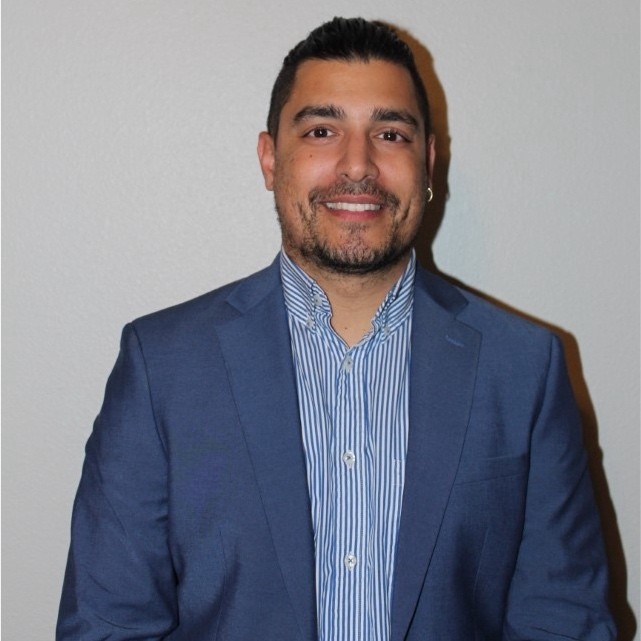
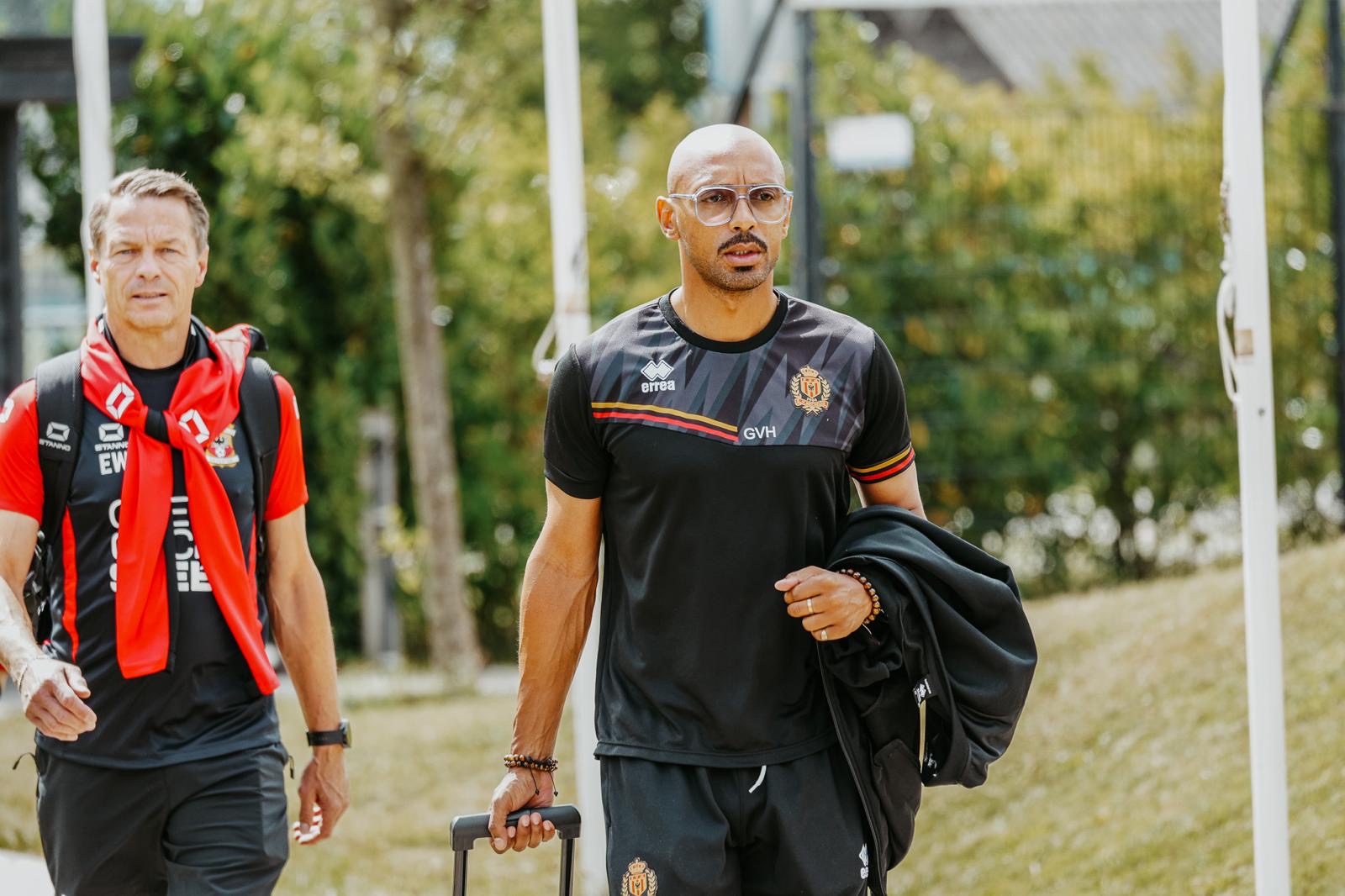
Gunter Van Handenhoven’s football education has taken him through almost every side of the game.
Born in Sint-Niklaas, Belgium, Van Handenhoven began his professional playing career with KV Mechelen before moving through clubs including Gent, French side FC Metz, La Louvière, Lokeren, Al-Ahli and Roeselare. He also represented Belgium at youth international level, including the 1997 FIFA World Youth Championship.
When injuries eventually brought his playing career to an end in 2009, Van Handenhoven did not leave football behind. Instead, he deliberately moved toward coaching, joining Anderlecht’s youth setup and taking charge of the club’s U16s. Even then, his motivation was rooted in passing on what he had learned as a professional player.
That first coaching experience soon opened another door. In 2012, Van Handenhoven became team manager of Anderlecht’s first team, a position he held for seven seasons. It placed him at the center of one of Belgium’s biggest clubs, working alongside players, coaches and management while experiencing domestic title-winning campaigns, Super Cups and European football.
Gunter Van Handenhoven’s football education has taken him through almost every side of the game.
For Van Handenhoven, however, the role was more than an organizational position. It became an education in what happens inside a professional dressing room: how different personalities and cultures come together, how coaches communicate their ideas, how players respond to pressure and what separates preparation at the highest level. It was also during this period that he developed a personal approach to leadership that remains central to his thinking today.
After Anderlecht, he spent time working in football media, including as a sideline reporter and analyst, giving him yet another perspective on the game. Rather than simply watching football, he began examining it tactically studying opponents, identifying weaknesses and looking at how teams could exploit them.
In 2021, Van Handenhoven returned to the technical side of the game, joining KV Kortrijk as assistant coach to Karim Belhocine. The move was a significant next step: after years of experiencing football from different angles, he was now putting those experiences together on the training ground.
A year later, he returned to KV Mechelen where he had begun his senior playing career, this time as an assistant coach. He has remained part of the club’s first-team staff, working under several head coaches and continuing to develop his coaching philosophy. Today, Van Handenhoven sees his current role as the point where everything he has learned finally comes together: the instincts of a former player, the development mindset of a youth coach, the organizational and human experience of a team manager, and the tactical eye developed through media and analysis.
But there is another step he still wants to take.
Van Handenhoven is not shy about his ambition to become a head coach. And when he describes what he would bring to that role, he does not begin with formations or tactics. He begins with people.
For him, football has always been about understanding the human being before the footballer, creating an environment where players are allowed to make mistakes while remaining accountable, and building a group capable of giving everything for one another.
His career has given him a rare view of the game from almost every angle. Now, he wants to bring all of those perspectives together from the front of the dressing room.
Key Insights
- Playing, coaching, team management and media experience have shaped Van Handenhoven’s approach to football.
- His leadership focuses on understanding people, inspiring progress and helping players clarify their goals.
- His ambition as a head coach combines a safe environment for mistakes with responsibility, accountability and consistent effort.
Exclusive Interview:
Our Exclusive Interview with Gunter Van Handenhoven
If you had about 60 seconds to tell the world who you are, what would that sound like?
I was born and raised in Belgium, coming from a mixed culture which I’m proud of. I’m a dedicated person, and I have a lot of passion for everything that I do professionally and personally. I have a lot of respect for people who are trying things in their lives even if they don’t succeed at first. I’ll end with this; Ultimately, my goal in life is to be happy, which for me is the equivalent of being successful.
You’ve experienced football from many different perspectives. You were a professional player, youth coach, team manager, TV analyst, and now an assistant coach. Of all those roles, which changed the way you understand football the most?
I think being an assistant coach over the last few years has taught me the most because you look at the game differently.
As a player, you execute. But from a very young age in my professional career, I wanted to understand what I was doing on the pitch. You come into training, you get an exercise, a passing game, a possession game or whatever it might be, and in the beginning of your career, you don’t really think about it. But I wanted to understand why we were doing that passing game or possession exercise. I wanted to understand my role on a football pitch.
Later, when I became a youth coach, I wanted to understand the best way to communicate an idea as a coach so that a team could execute it on the pitch.
Then, as team manager at Anderlecht, I had the opportunity to experience Champions League and Europa League football at the highest level. I wanted to see whether things were different from what I had experienced as a youth coach or professional player. How do players approach it? How does a coach communicate? How does he manage a group? How does he prepare a team for the highest level? Is it different from what coaches do in Belgium, or is it the same?
As an interviewer and analyst, I was also looking at games tactically. What does the opponent do? How do you organize your team to take advantage of the flaws in their organization?
Then, as an assistant coach, I had to put all those things together. You have to think about training sessions, work with the head coach on the philosophy and tactics for a particular game, and understand how to play against an opponent in a 4-4-2, 4-3-3 or with three at the back.
You have to understand how they build up, what spaces they leave, and what you can do to take advantage of those spaces. If you want your wing-back to come inside, for example, and your midfield player to run outside, how do you create those position switches and counter-movements in training? How do you bring those ideas to the players, help them retain them and then use them in actual games?
My current role has taught me the most about football because I can put everything I’ve learned before together.
You spent about seven seasons as Anderlecht’s team manager during a period when the club won several league titles and Super Cups. From inside the building, what actually made that environment successful?
I took the role of team manager because I wanted to see what was going on inside a professional dressing room at that level.
There were multiple reasons why Anderlecht was successful during that period. First, it was the biggest club financially in Belgium, so they could buy the best players in Belgium.
They also had a real football philosophy, a little bit like Ajax. It was based around youth development. We were much smaller, but we had similar ideas. A lot of players could come through into the first team, but they were surrounded by quality and experienced players.
We dominated Belgian football during that period.
Anderlecht was also one of the first clubs to renew its training facilities. That allowed us to attract more players. They invested in training facilities and medical staff many years ago, at a time when a lot of other clubs had not yet made those investments.
As a team manager, you were often positioned between the players, coaches, management and almost everyone else around the team. Did being in that position change your understanding of leadership, and did that experience influence the way you now operate as an assistant coach?
think I already had that kind of leadership in me as a player. I was a captain, and I always liked to inspire people and lead by example.
That’s one of the most important reasons why I like to coach, not just coach in football, but coach in life.
Especially in a dressing room, you get a visual representation of society in general. It’s a mixture of cultures, backgrounds and religions. It’s the same thing as society, just smaller and more intense.
It’s not because someone is making $500,000 a year that they came from a rich family. Some guys came from nothing, some from the middle class, and others from more privileged backgrounds. But we’re all moving through society, trying to inspire people to get better every day and leading a group of people toward a similar goal.
That’s what I love to do.
At Anderlecht, a lot of the coaches I worked with as team manager gave me the freedom to manage the dressing room. It wasn’t just about organizing apartments, cars, insurance or training camps. They gave me the freedom to actually manage the dressing room.
It’s the same thing as society, just smaller and more intense.
That was a big advantage because there were big names in that dressing room. That experience gave me the conviction that I could do it anywhere, even outside of football.
I developed my own way of trying to inspire people to move further in their lives and careers. I always started with three questions.
- Who am I? Try to figure out who you are. What are your weaknesses and strengths? What’s your character? How do you respond to certain things? What are your emotions?
- What do I want to achieve in life? What are your goals?
- And the third one, which is the most important: What are you willing to do to achieve those goals?
That’s the journey I try to take with players who are willing to do it. Not everybody wants to, and not everybody is open to it. But especially with younger players, I try to help them figure these things out and become more realistic about what they’re doing.
Football comes with highs and lows, and sometimes those moments can teach you about yourself. You faced many injuries during your playing career. What did those moments teach you about yourself and about the journey?
I ended my career at 31. What those injuries taught me is that I really love this game.
I struggled with injuries from a very young age. At the beginning of my career, when I was around 18 or 19, I had my first serious injury and had to undergo surgery. Over the course of my career, I had around eight surgeries on my knees.
Eventually, I had to stop because I couldn’t run anymore without pain. But what it taught me was that I really loved football.
Every time, I did everything I could to come back. Sometimes it was difficult mentally because you had to start over again and again, and the injuries were always long.
But I always had the passion to get back on the field. Every time I put on my boots, I wanted to be there. Everything we did, even the simplest passing drill, I wanted to be good at.
The injuries made me quit because I couldn’t do it anymore. My body didn’t want to follow me anymore. But there was no frustration afterward because I had given everything.
The most important thing my injuries taught me is that I genuinely love the game of football.
If you could sit down with the 20-year-old Gunter Van Handenhoven, the young player just entering professional football, what would you tell him about success, failure and what actually matters in a football career?
I never thought about success when I was playing. Never. I never thought about money either. Of course, there were negotiations and things you wanted, but money didn’t interest me.
The most important thing was that I wanted to feel good about what I was doing on a daily basis. And I found that within football.
Failure is something we all experience in whatever we do. But it never stopped me from continuing, moving forward or trying again. Sometimes in life, you hit a wall or don’t succeed at what you want to do.
But I never quit.
I wanted to be good at something, and I think, in the end, I was good at playing football because I worked for it and because I had talent.
The biggest failure in my career was probably the fact that I had so many injuries. But they never made me negative toward what I was doing because I loved it.
What my career taught me is that people need to find their passion. If you don’t do something with passion, go and find it. Find the thing you really, really want to do.
That’s what my career taught me, and that’s what I want to transmit to other people. We only have one life, and you need to find your passion.
You’re currently an assistant coach, but your ambition is to become a head coach. What does Gunter Van Handenhoven bring to the table as a head coach? What would that look like?
First of all, I think I’m human. When I work with people, I first see the human being, and then I see the football player.
Second, as a head coach, I think it’s very important that you create a sanctuary, a safe environment where everybody can make mistakes.
But that sanctuary has to come with strict rules. You get responsibility, but you also get accountability.
I think I would be the type of head coach whose strength is bringing daily inspiration and passion to a group of players.
When I work with people, I first see the human being, and then I see the football player.
I can talk to you about how I would manage training sessions, what I would do in training, how I would play tactically, or whatever it might be. But with all the experience I have, I think the most important characteristic of a good head coach is managing a group of players so that, at the end of the day, when it’s game time on Saturday or Sunday, they can run through a wall.
That’s what I miss in most teams where I’ve worked: the daily passion, the consistency and the work rate. Doing it over and over and over again.
That’s what I think I would be able to bring to the table.
Rapid Fire
Coffee or tea?
Gunter Van Handenhoven: Tea. I’ve never drunk coffee in my life. Ever.
City life or countryside?
Gunter Van Handenhoven: City life.
Talent or mentality?
Gunter Van Handenhoven: Mentality. By far.
Beach or mountains?
Gunter Van Handenhoven: The beach. You will never see me in the mountains. Maybe on a bike, because I like to cycle. But I would never go on a hiking vacation.
Sunrise or sunset?
Gunter Van Handenhoven: Sunset. Because it’s romantic.
Summer or winter?
Gunter Van Handenhoven: Summer. I’m fighting the cold. Winter isn’t for me.
Early bird or night owl?
Gunter Van Handenhoven: Both, but I do wake up at six every day. But I can go to bed at 11 or 12, midnight, 1 or 2 in the morning, depending on what we’re doing, and still get up at six.
Plan everything or go with the flow?
Gunter Van Handenhoven: Go with the flow.
Dinner out or cooking at home?
Gunter Van Handenhoven: Dinner out.
Road trip or flying somewhere?
Gunter Van Handenhoven: Road trip. Especially as I am aging.
Call or text?
Gunter Van Handenhoven: It depends. I’m more of a texting person, but with the people I’m close to, I’d say calling.
Win ugly or lose beautifully?
Gunter Van Handenhoven: That’s a difficult one. I know it’s all about winning in life and in the game, but… lose beautifully. I want to do things the right way, but don’t get it twisted I want to win!
Books or movies?
Gunter Van Handenhoven: More movies than books.
Five-star hotel or tent under the stars?
Gunter Van Handenhoven: Tent under the stars. I don’t really care about five-star hotels. I’m not very luxury-minded.
FAQ
Who is Gunter Van Handenhoven?
Gunter Van Handenhoven is a Belgian former professional footballer whose career has included youth coaching, team management, football media and assistant coaching.
What is Gunter Van Handenhoven’s role at KV Mechelen?
He works as an assistant coach, drawing on his playing experience, youth development work, dressing-room leadership and tactical analysis.
What is Gunter Van Handenhoven’s coaching philosophy?
He prioritises understanding the person before the player, creating a safe environment for mistakes and combining responsibility with accountability, passion and consistent effort.