
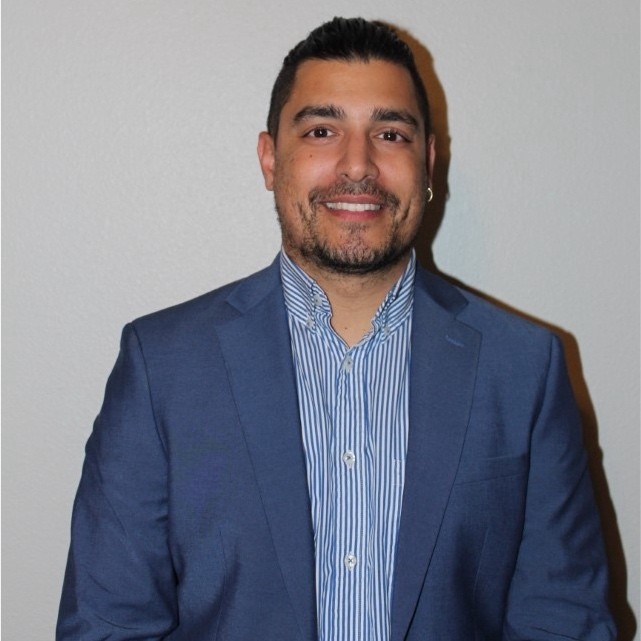
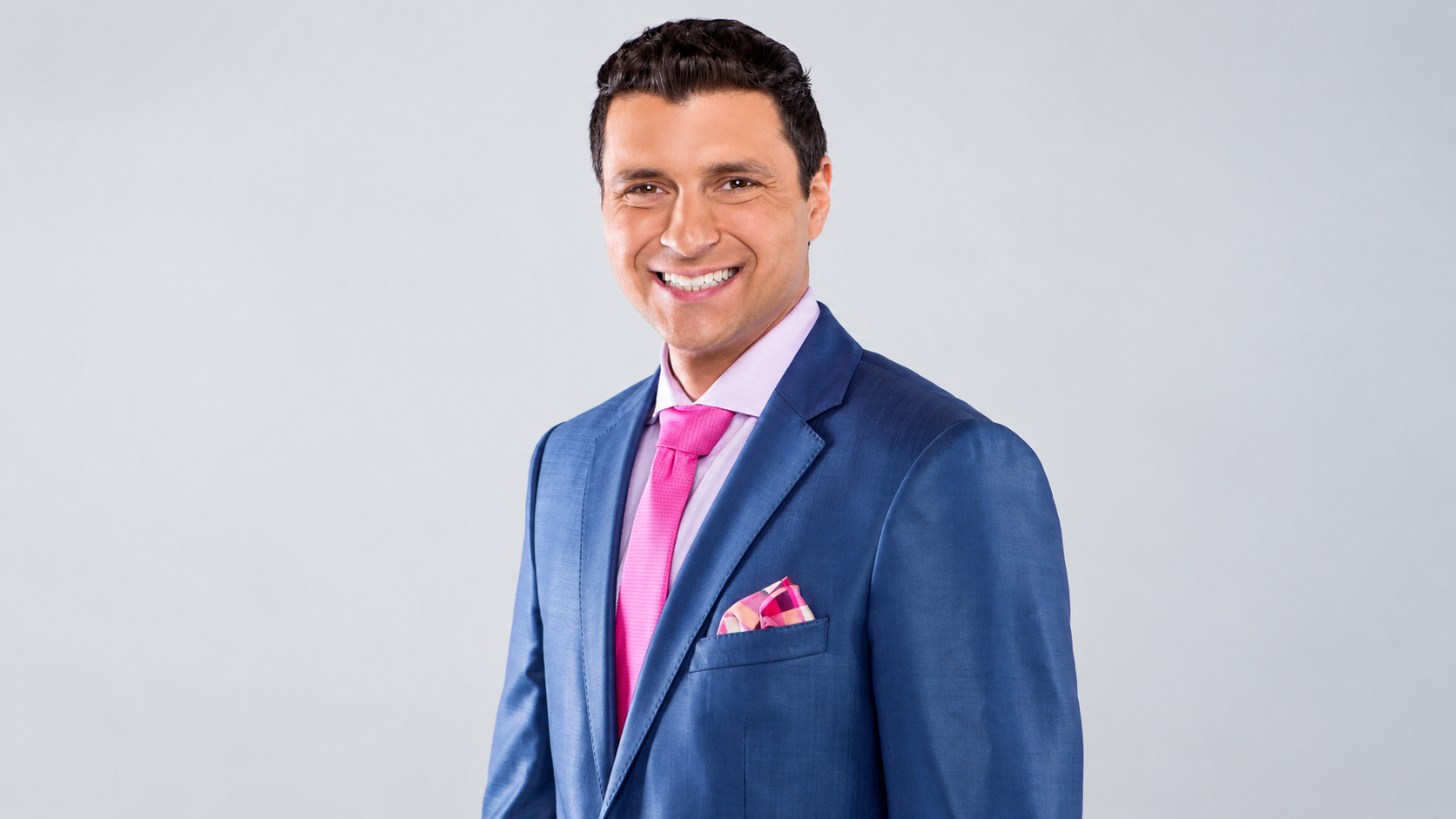
Profile
Role: Sports Broadcaster and Event Host
Specialisation: Sports Broadcasting, Interviewing, Commentary and Digital Media
Experience: Canadian Sports Media, WWE, ESPN, MSG Networks and TRT World
Focus Areas: Soccer, Hockey, Esports, Boxing, Wrestling and Supporting Others in Sports Media
Introduction
For more than two decades, Arda Öcal has built a career by saying yes to opportunities that may seem small to others, but for him every opportunity meant a learning experience, a lesson, a battle scar or simply a good reason to learn new things. Born and raised in Canada to Turkish parents, Öcal studied Mathematics and Business Administration at the University of Waterloo, but his curiosity kept pulling him toward a different world. What began with student radio and public-access television eventually became a career spanning sports broadcasting, television, wrestling and digital media. He worked his way through Canadian sports media before becoming a familiar face in professional wrestling, including a stint with WWE under the name Kyle Edwards, and later expanding his work across hockey, esports, boxing and soccer. In 2016, he joined ESPN, where over the following decade he became part of the network’s broad sports coverage, while also working with outlets including MSG Networks and TRT World.
But Öcal’s story is about more than the platforms and the jobs. A lifelong sports fan with a deep connection to his Turkish heritage, he has increasingly found himself drawn to soccer, including his role as the Turkish soccer analyst for ESPN’s Euro 2020 coverage. After roughly a decade at ESPN, he entered a new chapter in 2026, stepping away from the network and taking time to reconsider what comes next. In our conversation, Öcal talks openly about ambition, family, identity, the pressures of building a career in front of the camera, and the importance of helping others along the way. His philosophy is simple: leave people better than you found them. And after a career built on constantly chasing the next opportunity, he is now asking a different question, not simply what comes next, but what actually makes him happy.
Key Insights
- Curiosity, volunteering and accepting varied opportunities helped Öcal develop transferable broadcasting skills.
- Family and embracing his identity have reshaped his priorities and definition of success.
- Supporting others means actively advocating for them and helping open doors.
Our Exclusive Interview with Arda Öcal
If you had 60 seconds to tell the world who Arda Öcal is, not the résumé, not the job titles, but the person, what would you say?
I’m a guy who loves his kids. I’ve been super ambitious throughout my career, although I’m in a very different season of life now. I love sports, I love soccer, I love travel and I love life.
More than anything, I’m someone who wants to leave people better than when I found them, and actually do it. Some people say that, but I pride myself on being very solutions-oriented. My mindset is always, “Let’s figure out how to level you up. Let’s figure out how to make things better.” A rising tide floats all boats. That’s my vibe: good vibes, acts of kindness, and trying to put that out into the universe every single day. Some days are more challenging than others, of course, but it’s a daily effort.
You’ve spent a huge part of your life in front of cameras, microphones and audiences. When all of that disappears, who is Arda, the husband, father, friend and son, underneath the broadcaster?
I’ve actually had the opportunity to experience that this summer. I left ESPN after 10 years, and I spent the entire summer away from work, traveling a lot with my family and spending a lot of time looking inward and thinking about what I want to do with my life, who I am and where I am in my life. If this had happened 10 or 20 years ago, my mindset would have been very different. A similar thing happened when I left WWE about 10 years ago. Back then, I was still hyper-ambitious. I wanted to prove something in my career, make it somewhere else and prove the doubters wrong.
Kids change your life in the best possible ways, but they also change your priorities. I don’t have that same level of drive and ambition anymore, it’s just directed differently. My drive to be known as a success is far less important to me, but my desire to contribute to my kids’ education accounts is a lot higher.
When the cameras are off, I care deeply about putting my kids in the best position to succeed. At the same time, I’m revisiting what actually makes me happy. There was a time when the side quests, the one-off events, fun opportunities and side gigs, were actually more fun than the jobs I had.
I wonder if I continue pursuing those things. Do I continue looking for opportunities in soccer? One of the best opportunities I ever had was being the Turkish soccer analyst for ESPN’s Euro 2020 coverage. Sitting at the desk before the Türkiye national team games, hosting the pre-shows and the post-game shows, that was a thrill.
Kids change your life in the best possible ways, but they also change your priorities.
Do I pursue that again? Do I continue in broadcasting at all? Those are questions I’m genuinely giving some thought to. But I also feel more at peace with who I am as a person. There were days when I was embarrassed to show certain parts of myself. You can see my background (in the room), I’ve built a full arcade. There was a time when I was worried that showing that side of me might hurt my public image. Now I just don’t care. I embrace the nerdiness. I love collecting things. I love video games. I love nostalgia. I’m not shying away from the things that make me who I am anymore.
I even talked about this in a TED Talk a few years ago. When I was breaking into the industry, I actually considered changing my name to Adam because I thought Adam might get more auditions than Arda. I worried someone might see “Arda” on a résumé or hear it in the first two seconds of a demo reel and think, “What kind of name is that?” and move on.
Through the years, and I give ESPN a lot of credit for this, I learned to embrace my identity. I was able to put the umlaut on the O, so Ocal became Öcal , and I was very appreciative of that. Today, I truly believe I’m the best version of myself. I’m also the most accepting of my quirks and the nerdy things I enjoy. Video games, collecting, nostalgia, all of it. So, yeah, in that regard, I’m at peace.
You’ve said that when you walk into a room, you want to leave people better off than when you found them. Where did that philosophy come from? Was there someone in your life who taught you that success isn’t only about what you accomplish, but about how people feel after dealing with you? I think it comes from multiple things.
A lot of people hear something like that and think there has to be a selfish reason behind it. And honestly, everything you do in life probably has some percentage of self-benefit attached to it. You hear about the “helper’s high” that good feeling you get when you help somebody. I’ve read books from very altruistic people who basically say, if that’s your primary motivation, you’re still doing good. If someone reading this decides to increase their charitable giving or their acts of kindness simply because they want that positive feeling that comes from helping someone, then do it. That’s one of the least negative ways you can be self-serving. But I think there’s more to it than that.
I believe in karma to a degree, but I don’t think karma is transactional. It’s not, “I did three nice things today, so tomorrow I expect three nice things to come back to me.” Karma often comes back in ways you don’t expect, or in ways you’re never prepared for.
So I believe you should do good simply for the sake of doing good, not because you’re waiting for something to come back to you. There’s another part of it that’s very personal to me. Growing up in Canada, I’m sure you experienced some version of this growing up in Belgium, but I didn’t have Turkish role models to look up to. Certainly not on television. There were very few Turkish or Muslim people for me to see and think, “That could be me.”
One of the greatest joys I have now is when people reach out and tell me, “I watched you on your show, and my son or daughter saw you and said, ‘Wow, I can do that one day.’”
I never had that example growing up. So, to be able to show somebody that it’s possible means a lot to me. And I hope they don’t just use me as a blueprint, I hope they use me as a starting point and then surpass me by a wide margin. That’s what I want for the next generation. It is possible. It takes a lot of work, but it is possible. I’m honestly humbled and honored to be part of a group of people who can inspire others to pursue their dreams, or maybe even begin dreaming in the first place.
Your career took a pretty unusual route, from mathematics and business at Waterloo, to a corporate job, then radio, television, wrestling, WWE and eventually ESPN. Looking back, when did you stop thinking, “I’m trying to get into sports,” and start realizing, “This is actually who I am”?
Growing up, I never had this dream. I didn’t have the inspiration for it. I thought it was a cool job. Growing up in Canada, watching Hockey Night in Canada, there was a host named Ron MacLean. He’s still doing it today and is a legend in Canadian broadcasting. I thought he had the coolest job.
I also loved professional wrestling. I watched people like Mean Gene Okerlund and thought, “Wow, he’s interviewing these larger-than-life wrestlers. That’s such a cool job.”
I always loved the people talking about the games. I never thought I was going to be an athlete. I played sports and loved them, but I always thought the people holding the microphone had the coolest jobs. I just never thought it was a job option for me. I didn’t know anyone in the industry. I had no family connections, no friends in the business, no warm lead, no “in.”
So I thought, “That’s a really cool job that other people get.” I didn’t even know where to begin. My parents had immigrated from Turkey, and they were very adamant that I get a job that paid well. They came to North America, lived the immigrant experience, struggled, built something for themselves, and they didn’t want me to suffer financially.
So they encouraged me to become an engineer, doctor, lawyer, something with a stable career and good income. I’m very thankful for that.
That’s a big reason I went to the University of Waterloo and studied mathematics and business administration. I also genuinely had an affinity for math and was blessed to be good at it. But while I was at school, I spent a lot of my free time at the local student newspaper and public-access radio station. I still didn’t think of it as a career. It was just fun. After graduation, I got a desk job as a project manager at a finance and technology company. But nights and weekends, I continued going to the local public-access TV station. I volunteered there. They let me shadow the director, producer, hosts, graphics operators, audio technicians, everyone in the control room. I thought it was such a cool experience.
What I didn’t realize at the time was that I was giving myself my own education simply by being curious and showing up. Eventually, they had open auditions and the station manager encouraged me to participate. That led to a Sunday-night overnight bulletin-board-type show. Even then, I still thought of it as a hobby. I wasn’t getting paid. It was just something I enjoyed doing. But I was willing to work those random hours while still holding down a normal job. Then, in my mid-20s, I realized, “I’m still passionate about this. I’m still doing this.” I was also seeing people who had started at the same station getting other jobs and full-time opportunities. I was beginning to understand how the process worked.
So I thought, maybe I should actually give this a try. I left my desk job after saving enough money to scrape by. I wasn’t going to be living lavishly, but I could pay rent, eat ramen noodles and survive. I gave myself a year. I said, “If I’m incrementally better in my career one year from now, I’ll keep going.” If I reached a point where I was struggling and needed to get a job, I knew I had a backup plan. That’s a big piece of advice I give people: have a backup plan, but pursue your goal concurrently. It is possible.
That’s what I did. Every year, fortunately, there was some kind of light at the end of the tunnel that kept me going. I moved around for jobs, eventually moved to the United States, and here I am. It’s been a crazy career. It really is a product of saying yes to everything.
What I didn’t realize at the time was that I was giving myself my own education simply by being curious and showing up.
I tell people this all the time: it doesn’t matter if your dream is to be a baseball announcer or a soccer commentator. If early in your career someone offers you a low-level racing commentary job or asks you to be a paddleball reporter, say yes. You can learn something from everything. The skills are transferable, interviewing, cadence, commentary, professionalism, how to conduct yourself in different environments.
I said yes to everything. By now, I must have called around 100 different sports in multiple countries. It’s been a great ride. The only thing I would change is that I would have started sooner. But even then, I’m not disappointed with the journey.
You’ve worked across almost every corner of sports media, while soccer has increasingly become part of your portfolio, from Euro soccer and MLS coverage to conversations around the business and culture of the sport. What makes soccer different to cover from the other sports you’ve worked in?
The passion of the fans, for sure. The passion of the sport. It’s the global game. It’s the world’s most popular game. And, from my experience, a lot of the athletes are very outgoing and have no problem showing their personalities. That’s different from some of the other sports I cover. Hockey is a good example. We’re only now starting to see hockey players really come out of their shells and show their personalities. Even five or ten years ago, and you can still find examples today, hockey players tended to be very grounded, humble and respectful, but they also hid their personalities. And personality matters. You need that in order to sell the game and grow it to another level. Hockey may have been the last sport to the table in that regard.
With soccer, there’s already such a global passion. We saw that in North America during the World Cup. There’s already a soccer fever here. It’s really about making sure the biggest games have a presence in North America. Winning helps too. The further Team USA can go, the more fans will be created. The success of the national team and the success of American clubs will be a big factor. The growth of MLS matters too. Can MLS attract stars not just in the twilight of their careers, but as they approach their primes?
Do we ever get to the point where a player considered one of the five best players in the world, while still in his prime, considers an MLS move? Those are the kinds of things that can grow soccer in America. And when you look at youth sports, soccer is already one of the highest-participation sports because the barrier to entry is relatively low and it’s inexpensive to play. Compare that with hockey, which is one of the most expensive sports for a family to participate in. So I find soccer to be a unique and fun challenge. I’m a lifelong soccer fan, which certainly helps, but I think soccer is in a good place and there’s still plenty of room to grow in America. I also think it’s not as negative as the perception around the world might sometimes suggest.
After roughly a decade with ESPN, from your first assignment covering the League of Legends World Championship in 2016 to hosting and contributing across so many platforms, you recently found yourself on the other side of the door. You’ve said that ten years was a decent run and that you wanted to take some time before deciding what comes next. What did losing that institution from your daily life force you to reconsider?
It was a shock to the system. I had put a lot of my self-worth, identity and feeling of success into being at ESPN. Then suddenly, it wasn’t there anymore.
I had to work on myself and remind myself that I’m not worthless. I’m not discarded by the industry. Everyone experiences setbacks like this. I was one of many layoffs over the course of several months. I had to accept the reality and rebuild my confidence. I definitely lost my mojo for a while. That’s why I wanted to take the summer off. I wanted to completely detach from everything. I got off social media and essentially tried to reset the wiring in my brain.
I was away a lot, but more importantly, I put my heart and soul into my family.
I had spent so much of my career putting my heart and soul into the job, so I did the opposite. I put my heart and soul into my family for the entire summer.
I’m lucky that my wife is a teacher, so we were able to have the entire summer together. And that’s exactly what we did. It was wonderful. I cherish it because that kind of time doesn’t happen for a lot of families. And I realized that family is just as important to me as continuing to find professional success.
I had put a lot of my self-worth, identity and feeling of success into being at ESPN.
Of course, I still want to figure out what the next thing is. Have I determined what that is yet? No. I’m exploring a lot of possibilities. I’m even exploring the possibility that broadcasting might be it for me. It’s a shrinking field. Do I want to continue with content creation? Do I want to grind that out? I don’t know yet. Do I want to be the person who helps creators? Do I want to elevate others? Do I want to create content? Do I want to manage people? These are all questions I’m asking myself.
I’m still on that journey. I’m enlisting help along the way, coaches and other people, to help me figure out what would actually make me happy at this stage of my life.
I know there will probably be a component of helping others. I was an adjunct professor before COVID, and if I can find a position like that again, I’d welcome it.
I’m also very happy doing side gigs. I love hosting events, award shows, conventions, summits and business gatherings. I’ve already done a few since leaving ESPN, and I’ll continue pursuing those. And in terms of broadcasting, it’s a very tough industry, but I still feel like I have a lot to offer. So that may be something I pursue as well.
Let’s see where I land. But honestly, these last few months have been very healthy for me. They’ve given me the opportunity to realign and understand what my goals actually are.
You can’t always do that when you’re operating at the highest levels of your career because the job consumes you. Looking back, I was completely in service to the job. I didn’t have a proper work-life balance. I wanted to be the best I could be, the best teammate, the best employee and the most available employee. I poured my heart and soul into it because I thought that would be one of the reasons I might be spared during layoffs.
I’ve had to understand that things happen. You can’t take everything personally. Sometimes you just have to move forward. I don’t have a full answer yet, and honestly, it might take me a year. I really don’t know. But I’m not procrastinating and I’m not postponing. I’m also not rushing the process.
I’m allowing life to happen as it unfolds, seeing what comes up and seeing how I feel about what the next stage of my career should look like.
You’ve crossed paths with a lot of people throughout your career. When you look back, what do you hope people remember about you? If you could be a fly on the wall listening to what people say about you when you’re not in the room, what would you hope to hear?
One of the best compliments I ever received came from a senior executive in social media at ESPN, who said, “Arda is a great ally, and he talks people up in rooms that they are not in.” To me, that’s the definition of a champion. There’s a difference between a mentor and a champion. A mentor gives you counsel and advice, but they’re not necessarily pushing the buttons to get you hired somewhere or advocating for you. A champion does exactly that. A champion is someone in a position of influence who can help move your career forward, open doors you didn’t know how to open, or sometimes even move mountains for you.
I’ve always tried to be that person whenever I could.
I used to nominate people for internal awards without them knowing. I also discovered there was a Disney recognition portal where you could send recommendations. I initially thought it was anonymous, it wasn’t, but once I found it, I probably sent 30 or 40 recommendations for people I thought were doing great work but maybe weren’t getting enough credit. Maybe they felt underappreciated. I wanted them to feel appreciated. I knew those recommendations would eventually reach their leadership team or HR, and hopefully that recognition would come back to them. If my reputation is that I was an excellent teammate, someone who propped other people up, someone who cheered up the room, someone who was a good soldier and someone who did good work, then I’m very proud of that.
There are a lot of people who succeed without being very nice people. I never wanted to be that person. So I think that’s how I’d want to be remembered. As a champion for people. As somebody who was helpful and additive.
Rapid Fire
City life or countryside?
City life. I love big buildings, the hustle and bustle, and being where the action is.
Talent or mentality?
Mentality, for sure. Talent gets you through the door; mentality keeps you there.
Beach or mountains?
Beach today, because my kids love the beach. But I’d rather be able to say I climbed Everest or Kilimanjaro someday.
Summer or winter?
Summer. I’d rather be hot than cold, but I’ll take the sports of winter with the temperature of summer.
Early bird or night owl?
I used to be a night owl. Now I’m an early bird because I’m the one putting my kids on the bus. It’s good for family life, so I’ll enjoy it while I can.
Plan everything or go with the flow?
Plan everything. I’m a big planning guy, but I’m also comfortable adapting when things inevitably go off-script.
Dinner out or cooking at home?
Dinner out. I’m not a good cook, and if I had my way, I’d eat out every day.
Road trip or flying somewhere?
Flying. We found some fun in our road trip to Disney this summer, especially stopping at antique malls, but I love the convenience of flying.
Call or text?
Text. It’s more convenient, and people can respond when they’re available. I’m also very diligent about not ghosting people, if something takes 30 seconds to answer, just answer it.
Canada or Turkey?
Both. My mind is Canada; my heart is Turkey. I was born and raised in Canada, but my parents instilled a strong Turkish identity in me, and, of course, an appreciation for some of the best food in the world.
Books or movies?
Books, especially audiobooks and biographies. I’m a big movie guy too, but I don’t have as much time for movies these days.
FAQ
Who is Arda Öcal?
Arda Öcal is a Canadian sports broadcaster and event host of Turkish heritage whose career includes work with WWE, ESPN, MSG Networks and TRT World.
How did Arda Öcal begin his broadcasting career?
While studying mathematics and business administration at the University of Waterloo, he became involved in student media. He later volunteered at public-access television, gaining experience before pursuing broadcasting as a career.
What advice does Arda Öcal offer aspiring sports broadcasters?
He encourages aspiring broadcasters to accept varied opportunities, develop transferable skills and pursue their goals while maintaining a backup plan.