
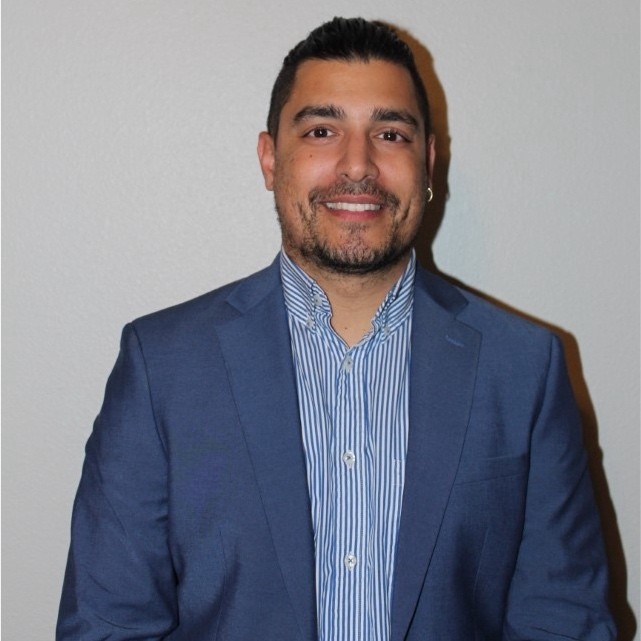
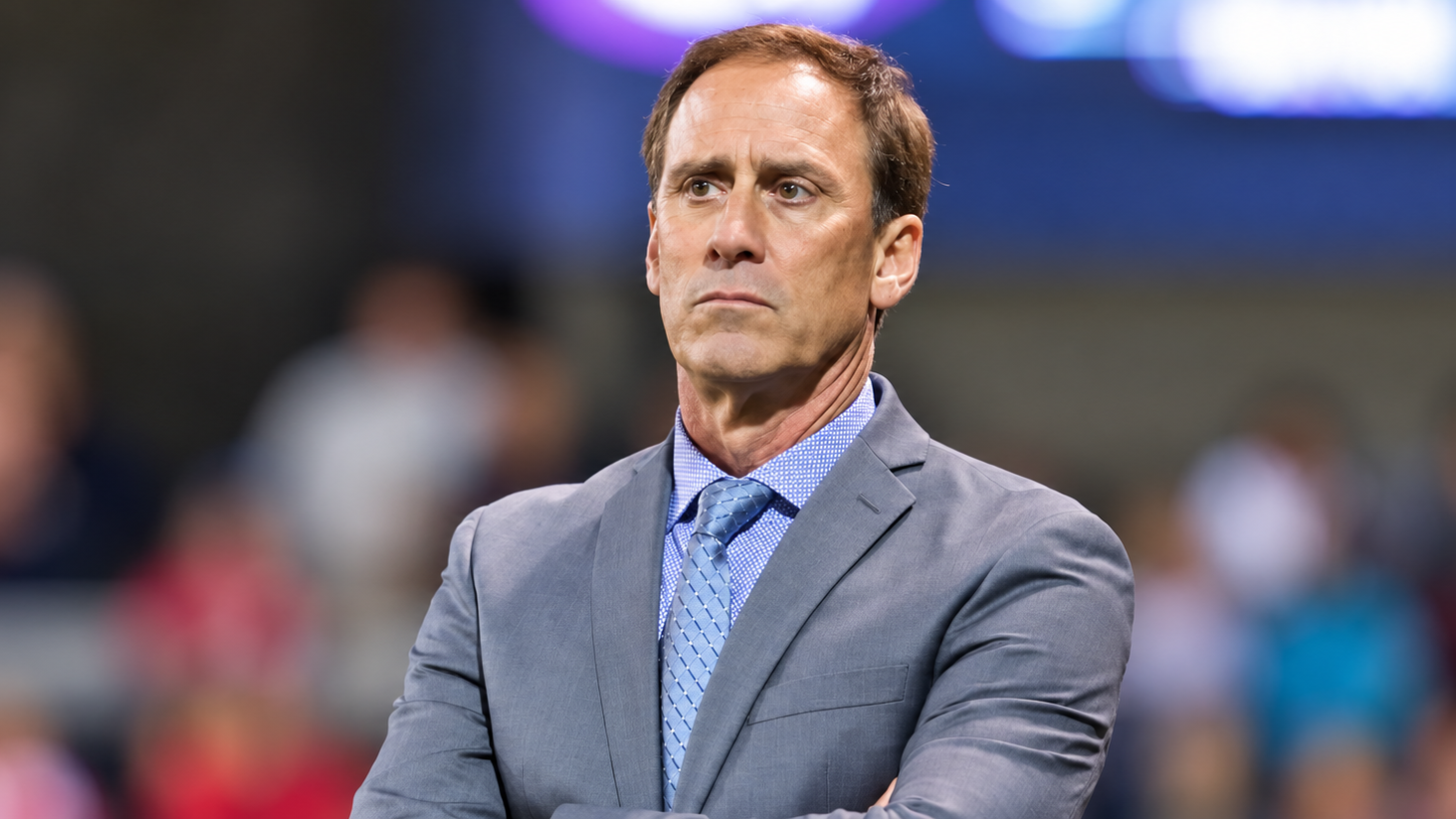
Profile
Role: President and General Manager of the Women’s Team at Annapolis Blues FC
Specialisation: Coaching, Technical Leadership and Club Management
Experience: U.S. Men’s National Team, 1988 Olympics, Washington Freedom, Sky Blue FC, Washington Spirit and Annapolis Blues FC
Focus Areas: Talent Identification, Player Development, Community Engagement and Sustainable Club Growth
In American soccer, there are names everyone knows. Then there are the people who helped build the game long before the spotlight arrived.
Jim Gabarra belongs firmly in the second group. And, perhaps remarkably, so does his wife.
Together, Jim and Carin Gabarra are about as close to American soccer royalty as you can get. Carin Gabarra, the former Carin Jennings, was one of the defining players of the early U.S. women’s national team. She won the 1991 FIFA Women’s World Cup, scored six goals during the tournament and received the Golden Ball as its outstanding player. She later won Olympic gold with the United States in 1996 and was inducted into the National Soccer Hall of Fame in 2000. She has also spent more than three decades building the women’s soccer program at the U.S. Naval Academy.
Jim was born in Key West, Florida, he did not even begin playing soccer until he was 13. He went from being a multi-sport athlete who was initially told he might be too small for football, to playing professionally, representing the United States at the 1988 Olympics and earning 14 caps for the U.S. men’s national team. He eventually moved into coaching, technical leadership and club management, becoming one of the few people to experience virtually every major chapter of professional women’s soccer in the United States.
He coached the Washington Freedom to the 2003 WUSA championship, worked through the transition into WPS, coached Sky Blue FC and later took over the Washington Spirit as head coach and general manager. In 2016, he led the Spirit to the NWSL Championship Final, where they lost to the Western New York Flash on penalties after conceding an equalizer with virtually the final kick of the match.
Yet for all of that, there is surprisingly little mainstream recognition of Jim Gabarra in the American soccer conversation.
That is unfortunate.
There is a tendency in American soccer to celebrate the newest names, newest clubs and newest ideas while forgetting the people who spent decades building the infrastructure, developing players, navigating failed leagues, surviving transitions and repeatedly helping the sport move forward. Jim has lived through almost all of it: indoor soccer, the early professional women’s game, WUSA, WPS, NWSL and now the emerging USL ecosystem.
His influence is also visible through the players he identified and developed. His career has intersected with some of the biggest names in American soccer, including Mia Hamm, Abby Wambach, Tobin Heath, Kelley O’Hara, Crystal Dunn and Rose Lavelle and many more. His approach has consistently gone beyond what can be captured in a scouting report, focusing on the person, the competitor and the teammate.
Today, Gabarra is back in his hometown of Annapolis, serving as President and General Manager of the Women’s Team at Annapolis Blues FC. There, he is applying everything he has learned to a different kind of challenge: building a community-driven club patiently, sustainably and with a pathway for local players and young professionals to develop.
That may ultimately be the most interesting thing about Jim Gabarra.
Jim has lived through almost all of it: indoor soccer, the early professional women’s game, WUSA, WPS, NWSL and now the emerging USL ecosystem.
He has never seemed particularly interested in being the person standing in the middle of the photograph.
His philosophy, as he explains in this conversation, is much simpler: be a good teammate, lead by example, do your job and make the people around you better.
The American soccer community could use more stories about people like Jim and Carin Gabarra. Not because they need the recognition, but because the history of American soccer deserves to remember who helped build it.
This conversation is one small attempt to do exactly that.
Key Insights
- Talent identification includes a player’s character, leadership and interactions away from the match.
- Improving team culture starts with respecting existing foundations and making considered changes.
- Community support, practical experience and sustainable growth underpin Gabarra’s approach at Annapolis Blues FC.
Our Exclusive Interview with Jim Gabarra
You’ve lived through a lot of different versions of yourself: player, player-coach, coach, general manager, technical director, stay-at-home father, and now president and general manager of the women’s team at Annapolis Blues FC. If you stripped away all those titles and we got down to who Jim actually is, how would you describe yourself?
In short, I’m a team player, good husband and father who leads from the front and make those around me better.
You’ve also been around some enormous personalities and players, from Mia Hamm and Abby Wambach to players like Rose Lavelle, Crystal Dunn and others. Did you notice a common theme with those players as you worked with them?
The biggest thing was that they were winners. You can always look positionally for a player, or look at their personality and how they’re going to affect the culture, but someone who’s a winner is going to find a way to win.
Mia and I won even when she was injured for most of the year, and we still had a successful season. Abby Wambach would fight through injuries, and she won all the time.
I think that was the common thread: they were winners, but they also knew how to make those around them better and bring them along for the ride. There are winners in individual sports who would be terrible in a team game, but the players you named, like all the great players in every sport, come much closer than 99% of people to having the complete package. For me, what stood out was that they were winners. They knew what it took to do their role, but also how they could help others elevate their roles so that the team could win.
You were born in Key West, eventually played for the U.S. national team, went to the Olympics, and became a major figure in American soccer. When you were a kid, did you actually believe soccer could become your life, or did the path only make sense when you looked backward?
I think it only made sense to me going forward. You have a dream, and you shoot for the stars. You just go along, stay persistent, and have that self-belief that you’re going to reach your goals. Along the way, maybe you don’t reach all of those goals, but you’re going to achieve some great things. When I grew up, I didn’t start playing soccer until I was 13 years old. I played every sport: basketball, baseball and American football. My dad coached me when I was younger, and I loved it.
I was a quarterback and cornerback in ninth grade. I was a 5’10” little dude playing quarterback, and our football team was probably top five in the state. I had a teacher who said, “You’re probably going to be too small to play football in high school. They just started a soccer program, and they were looking for good athletes. They said “Why don’t you go try out for that team?” So I went and tried out, and somehow I made varsity. I was playing for the varsity team and didn’t even know the difference between an indirect and a direct kick. Whenever there was a free kick, I’d quietly walk away because I didn’t know what to do. Fortunately, I got a really good young coach and mentor who taught me a lot. Then I went to a Division III college because no Division I teams were offering me an opportunity. I figured I’d take that opportunity, leverage it and get a better education. I had another great coach there. It took the Conn College Men’s Soccer team 45 years to win more games than our team did and they won a National Championship in doing so.
After I graduated, I decided I wanted to try out for a bunch of professional teams. I got cut numerous times. I’ve been cut, traded and released many times.
Eventually, I found an opportunity. I was cut in Wichita, Kansas, by the Wichita Wings and Roy Turner. I got home, and they had one roster spot open. I thought, “Let me call him back.” I was convinced I was going to go back and show him that I deserved that last spot.
I said, “If you get me a job and get me a place to stay, I’ll just come there and be a training player.” So I did that, and it was great. I had two lives. I learned how to wait tables while training with the professional team, thinking I was going to get that spot.
You have a dream, and you shoot for the stars.
Then, of course, three weeks in, they brought in an English guy who was a goalscorer. But while I was there, I met three or four guys who had played for the Detroit Express. They recommended me there, and I eventually signed my first professional contract there.
That’s where it started to dawn on me that I was a winner. I went there as a rookie, played my role, and we won a championship in front of about 33,000 people at the Pontiac Silverdome in the ASL Championship. That was a really cool moment for us. We just had our 40th-year reunion about 4 years ago. Do you know how big the roster was for that team? Sixteen players. At that reunion, we had 12 of the 16 there. One had passed away, one was sick, one was in Serbia, one coaching his club team in Serbia, and another had COVID. But having 12 of the 16 together was like the best thing in the world. We walked in as a group, and it felt like the day we won the championship. You still have that incredible lifetime bond.
Playing for the national team, I think I’m one of two players who played for the U.S. National Team after attending a Division III school. The other is Nico Borja.
I grew up watching the Cosmos and the NASL. Chico Borja was with the Cosmos, and he later became a teammate of mine on the national indoor team, the futsal team with which we won a silver medal in Hong Kong.
I just kept moving forward and taking any opportunities to play and get paid. I had the incredible experience of winning a championship as a player-coach. When US Soccer and John Kowalski started the indoor or futsal national team, MISL teams would not release their players. That gave our indoor team an opportunity to have 5 players on the US team. We were playing in what was at the time a second-division indoor league, the AISA, and John Kowalski basically took our team’s best American players.
That performance led to me getting a tryout with the full national team. I went and tried out, and all of a sudden, I was on the full team. You go from playing indoor soccer in a bus league to playing for the national team. It was a great time. We were nowhere near the resources that are available now, but it is so gratifying to have been blessed with the opportunity to contribute to the foundation of success for the National Team. I set lofty goals, chased my dreams and tried to reach those dreams through good work ethic, persistence and resilience and that path presented itself to me.
You’ve essentially spent your career watching American soccer rebuild itself over and over again. You’ve been there for the old indoor game, WUSA, WPS, NWSL and now the explosion of the American soccer ecosystem. What do you think is the biggest challenge, or mistake, American soccer keeps making that we still haven’t learned from?
I’d like to believe we keep learning from our mistakes, but there’s been a lot of changeover. The beautiful thing about our country is that everybody can have an opinion, everybody can have an impact, and everybody can run a league or a team, even though they’re probably going to make a lot of mistakes and learn from them.
You’re constantly having this influx of new people who want to get involved in the game, which is great. But along the way, sometimes you lose the quality of people who have the experience and competence to actually be successful in the game.
I think the biggest challenge with our country and the game is that it’s such a big country. I’ve always said we could have six national teams that would each have a different style of play. It’s almost like six countries within our country.
The challenge is getting all of that under one system or style of play for our national team. People have tried to do that, and I don’t know if that’s the answer. Maybe the answer 4-6 regional, sub-national teams. Then your national team coach can take what he thinks is the best team or combination from those regional teams. Similar to what you see with some countries using a majority of one or two of the top club teams players. This may give you the best opportunity to compete in a national team event, rather than selecting more somewhat of a fantasy team. At times that’s what I have felt we have doing with our men’s national team. We keep trying to find players who are American but are playing in Europe and blend them with players who were raised more domestically. It’s difficult to do that in a short window when you only have the players together for a limited time. It’s an interesting question. There are so many answers to it.
We have a wealth of opportunities and resources. As we move along, there’s more resources, more attention and more money. I think we’re doing a good job of refining that and getting the important pieces in place, particularly the youth game.
That’s the one big dysfunctional part in our country: the pay-to-play system and the monetization of kids, rather than just getting them into the game and letting them evolve naturally.
Everybody has a different path.
Annapolis Blues FC describes you as a master of talent identification and development, and your career includes identifying and developing players such as Sam Kerr, Tobin Heath and Kelley O’Hara. When you watch a 17- or 18-year-old, what are you looking for that doesn’t show up on a spreadsheet or scouting report?
I always like to look outside of the match. How do they interact with their teammates when they’re coming onto the field? How do they interact with them during the warm-up? How do they interact with their parents, the fans, their opponents and the referees?
There’s a lot there. You don’t just evaluate the technical side or the tactical side. In our country, the physical side is number one, and it’s almost like you don’t look any further than that. Yes the player has to have qualities but I think it’s important to look at who the person is.
I saw this with Abby Wambach when I was watching and recruiting her in Florida. I looked at how she reacted with her teammates and how she reacted with her coach. I’ve always felt like she was a real difference maker on both sides of the ball. She would come up with the goal or the defining moment. But you could also see what she was like off the field as a person and as a leader. And is a winner.
In 2016, you inherited the Washington Spirit and immediately had to blend returning players with your own vision. You ultimately took the club to its first NWSL final. How do you walk into an existing culture and change it without destroying the things that made it successful in the first place?
For me, I went in there and wanted to make improvements on what was already there.
You can’t change culture or results all in one season, especially when the NWSL season at the time was pretty short. My goal was to get to know everything they had done, respect everything they had done as a group of players, and then bring in some improvements, whether that was staff or players.
I brought in Denise Reddy, who’s now Emma Hayes’ assistant coach, as an assistant. She deserves huge credit because she filled all of my blind spots. She challenged me, but also supported me and had my back at all times, which is pretty much what you want from an assistant coach. We did bring in some players, and we got rid of some players. Those are hard decisions and hard conversations, but you have to make some changes. You just can’t make wholesale changes. The credit for the success of that entire year and that club, and I’m super proud of it, goes to everybody involved. That’s from the owner, Bill Lynch, to all the front-office staff, all the players, all the support staff and even the fans group. They deserve credit for supporting the team through some hard times during the first couple of years of the franchise.
I would be remiss if I didn’t say I’m still bitter about the result.
We had the lead, and for some reason, going into the second half of extra time, there were five minutes of injury time added. There had only been two minutes in the first half and three minutes in the second half, and now all of a sudden there were five minutes added to the last 15 min of extra time.
We were playing the Western New York Flash. They had a great long-throw play. They kicked the ball long over the top, we knocked it out of play for a long throw, and we had totally solved that throughout the game. We were set for the long throw, but they played it short, served the box and scored. It was literally the last kick of the game.
So we went from winning a championship to having to go to penalties, with no time to prepare the team for it. We had Allie Krieger, Diana Matheson, maybe Tori Huster, veteran players who were excellent at penalties, and they had their penalties saved.
It was devastating. They won the championship by advancing on penalties after the match ended in a draw. I was very upset because I felt like we had done everything we could. We had come up with a game plan, had a totally new system for a final, totally caught them off guard, and executed everything to perfection. Except we had to play those extra minutes, and that was the difference.
You’ve now moved from coaching and technical leadership into being the president and general manager of the women’s team at Annapolis Blues FC, where you’re responsible for competitive operations, business development, community engagement and the long-term direction of the club. What have you discovered about building a football club that you wouldn’t have understood when you were sitting on the coaching side of the table?
I’ve always managed up, and the cool thing about all those titles I’ve had is that I’m a big believer in learning by doing, rather than going and getting licensing or learning from someone who’s taking your money but has never actually done the job.
The cool thing about that is when I’m hiring a coach, I’ve been a successful coach. If I’m talking to a player, I’ve been in their shoes at the highest level. General managers, I know that role. Presidents, technical directors, sporting directors, I know how they all function, and I know that I’m competent and how to perform those tasks.
The cool thing about the Blues opportunity is that it’s a pre-professional club. We’re in USL League Two and the USL W League. Our fans wouldn’t know that because our operation is run at the USL Championship level. Maybe we don’t have quite as much staff, but the stadium we play in and all the budgets outside of the players’ budgets, which we don’t have because we don’t have professional players, are at that level.
Our attendance is at times up in the top five of USL Championship on average. We had our home opener two years ago, and that weekend it would have been in the top 10 of MLS attendance. What I’ve learned is that I want to continue with that formula of giving people the chance to learn while doing the job.
The cool thing about this opportunity is that it’s my hometown team. I don’t have to go to D.C. or New Jersey. I don’t have to learn how to balance my time with family and being away. Both my son and daughter played for the Blues last summer. I can do all this for my hometown team, and we’ve created something really special here.
With the community engagement and the amount of support we’ve had, whether that’s from small businesses or fans, it’s something really special.
To be able to build that into a vision of what you see all over the world, where you’ve got your hometown club supported by your community, with local players and local staff, and local front-office staff learning to do those jobs, is really exciting.
The cool thing about the Blues opportunity is that it’s a pre-professional club.
You have people coming out of college, learning on the job. If they want to go on to MLS teams, great. If they want to stay here and play for the Blues, awesome.
And being in the USL, we’re in the promotion and relegation system, where you can have the opportunity to create generational stories similar to what you see all over the world in our game.
That’s really exciting.
Along the way, there’s a lot that needs to happen. We need to get a training facility, and we need to build our own stadium because right now we’re limited to using Navy’s football stadium for only the pre-professional season, in May, June and July.
So, it’s about slow, sustainable growth. Just continue to grow and develop and offer these young people an opportunity to do the jobs that I’ve already done and mentor them along the way. I enjoy finding the right people, giving them the opportunity and then guide them in their development and success. Look at Jacob Murrell on the men’s side. He played for Annapolis Blues, then played for D.C. United for two seasons, and recently moved to the Scottish Premiership. We’ve also had a couple of front-office staff members who started as interns moved to seasonal employees and then went on to work in MLS front offices. In our first women’s season we had Bailee Desmit move on to Sporting JAX in the Women’s Super League. The pathway is there.
You’ve talked about building something community-driven in Annapolis. What excites you most about the direction of the USL and the broader American soccer ecosystem?
There are some teams that have found that formula and used it to good effect, whether it’s in USL Championship or even MLS.
MLS and NWSL are closed systems. They’re more of an NFL model. It will be interesting how this all evolves. I am a purist and love the underdog story so promotion and relegation provides all that.
Rapid Fire
City life or countryside?
Countryside.
Beach or mountains?
Beach.
Sunrise or sunset?
Sunset.
Summer or winter?
Summer.
Early bird or night owl?
I’m actually both now, but probably a night owl. My wife freaks out. She’s like, “You go to bed after me, and you wake up before me.”
I’ve always been a night owl. My grandmother was a night owl, so I’ve always been that way. Now I have to get up early so I can work.
Steak or seafood?
Probably seafood now.
Key West or Annapolis?
Annapolis.
Call or text?
Tough one. Text.
Win ugly or lose beautifully?
I don’t know. I’d take both. I’d probably say lose beautifully because you’re doing things the right way.
Indoor soccer or outdoor soccer?
Outdoor soccer.
One more Olympic experience or one more World Cup experience?
World Cup.
Mia Hamm or Abby Wambach?
(thinks a little) I’ll take Abby.
Build a club from scratch or take over a struggling club and turn it around?
Take over one and turn it around.
FAQ
Who is Jim Gabarra?
Jim Gabarra is a former U.S. men’s national team player and Olympian whose career spans coaching, technical leadership and club management in American soccer.
What is Jim Gabarra’s role at Annapolis Blues FC?
He serves as President and General Manager of the Women’s Team, with responsibilities including competitive operations, business development and community engagement.
What does Jim Gabarra look for when identifying young players?
He considers technical and tactical qualities alongside character, leadership and how players interact with teammates, parents, fans, opponents and referees.