
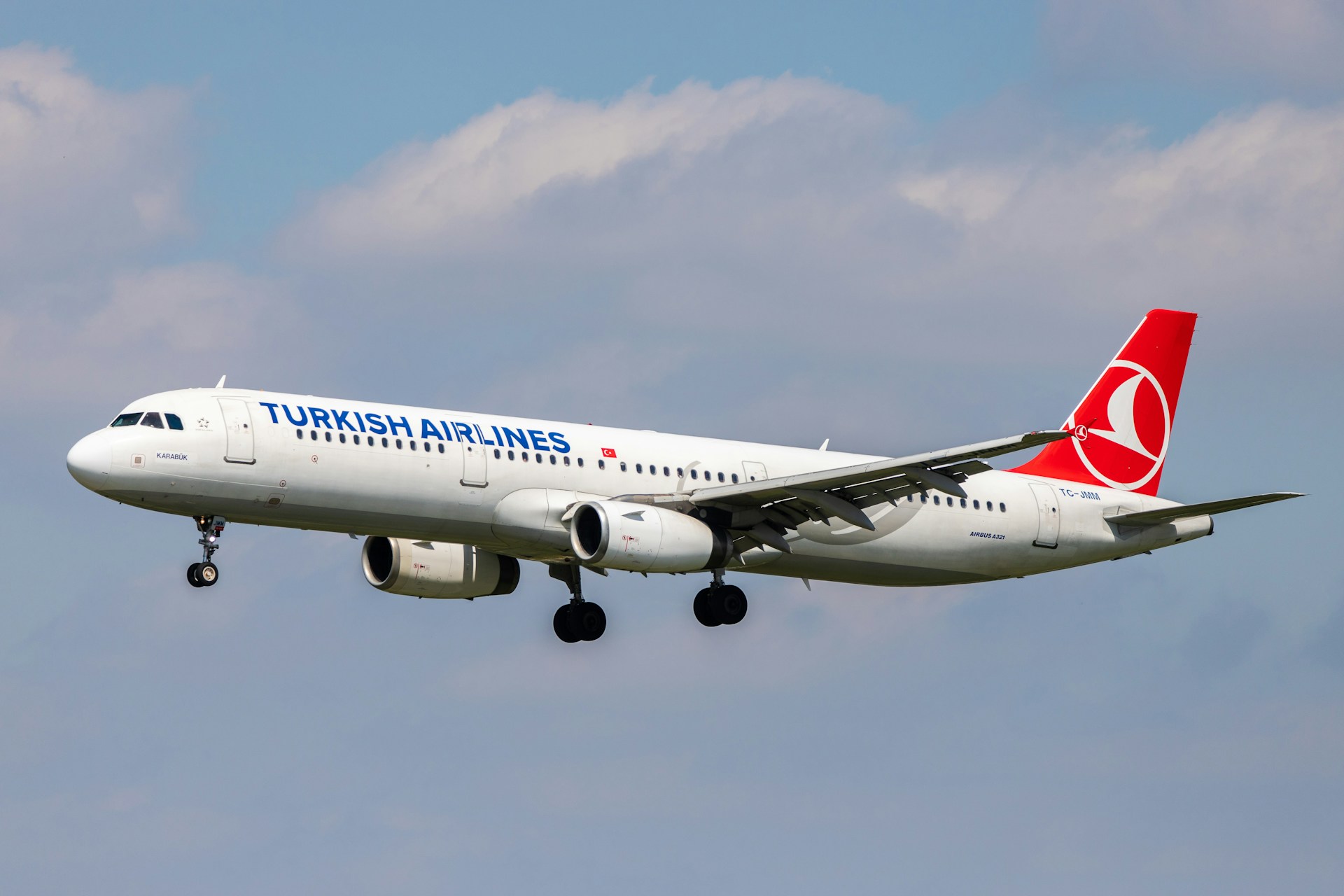
Turkish Airlines Did Not Buy a Shirt. It Bought a Seat at the Table.
Emirates, Etihad, Qatar Airways and Riyadh Air set the table twenty years ago. Istanbul has just paid the record price for the last chair.
On the night of 25 May 2005, Liverpool walked into the dressing room of the Atatürk Olympic Stadium in Istanbul three goals down to AC Milan. Paolo Maldini had scored inside the first minute; Hernán Crespo twice before the break. Fifty-four minutes in, Steven Gerrard headed the first goal back, Vladimír Šmicer scored the second, Xabi Alonso the third, and after Jerzy Dudek saved Andriy Shevchenko’s penalty, Liverpool had won their fifth European Cup. Supporters still call it the Miracle of Istanbul, the most mythologised night in the club’s modern history, and it happened in Türkiye.
Twenty-one years later, on 8 September 2026, Liverpool announced that from the summer of 2027 the front of its shirt would carry the name of Türkiye’s national airline. Ben Latty, the club’s chief commercial officer, said the partnership had “already strong foundations built from those special memories back in 2005.” Turkish Airlines will become only the sixth company in Liverpool’s history to put its name on that shirt, and the first change in seventeen years.
On the surface, this is a familiar story. A football club swaps one global sponsor for a richer one. The deal is understood to be worth more than £300 million over five years, in excess of £60 million a season, which Liverpool believe to be the most valuable front-of-shirt deal in Premier League history, though Manchester United claim a similar figure for theirs and neither club has published a number. Prices rise. Logos change. Nobody looks twice.
But look a little closer, and the familiar story stops making sense.
Because the shirt its owners believe to be the most expensive in English football will be paid for by an airline 49 per cent owned by the Turkish state’s sovereign wealth fund, from the city that gave Liverpool its greatest night. Why would an airline pay a record fee for a football shirt? And why this airline?
Reach is the easy answer, and the least interesting. A marketer asks a different question: not what Liverpool got, but what Turkish Airlines bought. Because the shirt is not the strategy. The shirt is the price of admission to one. And to see the strategy, you have to look at who else is already sitting at the table.
The Table
The table was set in Dubai. In 2006 Emirates put its name on the front of Arsenal’s shirt and on the club’s new stadium, now the longest-running front-of-shirt deal in the Premier League, renewed again this August through 2033. Abu Dhabi followed: Etihad took Manchester City’s shirt in 2009 and the stadium two years later, in a ten-year agreement reported at £400 million. Doha came next, when Qatar Airways took over Barcelona’s shirt from the Qatar Foundation in 2013 and later moved to the front of Paris Saint-Germain for a reported €60 to 70 million a season. Then Riyadh: in August 2023 Riyadh Air became Atlético Madrid’s shirt sponsor, and a year later the stadium through 2033, as an airline that at the time had no planes and was not yet flying. And now Istanbul.
Five cities, five airlines, one pattern. Airlines were spending close to a billion dollars a year on sports sponsorship by 2023, with football by far the most lucrative market, according to GlobalData, and Middle East carriers accounted for more than half of it. GlobalData’s latest report describes a sector dominated by “a small group of major Middle Eastern carriers”: Qatar Airways, Emirates, Etihad and Riyadh Air. Why airlines, and why these?
The answer is in what they sell. A hub carrier sells connections through a third country, so its customer is in Jakarta and Lagos and Toronto at the same time, and its brand has to be known at both ends of every journey. For a hub airline, unlike a domestic supermarket, every viewer in every market is a potential passenger. The front of a global club’s shirt is the only media property whose audience map looks like a route map.
Which is why the shirt stopped being an advertisement and became something closer to a category code. Emirates, Qatar Airways and Etihad wrote the code: a serious hub carrier wears a European giant on its chest. Marketers call this a point of parity, the thing you must have before anyone will listen to what makes you different. A hub airline without one is not yet in the consideration set.
Turkish Airlines had been outside it three times. It was Barcelona’s official carrier from 2010 until Qatar Airways arrived on the front of the shirt in 2013 and the partnership ended; Qatar Airways’ chief executive observed at the time that his airline had “a larger international network than Turkish Airlines.” It was Manchester United’s official carrier until July 2013, when the club replaced it with Aeroflot, the Russian state-controlled carrier. And it was EuroLeague basketball’s title sponsor for fifteen years, at a reported $12.5 million a season. When renewal talks ended, in the words of the league’s commercial chief, “too far apart,” the slot went to Etihad and Abu Dhabi’s tourism board for what Sportcal understands to be almost three times the money. Three partnerships, three displacements, and in every case the airline that took the seat was owned by a state.
The front of a global club’s shirt is the only media property whose audience map looks like a route map.
Fifteen years of second-tier prices for second-tier positions, and first-tier money taking them away. Liverpool is the first time Turkish Airlines has paid first-tier money, and its announcement opened with the sentence the Gulf had once used against it: the airline that flies to more countries than any other. From the summer of 2027, Dubai will be on Arsenal’s shirt and Istanbul on Liverpool’s, in the same league, in the same season.
A marketer looks at that table and sees not five deals but one competitive set, and a late entrant buying its way in. Which leaves the only question that matters: what does a seat buy? Start with what Turkish Airlines itself said.
What Turkish Airlines Actually Bought
“As the airline that flies to more countries than any other,” its chief executive, Ahmet Olmuştur, said in the announcement, “connecting people, cultures and continents is at the heart of who we are.” Read that as a marketer and notice what it does not mention: football. It describes a route map. The club’s own announcement draws the same line, placing a supporter base that “spans every continent” beside an airline “flying to more countries than any other.” Olmuştur has made this argument for a decade; at Euro 2016, as chief marketing officer, he called football “a great connector of people.”
It is not the first time Liverpool’s shirt has been bought for that reason. When Standard Chartered took the front in 2010, the bank explained that Liverpool had “a large number of fans across Standard Chartered’s core markets in Asia, Africa and the Middle East.” By 2022 its chief executive was counting “more than 770 million Liverpool FC followers across the world, many in Standard Chartered’s markets.” Seventeen years later an airline bought the same shirt for the same reason. The buyer changed; the logic did not.
What changed was the price of the footprint. The bank’s fee climbed from £20 million a season in 2010, to around £40 million in 2018, to a reported £50 million and more in 2022. What Turkish Airlines is doing with it has a name in Igor Ansoff’s old grid: market development, an existing product sold into new markets. The product is a connection through Istanbul. The new markets are named in the airline’s own centenary plan, which Skift reports targets eleven key markets in Asia and North America. Where are Liverpool’s supporters? The outgoing sponsor counted them in Asia, Africa and the Middle East; the analysts who priced its last renewal pointed to Asia and the United States. The shirt is not a billboard. It is a targeting instrument aimed at the markets the airline needs by 2033.
Turkish Airlines has run this play before, at smaller scale. On 1 March 2024 it launched direct flights between Melbourne and Istanbul; three days later it was announced as principal partner of Melbourne Victory, whose managing director said the deal would “help them launch their brand in the Australian market.” Open a route, buy the local club, convert the fan into a passenger. Liverpool is the same manoeuvre with the geography reversed: one club to sell every route at once.
The deal also corrects a weakness in the airline’s own portfolio. For fifteen years Turkish Airlines held breadth without depth: official-airline partnerships at Barcelona and Manchester United, a title sponsorship in basketball. None was exclusive enough to defend, and three were taken by richer state carriers. A single five-year front-of-shirt agreement is the opposite kind of asset: scarce, contractual and hard to displace. In brand portfolio terms this is consolidation, trading many shallow associations for one deep one, the move Emirates made when it chose Arsenal in 2006 and has kept renewing for two decades.
And the shirt carries something a route map cannot. Grant McCracken’s meaning transfer model describes how the meanings attached to a cultural property, a club’s heritage, its community, its anthem, migrate to the brand that stands beside it. Speed and Thompson added the condition in 2000: the transfer works when consumers perceive the pairing as a genuine fit and the sponsor as sincere. This is why the 2005 final matters commercially rather than sentimentally. Liverpool and Istanbul already share a story the supporters wrote themselves, and the club’s own commercial officer sold the deal on it. A marketer calls that congruence, and congruence is the asset that lowers the cost of being accepted.
Liverpool is the same manoeuvre with the geography reversed: one club to sell every route at once.
Put rough numbers to it. Turkish Airlines earned around $24 billion from more than 92 million passengers in 2025, roughly $260 per passenger. The shirt costs about $81 million a year. Break-even is therefore about 310,000 additional passengers a year, roughly a third of one per cent of the airline’s traffic. If the shirt shifts a sliver of Liverpool’s global support towards routing its long-haul journeys through Istanbul, it pays for itself. That is the customer acquisition cost, and it is not a reckless one.
But buying the right is only half of sponsorship. Bettina Cornwell’s work on sponsorship-linked marketing is blunt that the association has to be activated, or leveraged, to produce anything at all. When Emirates renewed with Arsenal in August, its president, Sir Tim Clark, described two decades of activation: “reaching the millions who follow Arsenal across the Emirates network and beyond.” The fee buys neither that activation nor the one thing that decides whether positive meaning transfers at all: how the deal is perceived. Which is where the other seats at the table start to matter.
The Other Seats at the Table
The first of those seats belongs to a state. Interviewed by Skift last year on what the magazine headlined “soft power,” the airline’s then chairman set out a centenary plan that Skift summarised as prioritising “cultural diplomacy as much as cash flow.” GlobalData’s sponsorship analysts noted this year that many Middle Eastern airlines “are state-backed and expected to advance national prestige and soft power,” and Türkiye’s flag carrier belongs in that category. In Simon Anholt’s nation-brand hexagon a country is judged through its exports, its culture and its people; a flag carrier is all three at once, broadcast from Liverpool’s chest into every market the airline wants to enter. That is an asset. It is also the deal’s largest exposure.
The second seat belongs to the regulator. At the end of September an independent commission found that Manchester City had, between 2009/10 and 2017/18, arranged “sham” contracts with commercial partners as part of a “disguised funding scheme” that inflated its revenues by £830 million. City is appealing; Etihad, which was not named in the published decision, “categorically rejects” any implication of impropriety and is considering legal action. For Turkish Airlines the lesson is not the obvious one. The Premier League’s associated party rules police deals between a club and companies connected to its ownership. Liverpool’s owners, Fenway Sports Group and the consortium that bought a minority stake in August, have no connection to Türkiye or its airline. On the League’s own definition, Turkish Airlines is not an associated party, and its exposure is reputational rather than regulatory. Call it sponsor selection as risk management: Liverpool can take state-linked money that City cannot, precisely because the state in question does not own the club.
The third seat is the supporters’, where perception is decided. A 2012 study of meaning transfer in endorsements found an asymmetry: negative associations migrate to a brand even when fit is weak, while positive ones transfer only when the fit is perceived as genuine and sincere. Bayern Munich is the case study. Its five-year sleeve deal with Qatar Airways, worth a reported €20 million a season, was not renewed in June 2023, by mutual agreement, after years of protest from the club’s own supporters and members. So far, Liverpool’s reaction is muted. A Greek Cypriot supporter in the Cyprus Mail called the deal “extraordinarily tone-deaf” while Cyprus remains divided; at the time of writing, no supporters’ group has mobilised as Bayern’s did. Two readings are possible. Either the congruence of 2005 is doing exactly the work the theory predicts, or the shirt has simply not yet been worn.
The fourth seat is the buyer’s own balance sheet. The chairman who spoke of soft power announced a shift to “disciplined growth” in March, amid what the trade press calls one of the most volatile fuel and geopolitical environments in its recent history. A £300 million commitment signed in that climate is a statement about priorities. There is a sporting risk, too. Etihad joined Manchester City in 2009 and rose with the club for a decade. Turkish Airlines is attaching itself to a club that won the league in 2024/25 and surrendered it to Arsenal a year later. A brand that buys a club at its peak is buying the only direction a peak can go.
The last seat is Türkiye’s, and the view from it is uncomfortable for a Turkish writer. Two weeks before Turkish state-linked capital bought what Liverpool believe to be England’s most expensive shirt, this publication’s own analysis found Fenerbahçe carrying squad costs equal to 103 per cent of its relevant football revenue and Galatasaray above UEFA’s 70 per cent ceiling. Five years earlier the president of the Turkish federation had put the big four’s combined debts at almost $1.9 billion. Turkish capital has learned to buy global credibility abroad faster than Turkish football has learned to build it at home.
Put the five seats together and a pattern appears. Every item is about perception: how a state, a sponsor and a balance sheet are seen, and whether supporters see fit. Perception is the one input the £60 million does not purchase. That makes this a bet rather than a certainty, and a bet can be scored.
How to Score the Bet
Treat the deal as a hypothesis with markers readable in 2032.
The first marker is awareness and consideration in the eleven markets in Asia and North America that the airline’s centenary plan is reported to target. If the airline is not measurably more present in long-haul travellers’ minds there by the midpoint of the deal, the targeting instrument has not fired. The second is activation: whether the sponsorship is wired into the airline’s frequent-flyer programme and route marketing, the way Emirates brings Arsenal supporters to London through its Global Gooners programme, or left on the shirt as a logo. The third matters most: whether a measurable share of Liverpool’s supporters in those markets begins to route its journeys through Istanbul. On the airline’s own numbers, that share need only be a fraction of one per cent to break even. The fourth is perception: whether the association stays on the right side of the asymmetry, carrying 2005 rather than Cyprus or the sovereign wealth fund. The fifth is the simplest. Emirates renewed Arsenal this summer into a third decade. Qatar Airways and Bayern parted after five years. In 2032 Turkish Airlines will either sign again or it will not, and that signature is the verdict.
Perception is the one input the £60 million does not purchase.
None of this is specific to one airline. Any sponsorship can be read the same way: what did the buyer actually buy, against whom, for which customers, how will it be activated, and how will anyone know it worked. Those five questions separate a marketing strategy from an expensive logo, and too much coverage of sponsorship stops at the price.
In May 2005 Liverpool’s supporters found their way to Istanbul and came home with a story they are still telling. Turkish Airlines has paid £300 million on the bet that the next generation of them will find their way to Istanbul again, not for a final, but for a connection.
References
- Airport Technology (Vitale, C.), 19 July 2023. Why are airlines spending so much on sport sponsorship deals?
- Airways Magazine (Chellini, S.), 20 July 2026. Turkish Airlines to Add Premium Economy in 2028, Push Fleet Growth, Eye NonStop Australia Flights
- Campbell, M. C. and Warren, C. (2012). A risk of meaning transfer: Are negative associations more likely to transfer than positive associations? Social Influence, 7(3), 172-192.
- Cornwell, T. B., Weeks, C. S. and Roy, D. P. (2005). Sponsorship-linked marketing: Opening the black box. Journal of Advertising, 34(2), 21-42.
- Cyprus Mail (Charalambous, A.), 8 September 2026. Greek Cypriot Liverpool fan upset over ‘tone-deaf’ Turkish Airlines sponsorship
- Daily Sabah, 27 January 2021. Turkey’s new law to curb excessive spending by debt-ridden clubs
- Emirates Media Centre, 6 August 2026. Arsenal and Emirates renew landmark partnership as one of Premier League’s longest-running relationships enters new era
- Fox Sports, 8 July 2013. Aeroflot becomes Man United’s official airline
- GlobalData, 2023. Middle East airline spending in sports sponsorship to further increase in coming years, says GlobalData
- Gulf News (Chatterjee, R.), May 2009. Man City clinch Etihad sponsorship
- Gulf News (Hammond, A.), March 2013. Qatar Airways in FC Barcelona’s first shirt sponsor deal
- Infobae / Around the Rings, July 2016 (republished 12 July 2021). Turkish Airlines, the Official Airline Partner of UEFA EURO 2016, takes off on its maiden flight to Paris
- Inside World Football (Elliott, A.), 8 September 2026. Liverpool sign record-breaking Turkish Airlines shirt sponsorship deal
- Invest in Türkiye (source: Dünya), 20 January 2010. Turkish Airlines signs deal with Barcelona of La Liga
- The Irish Times (Hunter, A.), 8 September 2026. Liverpool agree record £60m-a-year shirt sponsorship deal with Turkish Airlines
- The Irish Times (Unwin, W., Hughes, M. and MacInnes, P.), 29 September 2026. Manchester City guilty of Premier League charges after £900m of ‘sham’ contracts
- Kaneva, N. (2011). Nation branding: Toward an agenda for critical research. International Journal of Communication, 5, 117-141. (Discussion of Anholt’s nation brand hexagon.)
- Liverpool FC (Shaw, C.), 14 July 2022. A history of Liverpool’s shirt sponsors
- Liverpool FC (Shaw, C.), 27 April 2025. Official: Liverpool are the 2024-25 Premier League champions
- Liverpool FC, 8 September 2026. Liverpool FC announces Turkish Airlines as main club partner from 2027-28 season
- Malay Mail / AFP, 28 June 2023. Bayern end controversial partnership with Qatar Airways
- Marketing Week (Parsons, R.), 8 July 2011. Manchester City score naming rights deal with Etihad Airways
- McCracken, G. (1989). Who is the celebrity endorser? Cultural foundations of the endorsement process. Journal of Consumer Research, 16(3), 310-321.
- Melbourne Victory FC, 4 March 2024. Melbourne Victory lands Turkish Airlines as its new Principal Partner
- Morgan Sports Law (Cisneros, B. and Huggett, J.), 20 March 2025. An APT Legal Challenge: Manchester City’s victory over the Premier League’s rules
- Puyt, R. W., Antoniou, P. H. and Caputo, A. (2024). The Ansoff archive: Revisiting Ansoff’s legacy and the holistic approach to strategic management. Strategic Change, 33(6), 513-518.
- Skift (Smith, G.), 26 June 2025. Turkish Airlines Chairman on Soft Power, Fleet Growth, and the 2033 Vision
- Skift (Smith, G.), 5 March 2026. Turkish Airlines Chairman: ‘Disciplined Growth’ Will Define Next Phase
- Sky Sports, 8 July 2013. Premier League: Manchester United confirm Aeroflot as their ‘official carrier’
- Sky Sports (Solhekol, K.), 2 October 2026. Man City charges: Club sponsor Etihad Airways considering legal action against Premier League
- Speed, R. and Thompson, P. (2000). Determinants of sports sponsorship response. Journal of the Academy of Marketing Science, 28(2), 226-238.
- Sportcal (Robarts, S.), 14 July 2022. Standard Chartered and Liverpool renew to clock up 17 years
- Sportcal (Donaldson, A.), 9 October 2024. Riyadh Air replaces Civitas as Atletico Madrid stadium naming sponsor
- Sportcal (Donaldson, A.), 2 July 2025. EuroLeague rebrands as Turkish Airlines partnership lapses
- Sportcal (Saleh, T.), 13 October 2025. EuroLeague embraces change with expansion and revamped commercial strategy
- Sportcal (Donaldson, A.), 6 August 2026. Arsenal renews long-running Emirates partnership through 2033
- SportsPro (Long, M.), 4 March 2013. Qatar Airways confirmed as Barca sponsor
- SportsPro (Dixon, E.), 30 June 2022. PSG take off with Qatar Airways shirt deal worth ‘as much as €70m a year’
- SportsPro (Dixon, E.), 29 June 2023. Bayern Munich and Qatar Airways agree to end ‘€20m per year’ sleeve sponsorship
- Standard Chartered, 24 May 2018. We’ve renewed our LFC partnership
- Standard Chartered, 14 July 2022. We’ve renewed our partnership with Liverpool Football Club
- The Football Week (Gün, I.), 26 August 2026. Galatasaray and Fenerbahçe Under Premier League Rules
- TravelDailyNews International (Koumelis, T.), 23 April 2026. Airlines turn to multi-sport sponsorships to boost global visibility, says GlobalData
- Türkiye Wealth Fund. Our Portfolio: Transportation and Logistics
- UEFA.com, match report. 2004/05 AC Milan 3-3 Liverpool FC (2-3 on pens): Report
- UEFA.com, 20 October 2016. 2005 Liverpool vs Milan: The story of the Miracle of Istanbul
- UEFA.com, 9 June 2023. Miracle of Istanbul: 2005 Champions League final in the words of Liverpool’s unlikely heroes
- Yahoo Sports / BBC Sport (Patel, A.), 8 September 2026. Turkish Airlines to replace Standard Chartered as front-of-shirt sponsor