

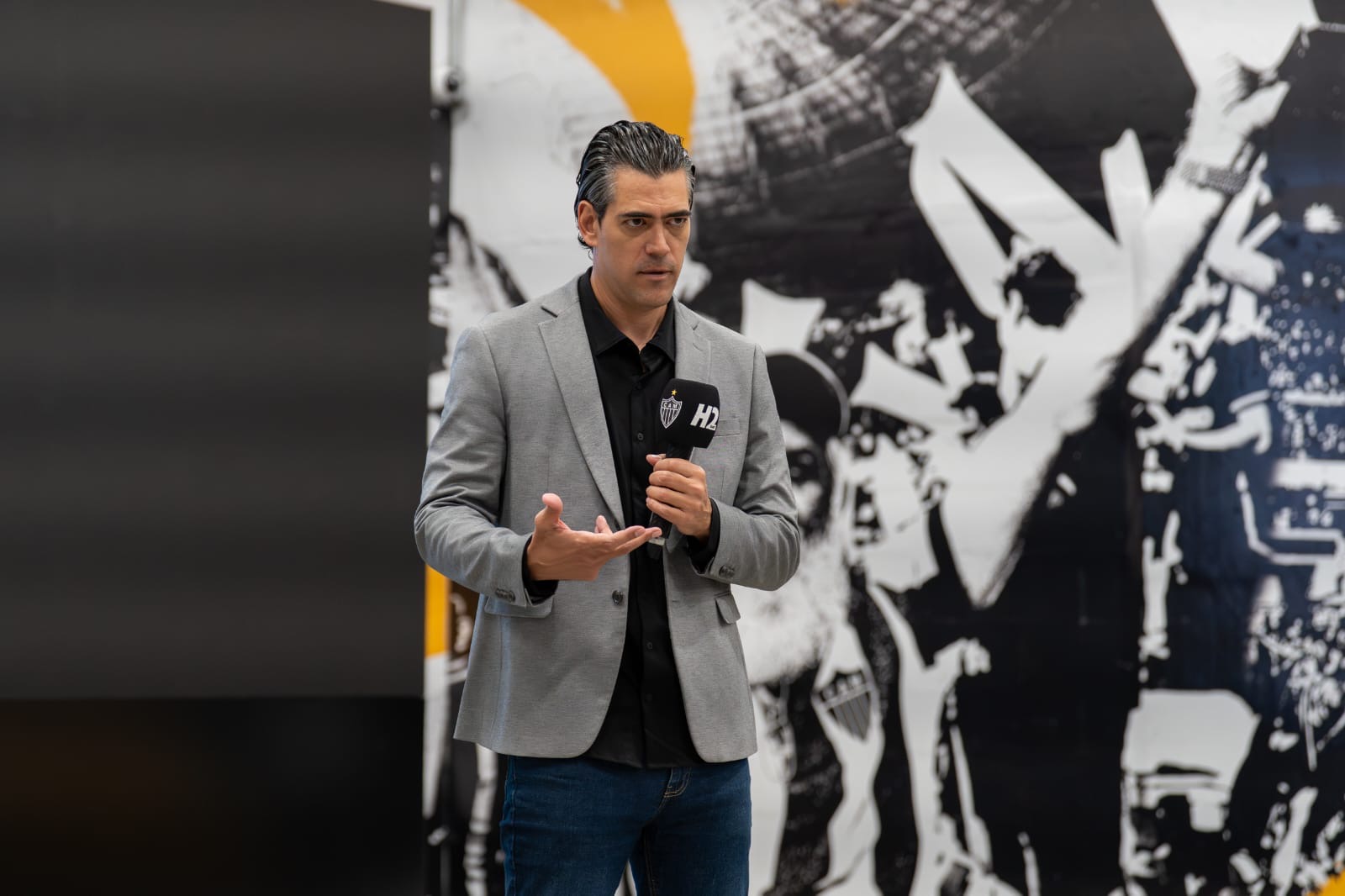
Profile
Role: Chief Sports Officer, Clube Atlético Mineiro
Specialisation: sports law and regulation, football administration, sporting strategy
Experience: América-MG, Internacional, Vasco da Gama and Santos
Focus Areas: club management, football operations, academy and women’s football, squad planning, player recruitment and development, market analysis, data science
Background: sports law and regulation, football administration, sporting strategy
Previous clubs: América-MG, Internacional, Vasco da Gama and Santos
Areas of Experience: club management, football operations, academy and women’s football, squad planning, player recruitment and development, market analysis, data science
Education: Faculdade Milton Campos, Law, 1999-2003, PUC Minas, Postgraduate Degree in Criminal Law, 2005-2006, CEDIN Educacional, Postgraduate Degree in Sports Law and Sports Business, 2013-2014, CBF Academy, Football Management and Performance Analysis qualifications, Universidade do Futebol, Technical Football Management studies, UEFA Academy, Certificate in Football Management, 2024-2025
Paulo Bracks’ career has taken him through some of the most important areas of Brazilian football, from sports law and academy football to recruitment, professional teams and senior club management. Now at Clube Atlético Mineiro, those experiences come together in one of the broader and more demanding executive roles in football.
As Chief Sports Officer, Bracks is responsible for the club’s football operation across all departments, including the men’s professional team, academy and women’s football, as well as recruitment, data, medical support, infrastructure and player transition.
A Belo Horizonte native, Bracks has previously held senior positions at América-MG, Internacional, Vasco da Gama and Santos. Across those roles, he has been actively involved in promotion campaigns, squad building, player development and recruitment, as well as the financial and institutional demands that come with running a professional football club in one of the world’s most competitive footballing ecosystems.
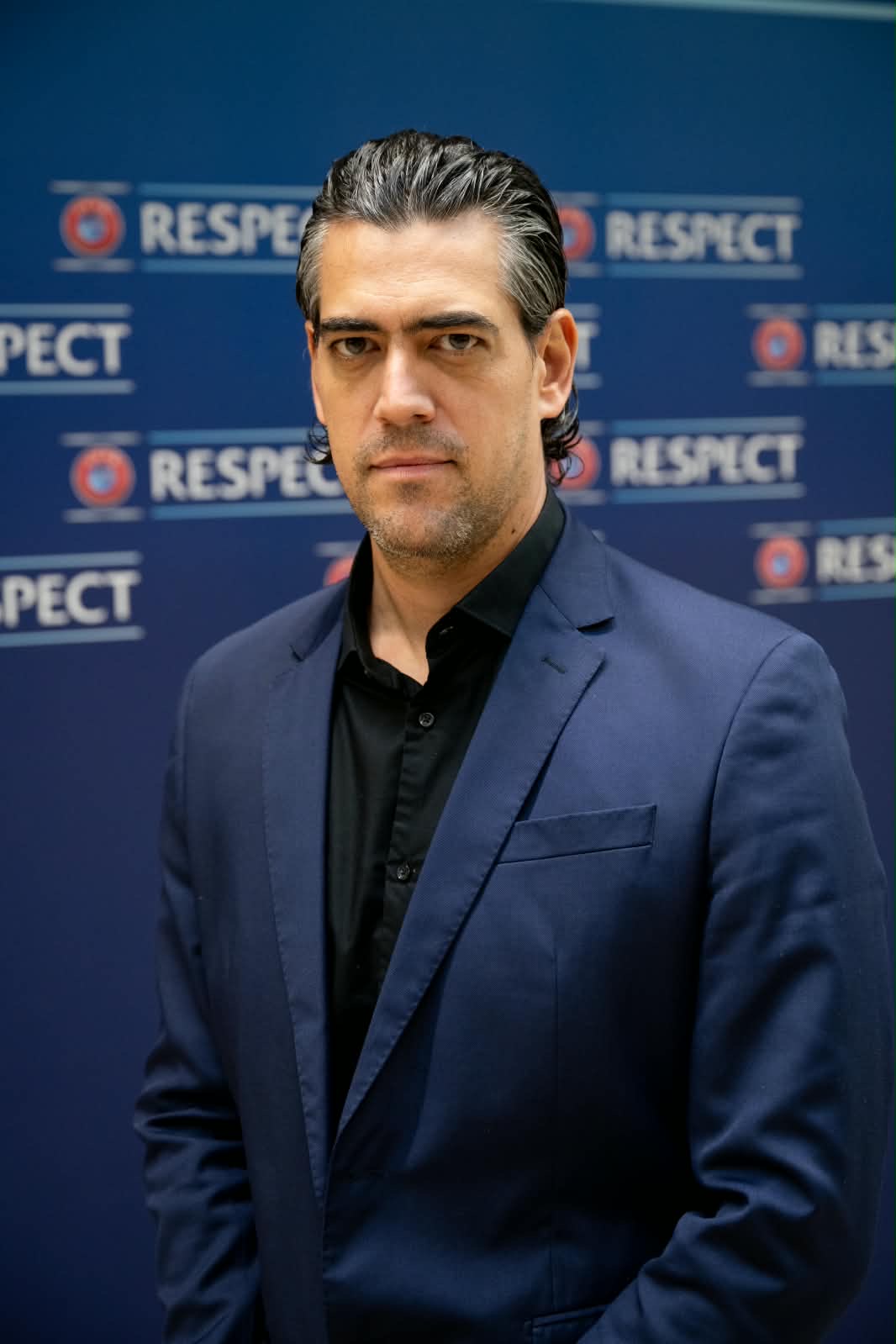
Professional Profile
Originally trained in law, Bracks moved from the regulatory side of the game into football administration, working his way through academy football, recruitment, professional teams and senior management. Experience within both traditional associative club structures and Brazil’s newly established SAF model has been a defining part of his development as a senior executive: at Vasco da Gama, he took on the club’s first SAF-appointed executive role, and at Santos his remit widened beyond football into finance, marketing and legal affairs, culminating in his appointment as CEO. That range of responsibility has continued at Atlético Mineiro, where he now leads the sporting department. Throughout, he has navigated institutional demands while building competitive squads, developing academy talent and maintaining the financial discipline required to sustain them in an increasingly costly Brazilian football landscape.
Football Leadership Philosophy
One of the clearest themes in Bracks’ approach to football management is the importance of bringing different sources of information into the same decision-making process.
At Internacional, he helped take an existing data-science project from planning into practice, later continuing that work at Vasco da Gama across the Brazilian and international markets. At Atlético Mineiro, that work has advanced further still, with a cutting-edge integrated data science and analytics operation, highly regarded by Bracks as a benchmark for modernization within the sector in South America.
For Bracks, data will always complement rather than replace football judgement.
Data extends the reach of the market, surfaces trends and allows players to be set side by side on a consistent basis. Match footage, in-person observation and knowledge of a player’s circumstances fill in what statistics alone leave out. When different sources point in the same direction, decisions become more informed.
One of the clearest themes in Bracks’ approach to football management is the importance of bringing different sources of information into the same decision-making process.
Beyond recruitment, Bracks sees each department as technically independent but ultimately working toward the same objectives. Medical, performance, analysis and recruitment teams need the autonomy to do their jobs while maintaining a common direction. His role is to provide that direction, monitor the work and keep the different areas moving together.
Planning provides a framework for the wider management of a club, but football remains an unstable environment where results can change the conversation from one weekend to the next. Maintaining process and strategic clarity allows a club to respond to immediate pressure without losing sight of its longer-term objectives.
Career and Development Pathway
Bracks began in Brazilian sports law and regulation in 2007, working as an STJD auditor before later chairing a disciplinary commission. A move to the Federação Mineira de Futebol in 2014, as competitions director, brought him closer to clubs and the practical side of running competitions. Alongside those roles, Bracks has taught at CBF Academy since 2010 and continued to build his qualifications in football management and performance analysis.
At América-MG, his first full-time club role, Bracks led the academy and women’s football from 2018 before moving into the professional department in 2019.
América returned to Série A and reached the Copa do Brasil semi-finals in 2020, with Bracks contributing significantly to the internal development of the club’s youth academy processes and the promotion of several youth players to the first team.
Alongside those roles, Bracks has taught at CBF Academy since 2010 and continued to build his qualifications in football management and performance analysis.
Internacional broadened his work across the professional and transition sides, embedding data science more deeply into processes related to both recruitment and performance analysis. Under Bracks’ leadership, the club finished second in the 2020 “Campeonato Brasileiro” and won the 2021 Brasileiro U20 title.
Vasco da Gama followed as Bracks became the club’s first SAF-appointed executive during its successful promotion campaign and helped rebuild the squad for Brazil’s 1st Division with signings such as capped Brazil international Paulo Henrique, keeper Léo Jardim and full-back Lucas Piton, all of whom remain key players for Vasco today.
Significant departures included the negotiations of highly touted academy products, Eguinaldo (Shakhtar Donetsk) & Andrey Santos (Chelsea), as well as forward Pedro Raul’s transfer to Mexican side, Deportivo Toluca.
At Santos FC, Bracks moved into an even broader executive role as CEO, with a brief that extended beyond football into the club’s commercial, financial and legal operations. Arriving with Santos outside the Série B promotion places, he became part of the leadership group that delivered the title and an immediate return to the top division for the historic giants.
Key Insights
- Data science and traditional scouting support a shared recruitment process.
- Departmental autonomy works alongside common objectives and coordinated leadership.
- Competitive squads, player development and financial responsibility require integrated planning.
Our Exclusive Interview with Paulo Bracks
Your first experiences in football came through sports law, the STJD (Brazil’s Superior Court of Sports Justice), the Federação Mineira de Futebol and the education of football professionals. In what way did this institutional foundation shape you as a professional?
Absolutely.
My background in law and my specialization in sports law led me to work at the CBF’s national tribunal. And that was my entry point, it was my “start” in a career in football, even though, at the time, that would have been unthinkable. Working for a few years judging disciplinary infractions in Brazilian competitions gave me a great deal of experience, an understanding of norms, statutes, laws, regulations, rules, in short, everything that governs football.
Later, as part of the technical body organizing competitions across the state, I grew closer to the clubs. All of that broad experience stays with me in my day-to-day work as an executive. I wasn’t a player and I didn’t grow up in a locker room. Quite the opposite. I came from outside the game and made my way in, and that path, without a doubt, sets me apart from the traditional profile in football. It consolidates my own identity in this market, which is quite select and restricted.
When leading a football department with distinct areas of responsibility, how do you ensure integration between them without each area losing its autonomy and technical specialisation?
Leading professional and youth football at a major club doesn’t just mean centralizing decisions, but ensuring that each area has full autonomy to perform at its highest level. The Medical Department, Performance Analysis, the Performance and Health Center, Market Analysis, among others, all need to be moving in the same direction and toward the same objectives. My role is also to set the pace, to control and direct, to align directives, protect values and be the guardian of the identity of a century-old club. I demand the maximum from every professional and every area because I know that high performance comes from drawing out the best in everyone. In the end, leading means making the machine run in sync, in a good and stable environment, connecting people, sustaining the club’s culture and turning execution into results on and off the pitch.
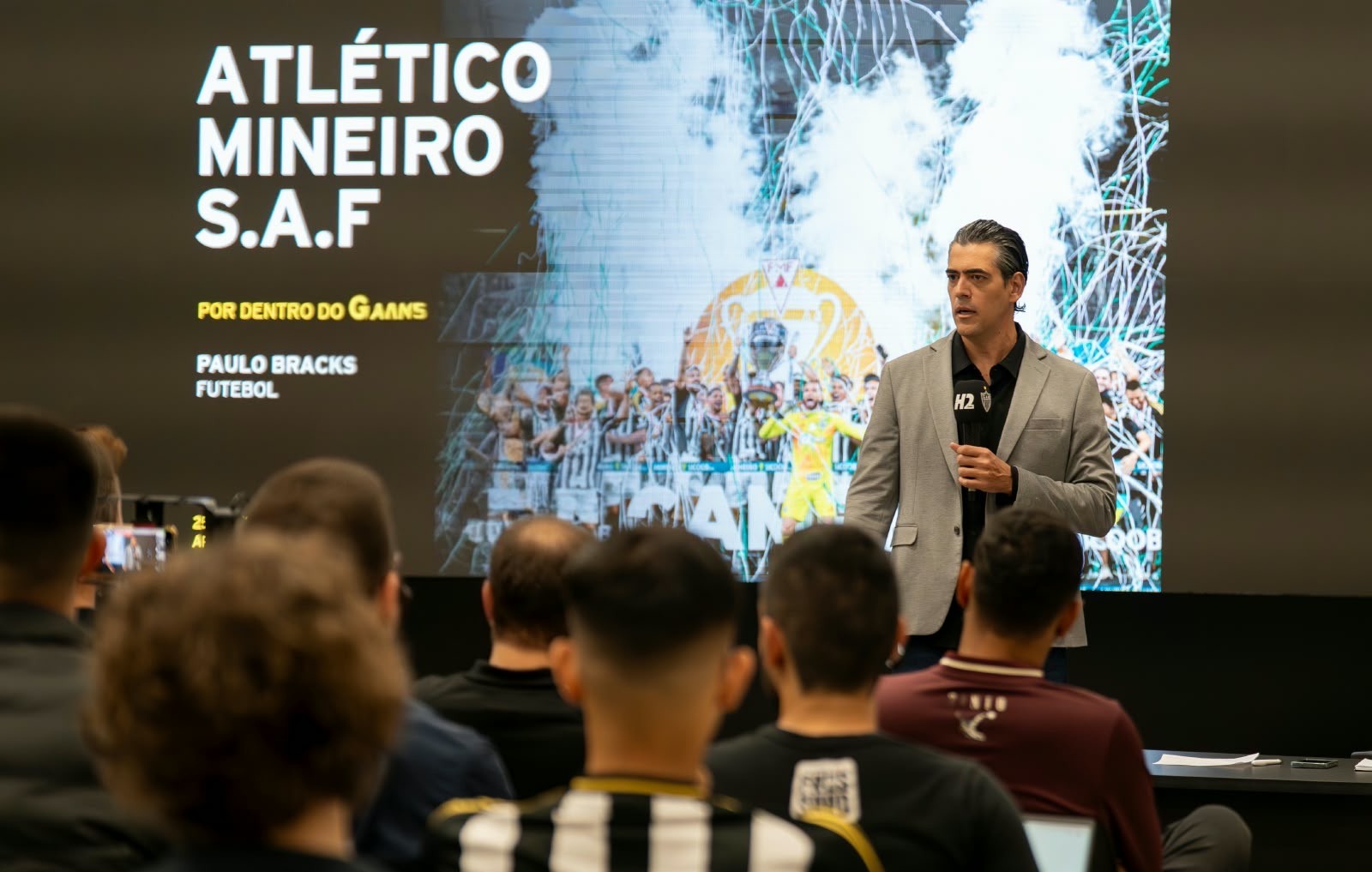
At Internacional, you helped implement data-science within the market-analysis structure. As an executive, how do you seek to balance the use of modern tools, such as data science, with more conventional methods of player identification?
At Inter, yes, I helped and implemented it, but it was already a project that existed conceptually. I got it off the ground. I continued that work at Vasco, at both the national and global level (at the time, the club was part of a multi-club ownership group). But it’s here at Atlético that the data science and analytics department is at its highest level. I’m not exaggerating when I say that, in this area, we are a reference point in South America. Not just in methodology, but above all in the integration with the performance analysis and market analysis process. Here, the process is unique and hybrid.
On the second part of the question, I don’t see data science and traditional scouting as competing methods, but as complementary tools. Data expands our capacity to observe the market, identifies patterns, compares players at scale and reduces risk. At the same time, video, live observation, market knowledge and understanding of the athlete’s context bring elements that data, alone and in isolation, cannot explain.
The key is integrating these different sources of information within a single process. The more evidence converges toward the same conclusion, the better informed the decision tends to be. In football, we will never completely eliminate uncertainty, but we can build increasingly better processes to reduce it.
Atlético, like other major clubs, faces pressure to compete immediately. How do you protect long-term football planning when short-term results naturally dominate public debate?
Working at a major club means living with pressure every day. Executives need to see that pressure as a privilege, because it comes from the passion of millions of supporters. I see football as a reflection of society itself. And the standard at a major club really does need to be high. The club’s planning is the “North Star” that guides management, but we can’t lose sight of who we work for and why we work on their behalf.
The focus needs to be on the medium and long term, especially because these are clubs with more than 100 years of history, but with the clarity that the weekend’s result can directly impact the route. It’s a dynamic scenario: a role that’s naturally unstable, demanding, above all, emotional and strategic stability.
That’s the challenge of the position!
Executives need to see that pressure as a privilege, because it comes from the passion of millions of supporters.
While public debate is driven by the heat of emotion, management needs to be guided by rationality, however difficult that balance may be. Technical decisions require strategy and planning. Only conviction in the process sustains the work that’s been done.”
What is the ideal balance between developing and selling players, maintaining the competitiveness of the squad and ensuring financial responsibility within the football operation?
Every serious club with governance and professionalism needs a well-defined budget.
There’s that saying that if you don’t know where you want to go, any road will do.
The budget gives you the parameters for your market moves, it sets the boundaries for squad building and for defining a coaching staff. What is the club’s goal for this year and for the next three years? That needs to be clear. At Atlético, for example, this year we set a budget for salaries, a number for athlete sales, for instance, but at the same time, the sporting objective for the year is very well defined. And that balance is challenging, because the two don’t move separately. Sporting and financial go hand in hand when a club wants to be sustainable and competitive. And here we have Galo2030, a consolidated project with very clear goals and objectives for a five-year period.
Looking ahead, what would you like Atlético Mineiro’s football structure to be recognised for in competitive, operational, and player-and-professional-development terms?
I would like Atlético to be recognized for combining competitiveness, management excellence and player development. Of course, results and titles are fundamental and mark trajectories, but the ambition is to build a structure with the permanent capacity to compete at a high level, regardless of cycles or specific individuals. That comes down to solid processes, qualified professionals, integration between departments and the continuous development of players and professionals.
I would also like to be known for turning information and experience into institutional knowledge. In short, I would like Atlético to be recognized not only for its results, but for the consistency and quality of the work that sustains those results. Particularly, in 2026, we have already managed to set a historic mark for minutes played by athletes developed and coming from our youth academy. It is the largest participation of young athletes from the club in the last 10 to 15 years. And all of it stems from planning, a process, a strategy. And this needs to be more than just recognized, it needs to become part of the club’s culture. There can be no going back.
Based on your UEFA education and your experience as an executive in Brazil, which administrative practices from Brazilian football could be adapted to the European context? And which characteristics of European management could add value to professional clubs in Brazil?
Having received the UEFA diploma allowed me, throughout my immersion abroad, to draw a parallel between what I’ve been doing here in Brazil for almost 20 years and what I absorbed through the course and experiences in Europe.
Here, crisis management is constant, due to the high pressure for results, in a continental-sized country that demands matches twice a week and enormous travel that directly interferes with athletes’ recovery and preparation. Working in Brazilian football, without modesty, prepares you for any challenge in the football world. Europe seems to us better prepared to have more strategic management, an overall organizational and structural framework, which allows clubs to cross borders with more strength and naturally. I feel that one can think and plan better, without that affecting the day-to-day.
The impression is that here in Brazil we are acting more than thinking. We always have urgencies. The fact is that the two realities and cultures are increasingly coming closer together, just look at the number of Europeans working in Brazilian football, which was unthinkable years ago. And the reverse too, still with modest growth, but breaking through borders. Football is one and the same, and good practices in governance and professionalism will always be the main causes we carry forward.
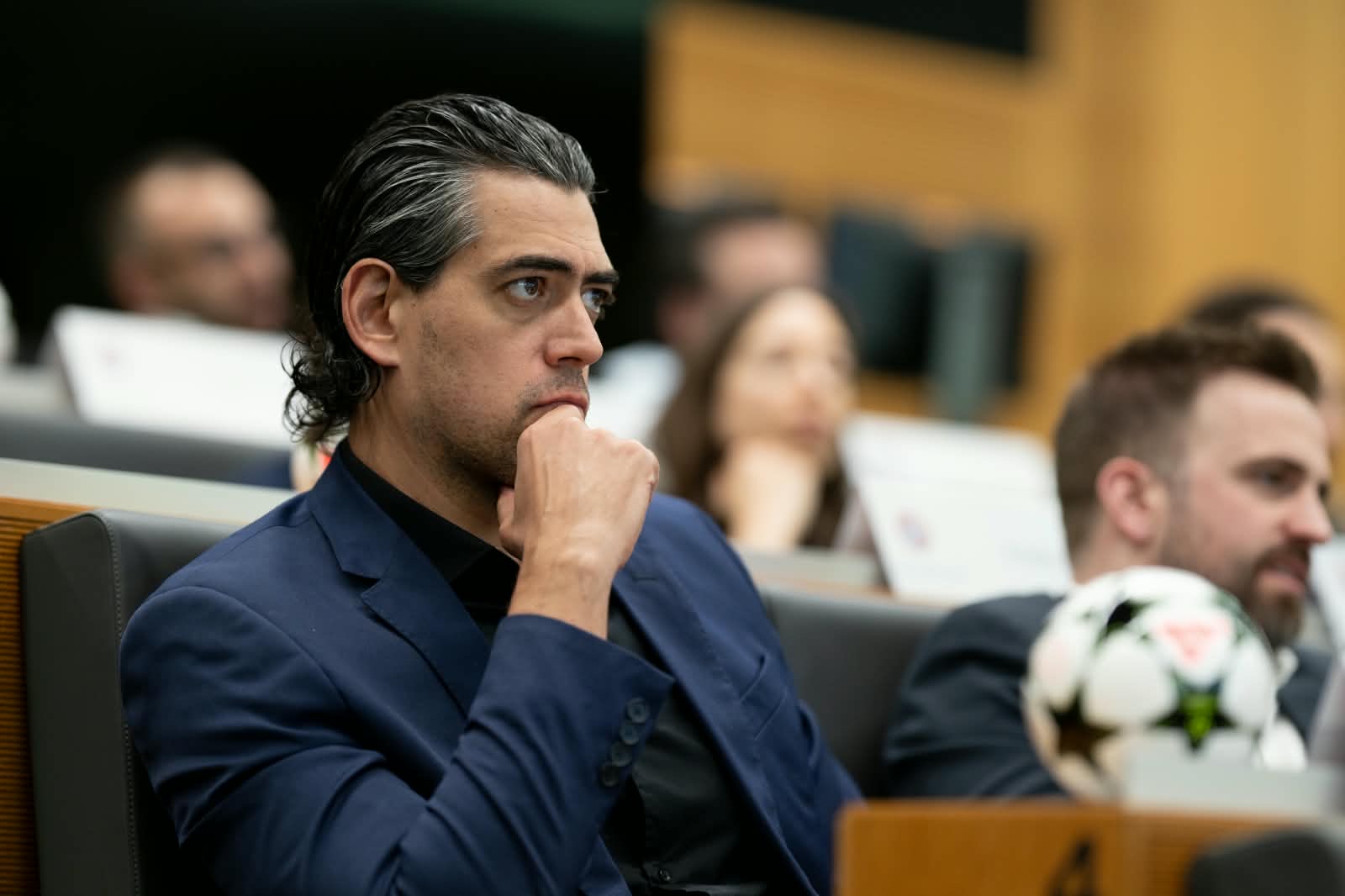
Finally, how do you see the position of Brazilian football on the global stage alongside other major footballing centres?
Brazilian football lost its leading role in world national team football some time ago. The eliminations against Europeans in the last World Cups are not mere coincidence, but a reflection of several factors.
On the other hand, our national league has all the attributes to establish itself among the three most competitive in the world. The recent growth in transfer figures and major deals has already put Brazil back under the spotlight of the global market. Today we compete with relevant European clubs for some signings.
We maintain hegemony in South America, and I feel the tendency is for that dominance to expand, but the real leap forward depends on management maturity across all the major clubs: we need to move closer to Europe’s big five in governance, structure, revenue and fan engagement, so that Brazil can consistently approach the top of world football.
FAQ
Who is Paulo Bracks?
Paulo Bracks is the Chief Sports Officer at Clube Atlético Mineiro, with a background in sports law, football administration and senior club management.
Which clubs has Paulo Bracks worked for?
Before Atlético Mineiro, Bracks held senior positions at América-MG, Internacional, Vasco da Gama and Santos.
How does Paulo Bracks approach player recruitment?
He combines data science with video, live observation, market knowledge and an understanding of each player’s circumstances.