
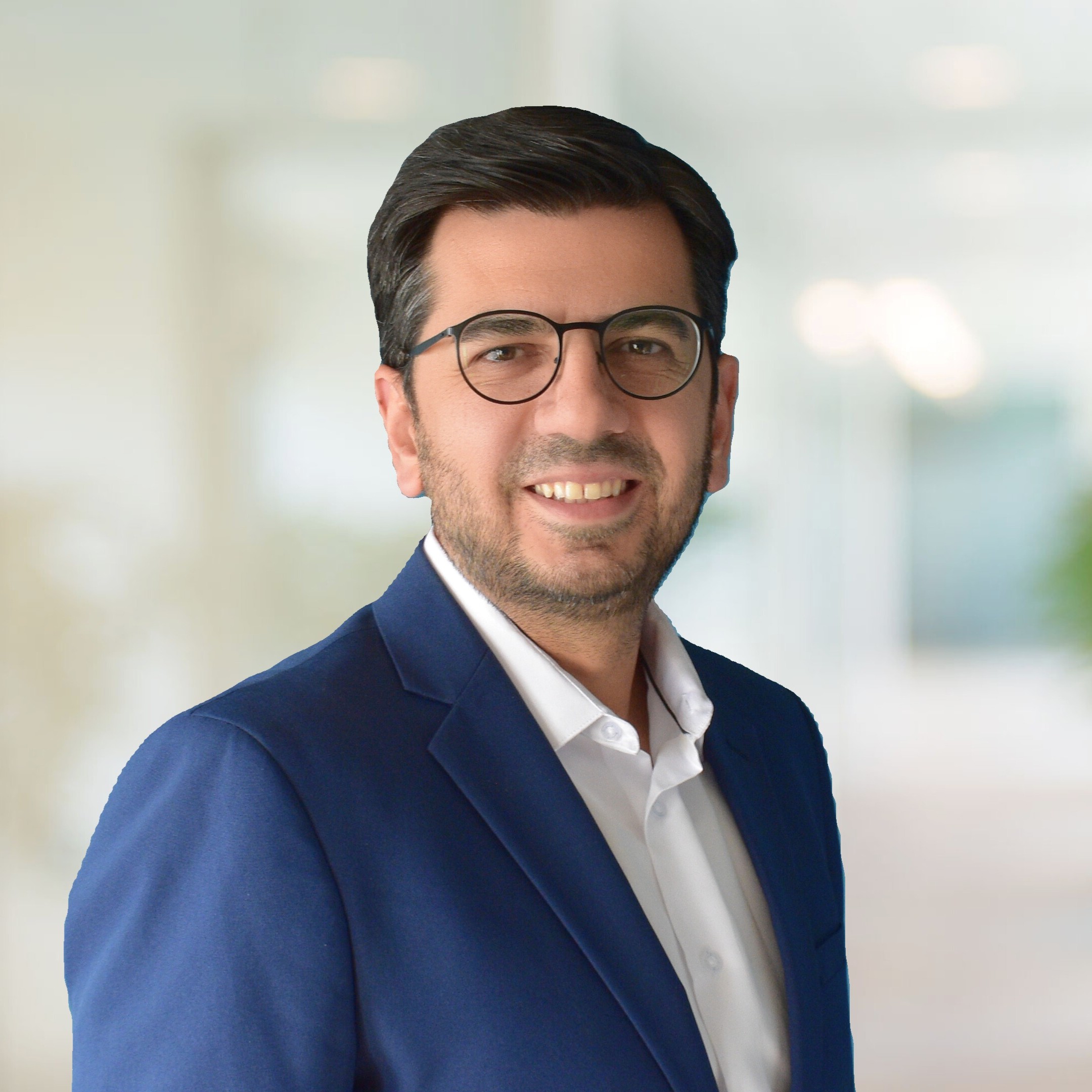
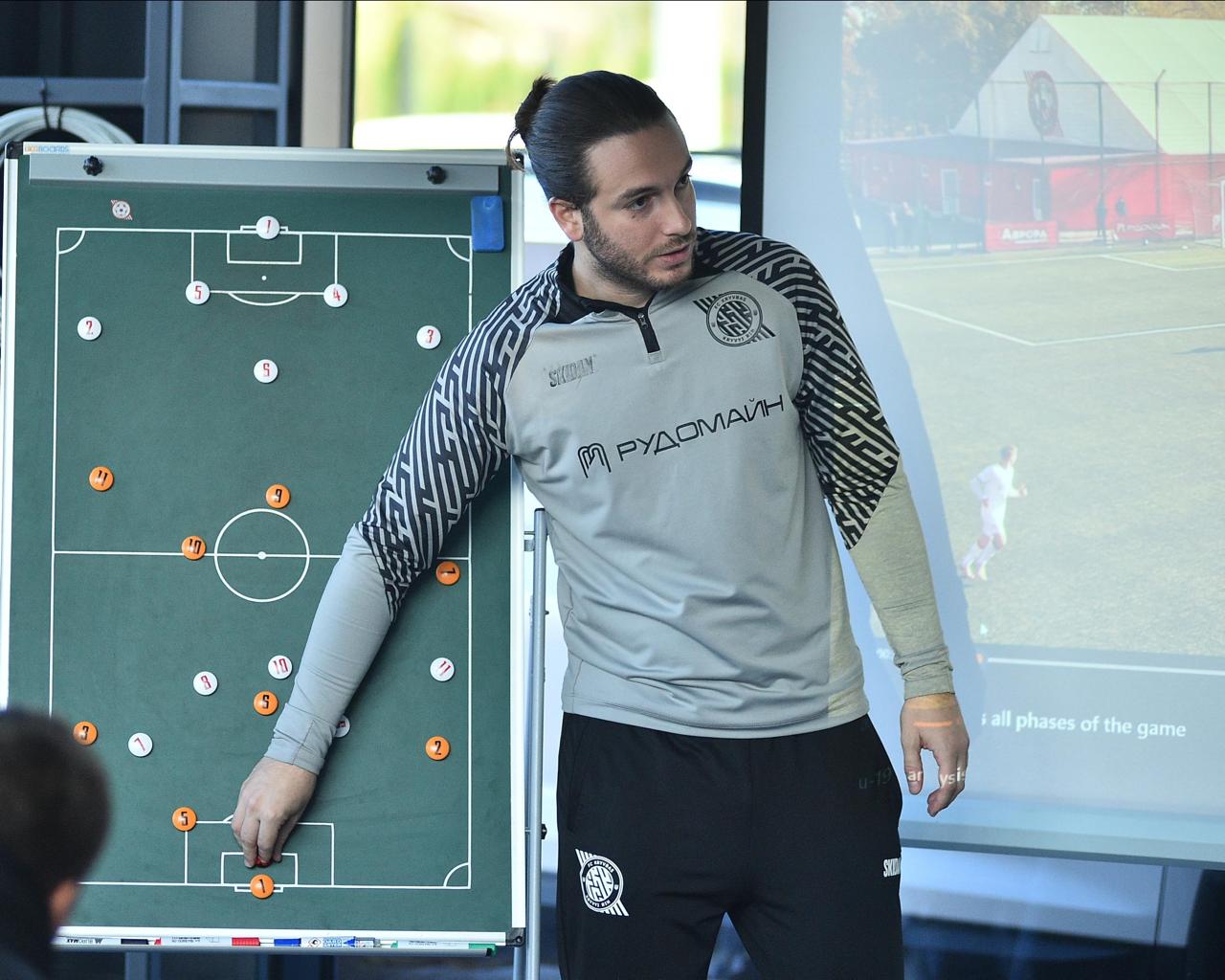
Profile
Role: Academy Director and Head of Youth Development
Specialization: Academy transformation, methodology, player pathway and talent decisions
Experience: Greece (AEK Academy Veria, Ajax Academy Veria and Olympiacos FC), Armenia (Pyunik FC) and Ukraine (FC Kryvbas Kryvyi Rih)
Focus Areas: Academy operating models, coach development, first-team transition, safeguarding and residential academy management
Qualifications: UEFA A License; Executive Diploma in Sports Management; University Study in Football Analysis
Marios Georgios Alexandris built academy systems in Armenia and then in a Ukrainian frontline city. He discusses alignment, wartime operations, girls’ football and the numbers academies use to judge themselves.
Background
Born in 1994 and raised in Greece, Marios Georgios Alexandris began his professional career at the age of 17 in the Olympiacos academy and played mainly in the Greek second and third divisions as a striker. Injuries and a series of misjudged moves brought that career to an end at 23.
Coaching was not the plan. He took an offer at the AEK academy in Veria in 2017, coaching the U-8s, and within a year had moved to the Ajax academy in the same city as coordinator and coach of the U-14s and U-12s. In 2019 he returned to Olympiacos, where he spent four years coaching every age group from U-8 to U-16 at the club’s central soccer school, working simultaneously as an academy scout from 2021.
His first directorship came in 2023 at Pyunik in Yerevan, and with it his first job outside Greece. He inherited an ecosystem of roughly 1,000 players across the academy and football school, more than 70 coaches and age groups running from U6 to the B team, with limited shared methodology and little routine connection between the school and the academy. The response was a documented philosophy, an age-group methodology, an eight-role selection panel for talent decisions, and expanded analysis and performance capacity. The 2023/24 season produced seven age-group league titles and three cup titles, seventeen B-team debuts by players born in 2007 and 2008, ten professional contracts for players born in 2006 and 2007, and the club’s first participation in a European youth tournament.
In 2024 he moved to FC Kryvbas Kryvyi Rih, a club operating through the war in Ukraine. The academy ran across two training centers and two residential hotels, with around ninety players living away from their families in a frontline city. The brief was to turn isolated activity into a repeatable operating system: age-group frameworks, digital player profiles, a formal scouting method, department leads with defined responsibilities and monthly parent meetings. Sixteen priority players were moved onto professional or pre-contracts, all four older Dytosnatsionalna futbolna liha Ukrainy (DUFLU) groups reached the playoffs, two reached the Final Four for the first time in the club’s history, and the U-15 girls’ side won the Ukrainian national championship unbeaten.
He speaks Greek and English, and basic Spanish. He has worked in two countries where he shared no language with most of his players or staff.
Key Insights
- Alignment between the board, the director and the coaches decides whether an academy strategy survives contact with daily work.
- Philosophy and methodology do not change between boys and girls; workload and requirements do.
- Academy development should be judged by contracts, first-team transitions and call-ups rather than by youth results alone.
Our Exclusive Interview with Marios Georgios Alexandris
If you had 60 seconds to tell the world who you really are, what would that sound like?
I’m 32, and even though my life is and was full of football, it’s essential to decompress from it sometimes. I have a beautiful family, my wife and daughter. I love watching shows and reading a vast number of topics including ancient history, space, physics, and technology. And I also enjoy cooking.
Your playing career ended at 23, and you were coaching U-8s soon afterwards. What happened?
I started my professional career at 17 in the Olympiacos academy and played for many teams in Greece, mainly in the second and third divisions. I was a striker and I really loved being a footballer. I had a great influence from my father’s career as well as he was probably the most prolific striker of his generation, who won ten league titles and played at the 1994 World Cup in the USA.
Some major injuries, my mentality sometimes, some incorrect decisions when choosing teams, led my career to an early end at the age of 23.
To be honest, it was not my intention to become a coach. I always said that if my career ended, I would stay in football, but coaching was definitely not my main goal. The proposal came suddenly. I didn’t have much time to think, my life and career were in a transitional state, so I took the chance immediately.
Pyunik was your first directorship and your first job outside Greece. When you inherit an academy that already has a system, and people invested in it, where do you start?
It was my dream and my ambition to work outside Greece. I always wanted to work in different environments, different cultures, different football schools.
Arriving in a new country, in a new club, is always demanding. You need to analyze the environment as fast as possible, understand where the problems are lying, and set your strategy and philosophy based on what needs to be changed and where you want eventually to arrive.
Changing things is the most demanding aspect of the work, because a strategy may exist on paper, but implementing it and shaping a club or academy through it is the main task. Most importantly, the board, you, the coaches must all be aligned. If the alignment is broken, it will not work. Imagine it as a chain. If a part of a chain is cut, the chain ceases to exist.
Imagine it as a chain. If a part of a chain is cut, the chain ceases to exist.
What did an ordinary week at Kryvbas actually look like regarding sessions, travel, disruption, keeping staff?
Ukraine and Kryvbas gave me a lot in my career, shaped me as a person, and I will always be grateful for the experience.
Even if this sounds weird, daily life was like being in a non-war country. People got used to the situation, me and my staff as well. War is a disastrous situation, we felt it every day, but life gives you this urge to just keep going. It was the same in the team. We worked at a very good level, training was operated normally, but we had disruptions due to air alerts caused by drones flying in the area, and rockets too.
Most importantly, the board, you, the coaches must all be aligned.
We had a lot of children in our team hotel from other regions of the country. Parents trusted their kids to us. It was an immense responsibility for all of us, but we managed to handle it and be safe and successful. Travelling was really tough because of the long distances, and we couldn’t fly inside the country, so most of it was by bus or train. Twenty to twenty-two hours on a bus to play an away game is not the most comfortable thing for players, but we must always adapt.
And when a family decides to leave?
It was one of the most demanding things. If a father or a mother tells you they don’t feel safe anymore and they want to leave the country, or move to a safer city, you can’t do or say much, because safety and human lives matter the most. Our city was close to the front, so the situation there was more intense. Football comes second when a matter of life or death comes first. Those challenges were very frequent.
Football comes second when a matter of life or death comes first.
You share no working language with most of your players or staff. How do you deliver a football philosophy?
In the beginning it’s always demanding. You need to translate and adapt everything you do and create, and talking to people is not easy because most people in these countries don’t speak English either. I had translators with me while I was working, but to deliver a message clearly, it’s essential to speak the language. I understood Armenian and Ukrainian at a very basic level, I learnt some words, but it was not enough.
The biggest problem is that vital information you always need to have is sometimes lost because of the language barrier. The sooner you learn the language, the better for everyone.
Kryvbas won the Ukrainian U-15 girls’ league in 2025, unbeaten. How is the girls’ program built?
It was a success we were very proud of, because girls must have equal opportunities in football. You don’t change the philosophy and the methodology depending on whether it’s a boy or a girl. You change the workload and the requirements in accordance with the level. What we were working on and teaching the boys, we did with the girls as well.
We did not separate a boys’ academy and a girls’ academy. Resources came from the general academy budget and we allocated them according to need.
You don’t change the philosophy and the methodology depending on whether it’s a boy or a girl.
Your record is read in numbers, with contracts signed, debuts and national-team call-ups. Which of those matters most, and which is easiest for an academy to flatter?
We are all judged by results. Football is like this. Although results at academy level should not be measured by wins in the younger ages, but by different facts and data. For me, the most important metrics and factors of development are signing professional contracts, transitioning to the first team and national-team call-ups.
We must not be obsessed with numbers, though. Results will be visible if we all follow the same line, the same pathway, the same mentality, the same level of professionalism and ambition. What my experience has taught me is that academies, and the people around academies, care about the results of the games and winning titles in 70 to 80 per cent of cases. You need to find the perfect balance between a match result and a development result, and that comes back to alignment and to what the club really wants to be.
You don’t change the philosophy and the methodology depending on whether it’s a boy or a girl.
You need to find the perfect balance between a match result and a development result.
What kind of project do you want next, and what would have to be true about it for you to say yes?
The project is more important than the place. I decided to go to a country at war because the project intrigued me. I felt it from day one. I knew we could do great things.
Most of the time, the way someone approaches you and explains the project is 90 per cent of your final decision. I’m genuinely open, I have no reservations about the country. The most important thing is to have a clear plan on the table, with clear lines of work and engagement and a clear path to success. Those are the foundations for a fruitful and successful collaboration.
The project is more important than the place.
FAQ
Who is Marios Georgios Alexandris?
Marios Georgios Alexandris is an academy director and head of youth development with experience in Greece, Armenia and Ukraine.
Which academies has Marios Georgios Alexandris worked with?
He has worked with AEK Academy Veria, Ajax Academy Veria, Olympiacos FC, Pyunik FC and FC Kryvbas Kryvyi Rih.
How does he measure academy development?
He prioritises professional contracts, first-team transitions and national-team call-ups rather than youth match results alone.