
Profile
Role: New England Revolution radio play-by-play voice and executive producer of radio
Specialisation: Soccer commentary and broadcast production
Experience: A voice of the Revolution since 2001, with more than 1000 matches called and work across MLS, USL, UEFA Champions League and European competitions
Focus Areas: Storytelling, broadcast preparation and soccer production
There are careers that arrive with a grand plan, and then there are careers that seem to happen almost by accident, until you look closely at the years of work underneath them. For Brad Feldman, the path into soccer broadcasting was very much the latter.
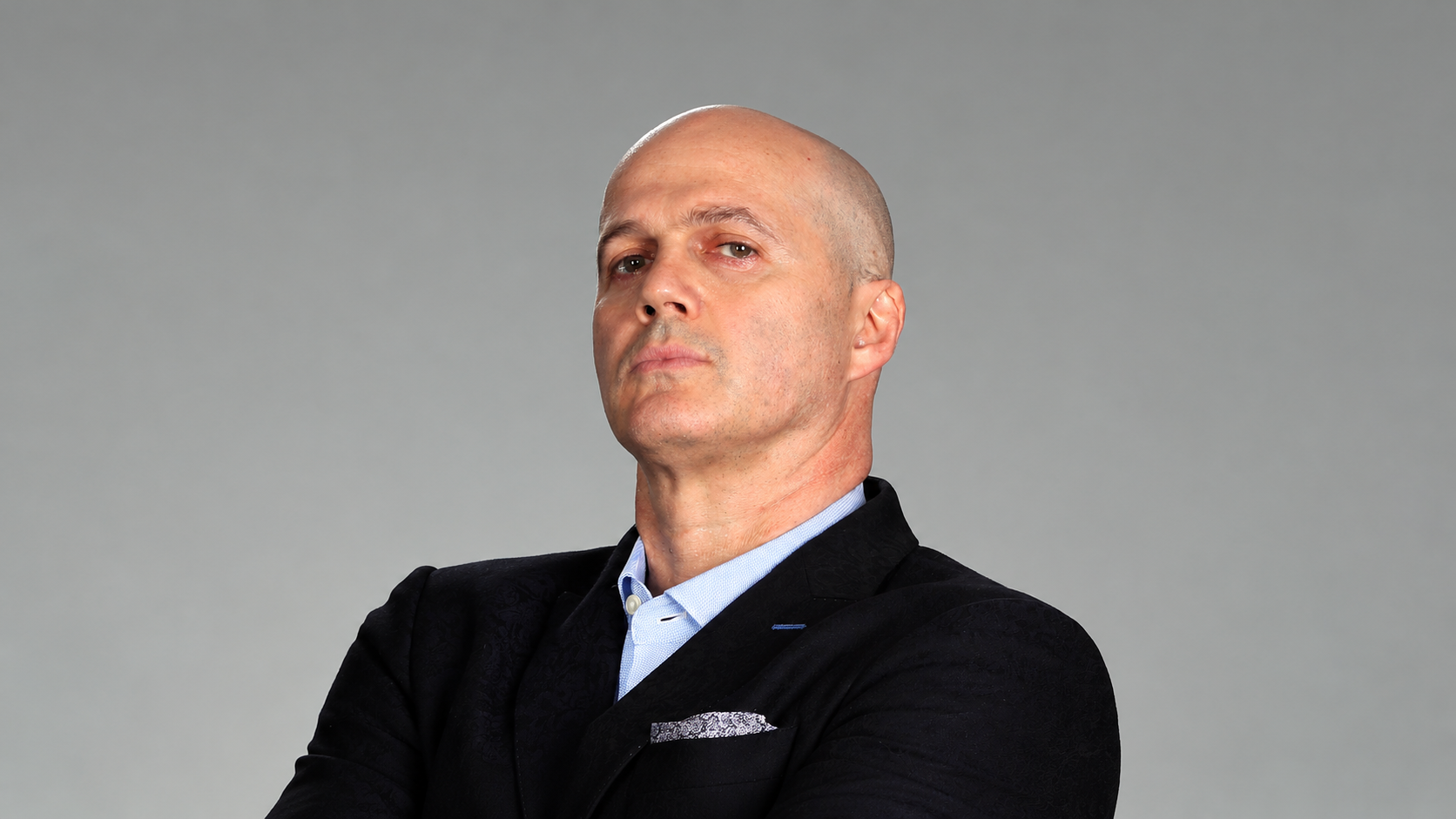
Feldman has been a voice of the New England Revolution since 2001, calling more than 1000 matches during his time with the club and working across MLS, USL, UEFA Champions League and European competitions. He has also spent years on the production side of the business, helping shape how soccer is presented on American television. Today, he remains the Revolution’s radio play-by-play voice alongside Charlie Davies and continues to contribute to the club’s broader audio operation.
But the story behind the voice is perhaps more interesting than the résumé. It involves VHS tapes, MLS players who became friends, showing up at stadiums simply to practice calling games, a daughter who told him to take the “training wheels” off, and a friendship with the late Paul Mariner that went far beyond the broadcast booth.
I sat down with Feldman to talk about the long road into broadcasting, preparation, confidence, Paul Mariner, and what it means to spend more than two decades telling the story of the same club.
Key Insights
- Practice, persistence and relationships helped Feldman build his soccer broadcasting career.
- Thorough preparation creates the confidence to trust yourself on air.
- Strong soccer broadcasts combine knowledge of the game with storytelling and trust in the production team.
Our Exclusive Interview with Brad Feldman
You grew up around Boston, spent your allowance on World Soccer and Total Football, watched the World Cup on closed-circuit television, and even remember being crushed when the New England Tea Men moved to Jacksonville. At what point did the kid who was consuming soccer realize, “Wait a minute, I’m actually going to make a living inside this world”?
I have to give a lot of credit to a lot of people who helped me along the way, especially early on. But the real catalyst for me getting into soccer commentary was a former player and still good friend named Brandon Pollard.
Brandon played for the U.S. Olympic team in 1996 and spent his entire professional career in MLS with the Dallas Burn, now FC Dallas. He was a star at the University of Virginia and just a very genuine, free-spirited guy. He’s also done all kinds of interesting things outside soccer, he’s worked to save honeybees, baked organic bread, and is a real curator of music.
At the time, I had my first sports-casting job in Sherman-Denison, Texas, a small market a little over an hour north of Dallas. My wife and I had just moved there from downtown Manhattan, near Union Square, so culturally and geographically it was a huge change. We didn’t know anybody. A friend told me, “You should connect with this guy Brandon Pollard. He’s into music like you are, he’s into soccer, and he plays professional soccer.” I said, “I know that guy. He’s on the Olympic team.” I was probably the only person in that market putting MLS highlights on the local news. They wanted Friday Night Lights football and baseball. High school football was religion. But I could also see that there was an appetite for soccer. There were tons of kids playing youth soccer, and there was a huge Mexican and Salvadoran immigrant population playing semi-pro soccer. I actually joined some of those teams and played with former high school players from the area. Some of it was the best soccer I’d ever played.
Brandon and some of his teammates became our friends. They would give us tickets to MLS games, and one night Brandon said, “Let’s go watch a World Cup game.” That’s where I first met some of the Dallas players. We watched Holland-Brazil in the 1998 World Cup, one of the all-time classic games. While we were watching, they told me they could tell I had a feel for what was going to happen next. My reactions weren’t just factual or information-based. They could tell I’d watched and played enough soccer that I anticipated the game. Not like a professional player, obviously, but I had a feel for it. Later, they said, “You have to bring us your demo tape.” So my wife twisted my arm, and I brought over a VHS tape of one of my six-minute sportscasts. Everybody made fun of my clothes and my delivery, but it was all in good fun. I forgot that I had left the tape in their VCR. Two months later, Ken Neal, who was Brandon’s agent and a producer, called me. He said, “Listen, if you’re willing to take coaching and work for cheap, I can give you an opportunity.” That opportunity was as a sideline reporter for Kansas City Wizards broadcasts. I ended up doing four or five of their away games.
And while I was doing that, I was digging in and doing as much homework as I possibly could. I probably overprepared. Some of my sideline hits were too long because I had so much information that I wanted to get out. But I was also watching MLS broadcasts and thinking, “The national guys are pretty good, but some of the regional broadcasters are good broadcasters who don’t necessarily understand what’s happening on the field.” I had a light-bulb moment. I thought, there’s an opportunity here.
Thirty years ago, nobody in this country was trying to become a soccer announcer. That wasn’t a career goal the way it is now. So I started doing soccer play-by-play wherever I could. I would record games on my own digital voice recorder and send demos to MLS teams.
When we moved back to New England, one of the places that gave me an early opportunity was the Revolution. I started as essentially the third backup, a fill-in online host. Adrian Healey, Derek Rae, Seamus Malin and others were all very welcoming. They treated it like a fraternity rather than a competition. I just kept grinding.
First I was a fill-in sideline reporter, then color commentator, then play-by-play. ESPN International gave me games, including Scottish Premier League matches and some Champions League and European qualifiers. Fox Soccer Channel gave me USL games, which was the A-League at the time. I was also doing Champions League for Setanta Sports. And suddenly I thought, wow, this is actually happening. It’s a 10-minute answer to your question, but that’s really how it happened. It only takes 10 years to become an overnight success in this business. I was working so hard and so focused that I didn’t realize the Big Bang had happened until after it happened.
For years, you kept a large-font script in the booth until your daughter Miriam essentially looked at you and said, “Dad, take the training wheels off.” You listened, and she was right. Looking back, what did that moment teach you about confidence, preparation and knowing when you’ve prepared enough to simply trust yourself?
She’s always been wise. People say, “You raised a good daughter,” and I say, “What do you mean? She raised me.” She grew up before I did. That script was always kind of a crutch. Miriam watched me doing a stand-up and realized that on the first take I never actually looked down at the script. It was a mental crutch. The lesson is really simple: if you do the work, you don’t need the cheat sheet. Preparing for a broadcast is like studying for an exam. If you’ve really studied, you don’t necessarily need the notes in front of you. The irony was that I wasn’t even using the notes I’d spent all that time preparing. The preparation itself had created the recall.
That doesn’t mean there’s anything wrong with having notes. With 30 MLS teams, injuries, international call-ups and players you haven’t seen in two years, it’s perfectly reasonable to have a little three-line memo. Where was this player developed? Did he play college soccer? Is he left-footed or right-footed? What’s his background?
That’s not a crutch. That’s a prompt. The important distinction is whether you’ve actually done the work. If I haven’t written something myself or at least gone through it, line-edited it and really looked at it, I’m not going to be ready in the moment.
The lesson is really simple: if you do the work, you don’t need the cheat sheet.
I also got great advice from Steve Levy when I was starting out. I told him how good he was at his stand-ups and asked what he did. He said, “Don’t over-prepare. Get a yellow legal pad, get a Sharpie, and write down three bullet points.” If you forget what you’re going to say or need a little prompt, it’s okay to look down. Just do it naturally and look back up. Those are probably the two best pieces of advice I’ve ever received about being on air: one from Steve Levy and one from my daughter Miriam. I still overprepare. I still sometimes want the crutch when I don’t need it. But I should listen to my daughter.
You’ve worked with an extraordinary collection of personalities, but the way you speak about Paul Mariner feels different. You described his memory as one of the great blessings to the sport, the club and to you personally. What did Paul bring out in Brad?
I’ve worked with a really good range of people, and many of them I still count as friends, Adrian Healey, Charlie Davies, Greg Lalas, and others.
I get choked up thinking about it because he (Paul) should still be with us.
Miriam and I went to the England-Ghana game this past summer wearing vintage 1982 Paul Mariner England jerseys. The number of older English fans who came up to us was amazing. They’d say, “I saw his debut for England,” or “I saw his debut for Plymouth Argyle.”
Paul was a working-class hero and a footballing hero at a particular time in English history when English society was going through a lot. He came from the working-class outskirts of Bolton. He was a late bloomer. He broke his leg at 17, was playing semi-pro for Chorley, working in a factory and studying at a technical school. Then he got discovered and went to Plymouth, Ipswich and Arsenal. He had this devil-may-care swagger, long hair, and this incredibly energetic style of play. He could leap, he could win headers, and he wasn’t afraid of the rough-and-tumble. He wore his heart on his sleeve, on and off the field.
People loved him. We’d go back to England and Paul would say, “Nobody remembers me.” Then we’d get out of the car and people would immediately recognize him. We wouldn’t pay for a drink. But he never once put on airs. He never acted like he was a big-shot celebrity.
Paul used to say, “I take as I find.” He took everybody on an individual basis. He didn’t think he was better than supporters or different from them. That combination of down-to-earth humanity and full-throated passion for everything he did created this contagious energy. Whether he was a coach, an announcer, a player or just living his daily life, he affected everybody around him. He wasn’t the most corporate guy. He wasn’t the most organized. He didn’t have a formal education. Some of those things probably worked against him professionally. But he had an implicit eye for players and tactics. He just knew the game.
He wore his heart on his sleeve, on and off the field.
I actually played futsal and pickup soccer with him. I think I saw his last game. We were playing 2v2 futsal in Lexington, Massachusetts, against Robbie Musto. Paul injured his Achilles, but before he did, he finished with this beautiful curling left-footed shot into the top corner. He said, “That’s it. I’m done.” I asked, “Done for the night?” He said, “No. Done. I just did my Achilles again.” That was it. He ended on a win. When he got cancer, I was heartbroken. He was like an uncle to Miriam and a member of our family. His sons are people I love. We still talk about him all the time. Every road trip I’m on, we tell a Mariner story.
Paul had an outsized influence on my life, on the Revolution, on Plymouth and Ipswich, on Arsenal, and on English football. But at the root of it, he was simply a good, decent guy. I think we could all use a little more of his ethical construct.
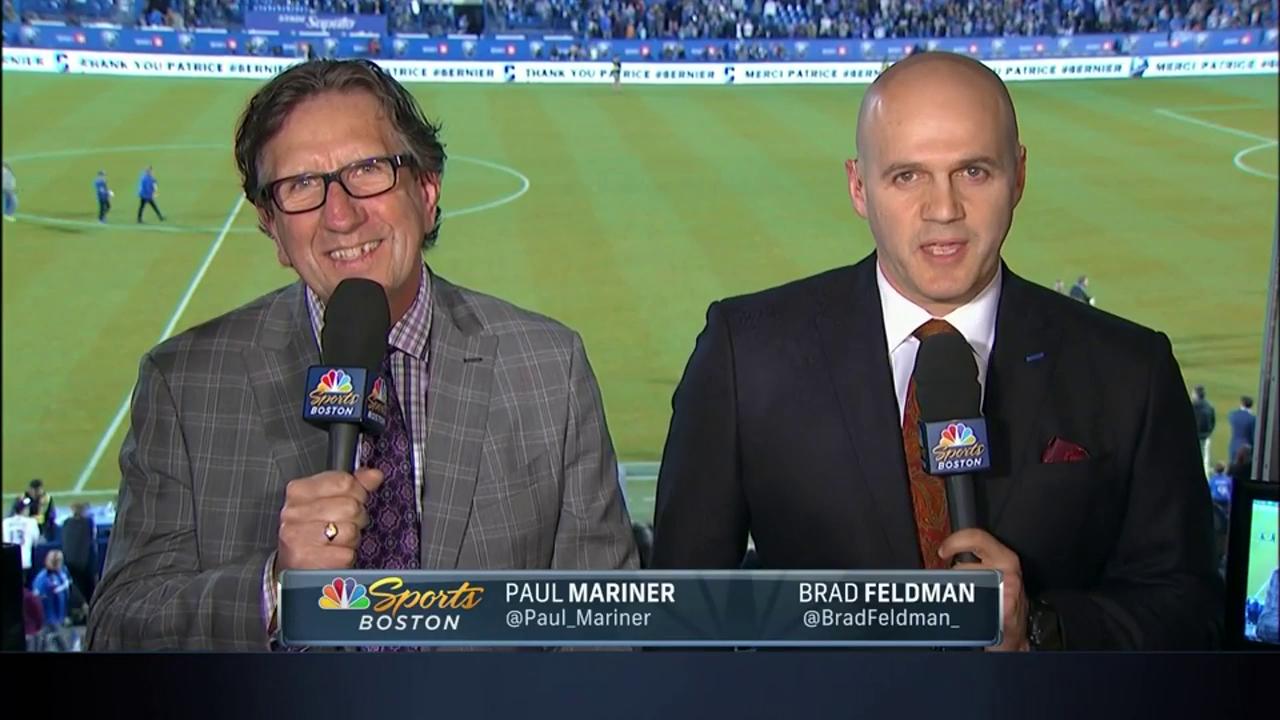
You’re both inside the broadcast and responsible for helping shape it. You’ve spent years not only calling games but helping produce the television operation. Does the producer in your head ever argue with the broadcaster in your head?
Just to clarify, my commentary with Charlie runs on the Apple TV broadcasts now, but only for the home games. For nearly 20 years I was the executive producer of the television operation. Now I’m the executive producer of radio, so there is still that same duality.
And yes, to an extent, those two sides of me do have to coexist.
When I was producing television, I was involved in selecting and hiring the producer and director in the truck. One thing I learned is that you can’t really produce from the booth when it comes to the actual in-game production. You can’t be on the air saying, “Hey, we need a replay.” That’s a cardinal rule. You can use talkback, but in most cases, the producer and director already know what picture you need. If they don’t have it, it’s usually because the replay machine isn’t cooperating or the operator has backed up too far, not because they don’t understand the game.
So you have to trust those people. What I tried to contribute was being a student not just of soccer, but of how soccer is televised. For years I would study broadcasts from Argentina and the Netherlands because they were soccer countries producing good broadcasts without the massive resources of the Premier League or Champions League. It wouldn’t have made sense to tell an MLS production crew ten or twenty years ago to simply copy a Premier League broadcast when they had 22 cameras and multiple replay machines and we might have had six or seven cameras. So I’d look for mid-level games in Argentina or the Netherlands, games where the resources were comparable to ours and study how they told the story.
What happens when a player gets a second yellow card? Do you show the first one? What was the context? What happens as he walks toward the tunnel? Does somebody from the opposing bench say something? Does the incident continue? Or after a goal: how quickly do you go to the crowd? Do you show the replay immediately? Do you establish whether there was an offside question? What’s the sequence?
Those details matter. Some of the people I worked with knew that stuff better than I did, and they taught me a lot. But there were also people who came from other sports who were excellent producers and directors but didn’t necessarily understand the nuances of soccer.
So you have to trust those people.
My contribution was trying to bring in best practices from places where soccer is deeply understood and then adapt them to what we could realistically do here. A lot of the people I used to do those seminars with eventually moved pretty high up the food chain at Apple. Hopefully, that’s a small contribution I made. But it was never one-way. They educated me too, especially on the commentary side. I spent a lot of time thinking about how we could make soccer broadcasts better in the United States. I think they have gotten better. We’re not all the way there, but we’re a lot better than we were.
Rapid Fire
City life or countryside?
City life.
Beach or mountains?
Mountains.
Sunrise or sunset?
Sunset.
Summer or winter?
Summer.
Play-by-play or storytelling?
Storytelling.
Paul Mariner or Steve Nicol?
That’s unfair. I love them both, but based on what you just heard, Paul and I were very close. Paul.
Plan everything or go with the flow?
Go with the flow.
Call or text?
I like to call, but we’re in a text world. Text.
Win ugly or lose beautifully?
Win ugly!
Books or movies?
Books.
Call the winning goal or call the comeback?
Call the comeback.
Old-school soccer or modern soccer?
Old-school soccer.
World Cup or MLS Cup?
In what context? I love the club game. Listen, it would be silly if I said anything other than the World Cup. It is the World Cup. But I love MLS. I’m a huge MLS guy. If you just said club or international, I’d say club.
FAQ
Who is Brad Feldman?
Brad Feldman is a soccer broadcaster who has been a voice of the New England Revolution since 2001, calling more than 100 matches during his time with the club.
What is Brad Feldman’s role with the New England Revolution?
He is the Revolution’s radio play-by-play voice alongside Charlie Davies and executive producer of radio. His commentary also runs on Apple TV broadcasts for home games.
What advice does Brad Feldman offer aspiring soccer broadcasters?
He emphasises doing the preparation, practising commentary and developing an understanding of the game. His interview also highlights trusting yourself on air and learning from others.