


Preparing Players for the Invisible Threshold
How can clubs develop the psychological traits that decide who turns professional?
You hear it all the time in football: “That kid has character.” As if character is something you either have or you don’t. But the four psychological traits I described in the previous piece, being obsessed with getting better, motivating yourself on the bad days, self-belief and being able to ask for help, don’t work like that. Some children are born with more of them than others. But all of them either grow stronger or wither in the environment where a player is brought up.
So the question for this piece is simple: how can clubs develop these traits?
The Environment Shapes the Mind
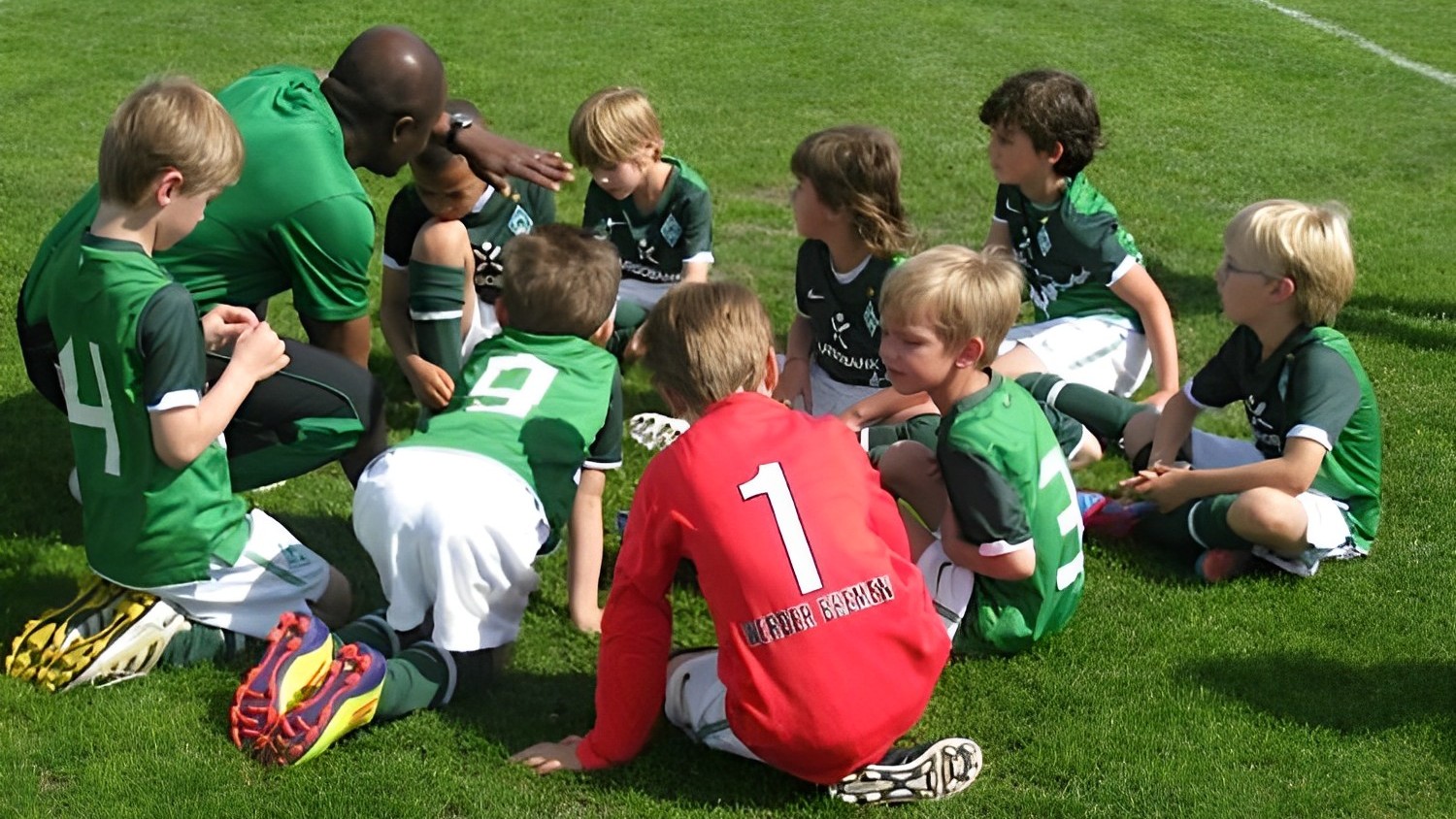
Picture two academies. In one, getting things wrong is treated as part of learning, and after a match the coach talks less about the score and more about what the player tried. In the other, the league table is checked every week and whoever gets it wrong is taken off. A few years later, the boy from the first academy has learnt to take risks, to take responsibility and to bounce back after a poor game. The boy from the second has usually learnt to play it safe.
Coaches know this too. Those at a Premier League academy in England who took part in one study talk about how much they value development, but also about how the pressure to win creeps into their work. One of them sums it up: “Maybe winning is player development rather than winning the game.”
So whether it knows it or not, a club is teaching its players something every day. Either not to fear mistakes, or to hide from them.
A few years later, the boy from the first academy has learnt to take risks, to take responsibility and to bounce back after a poor game.
In my view, the biggest misconception clubs have is that building this kind of environment is expensive. Most of what follows doesn’t need a big budget. It needs a change in how coaches see things, in the relationship with families and in the questions players are asked.
What Clubs Can Do
Deliberate, Individualised Challenge
Mental resilience doesn’t develop in a comfortable environment. But the challenge needs to be planned and tailored to the player.
- Playing Up an Age Group: At Stabæk, one of Norway’s best academies, talented players regularly train with the age group above. Facing stronger and quicker opponents forces a player to think faster. One warning, though: for a player who doesn’t get minutes or is constantly out of his depth, the experience can turn into a loss of confidence rather than development.
- Planned Challenges: Deliberate obstacles can be built into training and matches: a referee who makes poor decisions, playing a man short, putting a player in an unfamiliar position. Some games should also be handed over to the players entirely. They pick the teams and the tactics and take turns as captain. What matters is that the player isn’t left to deal with these challenges alone. There should be a short briefing beforehand and a conversation about what happened afterwards. That way, a young player learns on the pitch to control his emotions when things go wrong and to take responsibility for his own decisions. The ability to motivate yourself on the bad days is built the same way: by going through tough moments on the pitch.
- Tailored Dosage: The same challenge doesn’t have the same effect on every player. One loses concentration through overconfidence, another goes missing after a single mistake. Who plays up and what challenge he faces should be planned around each player’s biological development and individual profile. Minutes should be shared fairly as well. When only the physically advanced players get on the pitch, late developers fall behind both in experience and on the report card.
Psychologist on the Pitch, Support Beyond It
There are two separate jobs here. The first is on the pitch. A performance psychologist belongs on the training ground. The psychologist watches training without interrupting, shares observations with the coach and plans sessions together with them. Over time, an individual profile builds up for each player.
A sport psychologist working with Benfica’s B team explained to The Athletic why being on the pitch matters. Talking to a player about a moment afterwards isn’t enough; you also need to see it as it happens. That’s because how a player describes a situation and how he actually behaves on the pitch don’t always match. When the psychologist knows both, the conversation has something real to work with.
Being on the pitch has another benefit: psychology becomes part of everyday life. The player doesn’t need to be called into a room. During a drinks break he comes over and asks, “Did you see that?”, or wants to know how he can be better prepared for a similar situation. For a player who sees the psychologist on the pitch every day, going to them becomes second nature. That lowers the barrier to asking for help.
A performance psychologist belongs on the training ground.
The second job is off the pitch. As players get older, school, family expectations, agents and the nagging fear of “what if I don’t make it?” weigh more heavily. The person dealing with this shouldn’t be the psychologist who sits at the decision table. What a player shares should never find its way to the contract table, otherwise young players will go back to bottling things up.
Psychological Literacy for Coaches
An academy player spends 8 to 12 hours a week with his coach. However good the psychologist is, the coach is the one who has the biggest influence on a player’s mind.
A study of young athletes from various sports in Greece found that those with good communication with their coach were less inclined to play just to avoid mistakes. At Stabæk, too, coaches make an environment of trust, where players aren’t afraid of getting things wrong, central to their work. The kind of self-belief that doesn’t fear mistakes grows out of this relationship more than anywhere else.
Sadly, psychosocial development is still the most neglected corner of the academy. Technical, tactical and physical qualities can be measured, while the mental side is usually left to the coach’s gut feeling. Adding a psychology module to coach education could therefore be one of the most efficient investments a club can make.
Bringing Families into the Process
In a study of athletes, parents and coaches from 27 sports across five European countries, the lowest-scoring item was: “My coaches make time to talk to my parents about me and what I am trying to achieve.”
A study at the academy of a professional club in Switzerland points to the same problem. The alignment of expectations between player, family and club is at its lowest in the U17 and U18 age groups, just as players get closest to turning professional. In other words, at the most critical point everyone expects something different.
That is why families need to be brought into the process, educated as much as possible and not kept at arm’s length. Regular family meetings held a few times a season help make sure a player hears the same message at home as he does on the pitch.
Asking Players About the Environment
In the five-country study, coaches rated the development environment more positively than players and parents did. The environment the coach sees and the one the player experiences aren’t always the same.
A short survey once or twice a season makes this gap visible. The questions can be simple: “Does your coach talk to your parents about you?”, “How do you feel when you make a mistake?”, “Who do you go to when you have a problem?” This isn’t a tool for criticism; think of it as a mirror for the club. It also makes players feel they have a say in their own development. And being obsessed with getting better often starts with a player taking ownership of his development.
Final Word
Only a very small number of the children who enter an academy will turn professional. The club has a moral responsibility to the rest as well. The environment I have described here leaves even the boy who doesn’t make it as a footballer with a mindset he can carry into school, work and life.
Saying “that kid has character” is easy. The real question is whether we have built the environment that develops it.
References
- Andronikos, G., Souglis, A. and Martindale, R. J. J. (2021). “Relationship between the talent development environment and motivation, commitment, and confidence”. Journal of Physical Education and Sport, 21(1), 208–217.
- Barraclough, J., Grecic, D. and Harper, D. (2024). “English Premier League and English Football League academy managers’ experiences of how psychosocial skills and characteristics are identified and developed in youth academy soccer players”. Journal of Sports Sciences, 42(13), 1259–1271.
- Barraclough, J., Mitchell, T. O., Grecic, D. and Harper, D. (2025). “Applying an individualized psychosocial skills and characteristics development programme into an English male professional soccer academy”. Journal of Applied Sport Psychology.
- Gesbert, V., Crettaz von Roten, F. and Hauw, D. (2021). “Reviewing the role of the environment in the talent development of a professional soccer club”. PLoS ONE, 16(2), e0246823.
- Haukli, J. S., Larsen, C. H., Feddersen, N. and Sæther, S. A. (2021). “The athlete talent development environment in the best ranked football academy in Norwegian football: The case of the U16 team in Stabæk football club”. Current Issues in Sport Science, 6.
- Hill, M., Mitchell, S., Brookman, J., McGee, D. and Cumming, S. P. (2025). “Adolescent player development within institutional constraints in academy football”. International Journal of Sports Science & Coaching, 20(3), 1047–1058.
- James, S. (2023, 15 February). “Inside the Benfica talent factory: ‘We want our kids to win a Ballon d’Or'”. The Athletic.
- Sargent Megicks, B., Till, K., Rongen, F., Cowburn, I., Gledhill, A., Mitchell, T., Emmonds, S. and Lara-Bercial, S. (2022). “Examining European talent development environments: Athlete, parent and coach perceptions”. Journal of Sports Sciences, 40(22), 2533–2543.