


Momentum is real. Turning it into sustainable value requires a method, and the courage not to copy what already exists.
Women’s football has momentum. But momentum is not a business model.
The numbers surrounding women’s football are increasingly difficult to ignore. The 15 highest revenue-generating women’s clubs analysed by Deloitte generated EUR158 million in 2024/25, up 35% in one year. In England alone, Women’s Super League clubs reached GBP90 million in revenue. At the same time, investment vehicles, global brands and new ownership groups are moving into the game with greater confidence.
It is tempting to read this as evidence that the market is finally on the rise: visibility rises, sponsors arrive, revenues follow, and growth becomes inevitable.
That interpretation is comforting. But it is also dangerous.
The same Deloitte analysis shows how uneven the market remains. Arsenal Women, Chelsea Women and FC Barcelona Femeni generated an average of EUR24.3 million each, around 250% more than the average of the other clubs in the top 15. In the WSL, the four largest clubs accounted for 71% of league revenue. Five clubs also recorded year-on-year attendance declines after the record-breaking 2023/24 season, although early figures from the new season are once again encouraging. Growth is happening, but it is neither automatic nor evenly distributed.
Women’s football will not develop simply because more people now agree that it should. It will develop because clubs, leagues, federations, brands and investors make deliberate choices: whom to serve, what to build, where to invest and how to convert attention into habit and habit into value.
Equality does not require imitation
When I stepped into women’s football in 2024 as CEO of a Serie A club, one strategic reality quickly became clear: women’s sport is not a copy of the men’s game. This is not an argument for lower standards or diminished ambition. It is an argument for better strategy.
For decades, men’s football has accumulated inherited fan rituals, dense media distribution, established commercial categories, stadium habits and institutional memory. Copying its visible outputs (the same ticket products, content calendars, sponsorship assets or matchday assumptions) does not recreate the conditions that produced them.
Recent research reinforces the point. Yonder Consulting describes women’s sport audiences as a complex fandom in their own right, not an add-on to existing men’s strategies. Visa have similarly argued that women’s football offers a distinct experience and that tournament attention must be deliberately converted into year-round engagement. The strategic error is not learning from men’s football. It is confusing learning with replication.
The opportunity is to preserve what makes women’s football distinctive while building the professional capabilities that any serious sports business needs. That requires method.
FAIR: four connected drivers of value
In my experience, first as an operator and now advising rights holders, many organisations in women’s sport face a similar commercial challenge. It is often expressed through some version of the same question:
“How do we sell sponsorships when brands ask for visibility and we only have a limited number of people in the stadium?”
It is a legitimate question, but it often reveals a wider problem: clubs are starting with revenue. They are trying to sell sponsorship packages before they have developed a sufficiently clear understanding of their audience, the role their athletes can play or the identity that makes their proposition distinctive.
Revenue cannot be separated from these foundations. A sponsorship proposition becomes stronger when it is built around a specific community, credible athlete voices and a clearly differentiated identity, rather than relying primarily on the volume of exposure a property can offer.
This recurring pattern led me to develop the FAIR Value-Creation Framework at The Breakaway, built around four connected drivers: Fans, Athletes, Identity and Revenue. FAIR is not a rigid formula, nor does it treat these elements as independent workstreams. Instead, it offers a way to think about the sequence through which value is created.
Understanding fans helps build demand. Athletes create trust and cultural relevance. Identity gives people and partners a reason to choose one property over another. Revenue is the commercial outcome of bringing those elements together, and turning them into a proposition that can be sustained and repeated.
F – Fans
Do not assume the audience. Understand it.
One of the most persistent shortcuts in women’s football is to treat its audience as self-evident: younger, female, family-oriented and values-led. Some fans fit that description. Many do not.
Yonder’s UK research found that more than half of women’s sport followers are men and that there is no single women’s sport fan. I could validate that statement via a number of surveys that I have conducted.
This matters because a stadium strategy, content plan or ticket product built around an imagined audience can create activity without building loyalty. The key question is not simply how many people attended once. It is whether the organisation knows who they are, why they came, what friction they encountered and what will bring them back.
One of the most persistent shortcuts in women’s football is to treat its audience as self-evident: younger, female, family-oriented and values-led.
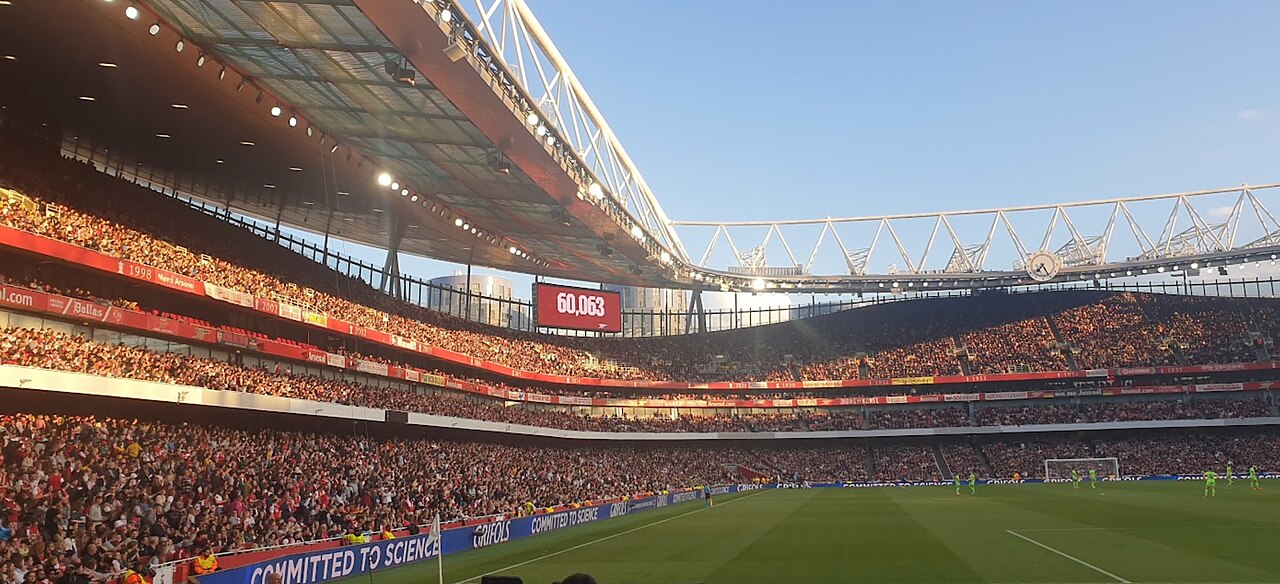
Arsenal Women provide a useful example of deliberate fan development. Deloitte notes that the club invested heavily in audience data, exceeded 35,000 attendees on five occasions in 2024/25 and generated EUR7 million in matchday revenue, the highest in its women’s club ranking. Tiered pricing was used to encourage repeat attendance. The important lesson is not simply to move matches into a larger stadium. It is to combine venue, data, pricing, communications and experience so that a bigger stage becomes a bigger asset.
A – Athletes
Treat players as protagonists, not inventory
In too many commercial plans, athletes appear at the end: a number of social posts, appearances and image rights to be allocated after the sponsorship has been sold. That misses one of women’s football’s strongest sources of value. Players are not only performers. They are trusted voices, cultural connectors and often the most credible bridge between a club and its communities.
During my time leading a Serie A women’s club, I held one-to-one conversations with every player and surveyed the squad about their values, interests, ambitions and concerns beyond football. One recurring concern was life after the game. That insight led us to create Beyond, a voluntary programme covering financial planning, fertility, education, language skills and career development. Participation reached approximately 85-90%.
The commercial lesson was not that every club should reproduce the same programme. It was that listening to athletes revealed needs, stories and capabilities that a conventional football operating model would have missed. Those insights could then inform leadership, content, community programmes and partnerships in a way that felt credible to the players themselves.
They are trusted voices, cultural connectors and often the most credible bridge between a club and its communities.
A current market example points in the same direction. The new London City Lionesses-Nike front-of-shirt partnership extends beyond branding: it includes community activation and research and development for female athletes. The strongest partnerships do not merely borrow player visibility. They help create better conditions around the players and build stories that both sides can credibly own.
I – Identity
Choose what you want to be known for
Women’s football properties often inherit a difficult identity question. Should the women’s team mirror the wider club brand as closely as possible, or develop greater independence? There is no universal answer.
Manchester City Women, for example, recently launched its own brand platform. At the same time, I have spoken to clubs that deliberately do not want separate brand identities or social media channels for their women’s and men’s teams because they consider them to be two equal parts of the same club.
Structure does not create differentiation by itself. What matters is whether the organisation can articulate a clear promise: the role it plays in football, the community it represents, the experience it offers and the cultural space it wants to occupy. A women’s team described only as the female version of an existing property is being defined relationally. That is rarely enough to build distinctive affinity or a premium commercial proposition.
R – Revenue
Revenue is an outcome, and a design discipline
Revenue belongs in the framework, but it comes last for a reason. A sponsorship deck cannot compensate for an unknown audience, underused athletes or an indistinct identity. It may still generate a deal, but the proposition will be difficult to price, activate and renew.
The women’s football market is currently commercial-led: commercial income represented 72% of the top 15 women’s clubs’ revenue in Deloitte’s 2026 analysis. That creates opportunity, but also concentration risk. Sustainable growth requires a clearer architecture across matchday, media, partnerships, merchandise, data and new products, together with the ability to attribute value accurately to the women’s property.
The EUR55 million agreement approved by Liga F in June 2026 is instructive because its stated objectives go beyond distributing cash: strengthening the league’s commercial and operational structure, supporting long-term sustainability and raising the profile of players. The real test will not be the headline amount. It will be whether the capital builds capabilities that continue producing value after the investment period ends.
From momentum to method
FAIR changes the order of the conversation. Instead of beginning with ‘What can we sell?’, it begins with four harder questions:
- Fans: Whose behaviour are we trying to change, and what evidence do we have about them?
- Athletes: Which player truths, voices and ambitions can create authentic value?
- Identity: What can this property credibly own that another club or league cannot?
- Revenue: How will those assets translate into measurable, repeatable and diversified income?
The answers will be different in London, Milan, Barcelona, Lagos or Los Angeles. They will also be different for an integrated club, an independent club, a league, a federation or a new investor. That is precisely the point. A method should create strategic coherence, not strategic sameness.
Women’s football does not need to reject everything built elsewhere. It should borrow intelligently: professional standards, data infrastructure, distribution expertise and commercial discipline. But it should not inherit assumptions that were formed for a different audience, a different history and a different media economy.
Momentum creates a window. The method determines what remains when the window closes.
The market is moving quickly. The Nike partnership with London City, the investment in Liga F and the revenue growth of Europe’s leading clubs all signal genuine progress. But headlines are milestones, not operating models.
The next phase will belong to the organisations that understand this distinction. They will study their fans before buying reach. They will involve athletes before designing activations. They will define an identity before packaging inventory. And they will build revenue systems that compound rather than disappear when a tournament ends or a sponsor changes strategy.
Women’s football has momentum. Whether it becomes sustainable commercial value will depend on what the industry chooses to build with it.
Women’s sport is not a copy of the men’s game
The Breakaway helps clubs, leagues, federations, brands and investors rethink women’s sport on its own terms, turning momentum into sustainable commercial value.