
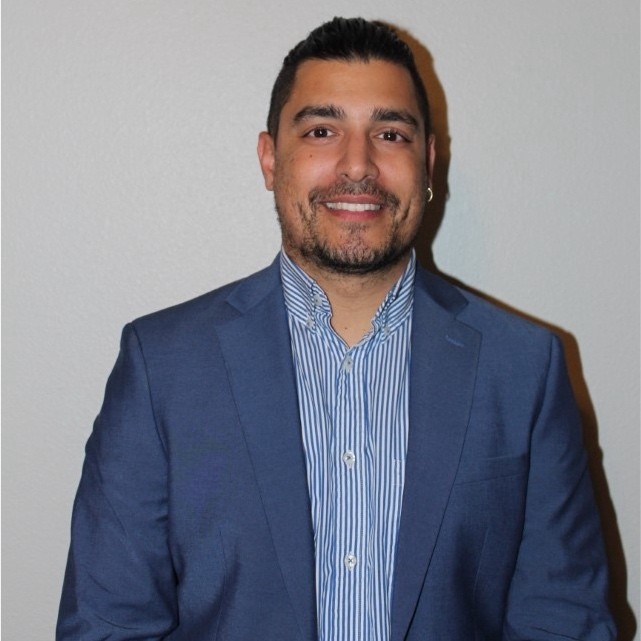
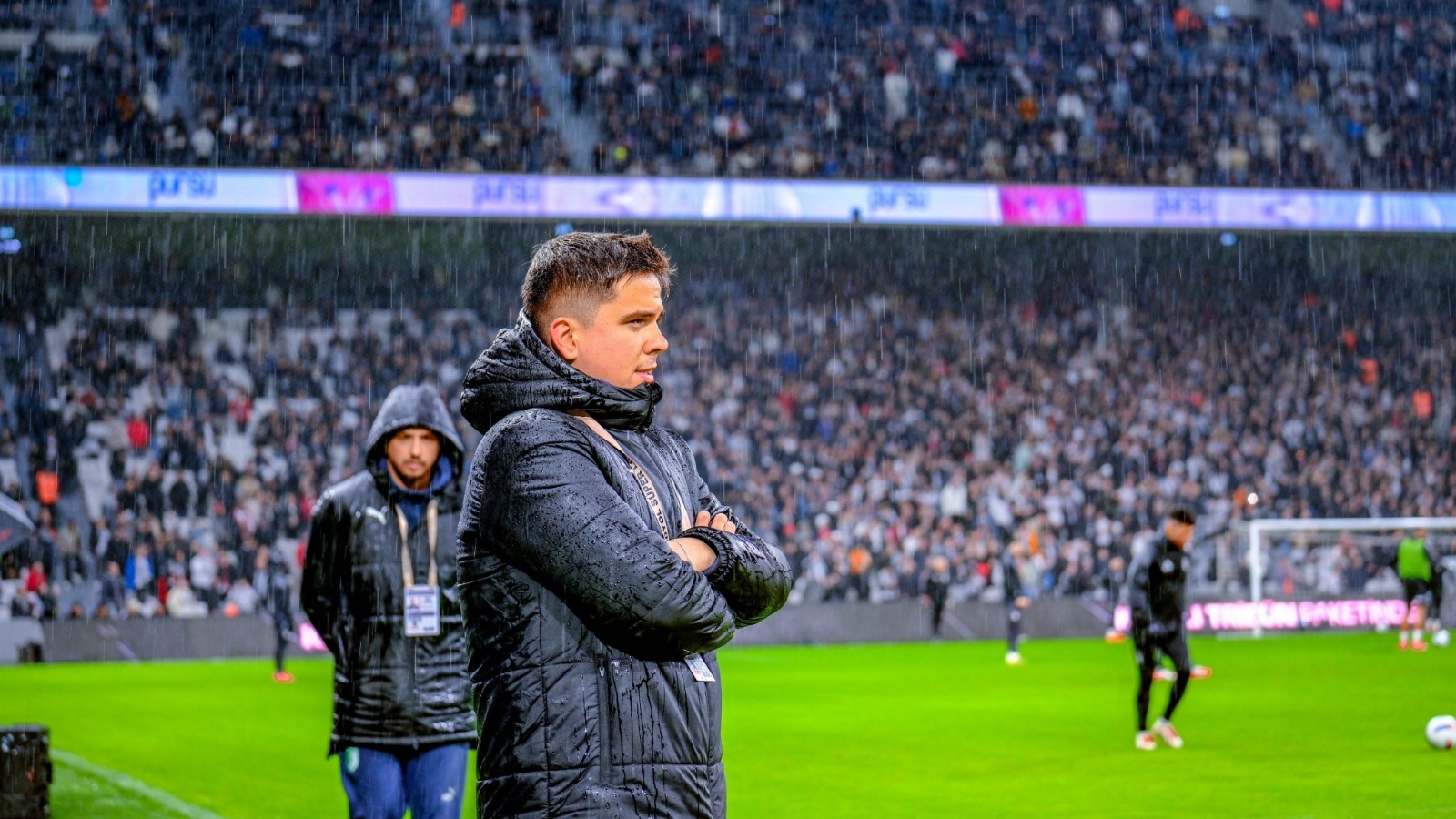
Profile
Role: Chief Scout at Bursaspor.
Specialisation: Scouting, match analysis and recruitment.
Experience: Hatayspor, Bodrum FK and Gençlerbirliği; opposition and team analysis in the Turkish Süper Lig.
Focus Areas: Physical data, video analysis, live observation, player suitability and scouting technology.
Background and Scouting Philosophy
Born in Bursa in 1999, Koça has built his career on the analytical side of the game, developing experience in scouting and match analysis before moving into senior recruitment roles in professional football. His path has taken him through Hatayspor, Bodrum FK and Gençlerbirliği, where he worked in both scouting and analysis, before returning to his hometown in January 2026 as the Chief Scout at Bursaspor.
But Koca’s approach to scouting goes beyond compiling names and watching matches. His philosophy is built around understanding the relationship between the player, the game and the environment in which that player is expected to perform. Data, in his view, is a starting point rather than a final answer. Physical metrics can narrow the search, but live observation ultimately determines whether a player can translate those numbers into football.
That perspective has been shaped by his experience as a match and team analyst in the Turkish Süper Lig, where he says he analyzed many professional matches from both opposition and team perspectives. It has also led him to develop an increasingly modern view of recruitment, one that combines data, video, live scouting and, increasingly, artificial intelligence. His own professional work reflects that interest: Koça has written about performance analysis, transfer metrics and the role of scouting in squad construction, while also delivering education on scouting methodology, data interpretation, video analysis and professional development.
His career has already produced moments that give substance to that philosophy. During his time at Gençlerbirliği, Koça identified Ousmane Diabaté while the midfielder was still playing at U19 level. He pushed for the player to be moved into the first-team environment, an experience that became particularly rewarding when Diabaté later earned a move to Newcastle United.
Yet perhaps the most interesting part of Koça’s story is where he wants to go next.
He does not see his future solely as a scout. His ambition is to move toward the decision-making side of football, to eventually become a sporting director and, later, operate at CEO level. That ambition reflects the broader philosophy evident throughout his work: finding a player is only one part of recruitment. Understanding why the player fits, convincing decision-makers, navigating financial and sporting realities, and ultimately building the right structure are entirely different responsibilities.
Now leading Bursaspor’s scouting department, Koça finds himself at an important stage of that journey. His challenge is no longer simply to identify talent. It is to help build a recruitment operation capable of anticipating what the club will need next.
And for someone who believes that technology can find the names, but humans still have to understand the player, there is perhaps no better time to ask what the future of scouting and Batuhan Koça himself, might look like.
Key Insights
- Data narrows the player pool, while live observation guides the final scouting judgment.
- Recruitment must reflect the club’s culture, playing model and required player roles.
- AI can save scouting time, but understanding players remains a human responsibility.
Our Exclusive Interview with Batuhan Koça
If you had only 60 seconds to introduce yourself to the world, how would you describe yourself?
I’m Batuhan Koça. I was born in Bursa, I’m 27 years old, and football has been at the center of my life since I was a child. I have worked as a scout for various scouting companies and professional clubs, and I continue to do so.
At an age when other children were interested in cars, games or different things, my world was simply football. Rather than just playing football, I wanted to be on the side that shapes the game and, one day, become part of professional football.
I shaped my life around that goal, and I am still following the same path today.
In a way, I am living the dream of that child who wanted to be part of professional football from an early age.
A player can look extraordinary on video and his statistics can practically scream ‘sign me’. But when you watch him live, you may get the feeling that something is not quite right. When what you see with your own eyes’ conflicts with the data, which one do you trust more?
For me, data is not the end result; it is the starting point.
In the scouting process, I initially use both physical and game-related data. I place particular importance on physical data. When evaluating a player, you should not only look at his individual performance; you also need to use the physical level of players in the same position in his league and the physical data of players in the same position in our league as references.
First, I establish the physical metric averages of players in the same position in the candidate’s league as a reference point. I look at metrics such as total sprint distance, distance covered above 20 km/h, and acceleration-deceleration (ACC/DCC). I then compare these figures with the corresponding metrics of players in the same position at the level of the Turkish league and, where possible, with the player’s own individual averages.
So, for me, simply asking, “Are this player’s physical numbers good?” is not enough.
The real question is where this player stands relative to the level of his own league and how close he is to the physical level we would need in Türkiye.
Based on these comparisons, I establish a lower reference point, narrow down the player pool and create the shortlist. The actual footballing side of the scouting process starts from there.
For me, data is not the end result; it is the starting point.
Data tells me which players I need to look at more closely. Then I start examining the player’s game, his role, his decisions and his potential within our footballing environment.
This speeds up the scouting process and allows me to use my time much more efficiently.
But once I watch the player live, the picture can change.
If there is a conflict between the data and what I see on the pitch, my live observation becomes the deciding factor.
Because data can tell you what a player does. But it cannot always show you why he does it, in which phase of the game he does it, how he makes decisions under pressure, how he affects the game as a whole, or how he reacts to different situations.
Data shows me the door. My observation on the pitch decides whether the player should actually walk through it.
Every club says it wants to find a player before everyone else discovers him. But when every scout in Europe starts talking about the same player, you are often already too late. So, what is the one thing that most scouts still overlook, but that you specifically look for?
I never see scouting as simply finding a young and talented player.
The real challenge is finding the right player. And the right player changes from club to club, or even from organization to organization.
Before looking at a player, you need to understand the club’s culture, its playing model and what the head coach wants.
I don’t approach a player simply by looking at his age, position or where he has played before. For me, the key question is:
“How valuable could this player be within the way we play, and what could he add to the overall identity we are trying to build?”
I see it a little like a puzzle. You have a playing model, a system, and you need to find the right pieces to complete it.
Because having 11 good players does not automatically mean you have a good team.
What matters is whether those players complement one another in terms of their roles and qualities, and whether together they can produce the football you are trying to build.
That is essentially the piece-to-whole philosophy at the heart of my approach to scouting.
One of the fundamental questions in scouting for me is not, “Is this player good?” but, “Is this player the right player for us?”
Can you tell us about a player who, at first glance, did not look like an obvious transfer target; someone who may have had certain question marks physically, technically, culturally or in terms of character, but gave you the feeling that ‘there is really a footballer in there’?
When I was working at Gençlerbirliği, shortly after taking the job, I went to watch an U19 match in November. It was not a transfer window and, to be honest, we were not looking for a player at the time.
I watched Osman Diabaté in that friendly and I saw something different in him.
The first thing that impressed me was not his talent or his physical attributes. It was how maturely he played for his age and the decisions he made in certain moments.
His decision-making quality, competitiveness, approach to contact, communication and desire to influence the game immediately stood out.
He wasn’t simply part of the game; he was trying to influence it.
Immediately after the match, I reported him to our head coach, Volkan Demirel, and we moved him up to the first team. The fact that he has now transferred to Newcastle United shows how far the potential we saw that day has taken him.
After Fisayo Dele-Bashiru, whom we brought into the squad at Hatayspor during the 2023/24 season through a different process, this is one of my most rewarding scouting experiences.
Sometimes you see something in a player that not everyone can see yet. Then you get to follow that player’s development.
That is the greatest satisfaction of all.
Put yourself in the room where transfer decisions are made. You genuinely believe in a player, but the sporting director, head coach or the rest of the scouting team does not share your opinion. Before assuming that the club simply does not see what you see, how far would you go to fight for that player?
It also depends on the decision-making culture of the club you work for. But I certainly don’t see disagreement as a bad thing.
I experienced a similar situation during the last transfer window.
We had a four-person scouting team. I was working as Head Scout alongside three other scouts. There was a player from Ligue 2 in France whom the other members of the team did not consider a fit for the profile and role we were looking for, but I was particularly convinced by him.
I believed the player showed a very strong fit in terms of both his physical data and his qualities on the pitch. Our head coach did not share the same view, while our CEO agreed with me.
For me, the important question is not who is right, but who has the stronger argument.
If a scout tells me, “This player is not suitable,” I want to know why. They can show me a piece of data, a specific sequence from video, or a detail they noticed while watching the player live.
If they convince me, I have no problem changing my mind.
For me, the important question is not who is right, but who has the stronger argument.
But if I believe I have stronger arguments and I still believe in the player, I will continue to stand behind that player until the transfer is completed.
There are many people who can watch 90 minutes of football and write a report. But that does not automatically make them a good scout. In your experience, what is the fundamental difference between someone who simply watches football and a scout who can genuinely identify successful players?
I see this distinction particularly often on social media.
There are people who analyze the game and players extremely well. But there are also people who are quite detached from the realities of football and the industry, yet believe they have very strong opinions.
I developed through the analysis side of the game. Although scouting was my first job, I spent around three and a half years working in the Turkish Süper Lig as both an opposition analyst and a team analyst. During that period, I analyzed around 50 professional-level matches from both an opposition and team perspective. That experience significantly developed the way I see football.
I believe football needs to be read from the general to the specific.
First, you need to know what kind of football you want to play. Then you need to select the right players who can create that football.
A player being good is one thing. That player being the right player for your football is another.
That is why I believe a good scout needs to understand not only the player, but also the game itself. They need to understand what different roles require, how well a player fits a particular role and how tactically flexible he can be.
But they also need to understand the reality of the industry.
Within a club, there can be many different people involved in decision-making: the president or owner, CEO, sporting director, general manager, Head Scout and scouts. On top of that, there is the budget, the player’s salary expectations, the transfer fee, the club’s position and its financial reality.
At the end of the day, you are not making transfers in a console game. This is real life, and the player on the other side is a human being. They have their own decision-making process, expectations, concerns and adaptation period.
And I think one of the most important points is this: finding the right player is not enough. You need to be able to explain why that player is right and convince the decision-makers.
Because this job is not simply about watching football.
You are dealing with major contracts, significant budgets and decisions that have real consequences.
I sometimes see comments on social media saying, “This player didn’t work out, he played two games, get rid of him.”
But the reality of football is not that simple. When evaluating a player’s performance, you need to consider the structure of the team he is in, the role he is given, the head coach’s expectations, the adaptation process and many other factors.
A good scout needs to understand football, but also the reality of the football industry and the responsibility behind the decisions they make. And, of course, they need to be comfortable working under pressure.
When we compare you with many people who have been doing this for years, you are still very young. That can be a disadvantage because your experience is more limited. But it can also be an advantage, because you may look at the game and scouting from a different perspective. What do you think the future of scouting will look like? Are there things clubs still do today that you believe will disappear in the coming years?
I think my age can be both an advantage and, in certain situations, a disadvantage.
In terms of experience, when I compare myself with people who have been doing this for many years, I have to accept that I do not yet have the same level of experience. But being young is also an advantage. You can look at modern football and technology from a different perspective, and you can adapt and integrate new tools more quickly. That creates a different perspective and, over time, a different scouting philosophy.
I think this change will also shape the future of scouting.
Looking at where modern football is going, it is no longer possible to ignore the impact of artificial intelligence and data on scouting. We can filter huge amounts of data according to very specific criteria.
For example, there are systems that can very quickly identify players within a certain age range, in a specific position, making a certain number of entries into the opposition penalty area and fitting within a particular budget.
I think the biggest advantage technology creates for a scout is actually very simple:
It gives the scout their time back.
AI and data can scan the player pool much faster and create the shortlist. That allows the scout to spend less time finding names among thousands of players and more time on what really matters:
Understanding the player.
Looking more deeply at the player’s character, decision-making, influence on the game, behavior in different scenarios and where he fits into the football you are trying to build.
I think we will see many more systems in the future where a scout can define their playing model, tactical expectations and player criteria in a system, and AI can then recommend players from different leagues around the world who fit those criteria.
I don’t see that as a bad thing.
I don’t believe AI necessarily has to replace the scout. On the contrary, when used correctly, it can help a good scout become an even better scout.
But there is another side to it. Technology may reduce the need for human labor in certain tasks. That means the football industry needs to prepare for this change not only from a technological perspective, but also from a human-resources perspective.
I don’t think it will be enough for the scout of the future to simply be someone who watches players. Scouts who can read data, use technology, but also read the pitch and understand people will become much more valuable.
On the contrary, when used correctly, it can help a good scout become an even better scout.
Because technology can show you the right names among thousands of players. But understanding why that player is the right player is still a human job.
Let’s look a little further into the future. Where do you see yourself in terms of your own career? What kind of path do you want to follow?
I entered the professional side of the industry through analysis and scouting within professional football. Before that, I had worked in scouting at companies, but over the last three and a half years I have gained significant experience within the professional game, particularly on the analysis and scouting side.
One of the qualities I see as one of my strongest today is my ability to read the game and the player from the general to the specific. I believe my experience in analysis has given me a strong perspective in this area. I try to evaluate a player not only through his individual performance, but also through the structure of his team, his role and his place within the team’s playing model. At the same time, I see the ability to combine data with live observation and to understand not only what a player is today, but what he can become in the right environment, as one of my strengths.
Despite my young age and relatively limited experience, I also believe I have built a strong global network.
But in the long term, I don’t see myself only on the scouting side.
I want to be a manager who can build a bridge between football and management.
And yes, this may be surprising, but I don’t have the ambition to become a head coach. I believe I have a good understanding of my own strengths, and I think my strongest qualities are not only on the pitch, but also in helping ensure that the right decisions are made behind the scenes.
That is why becoming a sporting director and, later on, taking on a CEO-level role are among my long-term career goals.
Whether that happens in Türkiye or another country is not particularly important to me. What matters is being on the decision-making side of football and taking responsibility for those decisions.
Within the next five years, I aim to take on a role at that level. To achieve that, I want to continue developing not only on the scouting side, but also in football management, finance, communication and decision-making.
My most recent experience was particularly important in that regard. I was working in an environment involving a major club, high expectations and, naturally, significant pressure. At a time when my club was making foreign signings again after many years, we conducted transfer discussions directly with players’ official representatives through my own network.
As Head Scout, I was involved in many stages of the process, from identifying and reporting on players to making initial contact and taking part in negotiations. For me, this was both a major experience and a serious challenge.
Because in an environment like that, you cannot simply recommend a player and step aside. You have to stand behind your decisions, convince the right people and manage the entire process under pressure.
Finding a player is one thing. Deciding that he is the right player for your club is another. Turning that decision into reality within the club is an entirely different process.
That experience made it much clearer to me what I want to do.
I don’t just want to find players. I want to take responsibility for building football structures and making the right decisions.
Rapid Fire
Coffee or tea?
Coffee.
City life or rural life?
City life.
Player development or winning now?
Winning now.
Talent or mentality?
Mentality. Always.
Sea or mountains?
Mountains.
Sunrise or sunset?
Sunrise.
Summer or winter?
Definitely winter.
Early bird or night owl?
It varies, but I’m more of a night owl.
Plan everything or go with the flow?
Plan everything.
Eat out or eat at home?
Eat out.
Road trip or flying somewhere new?
Fly.
Call or text?
Call. It’s more genuine.
Play ugly and win, or play beautifully and lose?
Play ugly and win. I look at the scoreboard.
Books or films?
Books.
Five-star hotel or a tent under the stars?
Five-star hotel.
FAQ
Who is Batuhan Koça?
Batuhan Koça is the Chief Scout at Bursaspor, with experience in scouting and analysis at Hatayspor, Bodrum FK and Gençlerbirliği.
How does Batuhan Koça combine data with live scouting?
He uses physical and game-related data to narrow the player pool, then evaluates players through observation. When data conflicts with what he sees on the pitch, live observation becomes the deciding factor.
What are Batuhan Koça’s long-term career goals?
He aims to become a sporting director and later take on a CEO-level role, developing his knowledge of football management, finance, communication and decision-making.