
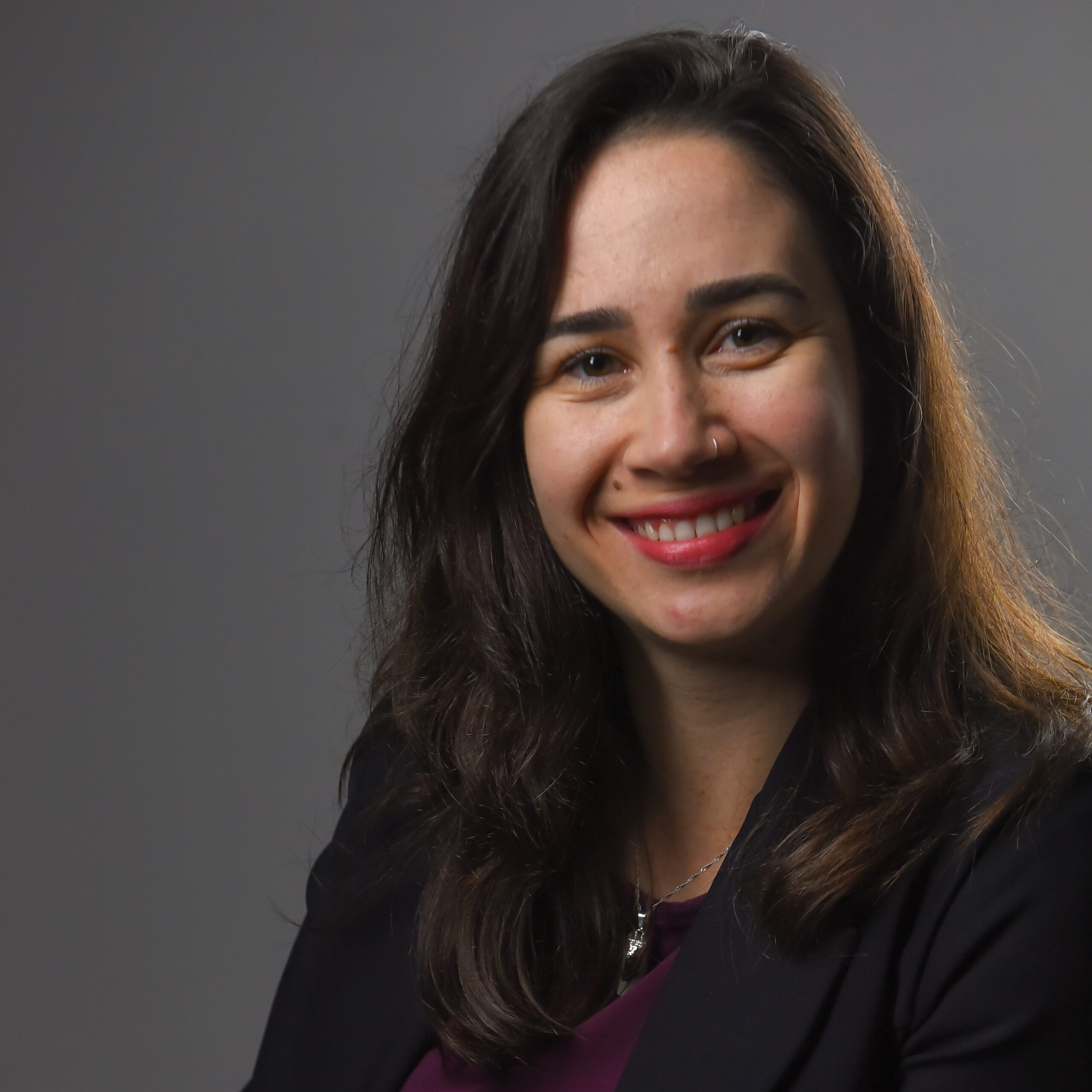
Profile
Role: Former Colombian international, broadcaster, advocate, investor and board member
Specialisation: Player advocacy, broadcasting, investment and leadership
Experience: Olympics, FIFA Women’s World Cup, FIFPRO, Telemundo, Common Goal and TMJ; four master’s degrees; lived in five different countries
Focus Areas: Women’s football, Latin America, athlete career transitions and inclusion
Football is not just a game; I wish it were that simple.
For Isabella Echeverri OLY, football has been a career, a platform, a business, a responsibility, and a lifelong journey through some of the most important rooms in the game.
From the pitch to player advocacy, broadcasting, investment and boardrooms, Isabella Echeverri has experienced football from almost every possible angle.
The former Colombian international represented her country at the highest level, competing at the Olympics and FIFA Women’s World Cup before building a career that has taken her far beyond playing. She has worked with FIFPRO, covered the 2023 FIFA Women’s World Cup as a broadcaster and won an Emmy for her work with Telemundo. She has also become an investor in sports properties and serves on the boards of Common Goal and TMJ.
That breadth of experience has shaped the way she sees the game, not simply as the 90 minutes on the pitch, but as an entire ecosystem of players, media, investment, leadership, advocacy and opportunity.
As women’s football continues to expand globally and Brazil prepares to host the first FIFA Women’s World Cup in South America in 2027, Echeverri brings a perspective that connects the realities of the past with the possibilities of the future.
In this conversation, she reflects on her journey beyond the pitch, the untapped potential of Latin American women’s football, the importance of preparing athletes for life after playing, and why the next chapter of the women’s game may depend on changing the way we measure its progress.
Key Insights
- Latin American women’s football has talent and passion that need stronger infrastructure and investment.
- Education, relationships and transferable skills help players prepare for careers beyond the pitch.
- Meaningful inclusion gives women influence over decisions, alongside representation.
Our Exclusive Interview with Isabella Echeverri
You have experienced football from so many different perspectives: as a player, broadcaster, advocate, investor, and board member. How has moving between these different roles changed the way you understand the game?
It’s funny you ask that because I always say I’ve seen football from almost every possible angle, and very few people have had that experience. The truth is that every seat changes your vision of the game.
When I was a player, football was about learning, competing, and performing. I was focused on everything that happened within those 90 minutes and on how I could become a better player and leader. The pitch was my whole world. You don’t necessarily think about the business meeting that funded the training ground you are standing on, the media rights deal that put your game on television, or the decisions that determined how your team travelled.
I began to understand the power of a player’s voice and platform in 2019, when I stood alongside my teammate, and now sister, Melissa Ortiz to fight for what we believed was right for our national team. That experience changed me. After retiring, I started sitting in different rooms. Moving to the Netherlands to work at FIFPRO gave me a completely different perspective: I was suddenly at the advocacy table, fighting for the players who were still on the pitch. It was a difficult period for the organization, but I learned more in that year than I probably would have learned in five.
Then came Telemundo, which opened my eyes to the media side of football and the power of storytelling. I started investing in sports properties and joined the boards of Common Goal and TMJ. Each role gave me access to another part of the ecosystem.
And that is what I understand now: football is not just a game, I wish it were that simple. It is an entire system, and the 90 minutes are only the most visible part of it. Everything that makes those 90 minutes possible, or impossible, happens in rooms that most players never see and often never think about.
I’ve learned to pay attention to those rooms. Moving between these roles has made me a much more complete person within football. In many ways, I understand the game better now than I did when I was playing it every day. And that understanding makes me better at every role I hold today. and, I hope, at the roles I will take on in the future.
You have worked across Latin America and internationally. What do you think the global football industry still misunderstands about the potential of women’s football in Latin America?
Latin America is a sleeping giant, not a developing market.
The passion for football is not something that needs to be created. It already exists in millions of girls and women who have been watching the game their entire lives, often alongside their families. We have an extraordinary amount of raw talent across the region. What we have lacked is the infrastructure to develop that talent and create sustainable pathways into professional football. The investment has not arrived at the scale it could, but every day I see more people beginning to understand the opportunity that exists here.
The media also has a role to play. We have not told enough stories about the players. Beyond names like Marta and Linda Caicedo, there are still too few women’s footballers who have become household names. With the growth of social media and more broadcasters investing in the women’s game, I believe that is going to change, and the next World Cup can accelerate that process.
Latin America is a sleeping giant, not a developing market.
What the global industry sometimes misunderstands is that Latin America is not a territory you need to convince. You need to serve it. There is a difference between a market you have to build from zero and a market that has been waiting for someone to show up properly. Latin America is the second one.
Brazil 2027 will make that impossible to ignore. I believe this World Cup can create a legacy that extends far beyond Brazil and helps unlock the potential of women’s football across the entire region.
You have earned four master’s degrees and lived in five different countries. How have education and international experience influenced the way you approach your career in football?
I never dreamed of becoming a professional footballer. Growing up in Medellín in the 1990s, there was no one talking about girls or women playing football. I genuinely thought I was the only girl in the universe who played. My family always supported me, so I never had to question whether I belonged in the game. But it was not until I was 14, when I first played with other girls, that I realized there were already women competing at World Cups. The whole thing took me by surprise.
I went on to play in some of the first editions of the Copa Libertadores in Brazil, but football was not professionalized enough at the time for me to seriously consider it as a career. I saw two possible paths: retire or find a way to continue playing at a high level while building an education. I chose the second and made the most of it.
Eventually, I did become a professional player, but my first salary was €600 a month. I could live, but I could not save a penny. That is why I kept studying. I wanted to be prepared for whatever came next. Education saved me from the trap that catches so many athletes: believing that the sport you do is going to last forever.
I do have four master’s degrees, but I actually think living in different countries has taught me even more. It forces you to understand the world from another person’s perspective. It taught me to be comfortable being an outsider. To adapt. To read a room in a language that is not your own, within a culture that does not work the way yours does. That ability to walk into almost any environment in the world and find a way to connect is probably the most valuable thing I carry into every role I hold today.
Football is global. And the people who thrive in it over the long term are the ones who can actually operate globally. Not simply travel across borders, but genuinely understand how to function across cultures.
Many athletes spend their entire careers preparing to perform on the pitch, but not necessarily preparing for what comes next. From your own experience, what do you believe players should be doing while they are still competing to build a meaningful career beyond football, and how can they turn the knowledge, relationships, and experiences gained as athletes into opportunities within the game?
I’ll be honest. I did almost everything right, and I still felt completely lost when I retired.
I studied throughout my career. I built relationships across the industry. I was intentional about preparing for life beyond football in a way that most athletes are not. And the day I stopped playing, I still did not feel ready. That tells you something about how difficult this transition really is, and how much more support players deserve while going through it.
My advice to players is simple: start now. Not when you feel the end coming. Now, while you are still a player. Educate yourself about the industry you are part of. Not just the game, but the business around it. Understand your rights as an employee. And, perhaps most importantly, build relationships with people who are not athletes. The football world is much smaller than you realize, and those relationships can become incredibly important later in your career.
Learn something new. Develop a skill outside of playing. Pay attention to what makes you curious. Those interests can become your next career. And understand that you already have something incredibly valuable: experience.
I did almost everything right, and I still felt completely lost when I retired.
The discipline, the ability to perform under pressure, the resilience, the experience of being part of something bigger than yourself, these are not just things you leave behind when you retire. They should be part of your CV. They are your professional foundation.
The world wants to hear from people who have actually lived something. Athletes have lived it.
Your career after football took you to FIFPRO, advocacy, media, and now investment. What motivated you to build a career that extends far beyond the pitch?
Each step followed naturally from the one before. I was not executing a five-year plan. I was following my passions, staying true to my values and paying attention to the things I genuinely cared about.
FIFPRO came from wanting to understand and advocate for players. Media came from wanting to tell stories and communicate. Investment and board work came from wanting to have a different kind of impact on the game.
Looking back, there is a thread connecting all of it. I think that is the only way to build something that lasts beyond the field: to follow what you care about, stay true to who you are, and allow your career to evolve with you.
You won an Emmy for your coverage of the 2023 FIFA Women’s World Cup. What did that recognition mean to you, particularly as your first major tournament as a broadcaster?
When I moved into broadcasting, I was stepping into something I had never been trained for. I had studied business, marketing and sports management, but I had never studied how to be on television. I knew how to communicate, but I had no idea what to do with my hands when I was standing in front of a camera or an audience.
So I did what any athlete would do: I hired a coach. This time, it was a communication coach who helped me navigate the transition and, more importantly, taught me how to translate everything I had learned on the field into words.
Winning an Emmy was a surprise. For me, it was recognition of a job well done by the entire Telemundo team that covered what I believe was an extraordinary World Cup.
But there was something particularly meaningful about that tournament. It felt like a full-circle moment. I had spent so much of my life experiencing football from the inside as a player, and now I was experiencing the World Cup from a completely different seat.
That recognition gave me a sense of peace after retirement, a reminder that leaving the pitch did not mean leaving the game. It meant finding a different way to be part of it.
You recently covered the 2026 FIFA World Cup. What was it like being part of the tournament from the media side, especially after having experienced the Olympics and FIFA Women’s World Cup as a player?
It was one of the best experiences of my life.
As a player, you live inside a bubble. You know your hotel, your training ground, your locker room, your opponents. The tournament itself is enormous, but your experience of it is actually very small, and completely focused on winning. Everything exists in service of the next game.
As the official sideline reporter for the Colombian national team with Telemundo, I followed every game, training session and travel day. In many ways, I was inside the tournament again, but this time I had eyes for everything I could not see as a player.
I could watch the fans. I could listen to their stories. I could understand what the World Cup meant to people beyond the pitch. And for the first time, I could actually enjoy the tournament rather than simply survive it.
That experience made me appreciate the World Cup in a completely different way. As a player, you experience the game from the inside. As a broadcaster, you begin to understand the world that exists around it.
You have spoken about opening doors and making rooms more inclusive. What does meaningful inclusion look like to you beyond simply having more women represented? And what needs to change within football’s culture, leadership, and decision-making spaces to ensure that women are not only present in the room, but also have a real voice and influence in shaping the future of the game?
Presence without power is decoration. It is not inclusion. Meaningful inclusion means women are in the room when decisions are being made, not brought in afterwards to validate a decision that has already been taken.
To get there, football needs to actively dismantle the way it has traditionally promoted and appointed people. The networks that exist within the game are still overwhelmingly male. If you continue hiring through the same networks without interrupting the pattern, you will keep creating the same rooms, and making many of the same decisions.
It requires intention. It requires people in positions of power, men included, to recognize that the room is stronger when it is diverse. Not as charity. Not as a box to tick. But as a strategy to build a better game.
Presence without power is decoration.
Inclusion is not simply about who gets a seat at the table. It is about who gets to shape what happens at that table.
Brazil 2027 will be the first Women’s World Cup hosted in South America. From your perspective as a former player, advocate, broadcaster, and investor, what do you hope this tournament will unlock for women’s football in Latin America, both on and off the pitch?
This World Cup will be a before and after, not only for Brazil, but for the entire region.
I hope it shows a generation of South American girls what is possible. That they can dream bigger, that they can be great at whatever they choose to do in life, not just in football.
Proximity has a deeper effect on young people. When the game is played at its highest level on their own soil, not on a screen or in a highlight clip, but in their cities, in their stadiums, in a language they grew up speaking, it can be life-changing.
Off the pitch, I hope the tournament forces the infrastructure and investment that women’s football has been waiting for. The momentum is already here globally, and especially in Latin America. I hope 2027 forces deeper conversations about investment, media rights, federation budgets and the conditions needed to build sustainable professional leagues, conversations that have been postponed for far too long.
A World Cup can create political will that advocacy alone cannot manufacture. 2027 is when it becomes impossible for anyone to look away from women’s football.
And finally, if you could change one thing about the women’s football ecosystem today, what would it be, and why?
I would stop comparing women’s football to men’s.
Right now, the ecosystem (the media, sponsors and federations) often measures women’s football against the men’s game. But you cannot fairly compare two different products when one has received decades of systematic investment and the other has been systematically underfunded.
And despite that, women’s football has continued to grow at a rate that men’s football has not experienced in a generation.
If we changed the metric, if we started measuring women’s football by its own trajectory, its rate of growth, the audiences it is reaching for the first time, and the commercial returns generated by the investment that has actually been made, the conversation would look completely different.
And, more importantly, the decisions would be different. Investment follows the story you tell about potential. The opportunity is real. And the people who recognize it early are going to be very glad they did.
FAQ
Who is Isabella Echeverri?
Isabella Echeverri is a former Colombian international who competed at the Olympics and FIFA Women’s World Cup. Her career beyond playing includes player advocacy, broadcasting, investment and board roles.
What did Isabella Echeverri win an Emmy for?
She won an Emmy for her work with Telemundo covering the 2023 FIFA Women’s World Cup.
What does Isabella Echeverri hope Brazil 2027 will achieve?
She hopes the tournament will inspire South American girls and accelerate investment, infrastructure and sustainable professional pathways in Latin American women’s football.