

Japanese influence in European football is usually measured through players. Yet an equally important story is developing beyond the pitch, where coaches, executives and emerging professionals are learning to operate inside European clubs while bringing perspectives formed in Japan.
When Japanese football and Europe are discussed together, the conversation usually begins with players. Their technical quality, tactical intelligence and professionalism have made Japan one of the most closely watched talent markets in the game. But the movement between the two football cultures is no longer limited to the pitch.
A growing number of Japanese professionals are building careers inside European clubs. They are working in coaching, youth development, sales, communications, strategy and operations. Their presence offers a different way to understand Japan’s rise in world football, not simply as a country that exports players, but as one that is developing people capable of contributing to the wider industry.
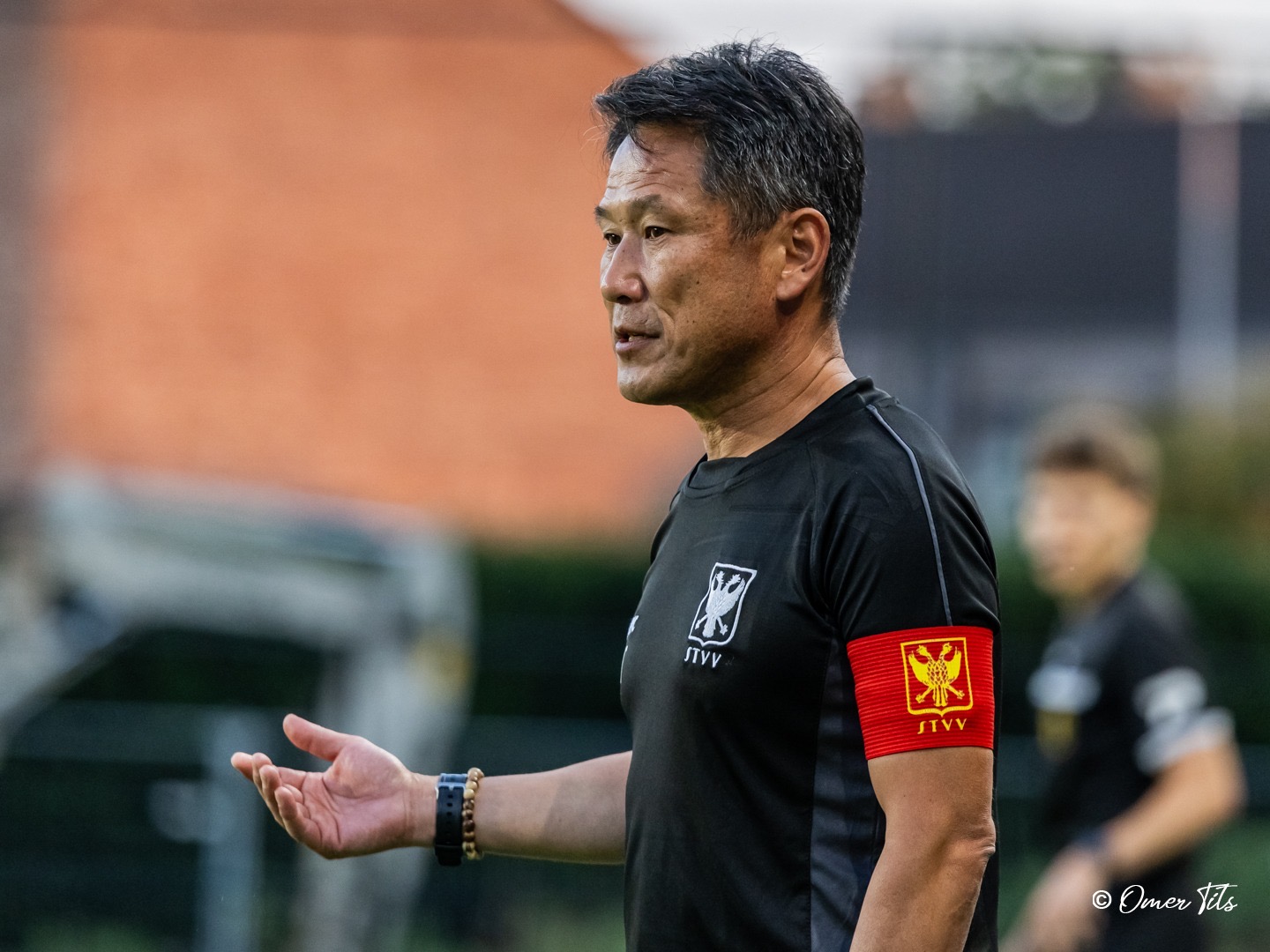
Tomoho Maekawa, Managing Director of FC Basara Mainz, Akira Fukushima, who works in sales and public relations at Sint Truiden VV, Tsuyoshi Takano, a senior figure in the Belgian club’s youth structure, and Ryusuke Hosaka, a graduate student gaining experience with Deshima Football and Fagiano Okayama, arrived in Europe through very different routes. Their reflections reveal shared values, but also important differences in how each of them understands culture, leadership and professional identity.
Choosing the Away Game
For Maekawa, the move into football was part of a deliberate decision to rebuild his career around international sports business. After nine years at Mitsubishi Corporation, he left Japan to study Sports Management at Columbia University. That step eventually took him into club strategy and operations in Belgium with ACA Football Partners and KMSK Deinze before leading him to Basara Mainz in Germany.
The precise destination was never planned. The purpose was. Maekawa wanted to compete outside Japan and believed that Japanese professionals needed to test themselves on the front line abroad. Football became the place where that conviction took shape. Even now, returning to Japan is not part of his immediate plan. He believes he can contribute more by remaining in Europe and continuing the work there.
“I think I can contribute more to Japan by staying in the fight here.”
Tomoho Maekawa
Takano’s journey began with a coaching idea. Near the end of his playing career, he read an interview with Richard Møller Nielsen, the coach who guided Denmark to the European title in 1992. Nielsen’s comments about applying what he had learned through coach education made a lasting impression. Takano decided that if he was going to study coaching, he wanted to learn in the strongest environment available. What began as a choice about education became a long pursuit of the limits of his own ability.
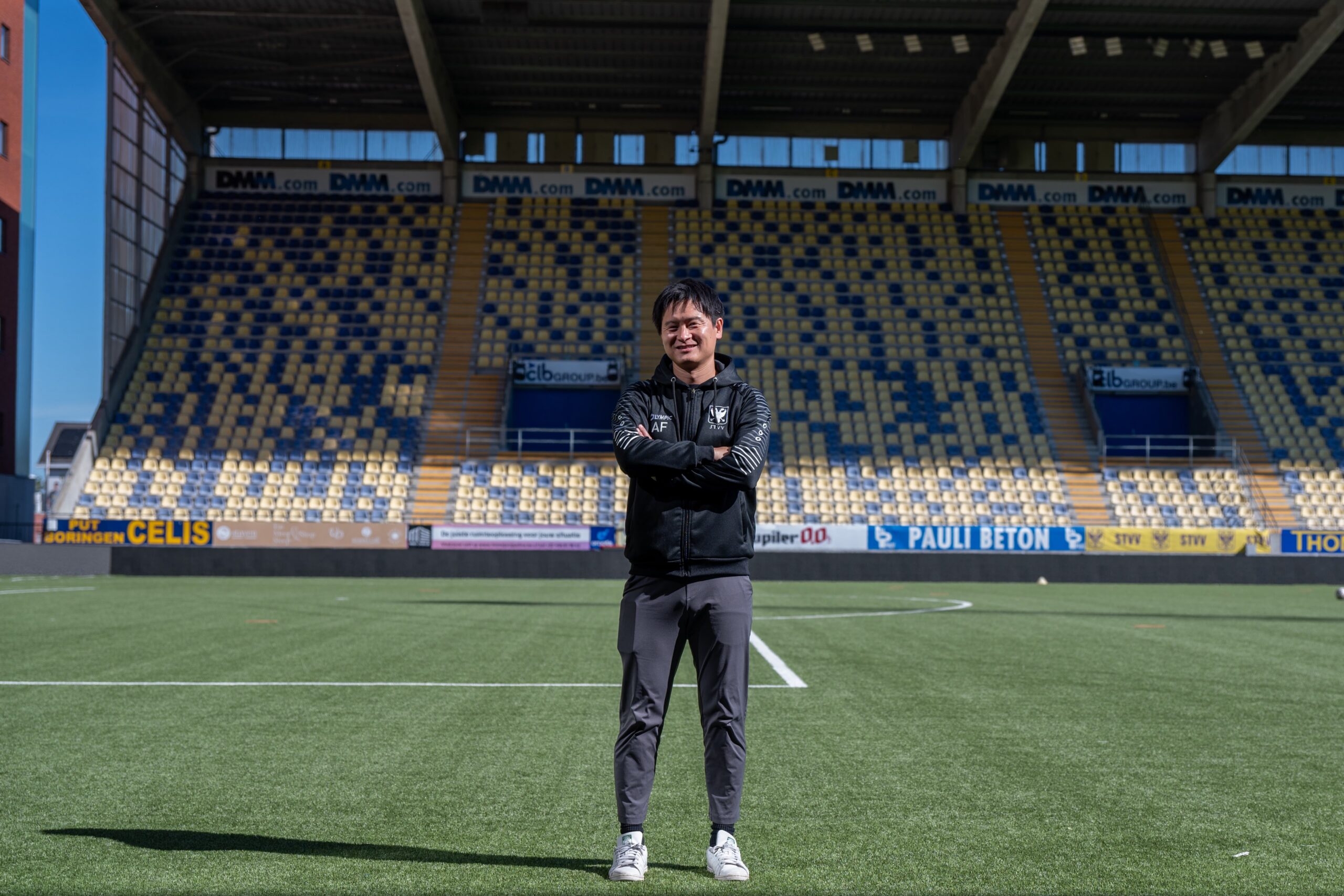
Fukushima’s route was shaped by the Tokyo 2020 Olympic Games. While working at Kashima Antlers, he joined the operational staff at Kashima Soccer Stadium, one of the football venues for the competition. Working with international colleagues and using English each day opened the possibility of a career abroad. At the same time, conversations with a friend working for a European club made him recognise that Japanese clubs already possessed business knowledge that could have value in Europe. He first supported corporate sponsorship sales for Sint Truiden from Japan before relocating to Belgium and expanding his role into sales and public relations.
Maekawa wanted to compete outside Japan and believed that Japanese professionals needed to test themselves on the front line abroad.
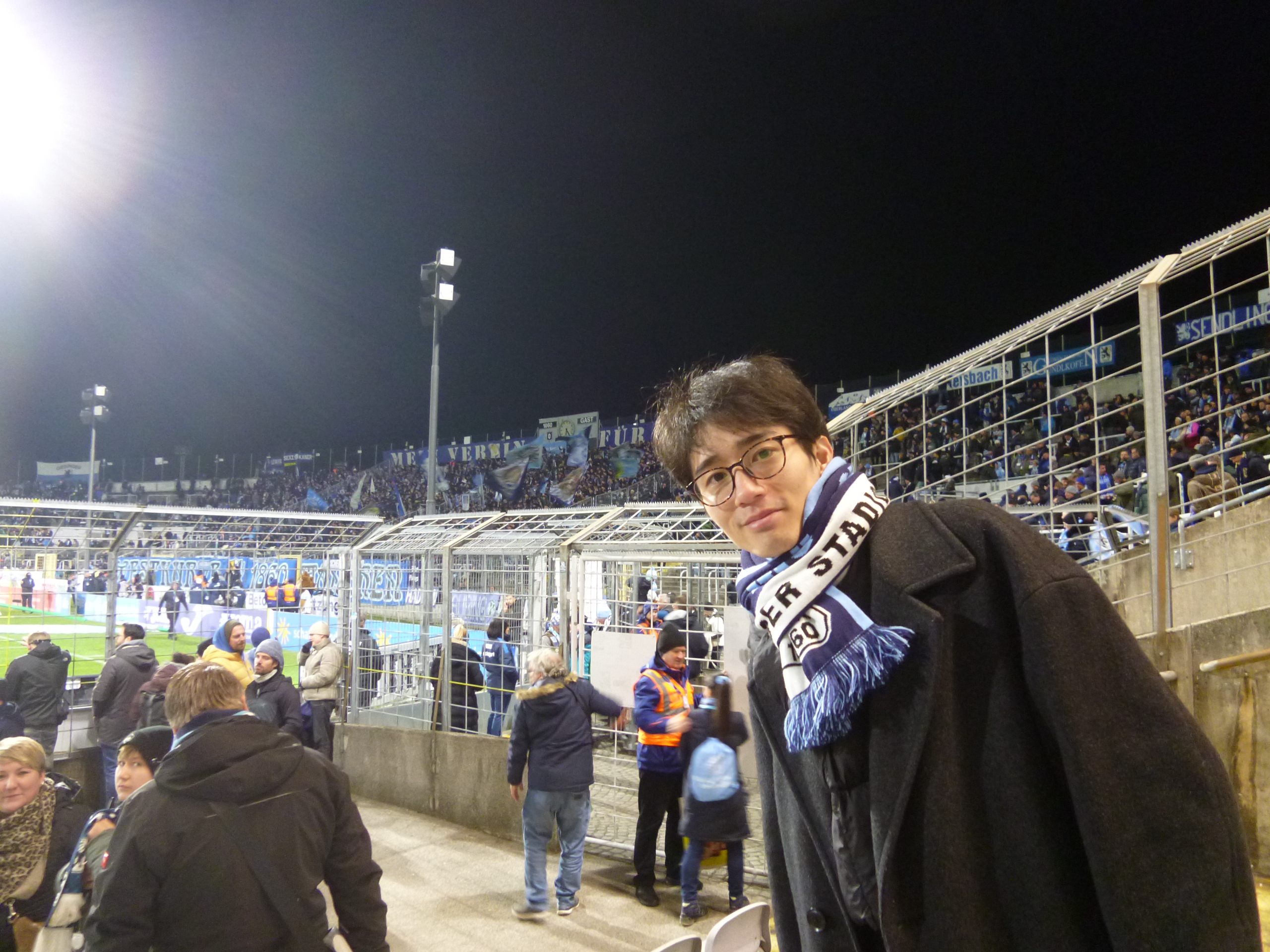
Hosaka represents a younger generation still creating its route into the industry. His academic background is in mechanical engineering and robotics. As a child, he had imagined a future connected to space development. During his university years, however, he began to think more seriously about where he wanted to direct his energy. Space appealed to his inner curiosity, while football connected him with people, communities and the wider world. He chose the path that pointed outward.
“My curiosity for space was directed inward, while my passion for football was directed outward, connecting people, communities and the world.”
Ryusuke Hosaka
With no traditional football business background, Hosaka treated his status as a student as an opportunity. He gathered information, attended events and completed an internship at Avispa Fukuoka. An exchange programme then brought him to Munich. From there he contacted Deshima Football and later approached Japanese clubs preparing for camps in Europe. Those messages led to practical roles with Deshima and Fagiano Okayama. His path was unconventional, but it was built on preparation rather than chance alone.
Europe Is Not One Culture
It is tempting to reduce the difference between Japanese and European football to a simple contrast. The four perspectives resist that conclusion. Europe is not one working culture, and neither is Japan. Clubs differ according to their size, ownership, history, league and the people inside them.
Fukushima experienced far less culture shock than he had expected. Before moving abroad, he had worked for several organisations in Japan and had already seen how different two workplaces in the same country could be. In Belgium, he found many familiar organisational challenges. For him, company culture and individual personality can be just as influential as nationality.
“Many of the challenges and dynamics of working within an organisation are universal, regardless of the country.”
Akira Fukushima
Maekawa noticed something else: the place football occupies in daily life. His experience has included Belgium, Germany, Spain and England, alongside his studies of the American sports model. What stood out was the civic meaning attached to a football club. Even at the amateur level, Basara Mainz exists within a community that cares about its local team. The scale may be different from the Bundesliga, but the relationship between club and place follows the same basic logic.
That cultural weight changes the job. A club is not merely a sporting organisation or an entertainment product. It is part of how people understand their town, their relationships and sometimes themselves. For a professional arriving from abroad, learning that meaning is as important as learning an organisational chart.
How Clubs Work
The clearest differences often appear in daily processes. Fukushima points to matchdays. At the Japanese clubs where he worked, many office employees came to the stadium and helped with the event even when their normal role was not directly connected to match operations. The collective responsibility was visible. In Europe, he has found responsibilities to be more clearly defined. Staff members without a matchday task may not be present, while colleagues can cover specific duties when someone is absent.
Neither model is automatically better. One creates a strong sense that the entire club owns the matchday experience. The other can protect efficiency and make accountability clearer. For Japanese professionals in Europe, the challenge is to understand the logic of the local model before deciding what should be changed.
Takano sees a similar contrast in communication. He describes Japanese workplaces as disciplined and focused, but believes that employees can sometimes find it difficult to express their thoughts freely. In European environments, people are often more willing to state an opinion regardless of position. That openness can produce friction, but it can also reveal the idea that solves a problem or prevents a mistake.
Maekawa has responded by investing time in relationships outside formal work. Informal conversations help him understand how colleagues think, what they value and how they prefer to make decisions. His starting point is that a Japanese professional working in Europe is a guest. Adaptation therefore comes before influence. Only after trust has been built can the strongest elements of a Japanese approach be introduced naturally.
Hosaka, observing clubs as a student and intern, has also noticed how organisational scale affects decisions. Major German clubs employ far more people than most J League organisations and therefore require more formal structures. Smaller Japanese clubs may give individuals broader authority and can sometimes move more quickly. He recalls his surprise when an internship enquiry to Fagiano Okayama received a direct response from the club’s corporate planning leadership.
A Different View of Development
Hosaka identifies player development and money as one of the sharpest differences between the two football systems. In Europe, he encountered a stronger belief that players are assets and targets for investment. That view is supported by a transfer market in which clubs can develop talent, sell it and reinvest the income.
Japan has historically occupied a different position within that economy. Development is spread across professional academies, local clubs, schools and universities. Those institutions have produced excellent players, but the financial rewards of development do not always travel through the system in the same way. Hosaka believes that raising transfer values and allowing more revenue to reach the grassroots level is one of the important challenges for Japanese football.
This is not simply a commercial question. It influences how clubs plan, how early they invest in players and how they measure the value of development. European experience can therefore offer Japanese professionals more than a different tactical education. It can show how sporting decisions, organisational structures and financial incentives shape one another.
Value Without Stereotypes
All four interviewees recognise qualities often associated with Japanese professionals: discipline, respect, diligence and awareness of the group. Yet they are careful about treating nationality as a guarantee of character or competence.
Maekawa rejects the idea that being Japanese creates value by itself. For him, the more meaningful point is that working in Europe is an away game. People who choose that path must operate beyond the language, habits and networks that once made professional life familiar. The move tends to select for conviction because remaining effective away from home demands it.
Takano has experienced the positive and negative sides of expectation. European colleagues may already associate a Japanese professional with discipline and hard work before the first conversation takes place. That reputation can support leadership. Staff and players quickly understand that he expects work to be completed properly. At the same time, an existing image can be difficult to change. Earlier in his European career, when less information about Japanese football was available, he often felt he had to prove the depth of his knowledge through experience, qualifications and detailed football discussion.
Hosaka feels a similar responsibility. As a Japanese person in Europe, he is conscious of being part of a minority. He knows that an individual’s behaviour can influence how others view a wider group. That awareness creates pressure, but it can also produce a strong sense of professional responsibility.
For him, the more meaningful point is that working in Europe is an away game.
Fukushima sees practical value in the growth of Japanese players across Europe. Clubs with Japanese players need people who understand the market, the language and the expectations surrounding those players. Japanese professionals can help create an environment in which a player can focus on performance without avoidable stress. They can also support commercial relationships and communication with Japan. The benefit is not symbolic. It can improve both sporting performance and business development.
Hosaka adds another dimension. Japanese hospitality and the country’s deep relationship with anime, manga, characters and virtual culture can introduce ideas that European clubs may not naturally consider. The point is not to copy Japanese campaigns without context. It is to recognise that what seems ordinary in one culture can become a source of creativity in another.
Adapt First, Then Lead
The strongest common message is that contribution begins with acceptance of the local environment. Takano advises Japanese professionals to respect and understand the country and region before trying to express their technical expertise. Leadership only works when it fits the people being led.
“As much as you want to be accepted, you need to fully accept them first.”
Tsuyoshi Takano
That principle also appears in Maekawa’s approach to relationships and in Fukushima’s attention to communication. Language remains Fukushima’s greatest challenge. The difficulty is not only vocabulary, but nuance. When an issue matters, he confirms important conversations in writing through email or chat. The extra step may feel slower, but it is far more efficient than repairing a misunderstanding later.
For Hosaka, adaptation begins even earlier, with finding the right door. His opportunities came from research, carefully formed assumptions and direct contact. He believes that Japanese professionals trying to enter European football should build relationships with people who understand both environments. Networks do not replace ability, but they can create the first situation in which ability becomes visible.
A Movement Beyond the Pitch
The four stories describe different stages of the same broader development. Takano brings decades of coaching experience and a leadership perspective shaped by changing perceptions of Japanese football. Maekawa has moved from corporate life into the responsibility of building a club with a social and developmental mission. Fukushima translates experience from Japanese professional clubs into a commercial and communications role in Belgium. Hosaka is still at the beginning, testing how engineering, curiosity and football business might form a career.
Their differences matter. There is no single Japanese method waiting to be exported to Europe. The more useful exchange happens when professionals understand both settings well enough to decide which habits to retain, which to adapt and which to leave behind.
Hosaka belongs to a generation born into a world where the J League already existed and Japanese players succeeding in Europe no longer felt exceptional. That generation can imagine a larger role for Japan because previous generations built the foundation. Maekawa hopes that more Japanese people succeeding abroad will turn individual examples into a movement. Fukushima believes the sports industry will continue to become more international, creating further opportunities for specialists with strong experience and a clear sense of the value they offer.
The next stage of Japan’s international football story may therefore be shaped as much by professionals behind the scenes as by the players on the field. Coaches, executives, commercial specialists and young people entering the industry will all influence how Japanese football is understood abroad.
Their task is not to reproduce Japan inside European clubs. It is to learn the local game deeply, earn trust and contribute something that would not exist without the journey between the two cultures. That is where the real value of the away game begins.
This article is based on interviews conducted with Tomoho Maekawa, Akira Fukushima, Tsuyoshi Takano and Ryusuke Hosaka for The Football Week.