

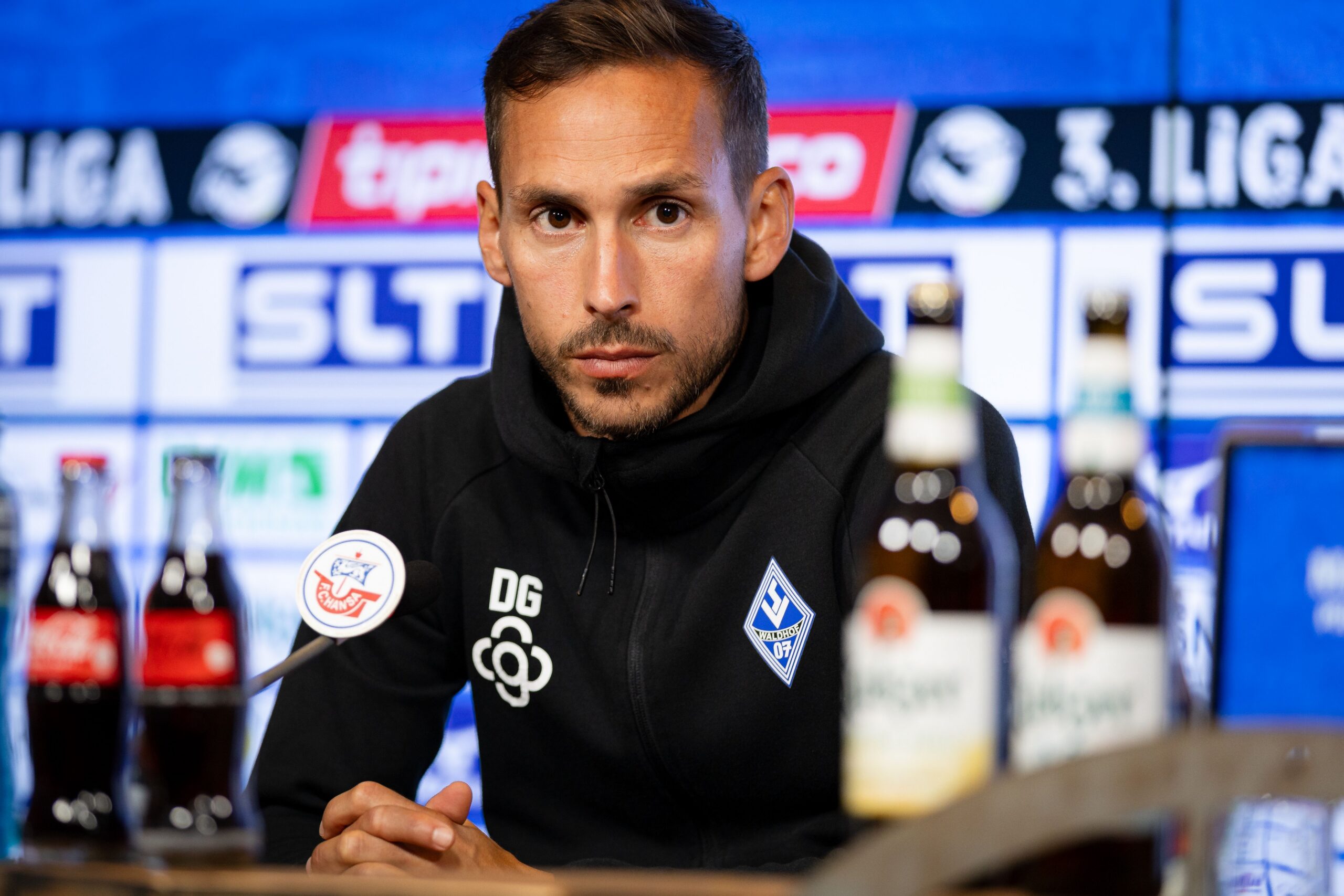
Profile
Role: Austrian UEFA Pro Licence coach
Specialisation: Player-centred football, leadership and individual player development
Experience: Austria, Germany, Portugal, Tanzania and Cameroon; senior and youth football; CEO and head coach
Focus Areas: Ball possession, clear patterns off the ball, individual responsibility and sustainable long-term value
Dominik Glawogger is an Austrian UEFA Pro Licence coach with a track record of delivering results under pressure while creating value that lasts beyond his time at a club. Across senior and youth football, he has won five titles — including two championships that lead to promotion – and successfully guided three senior teams to avoid relegation.
His first senior role abroad took him to Tanzania, where he led TOTO African SC through a six-month battle to remain in the Premier League. At Floridsdorfer Athletiksport-Club (FAC) in Vienna, Dominik initially worked as CEO and led a broader professionalisation of the club’s sporting and financial operations. When the first team at the end of the season dropped so far down the table that they were five points off avoiding relegation with six games to go, he also took over responsibility as head coach while continuing as CEO. FAC averaged 1.83 points per game in these matches he coached and secured its place in Austria’s second division.
In his next position in Germany’s youth football system Dominik guided Holstein Kiel’s U19s to the Regionalliga Nord title and promotion with the highest points total ever recorded in the competition. In the following season he managed to build and lead a team capable of competing convincingly in the highest division of Germany’s youth system, beating the very best youth teams of the country like RB Leipzig U19. His team also won the SHFV U19 Cup twice. At SSV Jahn Regensburg, he later led the U17s back to the Bundesliga in his first season at the club after an absence of more than ten seasons in this competition. Between those roles, he coached Vitória Sport Clube’s U23s in Portugal, worked in player development at Nkufo Academy Sports in Cameroon and later scouted and coached now successful senior players like Roan Nogha (Banik Ostrava).
After winning the HFV Super Cup with Teutonia 05 and competing in the DFB Pokal, Dominik was hired by 3. Bundesliga club SV Waldhof Mannheim, a team with rich history, in 2025. He started during a battle against relegation and kept the team in the league despite a difficult final run of fixtures against the teams at the top of the table, earning him a new two-year contract in the process. During that period, he also gave academy player Kennedy Okpala meaningful first-team minutes. Those opportunities contributed to the player’s development ahead of a €550,000 transfer only six months later – the club’s first transfer fee amounting to more than €500,000 in more than a decade. Although Dominik’s time at Waldhof ended early the following season, securing survival and giving Okpala increased minutes stood out as tangible achievements.
Dominik’s coaching style has also been shaped by a master’s degree in International Management and time spent observing high-performance environments led by coaches such as Xabi Alonso and Oliver Glasner. His footballing philosophy is player-centred and built on clear principles: ball possession to control and score, clear patterns off the ball, and individual responsibility within a defined team structure.
His international experience allows him to coach in German, English, French and Portuguese. Having also worked as a CEO, he understands how coaching and managing professional players are interconnected with recruitment, finances, club culture and long-term strategy.
As he weighs up his next coaching role, Dominik offers clubs a combination of immediate competitive impact, individual player development and sustainable long-term value for any professional team.
Key Insights
- Clear priorities, consistent leadership and shared standards help teams perform under pressure.
- Player-centred football combines individual ownership with demanding team principles.
- Coaching success includes stronger players, developing staff and lasting value for the club.
Our Exclusive Interview with Dominik Glawogger
Floridsdorfer Athletiksport-Club (FAC) in Vienna was an early test of your leadership capabilities. Since then, you have successfully led and guided teams through title races, promotions and relegation battles. What has remained constant in your approach to leading players and coaching staffs?
FAC taught me that pressure exposes every inconsistency within a club. When a team is five points away from not being relegated before the last 6 games of its season, players begin to doubt themselves, employees worry about the future and every decision carries more weight. What the team needed was not more information or a bigger motivational speech. It needed clear priorities.
I create clarity on three levels: what we need to achieve as a team, how the different units support one another and what each individual must contribute.
The same principle applies when competing for a title. My behaviour cannot change with every result. Leadership starts with controlling yourself, communicating honestly and living the standards you expect from others.
FAC taught me that pressure exposes every inconsistency within a club.
That consistency gives people security without allowing them to become comfortable. They understand the plan, their role and what is expected of them. That is the foundation for performing under any kind of pressure.
“Player-centred football” can easily become a slogan. What does it mean in your teams – and where does player freedom end?
Football belongs to the players. They make the decisions on the pitch, so my role is not to prescribe an answer for every possible situation. It is to give them clear reference points, expose them to realistic problems in training and help them recognise which solutions best suit their qualities.
Being player-centred does not mean creating a comfortable environment without structure. The demands are high: courage on the ball, intensity without it, compact distances and an immediate collective reaction whenever possession changes.
Within those principles, players must take ownership. A player who only follows instructions will always depend on the coach. A player who understands the game can adapt when the opponent changes or the match becomes chaotic.
The formation may change depending on the squad, but the principles and behaviours of the team must remain recognisable.
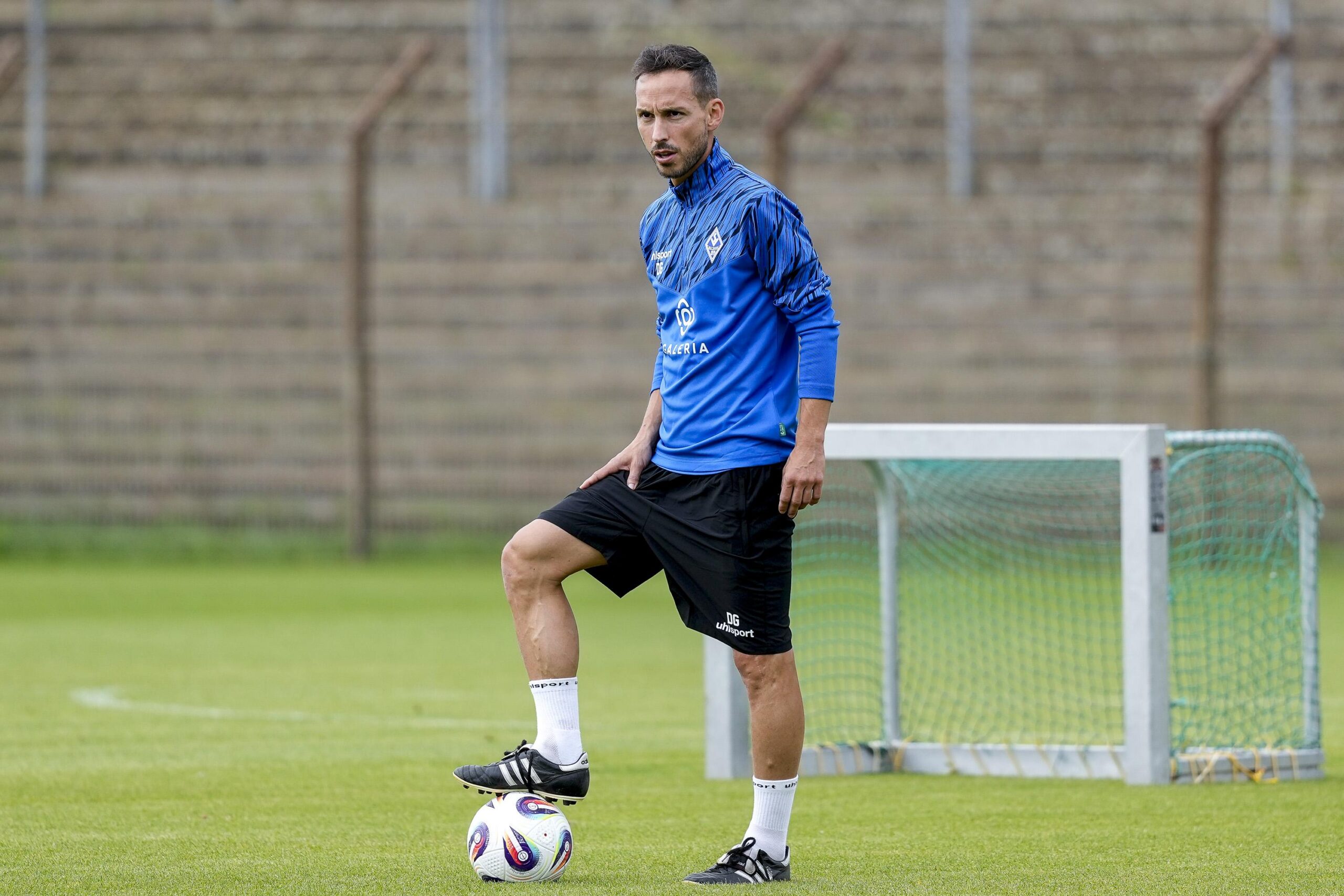
At FAC in Vienna, you experienced professional football from both the boardroom and the touchline. How has that broader perspective shaped you as a head coach – and what should remain after you leave a club?
It changed my perspective permanently. The head coach may be the club’s most visible sporting leader, but his role is to serve the organisation – not the other way around.
As CEO, I saw how every football decision reaches beyond the next match. Recruitment affects future budgets, team selection can influence player value, and communication shapes trust among employees, supporters and partners.
The same principle applies to the coaching staff. Specialists need the freedom to challenge ideas and take responsibility for their areas, but the players must experience one coaching team delivering one clear message.
That broader responsibility also changed how I measure impact. At FAC, I hired Lukas Fischer as an intern and later promoted him to team manager. Today, he is the club’s sporting director. At Waldhof Mannheim, Kennedy Okpala received meaningful first-team minutes during a critical period and was later transferred for €550,000.
The head coach may be the club’s most visible sporting leader, but his role is to serve the organisation – not the other way around.
Their subsequent success belongs to them. My role was to recognise their potential and provide an opportunity before the outcome was obvious.
A successful period should leave players with a better understanding of the game, staff members ready for greater responsibility and the club better prepared for what comes next. The question behind every decision is: does this help us compete today while also supporting where the club wants to go?
You have worked in five countries and can coach in four languages. When does that background make a real difference to a football decision?
Language is often the first sign of respect, but the real advantage goes deeper. Before you can guide a player, you need to understand how he communicates, responds to authority and processes feedback.
My master’s degree, which focused on Business in Emerging Markets, and an exchange semester in Russia gave me an academic foundation. Working in Tanzania and Cameroon turned that theory into practical experience.
Those environments taught me that the same message can produce very different reactions. That does not mean lowering standards or treating players according to stereotypes. The objective remains the same, but the way you help each individual reach it may differ.
Being able to communicate directly in German, English, French or Portuguese helps me build trust more quickly, distinguish between a lack of commitment and a misunderstanding, and support players as they adapt to a new environment. That is where international experience becomes a practical advantage.
At Waldhof Mannheim you experienced survival, a new contract and then an early departure the following season. What did you learn from these intense experiences?
My first responsibility was to keep Waldhof Mannheim in the league, and we achieved that in a highly challenging situation. I remain proud of what the players, staff and club accomplished together. The following phase, however, did not develop as we had hoped, and it would be dishonest to ignore that.
Afterwards, I reviewed my leadership and coaching with external experts. Looking back, I tried to accelerate certain changes before expectations and responsibilities were fully aligned across the organisation.
The main lesson was that a strong idea is not enough. It must be understood, shared and introduced at a pace that the organisation can support.
I will now invest even earlier in aligning expectations, communication and the right speed of change. That does not mean lowering ambition. It’s about creating an environment where the team’s ambition can consistently flourish.
My stint at Waldhof Mannheim confirmed that I can deliver under significant pressure. It also made me a more complete and better-prepared coach and especially leader.
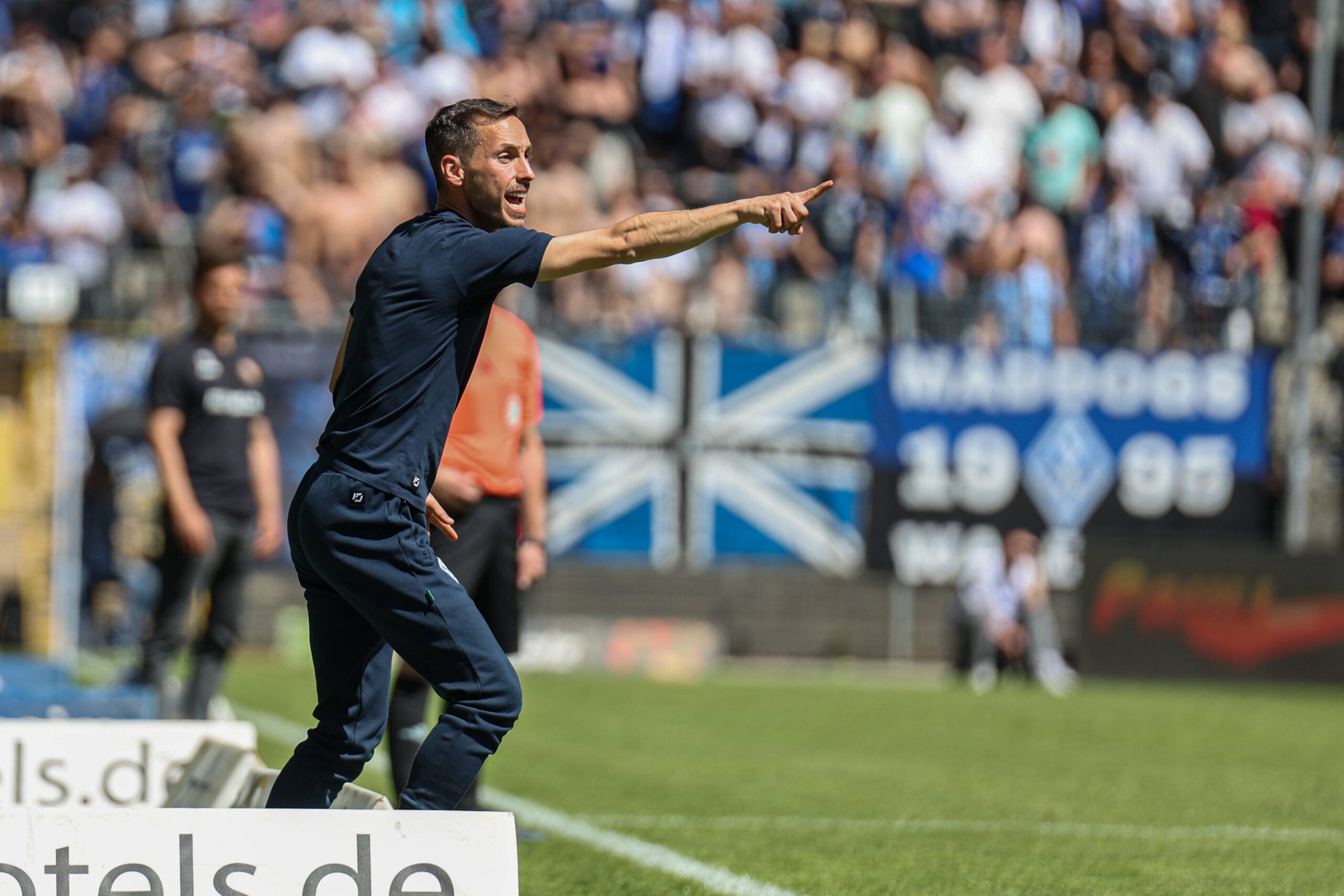
What are you looking for now – and what should your next club expect from you from day one?
Coaching in front of 25,000 supporters at a historic club in Germany strengthened my belief that there should be no artificial limit on ambition. It also confirmed that the right project is defined by its people and direction – not only by its name or the league in which it competes.
From day one, the club can expect an honest assessment of the squad, clear priorities for the players and staff, and a working environment built on responsibility, intensity and open communication.
I am looking for a project where shared ambition, clear roles and consistent daily work can create something meaningful and lasting.
If we were to review your work after twelve months, what evidence would convince us that the club is in a better position because of your time in charge?
The first measure has to be performance. Football is a results business, and a coach / leader must take responsibility for making the team more competitive.
However, the position in the league table should not be the only evidence. After twelve months, I would expect the team to have a clear identity and to perform with greater consistency, especially under pressure. The players should have a better understanding of the game, and several of them should have increased their sporting (and therefore also monetary) value through improved performances and greater responsibility.
I would also expect the coaching staff to have developed. Each specialist should lead their area with confidence while contributing to a shared direction. The academy should have a better connection to the first team, with young players receiving opportunities to train (and compete) with the senior players because they are ready – not simply because of their age.
From an organisational perspective, the board should receive honest information early on, recruitment decisions should reflect the club’s playing model, and there should be clarity about what the squad needs next.
Football is a results business, and a coach / leader must take responsibility for making the team more competitive.
Ultimately, the strongest evidence would be that the club is more competitive today, better prepared for tomorrow and less dependent on any one individual including myself.
FAQ
Who is Dominik Glawogger?
Dominik Glawogger is an Austrian UEFA Pro Licence coach with experience in senior and youth football, as well as club management as CEO.
What is Dominik Glawogger’s coaching philosophy?
His player-centred approach combines ball possession, clear patterns off the ball and individual responsibility within a defined team structure.
Which languages can Dominik Glawogger coach in?
He can coach in German, English, French and Portuguese.