
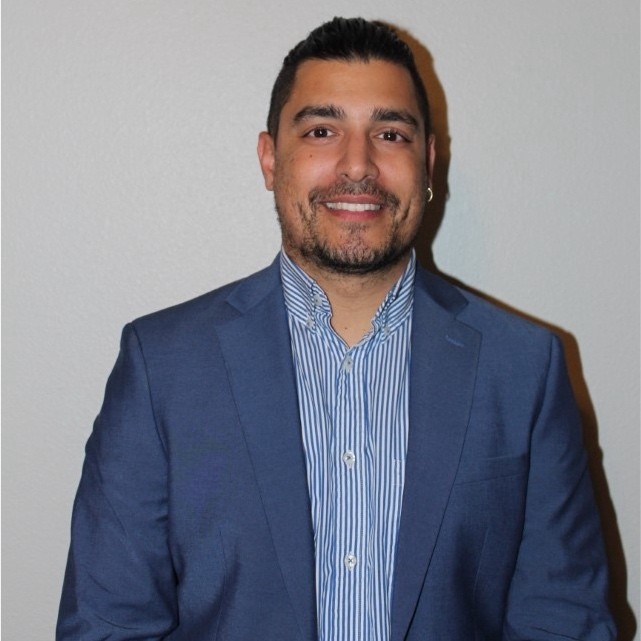
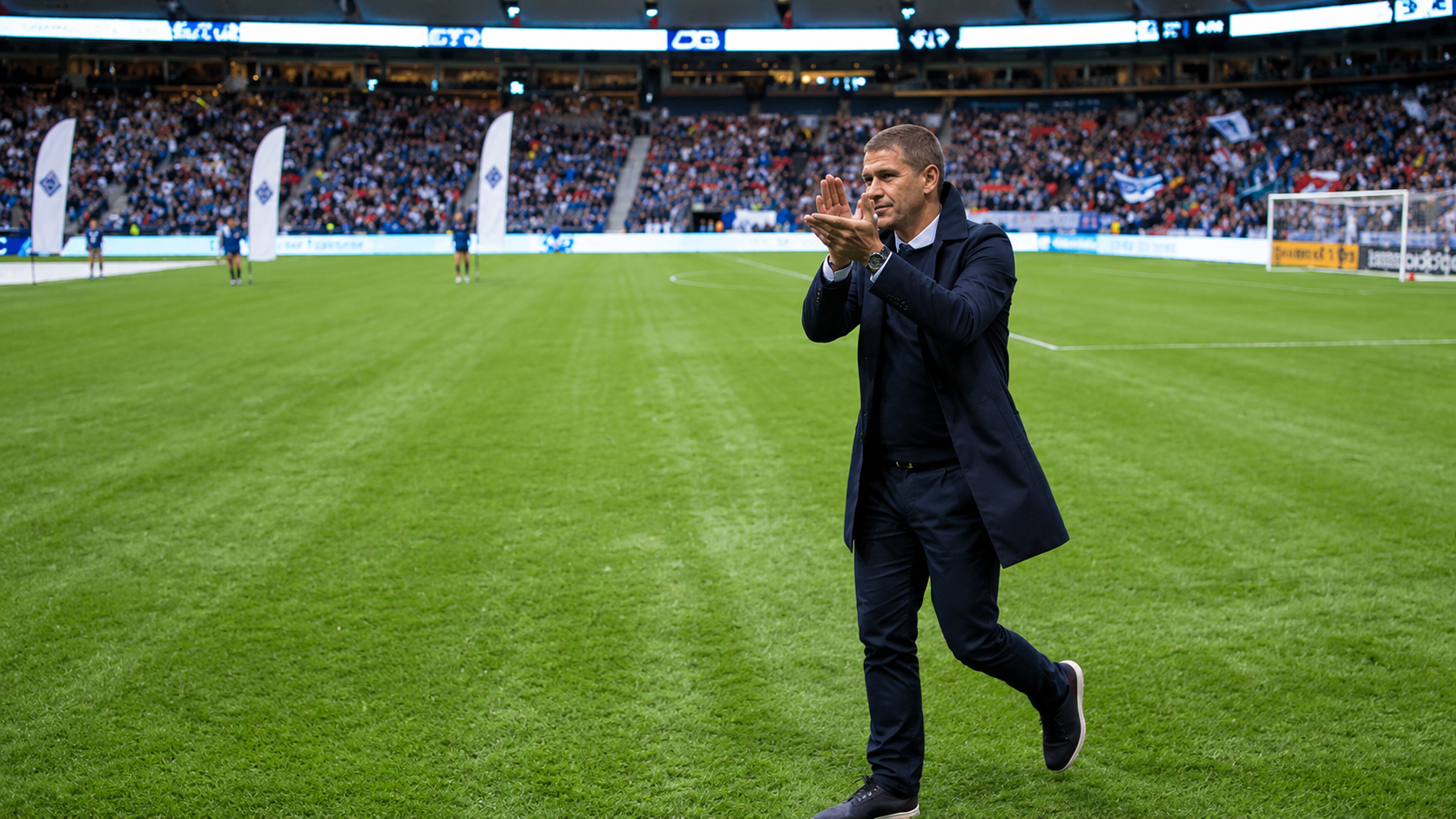
Profile
Role: Former Wales international, head coach and assistant coach
Specialisation: Coaching, youth development and sporting structures
Experience: England, Wales, Canada, the United States and Australia
Focus Areas: Talent identification, player development and technical and sporting roles
Bio:
From a small town in Mid Wales to more than three decades in professional football, Carl Robinson’s career has taken him across three continents and through almost every layer of the modern game.
Born and raised in Llandrindod Wells, Robinson left home at 16 to join the Wolverhampton Wanderers academy. He made his professional debut for Wolves in 1995 and went on to establish himself as a midfielder in the English game, also spending time with Portsmouth, Sunderland and Norwich City. Along the way, he experienced promotion to the Premier League with Sunderland and accumulated more than 400 senior club appearances.
Internationally, Robinson represented Wales 52 times between 1999 and 2009, earning his first cap against Belarus and eventually reaching the milestone of 50 appearances for his country.
In 2007, Robinson moved to North America, joining Toronto FC during the early years of Major League Soccer. He became a key figure for the expansion club, serving as co-captain and winning the Canadian Championship in 2009, Toronto’s first major trophy. In 2010, he moved to the New York Red Bulls, where his playing career began to evolve into coaching. As a player-coach, he worked under Hans Backe and gained an education that would ultimately shape the next chapter of his career.
After retiring as a player, Robinson joined the Vancouver Whitecaps coaching staff in 2012. Two years later, at just 37, he was appointed head coach. Over five seasons, he led Vancouver to three MLS Cup Playoff appearances, won the club’s first Canadian Championship in 2015 and guided the Whitecaps to the semifinals of the 2016–17 CONCACAF Champions League. He also won the Cascadia Cup twice.
His Vancouver tenure also became closely associated with youth development and talent identification. Robinson handed Alphonso Davies his professional debut at just 15, before Davies eventually moved to Bayern Munich for a then-record MLS transfer fee.
In 2020, Robinson moved to Australia, first taking charge of Newcastle Jets before joining Western Sydney Wanderers later that year. His Newcastle side won six and drew three of the ten matches he managed before his move, while he subsequently spent more than a season leading the Wanderers.
He returned to North America in 2023 as an assistant coach at D.C. United, working alongside Wayne Rooney. He later followed Rooney to Birmingham City in the English Championship, before returning once again to MLS with Atlanta United in 2024. He has also worked with the Wales national team and holds the UEFA Pro Licence, which he earned in 2013.
Today, Robinson’s perspective extends beyond the touchline. After more than 30 years in professional football as a player, international, player-coach, assistant, manager and senior football professional, he has increasingly focused on the wider technical and sporting structures that allow clubs and people to succeed.
That evolution has included postgraduate study focused on the sporting director function, an area that reflects where his experience is taking him next: beyond simply preparing a team for Saturday, toward understanding the pathways, people, structures and long-term decisions that shape a football club.
For Robinson, however, the titles and trophies only tell part of the story. Beneath the career is a philosophy built in Mid Wales and reinforced through decades of football: work hard, stay humble, keep learning, be honest with people, and never lose sight of the person behind the player.
Key Insights
- Robinson represented Wales 52 times and coached across North America, Australia and England.
- His approach to youth development centres on preparing players for the first team.
- He sees continued learning and strong relationships as essential to football leadership.
Our Exclusive Interview with Carl Robinson
If you had about 60 seconds to tell the world who you really are, what would that sound like?
I’m a young boy from Mid Wales. I come from a very poor town where my mother and father had very little. They both worked two jobs, so my upbringing and grounding was difficult.
Football was my passion. It took me all over Wales and eventually gave me an opportunity at Wolverhampton Wanderers as a 16-year-old apprentice. I took that opportunity, left home, and I’ve never really been back. Thirty-four years later, I’m still in football.
Leaving home at 16 was probably the hardest thing I ever did, but it was also one of the best. I learned to be myself, stand on my own two feet and become a young man. Football has plenty of ups and downs, and the reality of the game can be brutal sometimes, but it builds resilience and that was something my parents had already instilled in me.
My dream was always to play at the highest level I could. Fortunately, I played more than 400 Championship games and represented Wales 52 times.
Then, at 29, I moved to North America, to Canada, because I wanted to continue doing something I loved. I saw a lot of people complaining about their jobs, and I didn’t want to become one of them. I spent four years in MLS from 2007, then started my coaching journey. Sixteen years later, I’m still on that journey.
Over the last three years, between jobs, I’ve also invested a lot of time in my own professional development, particularly around technical and sporting director roles.
I have always had a desire to achieve my goals with a mindset that I will get there, and nothing will stop me. My whole outlook was hard work, determination and incredibly positive attitude.
There’s the Carl Robinson that football knows, and then there’s the Carl Robinson that your family knows. Where do those two people differ the most?
Unfortunately, in professional football, families sometimes have to take a back seat because of the circumstances. You get sold, you go on loan, you move clubs, and your family often has only one choice: follow you. But remember “your family is what defines you”
My family has been dragged all over the world, from the UK to Canada, America and Australia. My daughter is 24 and still lives in Vancouver, and my son is 18 and is currently a young professional at Swansea City.
But off the field, family is the most important part of my life. Football is my job and my passion, but it’s still a job. When you lose your job or leave work, your family is the one constant. They’re the people who support you when nobody else does.
Vancouver is also a brilliant place to live. It’s a long way from Wales, but it’s young, safe and an incredible outdoor city. People sometimes leave when they reach university age to explore different opportunities, but many come back later when they have families of their own.
I know your late father introduced you to football. When you look back at your career as a player and as a coach, which moment do you think your dad would have been most proud of?
The story of me becoming a footballer was really driven by my father. He had opportunities to play professionally for Cardiff and Swansea, but he turned them down because he wanted to stay local and, ultimately, meet my mum. Without that decision, I obviously wouldn’t be here today.
His drive was to push me to do what he hadn’t done and fulfill what he never got the opportunity to fulfill. I always wanted to make him proud because he was my hero. My mother was a huge influence too. They followed me all over the country when I played and when I went out on loan.
The values they gave me never changed: be respectful, be on time, speak to people the way you want to be spoken to, and never get ahead of yourself.
Sometimes you think too far ahead and start worrying about the next opportunity instead of controlling what you’re doing today. The best advice they gave me was simple: focus on where you are today. Tomorrow takes care of itself.
There were three moments that really stand out. My professional debut for Wolverhampton Wanderers, my first international cap for Wales against Ukraine, and earning my 50th cap, the golden cap.
I’ve been fortunate to win trophies during my coaching career, including the Cascadia Cup and Canada Cup, but trophies come and go. Being able to make my parents proud by making my professional debut, playing for Wales and reaching 50 caps, those moments meant more.
You recently completed an executive postgraduate course focused on the sporting director role. What was the biggest lesson or “aha” moment you took from it?
When you’re a player, your mindset is naturally different. Players can be selfish, and rightly so in some ways, because they’re thinking about themselves, their careers and their families. A coach’s job is to think about the team.
I was never the best player, but I always made the players around me better. Mick McCarthy, Neil Warnock and Harry Redknapp all said the same thing to me. That ability to influence people is what eventually pushed me toward coaching.
As a coach, I could influence an entire team and eventually an entire club, from the players and coaching staff to everyone working within the infrastructure.
I’ve been through six or seven coaching changes as an assistant or manager, and sometimes I couldn’t understand why those changes happened. I started asking people in senior positions about it, and their advice was simple: during the periods between jobs, keep learning and understand the different roles within a football club.
A technical director is more focused on technical alignment and pathways. A sporting director is more about management, bridging gaps between people and departments, stakeholders and the business side.
That really interested me and I totally understand now the structure and systems that are needed. I am clear in my Strategic perspective, Commercial impact effect, Alignment and influence paths and leadership leverage and enterprise judgment views.
Then I took the postgraduate course, which was a 19- or 20-month program. I left school at 15 to become a professional footballer, so going back to school at 48 was a little scary.
But one of the biggest things I learned was that showing vulnerability is actually a strength. Admitting that you don’t know everything is a strength. The best people surround themselves with experts who have different skill sets and can fill their gaps.
The course didn’t completely change what I knew. It refined it. It made me think more deeply about how to plan, prepare and strategize with a purpose.
You know about pathways, alignment, academies and executives, but you don’t necessarily understand all the detail behind each part. The course gave me more meat to the bone.
Admitting that you don’t know everything is a strength.
If you’re going to take on a senior executive role, you have to be fully prepared. I’ve got 35 years of football experience, but experience alone isn’t enough. You have to continue learning, keep an open mind and understand that there are new initiatives and ideas coming all the time.
Which disappointment in football probably did more for you than your biggest success?
Probably losing the cup final in Vancouver.
It was a two-legged final. We lost the first leg 1-0, then won the second leg 2-1. But we lost on away goals.
The painful part was that we were 2-0 up in the 96th minute, in the eighth minute of added time. They scored from a long ball after my goalkeeper and centre-back made an error, and suddenly the energy inside a 25,000-seat stadium just disappeared.
I had to go and shake the opposing coach’s hand, and then I had to face my team. I didn’t know what to say because I was numb inside, and the players were heartbroken.
The only thing I could say was, “Sometimes there are no words to be said. Just get yourself home to your family. We’ll come in tomorrow.”
That cup final changed my perspective. We didn’t lose the game. We lost the cup. We won the game, but we lost the trophy.
So I tried to turn it into something positive. We had dominated the game, and sometimes in football you don’t get what you deserve.
That night I didn’t sleep. The next day, I could have put on a show and pretended everything was fine, but instead I decided to be completely open with the players. I told them, “This is how I feel. I’m numb. I’m heartbroken, so I can only imagine how you feel.”
But my job wasn’t to take the disappointment away because I couldn’t. My job was to support them. That’s why that moment sticks with me. It still hurts, but it’s part of why you become who you are. Resilience isn’t about avoiding difficult moments. It’s about how you respond when they happen.
MLS can feel very different to coaches coming from Europe, salary caps, U22 initiatives, Discovery Lists, allocation money, Homegrown Players, Designated Players and so on. When did you first realize, “Okay, things are done differently here”?
I joined MLS in 2007, literally about a week before David Beckham went to LA Galaxy. That was a huge moment for the league because it was really entering a growth stage.
I joined Toronto FC, which was a brand-new franchise. I’d come from Norwich, Sunderland, Portsmouth and Wolverhampton, properly structured football clubs with strong identities, supporters and established ways of doing things.
Toronto was different. Some of the departments and structures you would expect at an established football club simply weren’t there yet.
But there was incredible energy from the supporters and the city, and the ownership group, Maple Leaf Sports & Entertainment, had a strategic plan looking three to five years ahead and beyond. That excited me.
I also started learning about coaching while I was there. I was around 30 or 31 and working toward my UEFA Pro License.
And then I got traded to the New York Red Bulls.
That was strange for me because every previous move I’d made from Wolves to Portsmouth, Portsmouth to Sunderland, Sunderland to Norwich had been my decision. Suddenly it wasn’t.
I had an honest conversation with the general manager and essentially learned, “These are the rules.”
So I went to New York and worked with Hans Backe. On my first day, he told me he’d heard good things about me, but that I needed to be at the training ground at 7 a.m. every morning.
I said, “But the players don’t report until 9.”
He said, “Yes, but if you want to be a coach, you’ve got to act like a coach.”
That became the beginning of my player-coach journey.
I worked with the staff from 7 a.m., preparing training, looking at numbers and analysis, then went into a locker room with Rafa Márquez, Thierry Henry and Juan Pablo Ángel. After training, the other players would go home, but I’d stay behind and do analysis, post-game reviews, individual work and preparation for the next training session.
Those 18 months were probably the best learning experience of my life.
By the time I became head coach in Vancouver, I understood the MLS salary cap, salary budgets, trades, GAM, TAM and the different mechanisms. I was speaking with agents, negotiating transfers and trades and identifying (South American) talent.
I also understood the unique differences between Canada and the United States. A U.S. player going to Canada could be treated differently from a Canadian player going to the U.S. All those little rules and regulations matter.
I was learning on the job, but I also had to get results. And if you’re a manager and you don’t get results, nine times out of ten, you lose your job.
The biggest lesson was that people matter. You’re only as good as the sum of your parts. If your players, coaching staff and support staff believe in the direction you’re going, believe you’re a good person and want to be part of it, you don’t realize how powerful that can be.
I spent five wonderful years in Vancouver and eventually felt like I understood MLS inside out. But the rules change every year. That’s part of the challenge.
All of this experience has guided me with the knowledge that I have total clarity which leads to strong connections while allowing the heads of departments to lead while I set the intent and boundaries showing a strong accountability. This is what I am about….
You have a great story involving Rafa Márquez that taught you something about leadership. Tell us what happened?
Hans Backe told me I had to tell Rafa Márquez that he wasn’t playing.
I lived in the same building as Rafa, played the same position and considered him a friend and teammate. So I was incredibly uncomfortable.
I was 31 years old, sitting there with sweaty palms, sweating through my shirt and wondering how I was going to tell a Mexican international and Barcelona legend that he wasn’t playing. Eventually Rafa came in. I sat him down and told him he wasn’t playing.
Then I made the mistake of trying to protect myself. I said, “I’m not playing either.”
He didn’t say anything. He just got up and left. That night I called Rafa. No answer. I called Thierry. No answer. I felt incredibly lonely because one thing I’ve always prided myself on is being a good teammate.
The next day, Thierry was laughing and joking with me. Then Rafa walked in.
I asked him, “Are you okay?” He said, “Yeah.” I said, “I thought you weren’t my mate anymore because you didn’t call me back.”
He looked at me and said, “I knew I wasn’t playing, Robbo. The coach told me two days ago.”
That’s when I realized what Hans had actually been doing.
He wasn’t asking me to deliver information Rafa didn’t already know. He was testing me. He wanted to see whether I could have a difficult conversation with a key player, how I would handle the relationship and whether I would crumble afterward.
The lesson was simple: be direct, be honest and don’t BS people.
Rafa didn’t agree with the decision, but he respected me because I told him the truth.
Whenever you’ve got a tough decision, make it. Sit in front of the person and tell them. Don’t go into too much detail because the moment players are told they’re not playing, there’s a chance they stop listening.
Your door should always be open, but you also have to challenge people, push them and support them. And you have to tell them when they’re doing well.
The lesson was simple: be direct, be honest and don’t BS people.
That experience shaped a lot of my leadership style.
About 90% of the job is supporting people and doing the foundational work to make them better. It’s the 10% they don’t agree with. And that’s human nature.
You’ve worked as a player, player-coach, assistant, manager and in technical and sporting roles. Where do you see yourself going next?
I don’t know exactly where I’ll land, and I don’t think you can plan that completely.
Players sometimes think they have a divine right to become coaches because they’ve played professionally. They don’t.
Coaching must be your passion. Being involved must be your passion… Its what I am all about!! Someone who’s never been part of professional football can give 100%, and if you give 99%, they have an advantage over you because they’re working harder.
Having played gives you experience. You understand the locker room, what works, what doesn’t and what’s needed. But it doesn’t give you a divine right.
There are fantastic coaches and managers who never played professionally because they studied, educated themselves, developed and surrounded themselves with experts.
My journey has gone from player to player-coach, assistant coach, manager and now toward the technical and sporting side.
I often use my former Wolves teammate Dougie Freedman as an example. He went from being a player and Crystal Palace legend to becoming a manager, then returned to Palace as an assistant sporting director before becoming sporting director. He spent many successful years there and has now taken on the same type of role in Saudi Arabia.
I asked him, “When do you know it’s the right time to move from assistant to manager, or from management into the sporting or technical side?”
His answer was very honest: “You don’t.”
It’s about opportunity and knowing people. Dougie got his opportunity because he was known, but then he surrounded himself with good people and continued to learn.
That’s how I look at my own development. I’m preparing myself for the next opportunity, whenever it comes.
I’ve got almost 20 years of MLS experience. I understand the North American landscape, youth soccer, the different mechanisms and the challenges clubs face.
I also understand what it’s like to be the manager under pressure. If a manager loses three games in a row, I’m not there to tell him what team to pick. I’m there to support him through that difficult period because I’ve lived it.
And I’m thinking beyond Saturday.
The manager is thinking about Saturday and the result. The sporting director, technical director or general manager has to think about 12 months, 18 months, two years and three years.
Who’s coming through the academy? When should they be introduced? Is your highest-paid player giving you value? What happens if you’ve got a young player ready to come through but you’ve got a Designated Player blocking his pathway?
You need to understand all of those pieces.
That’s where I think my experience gives me a unique skill set.
You’ve spent a lot of time around academies. What do you think clubs often get wrong about youth development?
Over the last three years, particularly through my work with Atlanta and DC, I’ve spent a lot of time with academy managers and staff.
There are some common themes.
The first is that academy coaches want to win games because they see winning as part of their own career development. If they win at U18 level, they think that gives them a better chance of becoming a first-team coach.
The second is that they want to play their strongest team and give their best players the most minutes.
But the whole thing needs to be flipped around.
The job of an academy is to make players ready and available for the first team.
You might win the GA Cup, the Dallas Cup or whatever competition you’re playing, but maybe only one player comes through.
So you have to understand that you’re developing a team with the objective of getting players through the system.
You also have to give players time because there are late developers. Some 15- and 16-year-olds are already physically ready for men’s football. Others aren’t physically ready, but technically and tactically they’re miles ahead. They understand the game, where to be and what to do, but they need time.
The job of an academy is to make players ready and available for the first team.
The coach’s remit shouldn’t be to win every game. Their remit should be to develop players and make them individually better.
So I always ask: What is the best academy? The one that wins all the cups, or the one that gets players through to the first team?
I think finding the balance is the key.
And if an academy coach wants to become a first-team coach, they should become an expert at developing players. The coaches who consistently develop first-team players are the ones who eventually get those first-team opportunities.
It’s not about the coach. It’s about the player.
How do you view the growing role of data in football?
Data is here, and you have to use it.
I’m not an expert in data, but I have a very strong understanding of it. My expertise is the underbelly of football.
You need data to support and inform decisions. If you make decisions strictly based on football, sometimes your eyes deceive you.
But if you rely strictly on data, you don’t understand the feel, the smell, the camaraderie and the dynamics inside a team.
Sometimes the dynamics don’t fit the numbers.
You have to mix both together. Experience and knowledge of the game allow you to understand what the data is worth.
I live my life by the saying “am I better today that I was yesterday and what have I learnt? That is my mentality to improve and grow as a person”
- City life or countryside? Countryside.
- Talent or mentality? Mentality.
- Beach or mountains? Beach.
- Sunrise or sunset? Sunset.
- Summer or winter? Summer.
- Early bird or night owl? Night owl.
- Plan everything or go with the flow? Plan everything.
- Dinner out or cooking at home? Dinner out.
- Road trip or flying somewhere? Flying somewhere.
- Dogs or cats? Dogs.
- Call or text? Text.
- Win ugly or lose beautifully? Win ugly.
- Books or movies? Movies.
- Five-star hotel or tent under the stars? Five-star hotel.
But there’s a reason behind a lot of those answers.
I grew up in the countryside and came from nothing. I never went to a beach when I was young, so now I’d choose the beach because I had 20 years in the countryside.
If you don’t reward yourself with certain things along the way, all the hard work is for nothing.
And win ugly? The game is about winning.
Modern football has all these buzzwords, game style, methodology, philosophy, but if a manager plays beautiful football and loses five games in a row, he’s usually out the door.
Winning is the most important thing. Once you start winning, it builds mentality, and mentality gives you the foundation to build your game model and philosophy.
You’ve got to lose with dignity and win with humility.
If you have those principles around you, you won’t go far wrong.
FAQ
Who is Carl Robinson?
Carl Robinson is a former Wales international footballer who has worked as a player-coach, assistant coach and head coach.
Where has Carl Robinson coached?
He has coached in North America, Australia and England, including roles with Vancouver Whitecaps, Newcastle Jets, Western Sydney Wanderers, D.C. United, Birmingham City and Atlanta United.
What is Carl Robinson’s approach to academy development?
He believes academies should prepare players for the first team and give late developers time to progress.