
There are football offices.
And then there are places where you walk in and immediately sense that football has become something much bigger than what happens on the pitch.
When I walked into Major League Soccer’s new headquarters in Manhattan, the first thing I thought about wasn’t the size of the building.
It was distance.
Not the distance from the entrance to the meeting room. Not the distance between one floor and the next.
I was thinking about the distance between where MLS started and where it is today.
Because in football, 30 years is not a particularly long time.
In some countries, 30 years barely represents a generation. Football has been played in the same stadiums for a century. Grandfathers take their sons to matches. Those sons take their own children. Seats, shirts, songs and stories are passed from one generation to the next.
MLS never had that luxury.
It had to build its history while living it.
That is a very different challenge.
And walking through the new MLS headquarters, you can feel that difference.
The building is modern. Extremely modern.
Digital screens. Live match data. Meeting rooms and working spaces built around technology. One area at the heart is called “Midfield.” The entrance creates the feeling of a player walking through the tunnel before stepping onto the pitch.
It is impressive.
But buildings don’t create football.
People do.
That was the part that interested me most.
Because when you look at MLS from a European perspective, there are still plenty of things that feel different.
A closed league structure. Salary rules. Playoffs. The draft. The Designated Player mechanism. Clubs operating within a framework defined by the league.
For someone coming from European football, some of these ideas can feel unfamiliar at first.
But perhaps that is exactly the point.
MLS never needed to become Europe.
MLS needed to become MLS.
The Beginning Was Anything But Glamorous
MLS played its first season in 1996.
Ten teams.
Just ten.
Today, there are 30.
There are purpose-built stadiums. Training facilities. Academies. Players arriving from different parts of the world. International broadcast agreements. Owners who understand that a football club is not simply a team, but a city, a community, an entertainment business and a long-term investment.
And perhaps most importantly, a young player growing up in America no longer has to explain why they play football.
When I was growing up in Germany, football was everywhere.
It wasn’t a question.
It was simply part of life.
In America, football had to introduce itself.
That is a completely different challenge.
Imagine trying to build a professional football culture in a country where other sports already have generations of history, enormous television audiences and deeply established identities.
You are not just competing for the player.
You are competing for Saturday.
For the family’s time.
For the child’s attention.
For the television screen.
For emotion.
That is why I don’t think MLS’s development can be measured only by the number of teams or the value of its clubs.
I think the more meaningful measure is habit.
People are beginning to plan their weekends around MLS matches.
Children wear MLS jerseys.
Supporters travel to away games.
Academies are producing players.
Young footballers still dream about Europe, but increasingly they can also imagine becoming stars in their own country.
That is cultural development.
And culture takes time.
Sometimes a player changes the conversation itself.
Then Messi Arrived
Football has always understood the power of great players.
But sometimes a player doesn’t just score goals.
Sometimes a player changes the conversation itself.
Lionel Messi’s arrival in MLS was one of those moments.
Suddenly, people who had never watched an MLS match were talking about Inter Miami.
People who had never paid attention to the league were asking questions about its clubs, its players and the way the league works.
That is the part of football that numbers can never fully explain.
A superstar doesn’t just bring goals.
He brings curiosity.
Curiosity brings viewers.
Viewers create attention.
Attention creates commercial opportunity.
And if that opportunity is used properly, it can be reinvested into the game.
But there is also a danger.
What happens if too much of the system is built around one superstar?
What happens when the superstar leaves?
That is where the bigger question for MLS begins.
The league cannot become simply a place where famous players come at the end of their careers.
It has to become a football ecosystem where great players are developed, where top coaches want to work, where sporting directors want to build long-term projects and where young players see an environment in which they can develop.
That is much harder.
But it is also much more important.
The American Contradiction
There is something about American sport that has always fascinated me.
Americans understand competition.
They understand entertainment.
They understand commercial strategy.
They know how to create a stadium experience.
They know how to market a league.
But football has its own culture.
And you cannot buy everything.
You can build a beautiful stadium.
You cannot buy a rivalry.
You can create a marketing campaign.
You cannot buy a memory.
You can put a player on a billboard.
But you cannot guarantee that he becomes a legend.
That has to happen naturally.
This is what makes the path MLS is taking so interesting.
How do you grow without losing control of what you are building?
How do you globalize without becoming a copy of Europe?
How do you commercialize without losing the supporter?
How do you chase bigger ambitions without forgetting where you came from?
That balance is not easy.
The Headquarters Tells the Story
Walking through the new headquarters, I found myself thinking about that contradiction.
The building is looking toward the future.
But it hasn’t forgotten the past.
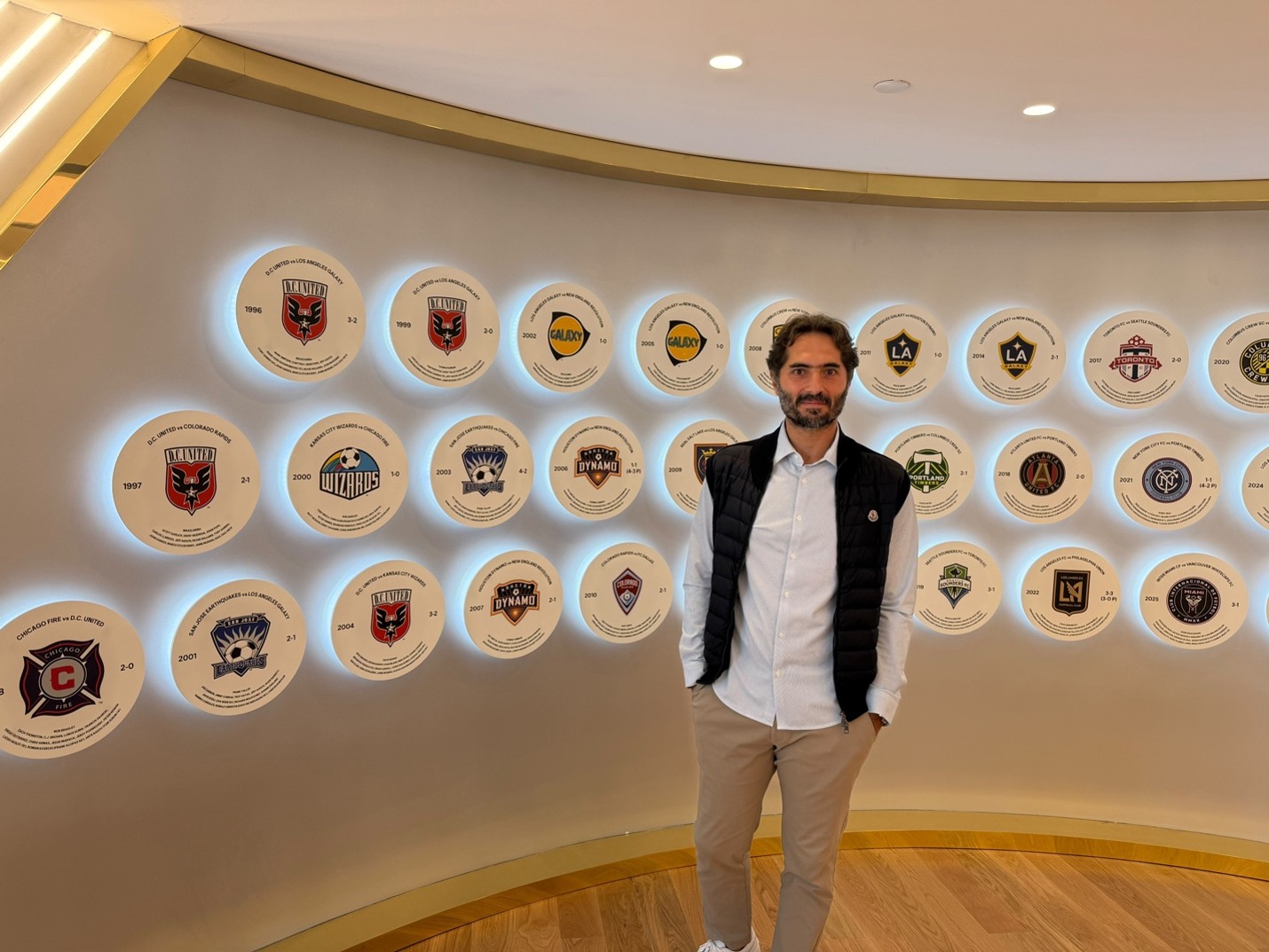
Every MLS club has its place. The history of the league is part of the environment. Technology is everywhere, but so is the identity of the league.
That matters.
Because when institutions grow, they sometimes become uncomfortable with their beginnings.
They want to look as though they were always successful.
MLS doesn’t need to do that.
Because its beginning is actually one of its greatest assets.
The league started with 10 teams.
Today, there are 30.
Once, it had to convince people that professional football could survive in America.
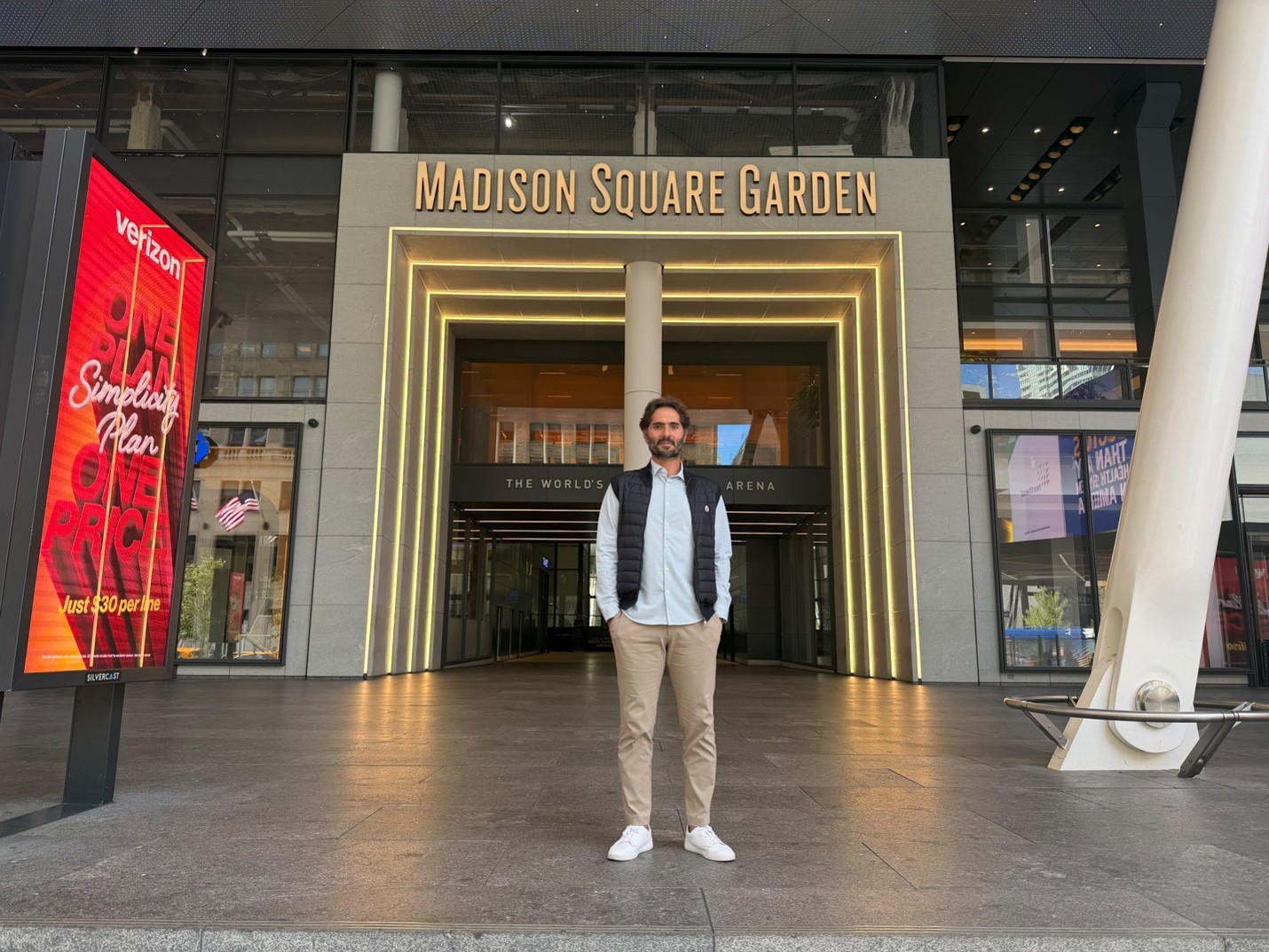
Today, its headquarters sits in the heart of Manhattan, just steps from Madison Square Garden.
This is a story worth telling.
But the Hardest Part Starts Now
This isn’t a criticism of MLS.
It is a challenge.
Because growth creates a different kind of responsibility.
When you’re small, survival is success.
When you become bigger, the expectations change.
The questions become harder.
Can MLS consistently develop top-level players?
Can its clubs keep their best young players long enough for supporters to know them, connect with them and build memories around them, while also allowing those players to move to Europe at the right moment?
Can MLS clubs compete internationally?
Can the league create genuine global rivalries?
Can clubs build football institutions that can survive independently of individual owners, commissioners or superstar players?
And perhaps most importantly:
Can a young American player eventually look at MLS not simply as the beginning of a career, but as one of the places they ultimately want to reach?
To me, these questions matter far more than the next sponsorship agreement.
Because football always has the final word.
And that final word belongs to the pitch.
New York, Football and the Next Generation
After leaving the headquarters, I walked toward Manhattan.
New York continued doing what New York does.
Noise.
Traffic.
People walking quickly.
Nobody seemed to be waiting for football.
Perhaps that is what makes the MLS story so interesting.
Football is no longer asking America for permission.
It is asking for attention.
The new MLS headquarters sits in the heart of one of the world’s most important media and commercial cities.
That is symbolic.
But symbols are easy.
Execution is harder.
The next 10 years will tell us whether MLS becomes simply a successful North American sports league or whether it evolves into a genuine football ecosystem capable of creating its own stars, its own traditions and its own global identity.
I don’t think MLS needs to become the Premier League.
It doesn’t need to become La Liga.
And it certainly doesn’t need to become the Bundesliga.
Doing so would miss the point entirely.
MLS needs to become the best version of itself.
It needs to keep the organization, ambition and commercial vision that American sport does so well, while holding onto the passion that makes football what it is.
And it needs to understand that those two worlds don’t always speak the same language.
Perhaps that is exactly where the opportunity lies.
Because when different football cultures come together, something interesting can happen.
I’ve seen that throughout my own career.
Germany taught me discipline.
Türkiye taught me emotion.
Spain taught me to look at the game differently.
Football never gives you one correct answer.
It gives you questions.
And MLS is asking some very big ones today.
Thirty years ago, the question was:
“Can professional football survive in America?”
Today, that question feels too small.
The more interesting question is:
“What can American football become?”
Walking through that new building in Manhattan, surrounded by screens, club identities, technology and the history of a league that began with just 10 teams, I couldn’t help but think:
The story isn’t over. In many ways, it may only just be beginning.