
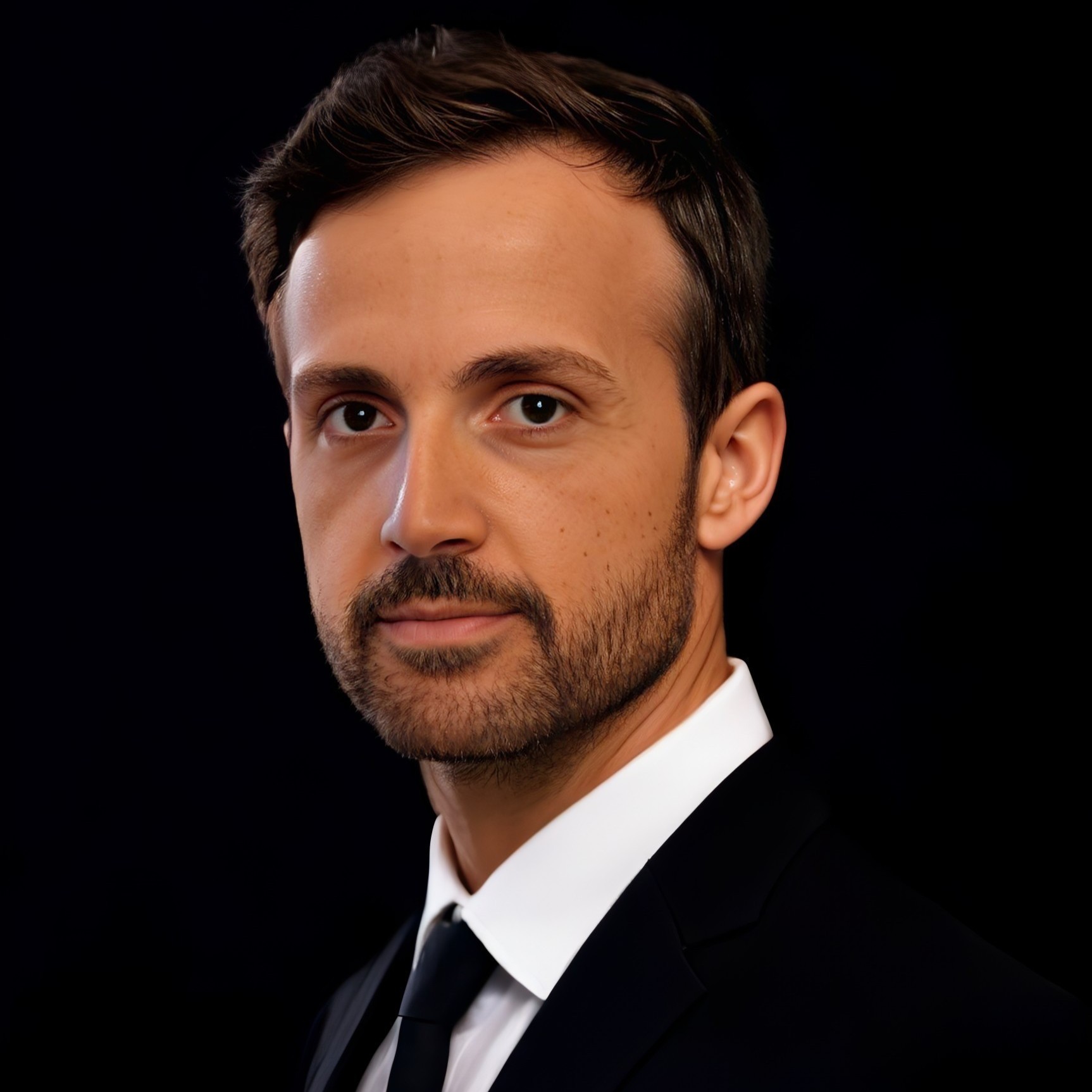
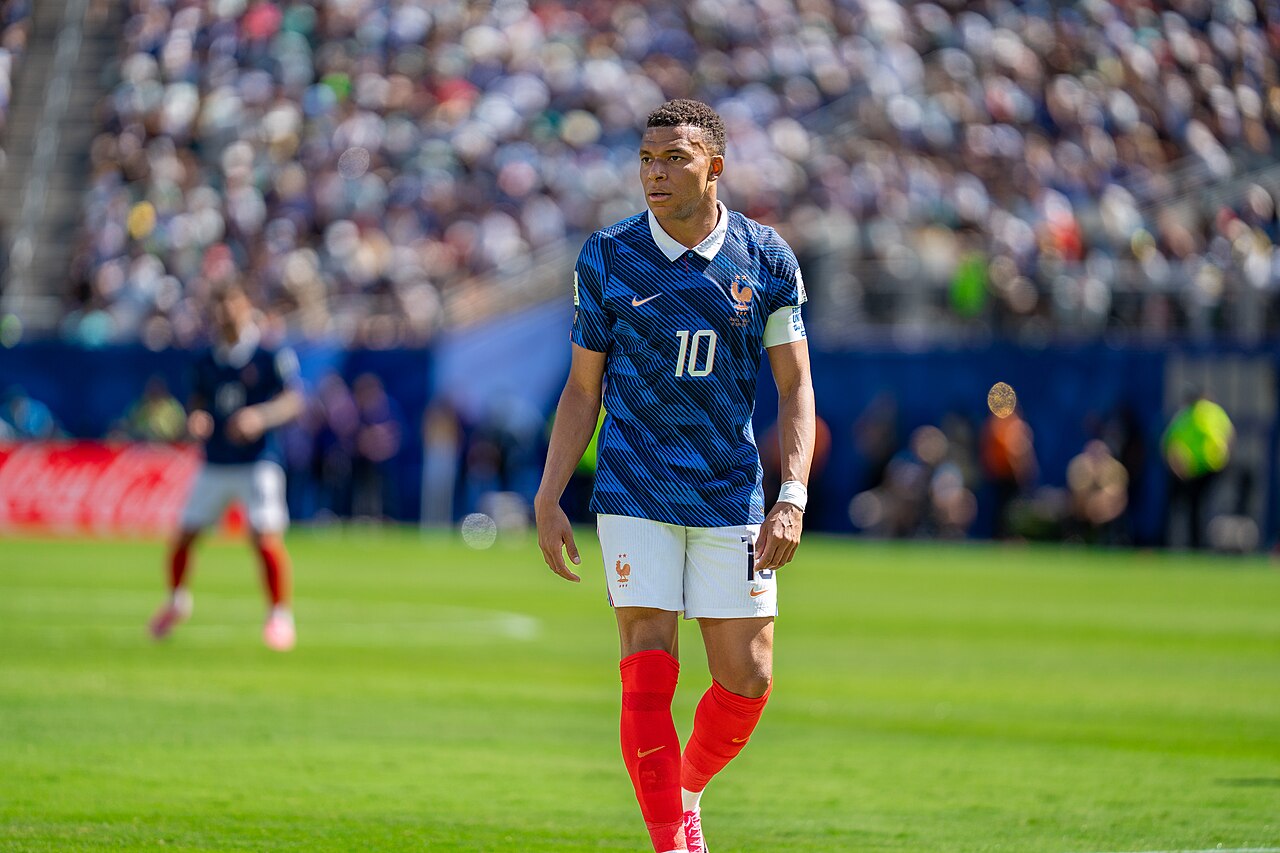
The company that taught athletes they could be brands just watched the lesson walk out its door.
Since he was eight years old, there has been a swoosh on Kylian Mbappé’s boots.
Nike signed him in 2006, a child from the Paris suburbs who had not yet played a professional minute, and for two decades the two grew up together. By 2019 he was the brand’s leading global football ambassador. He wore Nike to a World Cup title at nineteen, to a second final at twenty-three, and this summer, at twenty-seven, to a Golden Boot and the all-time World Cup scoring record. If you have watched him at all, you have watched a swoosh move at speed.
On the surface, what happened on 18 September is a familiar story. A star’s contract runs out. The brand offers a signature boot and calls it a career journey. The star weighs his options and moves. Football has seen the film: Neymar to Puma, Lamine Yamal to Adidas, a hundred smaller names before them. Logos change, and the market shrugs.
But look a little closer, and the familiar story starts to come apart.
Because Mbappé did not go to a rival. Rivals were reported to be circling, and he walked past all of them. He went to On, a Swiss company that makes running shoes, that has never sold a football boot, and that will not have one to sell until next year. The biggest star of football’s next generation left the most powerful football brand on earth for a company with no football boot to its name.
The easy explanation is money. But money is the one thing Nike could always match, and it still lost. The other easy explanation, the one you will have read a dozen times this week, is that athletes now want empowerment, control, a seat at the table. That is true. It is also the least interesting thing about what happened.
Because the real question is not what Mbappé got. It is what On bought. And to see that, you have to stop looking at the player and start looking at the buyer.
The Wall
To see what On bought, you first have to see the shelf it was buying from, and the football boot shelf is one of the strangest in retail.
Two companies own it. Nike and Adidas together take an estimated 55 to 60 per cent of every pound spent on football boots worldwide; Puma, a distant third, takes about a tenth. One study of the athletic footwear industry calls it a fifty-year duopoly with “near impossible barriers to entry,” a market of such scale that “dozens” of brands have “come and go” trying to crack it. Strategists have a plain name for what those brands ran into: barriers to entry. In boots, they come in two kinds, and it matters which is which.
The first kind is structural. A boot is technical equipment with specialised requirements, made at enormous scale, sold into a market where the leaders wage price wars that squeeze everyone’s margins. An industry source puts it bluntly: the cleat business is “probably the hardest, least profitable, most competitive market to enter.” No superstar fixes a bad boot.
The second kind is the one that keeps newcomers out, and it has nothing to do with factories. A boot is equipment, but it is also a fashion object, a sponsorship asset and a symbol of who a player is. Players wear what they trust; fans buy what their heroes wear. And that trust, which took Nike and Adidas decades to earn, is not floating free in the market. It is locked down in contracts. Boot deals are signed with players, not clubs, and they follow the player wherever he goes. Ronaldo’s Nike deal is reported to run for life; Messi’s with Adidas does too. At this summer’s World Cup, Nike shod 534 players, 42.79 per cent of the tournament, more than any other brand. That is the wall. Call it category credibility, and notice what kind of barrier it is: you cannot build it on a schedule, because the players who would give it to you are already wearing someone else’s logo.
Under Armour is the cautionary tale: it arrived in footwear with money and a Super Bowl advert, into what one analyst called “a treacherous category fiercely defended by the big players,” and it is still a niche presence in boots. Cash bought it a place on the shelf. It never bought it the foot.
And yet the wall is not what it was. Nike’s share of World Cup players has slid from 62.8 per cent in 2018 to 42.8 this year, and Harry Kane chased a Golden Boot in Skechers. Where a wall loosens, a door can open.
So how does a running-shoe company with no boot get through? It does not build a door. It waits for one to open, and pays for it in a currency the giants do not use.
What On Actually Bought
On had done this before, and it is worth telling properly, because On is not improvising with Mbappé. It is repeating itself.
In 2018 Nike tried to cut Roger Federer’s fee, and Federer, who stood in the company’s own pantheon beside Jordan and LeBron, walked out. In November 2019 he put an estimated fifty million dollars into a young Zurich running brand called On, for an estimated three per cent of the company, figures On has never confirmed, and took a working role in product. One of On’s co-founders called it “not traditional athlete sponsorship.” Within two years On had listed in New York. Marc Maurer, then its co-chief executive, later described the effect in one line: “Roger was the accelerator. We basically wanted to open the door, and we were clear that tennis is the next sport.” Federer’s slice of that company is now worth several hundred million dollars, and last year it made him a billionaire.
On knew a superstar’s equity stake could open a sport. By this summer it needed one to open. On is a beautiful business with a slowing engine: premium, full price, gross margins above sixty-five per cent, three billion Swiss francs in sales last year. But in August it trimmed its growth forecast, its largest market slowed for a second straight quarter, and its shares fell by a fifth in a day to near a twelve-month low. A brand like that does not enter the hardest category in sport for pleasure. It enters because it needs a growth lever, and football is the largest one on earth.
It only needed a door. In the summer of 2026, one opened.
Mbappé’s Nike contract ran out on 31 July. Through the World Cup he remained, as Forbes put it, “still nominally a Nike athlete but only because Nike secured a one-month contract extension to stop him switching boots mid-tournament, a deal due to expire twelve days after the final.” Nike released a signature boot and called it a career journey. It was a farewell tour. And On had been standing beside that door for a year: Thierry Henry had worked for the company since 2025 without anyone knowing, and it was Henry who led the recruitment.
Here is the part that matters. On any reading of the two companies’ balance sheets, Nike could have matched any fee; cash is the giants’ home ground. So On, by every account of the deal, did not compete on fee. On itself has confirmed that the structure includes cash and equity, while declining to disclose the amounts; according to The Athletic, the deal runs for roughly ten years and carries performance clauses. Mbappé becomes a global ambassador and an equity stakeholder, working with On’s product teams on boots that will not reach the market until 2027. He is not paid to wear the boot. He is paid, in part, if the boot works.
He is not paid to wear the boot. He is paid, in part, if the boot works.
Strategists call this equity for access, and the mechanics matter. On did not write a bigger cheque. It issued a piece of itself and, in effect, diluted its own shareholders to buy its way into football, and that cost is the point. Nike cannot hand a footballer a share of Nike without becoming a different company. On could, because it is small enough, and hungry enough, to do it. The equity was never generosity. It was the entry ticket, priced in the one currency the incumbents do not carry. It bought, in one signature, what Forbes called “instant credibility in a sport where credibility has historically taken decades to build.”
Which is where this stops being a story about one company. Because three summers ago a different superstar rebuilt his wage in a way that looked, at the time, like a one-off. It was the first rung.
The Ladder
The first rung was Lionel Messi. He moved to Inter Miami in 2023 on a contract that, as this column argued in August, put him not on the payroll but on the cap table: a base salary modest by his standards, then, as widely reported, a share of the new subscribers Apple signed up to watch him, a share of the Adidas merchandise he moved, and an option to own a piece of the club once he retires. His wage had become a percentage of the value he created.
Mbappé is the rung above it. Messi took a percentage. Mbappé took a piece. One is paid out of the sales a player generates; the other is a share of the company that generates them, and the difference is the difference between a bonus and ownership. Investors have a phrase for it: skin in the game. If On’s boots fail, Mbappé does not merely lose a fee; he loses what his stake would have been worth. A man designing a boot he owns a piece of designs it differently.
But the ladder is older than either of them, and its bottom rung was laid by Nike. In 1984 a Chicago Bulls rookie signed a five-year deal worth about two and a half million dollars. The innovation was not the number but a clause, credited in most tellings to his mother and his agent David Falk, and reported at around five per cent, that paid Michael Jordan a royalty on every pair sold. Nike expected, by most accounts, about three million dollars of sales over the first few years. Air Jordan sold a reported hundred and twenty-six million in its first year. By 1997 Nike had spun it out as a brand of its own; in 2025 it generated 7.6 billion dollars.
Every agent alive learned two things from that. A percentage beats a fee, if the brand grows. And a percentage outlasts a body: Jordan’s royalties did not care that he had retired. A fee ends when the contract does. A share does not.
The rungs between were laid one at a time: Beckham’s 2007 option to buy a Major League Soccer franchise for a fixed twenty-five million dollars, which became Inter Miami; then Stephen Curry at Under Armour and Roger Federer at On, equity in the brand whose logo they wore. Four decades, one direction: fee, percentage, share, ownership. A University of Chicago business law review article on the Messi deal names the progression in three words that read like a thesis: employee, asset, owner. The academic term is assetization: the athlete becoming capital rather than labour.
Mbappé did not invent anything. He climbed. And the first rung of that ladder was laid by the company he has just left.
The Incumbent’s Blind Spot
It is tempting to read Nike’s summer as a single collapse, so separate two stories that happen to be unfolding at once.
The first is corporate. Nike’s shares hit a twelve-year low in September; a company once worth 264 billion dollars is now worth about 57. On 21 September, three days after On announced Mbappé, it was removed from the S&P 100, ending an eighteen-year run. None of that was caused by a footballer changing boots, and it would be dishonest to pretend otherwise. But the timing matters. The implicit premium of a Nike deal, the old assumption that being with Nike is itself the prize, is dimmer than at any point in the careers of the athletes now deciding where to go. Marketers call that premium the halo effect. It is fading.
The second story is about what Nike offers an athlete, and why it keeps losing. Because Nike is not, on the evidence of these departures, being outbid. Look instead at why its stars actually left.
Lamine Yamal is nineteen, a World Cup winner, and Messi’s heir at Barcelona. A bidding war with Nike ended in 2024 at Adidas, and this summer, on his own YouTube channel, he explained why: his path to being the face of Nike was blocked by the icons already there, Mbappé and Vinícius among them, while at Adidas he saw “massive space” to become the brand’s leading face. Adidas has made him exactly that, the face of its F50 franchise and of a World Cup campaign beside Messi and Beckham.
Now read that beside a meeting eleven years earlier. In 2013 Nike sat down to re-sign Stephen Curry. According to ESPN’s account, relayed by Curry’s father, an executive misstated Stephen’s first name, and the presentation still carried Kevin Durant’s name from an older deck. “I stopped paying attention after that,” Dell Curry said. His son would never reach the top tier at Nike. Curry signed with Under Armour, where he was the marquee name “rather than in the shadows of Nike’s heavy hitters.” And read both beside Federer, whom Nike tried to pay less in 2018, and who left.
Three sports, three stars, one reason. The brand with the most stars keeps losing the star who wants to be first. It is the incumbent’s structural blind spot, and it has a precise shape. A roster built to project dominance, to put a swoosh on 534 World Cup players, cannot, by definition, make every one of them the centre. And a company worth 57 billion dollars cannot hand a footballer a share of itself without changing what it is. So the two things elite athletes now want most, to be first and to own, are the two things Nike is worst placed to give.
The brand with the most stars keeps losing the star who wants to be first.
Its rivals exploited exactly that, from two angles. Adidas won Yamal with centrality: you will be our face. On won Mbappé with equity: you will own part of us. By the athletes’ own accounts and the structure of both deals, neither appears to have been decided by money. Both offered a partnership where Nike offered a portfolio, a place in a collection rather than a stake in a future.
The cost lands on the succession chart. Nike had positioned Mbappé as Ronaldo’s successor and the face of its football business, with twelve signature boots in seven years; that succession now belongs to a Swiss running company, and its other future face belongs to Adidas, which can field Messi, Yamal and Bellingham in one campaign. Nike keeps Haaland and Vinícius; it keeps Ronaldo, who is forty-one. In the language of the boardroom, that is a key-person risk it did not plan for and a succession problem it did not see coming. The ladder was Nike’s idea. The climbers are leaving.
Which makes On the winner and Nike the loser, and it would be a clean story if the history stopped there. It does not. Because one man on that ladder took exactly the step Mbappé has just taken, and it did not end the way the announcement suggests.
Federer’s Playbook, Curry’s Warning
Curry’s story is the one nobody at On’s announcement will mention, because he took Mbappé’s step before Federer did, and in time it went wrong.
Curry’s equity was in Under Armour itself. His 2015 extension came with a stake in the company, and his 2023 extension, which Under Armour’s founder called a “lifetime deal,” added 8.8 million Under Armour shares worth seventy-five million dollars at the time and made him president of Curry Brand, the sub-brand the company had launched around him in 2020. On 13 November 2025 they parted. Under Armour, once the upstart that was going to challenge Nike, was by then in retreat, cutting another ninety-five million dollars and abandoning its baseball and college deals; its shares had roughly halved, and with them the value of Curry’s stake, an estimated thirty-seven million dollars left on the table. Curry Brand had shrunk to about two per cent of the company’s revenue; the shoes, in Forbes’s judgement, “never grabbed the slice of the sneaker culture” the brand had hoped for. Curry, at thirty-seven: “I’m a free agent. The sneaker industry is difficult. Things change over time.” He left with sole ownership of Curry Brand and, the next evening, warmed up in Nike Kobes.
Put Curry beside Federer and the lesson is exact. Same move, same structure, opposite company, opposite result. Federer’s three per cent is worth hundreds of millions because On grew; Curry’s stake rode Under Armour’s decline the way Federer’s rode On’s ascent. The equity did not fail him. The counterparty did. That is what an equity deal quietly does to an athlete: it turns his brand partner into his investment, and his fortune into a function of the partner’s health. Investors call it counterparty risk. Athletes are only now learning the phrase.
Now hold Mbappé’s contract up to that light. On is a strong company, but a decelerating one, and it has entered what the industry itself calls the least profitable category in sport with a product that has not yet reached the market. The boots arrive in 2027 and must clear a technical bar Nike, Adidas and Puma have spent decades raising, in front of players who choose boots by feel and trust, not by who owns a piece of the company. Buying the face does not buy the foot. If the boot fails, Mbappé’s stake is Curry’s, not Federer’s.
And the risk runs both ways. Mbappé has concentrated his footwear future, for a decade, in a single company. On has staked its entry into the world’s largest sport on a single twenty-seven-year-old body. Each has bet on the other, and neither can hedge. That, too, has a name, concentration risk, and it sits on both sides of this table at once. Federer, moreover, invested late in his career, in a smaller sport, in a tennis-inspired lifestyle line far less technically demanding than a football boot; Mbappé is mid-career, in the largest sport on earth, in the hardest category to break into. The playbook is the same. The pitch is not.
None of this makes the deal a mistake. It makes it a bet, and bets have two outcomes. Mbappé has chosen Federer’s structure. Whether he gets Federer’s result or Curry’s will be decided not by anything he does on a pitch, but by whether a Swiss running company can make a football boot the best players in the world are willing to trust.
The Share Register
Whichever way that bet lands, one thing changed on 18 September regardless of how the boots sell.
For a century the relationship between a star and the brands that paid him ran one way: the brand held the money, the athlete held the appeal, and the money rented the appeal for a while. A sponsorship was a cost on one ledger and an income on another. Mbappé’s deal is not a rental. On did not pay to borrow his appeal; it paid, partly in shares, to make his appeal part of its own balance sheet, and made him a part-owner of the outcome. The transaction is simple: a company that could not build credibility bought it, and the price was no longer just a fee but a slice of the company. The endorsement has become an equity issuance.
That is the strategy lesson, and it cuts two ways. For a challenger it is now the playbook: find the credibility you cannot manufacture, wait for the one door that opens, and pay for it in the currency the giants do not carry. Federer proved it worked; On has just run it twice. For an incumbent it is the warning: what the best athletes now want is precisely what a company built on a crowded roster and a fifty-seven-billion-dollar valuation cannot easily give. Nike will not be the last giant to discover that its strength is the reason its stars leave.
And it is the marketing lesson, because it changes what an athlete is. A man paid a fee is a billboard, however famous. A man paid in shares is a partner with a claim on the upside, and the upside outlasts his legs; a fee ends when the contract does; a share compounds. What Mbappé has bought himself, at twenty-seven, is optionality: a stake in a future that does not depend on how fast he can run in 2032. The trade is that the future is On’s, not his. Federer’s compounded. Curry’s did not. That is the whole bet, and every superstar’s next contract will now be measured against it.
A man paid a fee is a billboard, however famous. A man paid in shares is a partner with a claim on the upside, and the upside outlasts his legs; a fee ends when the contract does; a share compounds.
Which brings the story back to where it started. The company that gave a rookie a percentage of every pair sold in 1984, and built a brand that now sells 7.6 billion dollars a year on that clause, has just watched the endpoint of its own lesson walk out of its door and into a running brand’s cap table.
For twenty years the swoosh on Kylian Mbappé’s boots told you who owned the relationship. The share register in Zurich tells you it has changed hands.
Sources
- Sportico: Kylian Mbappé Joins On After Leaving Nike
- Sports Mole: The Biggest Player Sponsorship Deals in Football History
- FIFA: World Cup Golden Boot Race
- Sky Sports: Kylian Mbappé Breaks the World Cup Scoring Record
- DataIntelo: Global Football Boots Market
- Hedgeye: Athletic Footwear Duopoly
- Andscape: Kylian Mbappé, On and Football Equity
- Shikenso: The Boot Brands Behind Football’s Biggest Names
- FashionNetwork: Adidas Challenges Nike in the Football Boot Market
- NBC News: Under Armour Enters the Footwear Market
- Forbes: The World Cup Golden Boot Sponsorship Battle
- Boardroom: Roger Federer’s Partnership With On
- European Business Magazine: How Federer’s On Partnership Became a Multibillion-Dollar Success
- Forbes: Roger Federer Becomes a Billionaire
- Quartr: On Holding Financial Information
- Yahoo Finance: On Holding Q2 2026 Earnings
- Investing.com: On Holding Earnings Call and Share Price Fall
- Reuters: On Signs Kylian Mbappé After Nike Departure
- CNBC: On Signs Kylian Mbappé to a Ten-Year Partnership
- Footy Headlines: Inside Kylian Mbappé’s Deal With On
- Forbes: How Mbappé’s Move to On Could Reshape Football Sponsorship
- ESPN: Lionel Messi’s Inter Miami, Apple and Adidas Deal
- Katarki: Michael Jordan’s Historic Nike Contract
- Basketball Network: Nike Deals That Redefined Athlete Wealth
- Forbes: The Rise and Fall of Stephen Curry’s Under Armour Partnership
- Beckham Insider: David Beckham and Inter Miami Ownership
- University of Chicago Business Law Review: The Lionel Messi Deal
- Sporting Goods Intelligence Europe: Nike Exits the S&P 100
- Fortune: Nike’s Falling Share Price and Market Capitalisation
- Footy Headlines: Lamine Yamal Explains His Move From Nike to Adidas
- Fortune: How Nike Lost Stephen Curry to Under Armour
- SoccerBible: Why Mbappé Leaving Nike Could Shake Football’s Biggest Brands
- CNBC: Under Armour Splits With Stephen Curry
- Sportico: Stephen Curry and Under Armour End Their Partnership
- Huddle Up: The Story Behind Stephen Curry’s Under Armour Split
- The San Francisco Standard: Stephen Curry Becomes a Footwear Free Agent
- SportsPro: Curry Brand and Under Armour Separate