

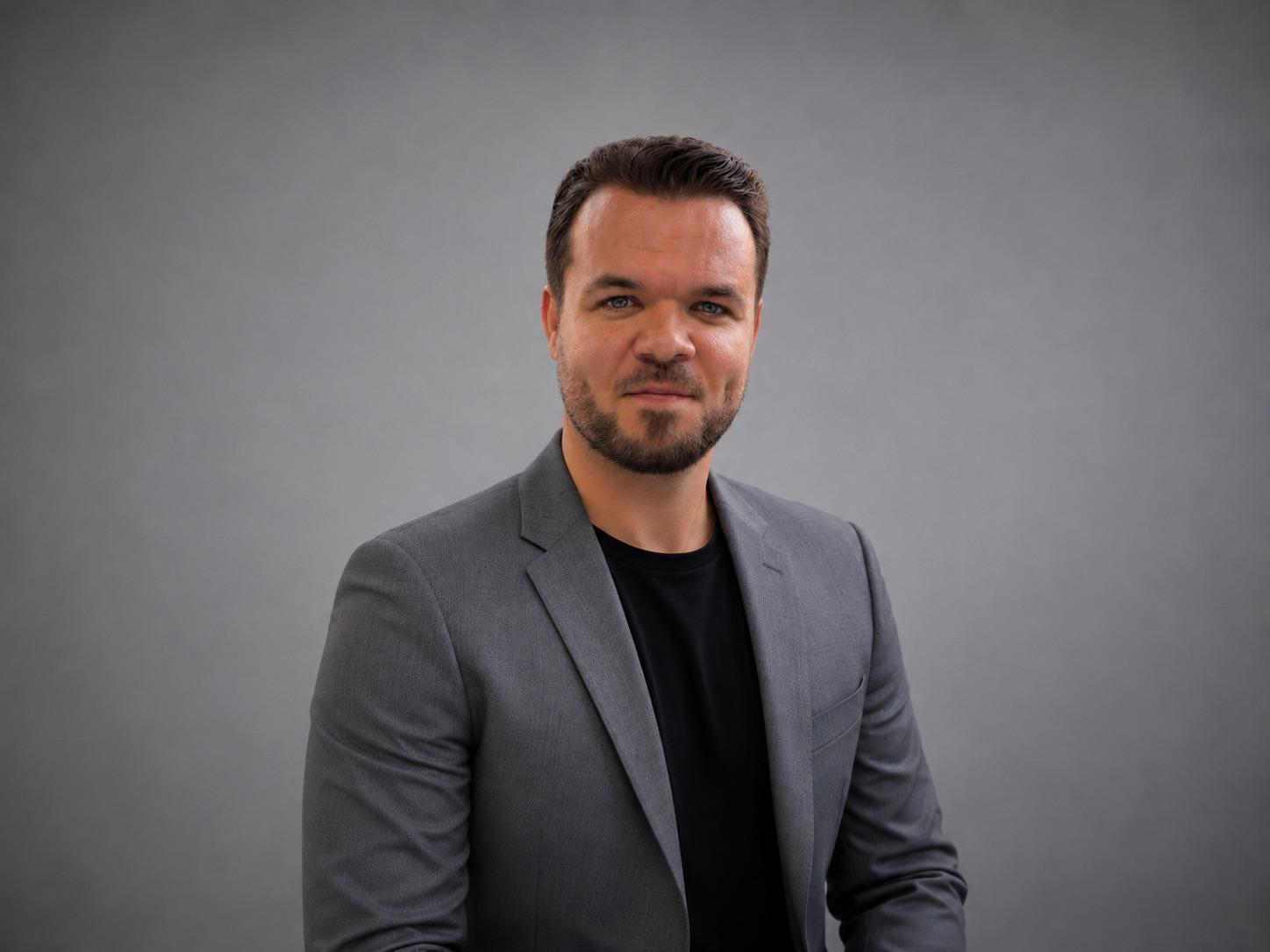
Scout and member of the technical secretariat at Croatian first-division club NK Istra 1961, Oriol Roig reached first-team decision-making by an unusual route: RCD Espanyol academy in Barcelona, a youth academy in Okinawa (EFAO), summer camps in Los Angeles and a methodology desk in Estonia. He is now one of the people deciding who joins the squad, in one of Europe’s most active selling leagues.
Profile
Role: Scouting Department & Technical Secretary, NK Istra 1961 (Croatia)
Specialisation: International scouting, recruitment and technical secretariat, supported by performance data and video analysis.
Experience: Around ten years across youth development, coaching, methodology, performance analysis and recruitment in Spain, Japan, Estonia and Croatia.
Focus Areas: Player identification and squad building, performance data and video analysis, coaching methodology, player development, sport management.
Oriol Roig runs the scouting department and technical secretariat at NK Istra 1961, the Istrian club that has spent the last two decades in Croatia’s top flight. He took the role in January 2025, having joined the club in August 2023 as its performance video analyst, and now sits on both sides of the recruitment conversation: the analysis that tells a club what it has, and the search that tells it what it needs.
His route there is not the conventional one. Roig began in the youth structure at RCD Espanyol de Barcelona, where he coached for over three years from 2016. From there he moved into international youth development, taking a youth coordinator post at the European Football Academy in Okinawa, Japan, and coaching on Nike’s football programmes. In 2021 he crossed to the United States to coach summer camps in Los Angeles, before heading north to Estonia, where he spent close to two years as coordinator of methodology.
That Estonian post is the hinge in his career. Coordinating methodology means putting a club’s playing idea into writing and making it teachable across age groups, work that sits between the training pitch and the sporting director’s office. It moved Roig from delivering sessions to designing the framework the sessions belong to, and it prepared the analytical, structural side of the job he does now.
Roig trained as a Tècnic d’Esports at the Catalan federation and holds Spanish coaching qualifications. In June 2025 he completed a Master in Sport Business at the Johan Cruyff Institute, formalising the management side of a profile that had until then been built entirely on the grass. The combination is uncommon at his level: a coach’s qualifications, an analyst’s tooling and a recruiter’s remit held by the same person.
Key Insights
- Data, video analysis and live scouting all complement each other and form part of the overall process when deciding whether a player deserves to be seriously considered.
- The objective is not simply to react to the market, but to be prepared before the need actually appears.
- Above all, I remain ambitious to improve, continue learning and keep developing professionally.
Our Exclusive Interview with Oriol Roig
You joined NK Istra 1961 as its performance video analyst in August 2023 and the scouting department and member of the technical secretariat since January 2025. How do you structure the work between identifying players and running the operational side of a squad?
First of all, this role requires a high level of organization, consistency and a deep understanding of both your own squad and the players you are scouting as potential additions to the team. From there, you establish different filters and carefully assess every situation within the squad, identifying both current and future needs. Of course, the entire process is based on teamwork and constant communication with the Sporting Director and the Chief of Scouting. Recruitment decisions are never isolated, they are part of a collective process.
Recruitment decisions are never isolated, they are part of a collective process.
Before you were recruiting players, you spent year and a half analysing the ones already in the building. What does a performance analyst’s eye pick up in a scouting report that a pure scout might miss?
I started at the club as a video analyst, which meant constantly analysing our league opponents as well our own team. Naturally, that allowed me to make comparisons and above all, develop a strong understanding of the level of the croatian league, the different clubs and their respective expectations. I have always naturally looked at players from different perspectives: technically, tactically and in terms of their behavior inside and off the pitch. For me, the personal and human side of a player is an essential part of the evaluation process.
For me, the personal and human side of a player is an essential part of the evaluation process.
You describe your work as international scouting, performance data and video analysis in the same breath. When those three inputs disagree on a player, which one do you trust, and how do you settle the argument internally?
For me, everything is connected. Data, video analysis and live scouting all complement each other and form part of the overall process when deciding whether a player deserves to be seriously considered. However, I’m very clear that watching a player live, ideally on several occasions and in different contexts, remains the most important part of the process. Ultimately, the final decision is always made collectively. Different perspectives are valuable, and the objective is to combine them to make the best possible decision for the club.
Istra compete in a league that regularly develops players for bigger markets. How do you balance recruiting for the coaching staff’s immediate needs against building a squad that holds its value?
Our project is very much focused on creating value and providing opportunities for young players. We have a strong academy with talented players who have already progressed into the first team and become important members of the squad, while others are still developing and preparing for their opportunity. That pathway is always a priority for us. At the same time, we need to anticipate future needs. We continuously monitor different young players for every position, so that if a need arises, we are already prepared with several options that we know well. The objective is not simply to react to the market, but to be prepared before the need actually appears.
The objective is not simply to react to the market, but to be prepared before the need actually appears.
From the RCD Espanyol academy to youth coordination in Okinawa, camps in Los Angeles and a methodology role in Estonia: four football cultures, four sets of assumptions about how a player should be developed. What travelled with you, and what did you have to leave behind?
For me, respecting every culture is fundamental. You need to be open-minded, willing to understand the environment you are entering and make an effort to learn the language. That helps you adapt much faster, and people appreciate the effort. Beyond that, certain principles should travel with you wherever you work: professionalism, commitment, consistency and the determination to work well. Ultimately, it’s about understanding what the organization expects from you and working every day to achieve the objectives established by both sides.
You hold spanish coaching qualifications and a Master in Sport Business at the Johan Cruyff Institute. How has the management training changed the way you argue for a signing in front of the people who sign it off?
For me, we need a several positive reports of a player and ideally those reports should come from more than one person. That gives the evaluation greater depth and reduces the risk of making decisions based on a single opinion. Trust is then built through results. When the club gives you the opportunity to bring in a player you have identified or recommended, and that player subsequently demonstrates his level in trainings and official matches, you gradually build a positive track record. Once you have established that credibility, I think those internal discussions become easier because there is already a strong foundation of trust in your judgement and in the process behind your recommendations.
Are there any role models you admire—whose style likes you—and whose career path you would like to follow?
I certainly have several references in football. I particularly look at Sporting Directors who like me, were not professional football players but have built an excellent career in sporting management. José Boto and Ramon Planes are for me two very good examples and references. I identify with many aspects of their approach and working methods, particularly regarding scouting, recruitment and squad planning.
At the same time, I’m fortunate to work and learn daily alongside Manolo Salvador our Chief of Scouting, our Sporting Director Sasa Bjelanović and our General Director Mikel Lauzurica. Being able to work closely with people who have the experience and knowledge is a privilege and an important part of my own professional development.
You have built a first-team technical role in a foreign league on the back of an unusually international route. What does the next project look like in terms of club, structure and mandate, and what would you want the people above you to give you room to do?
I’m very happy at NK Istra 1961 and I have always felt strongly identified with the project. It represents the type of football environment and scouting model that I have always enjoyed working in. I’m grateful to continue learning at a club that gave me an opportunity and to have the chance to develop professionally while growing alongside the club. It’s important for me to be in an environment where my opinion is valued, where I’m asked for my perspective and where I have the opportunity to identify, follow and propose players that I believe could be interesting for the club.
Looking ahead, I see myself continuing to develop within technical and recruitment structures, taking on increasing responsibility within a technical secretariat and sporting department. Projects with a similar philosophy are particularly attractive to me: clubs where scouting, player development, squad planning and the creation of sporting and economic value are genuinely connected.
Above all, I remain ambitious to improve, continue learning and keep developing professionally.
FAQ
Who is Oriol Roig?
Oriol Roig runs the scouting department and technical secretariat at NK Istra 1961, the Istrian club that has spent the last two decades in Croatia’s top flight.
What does Oriol Roig consider the most important part of player evaluation?
However, I’m very clear that watching a player live, ideally on several occasions and in different contexts, remains the most important part of the process.
What type of projects interest Oriol Roig?
Projects with a similar philosophy are particularly attractive to me: clubs where scouting, player development, squad planning and the creation of sporting and economic value are genuinely connected.