

Europe Doesn’t Need Another Player Database. It Needs Access.
At a Glance
Category: Football Recruitment Infrastructure
Mission: Give professional clubs permanent, trusted access to South America’s emerging talent markets.
Product: One-Life Recruitment Platform
Market Access: Federations, competitions, professional clubs and trusted local decision makers.
Intelligence: Video and Data and AI and Human Scouting and Local Context
Execution: From player identification to decision-maker access and transfer.
Premium Validation: The One-Life Show
Starting Market: Colombia
Expansion: Ecuador, Venezuela, Panama, Chile, Paraguay
How One-Life is building the recruitment infrastructure that could change how clubs discover and sign South American talent.
The club keeps the decision. One-Life gives it the market.
The Problem Is Not Finding Players
South America is one of the world’s greatest football talent markets. Yet for many European clubs, recruiting there remains remarkably inefficient.
The problem is not finding players.
The problem is knowing which players to trust, seeing them early enough, understanding the context behind the data, reaching the real decision makers and executing a transfer before everyone else arrives.
A Sporting Director sitting in Germany, Spain or UK may have access to thousands of player profiles and millions of data points. What he often does not have is trusted infrastructure on the ground.
One-Life was built to become that infrastructure.
The company combines continuous competition coverage, player video and data, local scouting intelligence, direct club and federation relationships and transfer execution inside one recruitment platform. Instead of sending scouts repeatedly across South America hoping to find the right player, clubs can continuously follow an emerging talent market from Europe and physically enter the process only when it matters.
One-Life does not want to give clubs more players to look at. It wants to dramatically reduce the number of players they need to look at.
One-Life does not want to give clubs more players to look at. It wants to dramatically reduce the number of players they need to look at.
From Discovery to Transfer
- ACCESS Competition and federation relationships create structured access to emerging talent.
- CAPTURE Matches, tournaments and player development environments generate continuous video and performance evidence.
- FILTER Club-specific recruitment briefs reduce the market to relevant profiles instead of adding more noise.
- VALIDATE Data, AI-supported analysis, human scouting and local context are combined into decision-ready intelligence.
- UNLOCK One-Life provides access to the people behind the player: club, decision maker, representation and realistic transaction context.
- EXECUTE When the club wants to move, One-Life helps take the process from recruitment decision to transfer.
Key Takeaways
- One-Life combines video, data, AI-supported analysis, human scouting, local intelligence and transfer execution.
- The platform is designed to reduce the market to players who fit a club’s specific recruitment brief.
- The model starts in Colombia, with expansion planned across selected South American countries.
Our Exclusive Interview with One-Life
A Conversation About the Next Infrastructure Layer in Football Recruitment
Football has more scouting data than ever. Why do clubs still struggle to recruit efficiently in South America?
Because information and intelligence are not the same thing.
The industry has become very good at producing data. A recruitment department can open a platform and see thousands of players, statistics, clips and reports. But when the decision becomes real, the difficult questions are often still unanswered: Which player should we actually watch? How does his performance translate to our level? Who controls the decision on the selling side? Is the club willing to sell? What is the realistic valuation? Who represents him? Is the information reliable? And can the transaction actually be executed?
That gap between discovering a name and being able to make a confident recruitment decision is where One-Life sits.
We are not trying to create more noise for Sporting Directors and scouts. We want to reduce the market for them. If a club gives us a precise recruitment brief, our job is to bring back a much smaller number of players who are genuinely relevant, with the evidence and local context needed to decide what to do next.
So is One-Life competing with Wyscout, Hudl or traditional scouting platforms?
No. We use data, but we are not trying to build another database.
Existing tools are extremely valuable for analysing players and competitions. One-Life is solving a different problem: market access.
We are building a proprietary recruitment environment around South American markets. It combines competition access, video, performance data, AI-supported analysis, human scouting, local intelligence, club relationships and transfer execution.
A Sporting Director should not need one platform to find a player, another source to understand him, an intermediary to reach the club and three more conversations to understand whether the transaction is realistic.
Our ambition is to connect those layers in one recruitment workflow. The technology makes the market visible. The network makes it actionable.
The technology makes the market visible. The network makes it actionable.
What does a Sporting Director actually see when opening One-Life?
Imagine you are the Sporting Director of a Bundesliga club and your recruitment team needs a left-footed centre-back between 17 and 20, with a defined physical profile, specific build-up characteristics and a transfer budget.
The objective is not to return 600 names. The objective is to reduce the market.
One-Life surfaces the players who fit the recruitment thesis and gives the club the relevant evidence around them: match footage, performance data, development trajectory, scouting assessment and contextual intelligence.
Then comes the layer that normally does not exist inside software: What does the local sporting director think of the player? Is the selling club open to a move? Who controls the decision? What is the likely valuation? Are there contractual or representation issues? What is the realistic path to a deal?
If the club wants to move forward, One-Life can take the process from digital identification to local validation, direct decision-maker access and ultimately transfer execution.
That is the difference between a player database and recruitment infrastructure.
How do you find players before they become obvious to the wider market?
This is where the model becomes difficult to replicate.
We do not want to become better at searching the same database everybody else is searching. We want to create structured access further upstream, through competitions, federations, clubs, local scouts, video capture and long-standing relationships on the ground.
That creates a funnel: competitions and youth ecosystems generate the player universe; video and data make that universe measurable; technology and human scouting filter it; local intelligence validates it; and the club’s own recruitment brief determines who matters.
The objective is simple: see the player before he becomes obvious, and give our partner clubs enough evidence to act before the wider market arrives.
The One-Life Show was originally at the centre of the company. Where does it fit now?
The first three One-Life editions taught us something extremely important.
The clubs did not tell us, ‘We need more shows.’ They told us, ‘We need access to this market all year.’
That insight changed the company.
The Show is now the premium validation layer of the recruitment platform. Once players have been identified and followed through the system, selected talent can be brought into a highly controlled competitive environment where club recruitment staff can see them live, compare them and build personal conviction.
The media component then creates a second benefit. A club is not only recruiting in the market; it can build relevance and cultural presence in that market at the same time.
The platform finds. The network unlocks. The Show validates. The transfer completes the process.

The platform finds. The network unlocks. The Show validates.
Why can’t a European club simply build this infrastructure itself?
It can. But doing it properly is expensive, slow and difficult to scale.
A serious operation requires local scouts, competition access, cameras and video workflows, analysts, relationships with clubs and federations, legal and transfer knowledge, continuous travel and, most importantly, years of trust-building.
Then the club has to replicate that infrastructure every time it enters another market.
One-Life builds that infrastructure once and allows partner clubs to plug into it. That converts a large fixed-cost international scouting operation into a scalable recruitment capability.
Crucially, we do not replace the club’s scouting department. The sporting decision always belongs to the club. We make the recruitment team’s reach dramatically larger and give its scouts better information before they spend their most valuable resource: time.
Does technology eventually replace the scout in this model?
No. The opposite.
Technology is exceptionally good at processing volume, identifying patterns, structuring video and data, and helping a recruitment department move from thousands of players to a manageable pool. But football recruitment is still a judgement business.
A scout understands context: game state, tactical role, mentality, adaptability, physical projection, personality and the difference between a statistical signal and something that will actually translate to a new league.
Our philosophy is therefore not AI instead of scouts. It is technology doing the work that technology is good at, so scouts can spend more time doing the work only scouts can do.
The best outcome for One-Life is when a scout says: ‘This saves me weeks of work and gets me to the right player earlier.’
What is the real competitive advantage One-Life is trying to build?
Trust and proprietary access.
Software features can be copied. A database can be replicated. Relationships, competition access, local knowledge and a reputation for executing transfers professionally are much harder to reproduce.
The deeper One-Life goes into a market, the stronger that advantage becomes. More competition coverage creates more player evidence. More evidence improves filtering. More club relationships improve local intelligence. More successful transactions deepen trust. And every additional partner market makes the platform more useful to the recruitment departments using it.
That is why our strategy starts with depth, not geographic vanity. We want to build the definitive recruitment infrastructure in Colombia and then replicate the model market by market across South America.
What does success look like five years from now?
Success is when a Sporting Director in Europe thinks about recruiting a 17-year-old in Colombia, Ecuador or another One-Life market and opening One-Life feels as natural as opening the tools his recruitment department already uses every morning.
But with one fundamental difference: behind every relevant player there is not just data. There is access.
Access to the competition. Access to the footage. Access to local intelligence. Access to the club. Access to the decision maker. And ultimately, access to the transfer.
Our ambition is to become the operating system for international recruitment from South America.
Why This Matters to a Recruitment Department
- LESS NOISE Start with a club-specific recruitment thesis and reduce the market to relevant profiles.
- EARLIER ACCESS Build visibility on emerging players before they become obvious to the broader international market.
- BETTER CONTEXT Combine video and performance evidence with human judgement and local market intelligence.
- FEWER WASTED TRIPS Travel when a player or market opportunity has already earned deeper attention.
- DIRECT ACCESS Reach the people who can actually move a transaction forward.
- ONE CONTINUOUS WORKFLOW Move from discovery to validation to transaction without rebuilding the information chain at every stage.
The One-Life Show: Premium Validation, Not the Starting Point
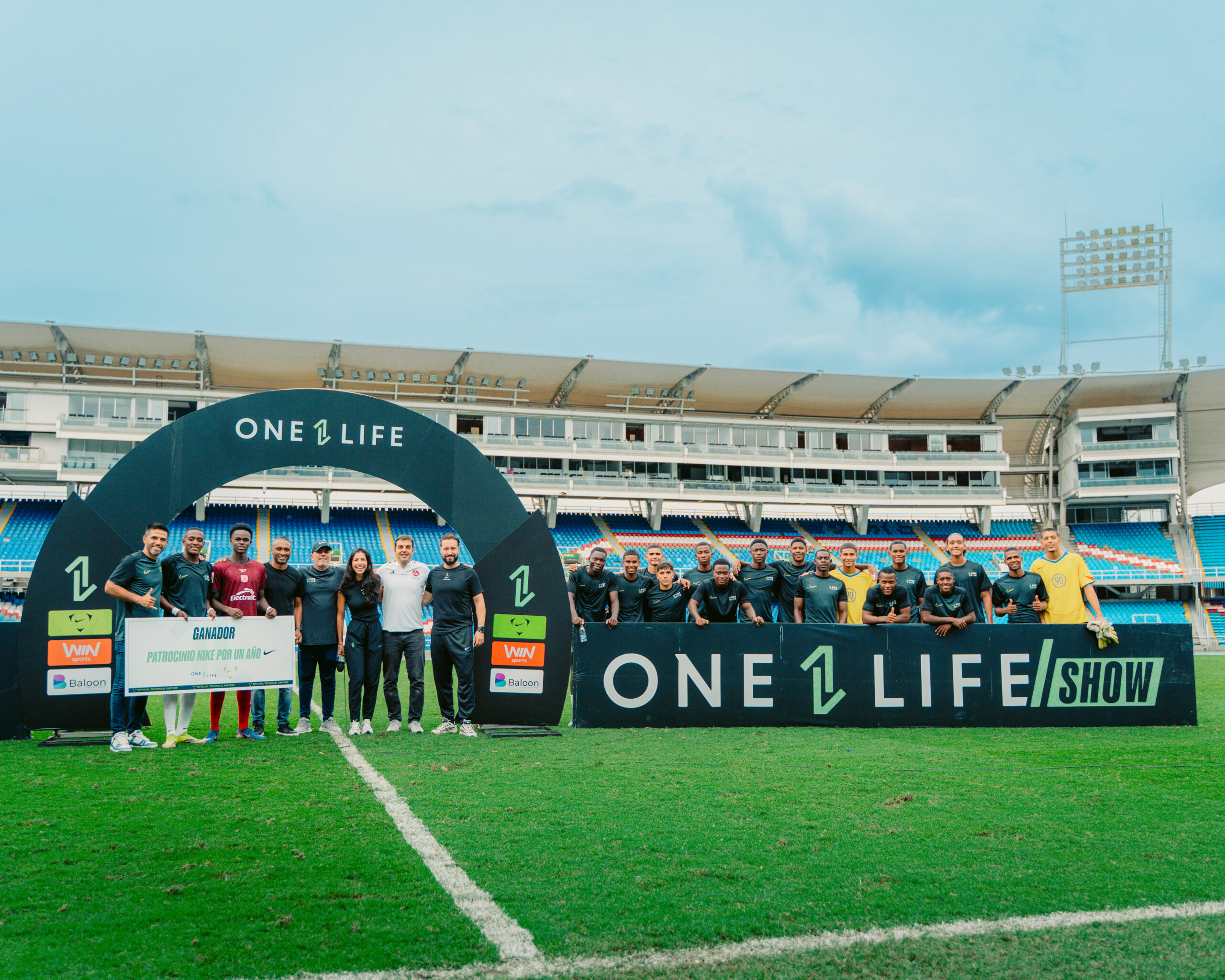
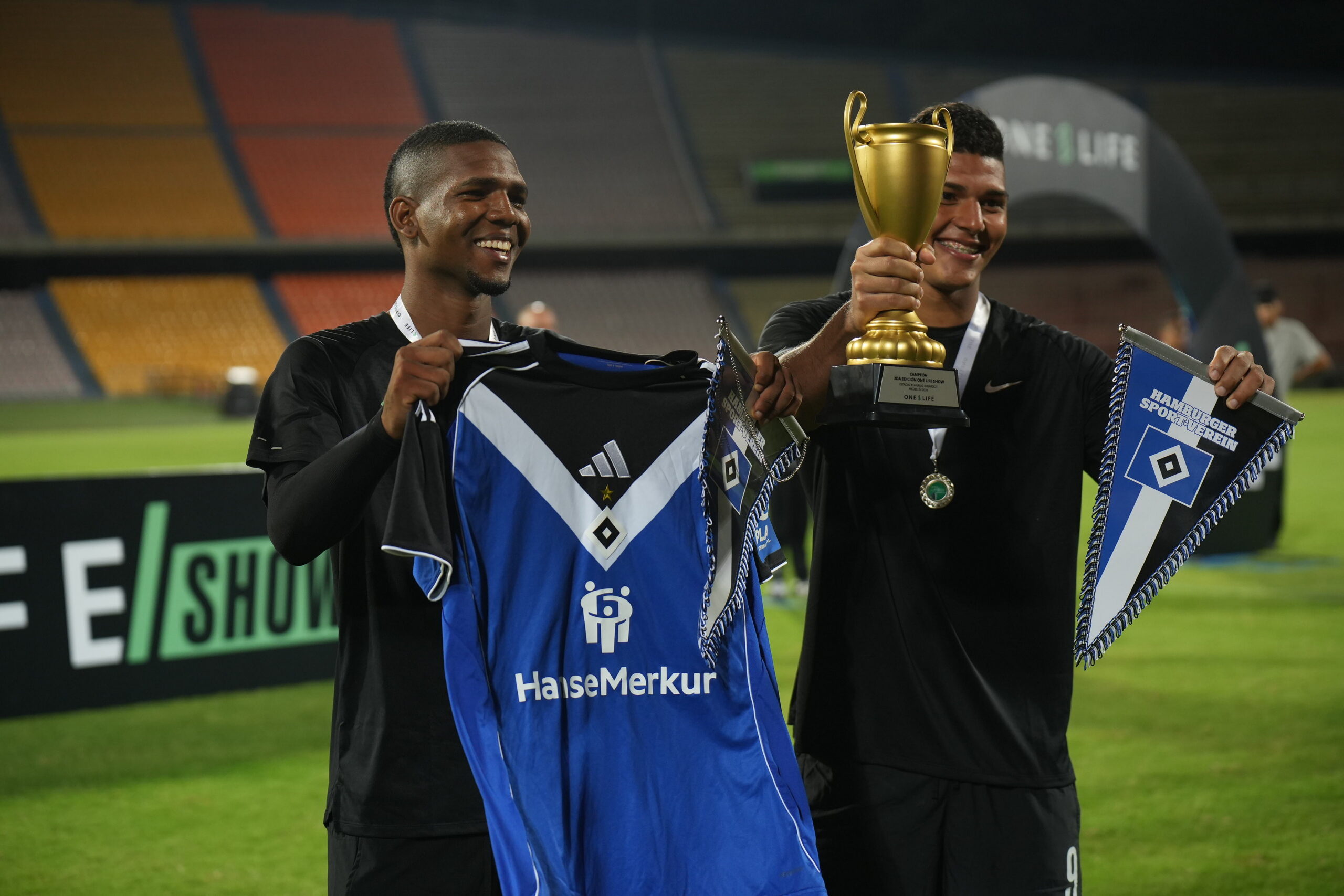
One-Life has already demonstrated its ability to bring South American and European football institutions together through live events. Three landmark editions paired Independiente Santa Fe with Austria Wien, Atletico Nacional with Hamburger SV, and America de Cali with 1. FC Nuremberg.
Those events remain strategically valuable, but their role has changed. The Show is no longer the product around which the recruitment proposition is built. It is the premium final-stage environment available inside a much larger year-round recruitment system.
For clubs, that means the media engine becomes an additional advantage rather than the reason to participate: recruitment first, validation second, market relevance as an upside.
One-Life’s Existing Proof
The company was founded in 2025 and has already built relationships across Colombian and European football. Its earlier model combined nationwide scouting, competitive tournaments, elite training environments, live events and transfer pathways. That operating experience is now being converted into a permanent recruitment platform.
The original One-Life profile documented club relationships including Atletico Nacional, Independiente Santa Fe, America de Cali, Hamburger SV, Austria Wien and 1. FC Nuremberg. It also documented 97 matches, 15 tournaments, four cities and three live shows in its 2026 profile. These operating assets are the foundation for the next phase: turning episodic access into continuous recruitment infrastructure.
The Message to Sporting Directors
One-Life is not another scouting database.
We are building the infrastructure that allows a European club to recruit in South America almost as if it had its own recruitment department on the ground.
We identify and filter the talent, provide the video, data and local intelligence, connect the club directly with the people who control the decision and, when the club wants to move, help execute the transfer.
The club keeps the decision. One-Life gives it the market.
Editorial Closing
For years, the football industry has invested heavily in seeing more players. One-Life is betting that the next competitive advantage will come from something different: seeing the right players earlier, understanding them better and having the local access required to act.
In South America, that distinction matters.
The next breakthrough talent may already be visible somewhere. The question is whether a club has the infrastructure to recognise him, validate him and reach the people behind the decision before everybody else does.
That is the problem One-Life is building to solve.
FAQ
What is One-Life?
One-Life is a football recruitment platform and market-access infrastructure connecting professional clubs with emerging talent in South America.
Is One-Life a scouting database?
No. Data and video are components of the product, but the proposition extends into competition access, human scouting, local intelligence, decision-maker relationships and transfer execution.
Does One-Life replace a club’s scouts?
No. One-Life is designed to increase the reach and efficiency of the club’s existing recruitment department. The club retains full control of every sporting decision.
Where does the One-Life Show fit?
The Show is the premium validation and market-activation layer of the platform, used after the recruitment funnel has already identified relevant talent.
Where does One-Life start?
The model starts in Colombia, with expansion planned market by market across selected South American countries.
What is the long-term ambition?
To become the operating system for international recruitment from South America: a permanent layer connecting talent evidence, local intelligence, access and transaction execution.
Learn More About One-Life
Discover the One-Life recruitment platform, its market-access model and the role of the One-Life Show.