
The Teacher Who Never Stopped Teaching
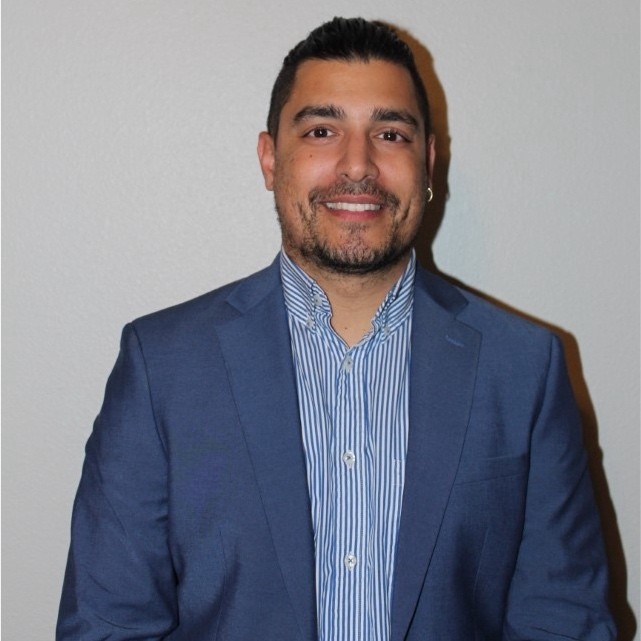
An exclusive conversation with Sean Carey, Vice President of Football Affairs & Assistant General Manager at Rhode Island FC
Profile
Role: Vice President of Football Affairs / Assistant General Manager, Rhode Island FC
Specialization: Roster Construction, Recruitment, Player Evaluation, Player-Centered Culture & Budget Management
Prior Experience: CM Soccer, New England Club Soccer League, Three Step Sports, Lincoln Street School
Focus Areas: Soccer Management, Player Movement, Player Development, Club & Player Budgets
Some football careers are built in stadiums. Others are built in classrooms.
Sean Carey somehow managed to build his in both. For more than three decades, Carey stood in front of elementary school students, teaching, guiding and helping young people navigate the world around them. At the same time, he was building a parallel career in soccer, one that eventually led him into professional football and, ultimately, to Rhode Island FC. It is an unusual journey. And perhaps that is what makes it so interesting.
Carey’s football story began long before Rhode Island FC. A three-time first-team All-American collegiate player, he spent years involved in soccer across New England, working in player development, coaching, scouting and soccer administration.
But there was another career running alongside all of it. Teaching. Carey began teaching at Lincoln Street School in 1993 and remained in the classroom for more than 30 years, officially finishing that chapter in December 2025.
Then came Rhode Island FC.
Carey joined the club during its formation and became part of the group responsible for building its football operation. In July 2023, Rhode Island FC appointed him as Assistant General Manager, with responsibilities including player scouting, player development and front-office operations. The club’s first two seasons would prove remarkable. Rhode Island FC reached the USL Championship Final in its inaugural 2024 campaign and followed that with another run to the Eastern Conference Final in 2025. Then, in February 2026, Carey found himself taking on an even greater responsibility.
Carey believes people perform best when they know you genuinely care about them as human beings. That philosophy has influenced the way he works with players, coaches and colleagues and it may explain why his transition from education into professional football feels less like a career change than a continuation of the same work on a much larger stage. The students became players. The lessons became life in professional football. The classroom became a locker room, a front office and an organization being built from the ground up. And the responsibility remained the same: help the people around you become better. For Carey, football is not simply about roster construction, contracts, budgets or results. It is about people, relationships and creating an environment in which others can succeed. That may be the most interesting thing about his story. He spent more than 30 years teaching children. Then he stepped into professional football. But he never really stopped teaching. He simply found a new classroom and is currently the Vice President of Football Affairs and Assistant General Manager of Rhode Island FC.
Key Insights
- More than 30 years in education shaped Sean Carey’s people-first approach to football leadership.
- Carey helped build Rhode Island FC’s football operation and supported its rapid competitive success.
- His leadership philosophy centres on autonomy, preparation, listening and specific praise.
Our Exclusive Interview with Sean Carey
The Teacher
You spent more than 30 years as an elementary school teacher while also building a career in soccer. Tell me about that journey and what being a teacher has meant to you.
If you want to understand Sean Carey, you probably shouldn’t start with his current job title.
Start with 1993.
That was the year Carey walked into his first classroom.
At the time, there was no MLS. There was no USL as we know it today. For players in the United States, the professional soccer landscape looked very different.
Carey was based in Massachusetts, where a large Portuguese community provided a connection to the game. During the day, he taught.
At night, he trained.
He played for The Lowell Blues, alongside players from Morocco, Nigeria, Portugal and beyond.
“It was really the best of times,” Carey recalls.
The weekends were spent playing against some of the top teams in the area. There were no modern professional facilities or expansive soccer infrastructure.
There was simply the game.
And then Monday came.
Back to the classroom.
For Carey, teaching became much more than a profession.
“Being a teacher is very humbling,” he says. “It’s an amazing way to spend the day.”
The reason was simple.
“You never have to worry about thinking you’re too important when you’re taking care of someone’s most prized possession, their kids.”
That responsibility, Carey explains, was never limited to academics.
“You have to meet their needs socially, emotionally and academically.”
And for Carey, there was an order to those responsibilities.
He eventually began to recognize the same principles in professional football.
Players, like students, need more than instruction.
They need support.
They need understanding.
They need someone willing to see the person behind the role.
Carey spent 30.5 years in the classroom, officially finishing his teaching career in December 2025.
And then came a moment that made the entire journey feel strangely circular.
One of his students from 1994 eventually had a son.
That son became one of Carey’s students during the final two years of his teaching career.
His former student’s son was now sitting in his classroom.
“That was a nice way to tie things up and come full circle.”
Two Lives, One Philosophy
You’ve spent decades in education and now work in professional soccer. What’s the common thread between being a great educator and being a great football executive?
For years, Carey lived two professional lives.
Teacher during the day.
Football professional alongside it.
He believes the connection is ultimately about people.
“From working with teams, I was able to live two lives—teaching during the day and working in pro soccer.”
For players, the first responsibility is simple.
“You spend time with players and they understand we care about them as a human being.”
“You spend time with players and they understand we care about them as a human being.”
That means asking the questions that have nothing to do with football.
How are they?
How is their family?
How are they doing away from the pitch?
“When they know and feel that, it’s easier to help them and work with them.”
Professional soccer can be a roller coaster, Carey says.
One week can be completely different from the next.
That is why he tries to maintain perspective.
“We don’t get too excited when we win, and no one gets too down when we’re in a tough spot.”
But maintaining perspective doesn’t mean avoiding difficult conversations.
Sometimes those conversations are necessary.
“You have to have tough conversations in a respectful way.”
His years as a teacher helped him understand how to have those conversations while still maintaining the relationship underneath them.
There is the VP of Football Affairs speaking to a player.
And then there is Sean speaking to another person.
“Teaching helped me enormously for this.”
The role may change.
The responsibility doesn’t.
Building Rhode Island FC
You helped build Rhode Island FC’s football operation from the ground up. What was the first moment when you looked around and thought, “We actually have a football club here”?
Carey is quick to make one clarification.
Rhode Island FC wasn’t built overnight.
“The groundwork was being done already.”
The club had been in development for roughly two years before the football staff was assembled, with executives putting in “a lot of great work with great vision and foresight.”
When Carey joined the process alongside Khano Smith, the responsibility was clear.
“This was A Club for all Rhode Island.”
And building that club meant building much more than a football team.
Centreville Bank Stadium became the centerpiece—a best-in-class facility with the amenities and infrastructure to host major events.
Around it was an entire organization.
- Ticketing.
- Community Relations.
- Marketing.
- Partnerships
- Technical operations.
- Game-day operations.
- Football.
- Front office.
“It’s a big business,” Carey says.
Carey credits Smith’s leadership during that foundational period.
“He was very true to himself and to how he believed the roster needed to look.”
Helping Smith pursue that vision became a major part of Carey’s role.
“Helping him in that pursuit was a great experience, and I will always be grateful for it.”
The gratitude goes beyond the professional relationship.
Carey and Smith had been friends for years before the job ever existed.
Smith was actually the person who initially asked Carey to take the position.
Carey’s response?
Go interview other people.
“Because he may find someone better.”
After going through that process, Carey eventually accepted.
And then came Charleston.
Rhode Island FC reached the Eastern Conference Final in its first season.
They won.
Amid the celebration, Carey and Smith shared a quiet moment.
It was captured on television.
For Carey, that moment meant more than simply winning a championship.
It represented a friendship, a leap of faith and something they had built together.
He was happy for Smith.
“This was his first year as a head coach.”
And Carey believes there is another lesson in moments like that.
“I believe things happen. Don’t label them as good or bad.”
Even difficult situations, he says, give you an opportunity to learn and grow.
The Job Before the Job
As VP of Football Affairs and Assistant General Manager, what does a day in the life look like? I’m sure no two days are the same, but what does a typical day look like for you?
There really isn’t a typical day.
Especially because Carey’s transition into professional football happened while he was still teaching.
Initially, he took a leave of absence so he could be on site when necessary, while continuing to manage football responsibilities remotely.
- Contract negotiations.
- Agent discussions.
- Football operations.
“A big part of my role is handling things around Khano so he could focus as much as possible on coaching the team and managing the group.”
At the same time, Carey had to help answer to the board, work with the director of operations and make sure the football operation was functioning properly.
Today, he is fully on site.
He’s in the office.
Taking calls.
Building infrastructure.
Planning.
Preparing.
And, perhaps most importantly, trying to stay ahead of problems.
“Once the season starts, you already need to be thinking about the next one.”
The point isn’t that the current season doesn’t matter.
It is that the next one has already begun.
“If you’re not preparing already, you’re behind.”
Carey wants to anticipate problems before they happen.
“You want to have solutions ready for problems that haven’t occurred yet.”
That requires being proactive, modeling good behavior and helping people along the way.
He also sees himself as a conduit between different parts of the organization.
- The stadium.
- The front office.
- The football department.
- Leadership.
The objective is simple: everyone should feel like they are part of Rhode Island FC.
And sometimes, the most valuable thing he can do is listen.
“Sometimes he needs to talk through decisions,” Carey says of Smith. “I’ve found being a good listener is key in being helpful.”
Control by Letting Go
Football is full of personalities. How do you create an environment where very different people can still pull in the same direction?
For Carey, the answer starts with autonomy.
“To be most successful, you give people autonomy as much as possible.”
But autonomy isn’t automatic.
“People earn it and maintain that.”
That means giving people responsibility while accepting that you cannot control every detail.
And Carey sees an interesting paradox in that.
“When you give people autonomy, you let go of some control.”
But then comes the irony.
“When you lose control because of it, you actually gain more control.”
That philosophy is particularly important when managing players.
Carey points to Smith’s approach with the playing staff.
Smith allows players to be themselves.
They can have personality.
They can work through the things they need to work through.
But there still has to be some uniformity in how challenges are handled.
Individuality is embraced.
The greater good of the team remains the foundation.
Carey has also seen how players can rise to the occasion in high-pressure environments.
“In our first two years, I thought our players responded extremely well in some very high-pressure situations.”
The challenge isn’t removing pressure.
It is creating an environment where people can perform within it.
What Building a Club Teaches You
What is something about building a professional soccer club that you understand now that you didn’t understand three years ago?
Carey doesn’t necessarily believe he learned something entirely new.
Instead, the experience validated things he had already suspected.
“A lot of the things I believed going into it have been validated by going through the actual process.”
One of the biggest takeaways has been developing a deeper understanding of the economics behind a major sports organization.
A $130 million stadium gives you a different perspective.
“It’s world class, and whenever we bring people there, they find it amazing.”
But the stadium is only part of the equation.
Carey has gained a greater appreciation for how partnerships, fan engagement, ticketing, football operations and the rest of the organization connect.
“I have a much better understanding of the economics of a large sports organization and how important partnerships and the fan base are to the entire operation.”
That, perhaps, has been his biggest takeaway.
“How it’s tied together.”
And once again, Carey sees a connection to the classroom.
He has lived in environments where large groups of people with different responsibilities have to work together.
The principle remains the same.
There is, however, one thing he has become even more convinced of.
“There is an easy way to lose control of things, which is to try to control everything.”
“There is an easy way to lose control of things, which is to try to control everything.”
Sometimes leadership means knowing when to step back.
The Decision Not to Change
If I gave you the keys to the club for 24 hours and told you there were no meetings, no budgets and no politics, what would you change first?
Carey laughs at the premise.
” I had the opportunity to serve as interim president for six months, so I’ve actually had some time to think about that.”
“Sometimes the best thing to do is not to change anything.”
“Sometimes the best thing to do is not to change anything.”
Because not making a change is still a decision.
The question, Carey says, is whether you’re strong enough not to change something simply because you have the authority to do so.
With less than two months left before the season ends, he wouldn’t start moving pieces around.
He would focus on making sure everything was running well.
Making sure people were having the best possible experience.
And, perhaps most importantly, he would spend time telling people what they were doing right.
Carey carries over something from his teaching career that he calls specific praise, telling people exactly what they did well rather than simply saying they did a good job
He gives the marketing team as an example.
“I would tell them they’re the best marketing team in the USL and give them feedback and acknowledgement with specific metric results.”
Sometimes leadership is about making sure people understand exactly what they’re doing well.
The Goal That Only Exists in Memory
If your career in football were a movie, what scene would you replay for the audience—not because it was your biggest achievement, but because it captures who you really are?
Carey answers in two parts.
One as a player.
One as an executive.
The player memory takes him back to 1994.
The Lowell Blues.
An amazing coach.
A beautiful grass field.
And a goal.
“A world-class goal.”
There is no footage.
No television replay.
No radio commentary.
It exists only in his memory.
“There was no TV, no radio. It only lives here, in my heart and in my mind.”
The coach had worked with the players on a specific technique.
Carey used it.
And what stayed with him wasn’t simply the goal.
It was seeing the coach’s reaction.
There was also something surreal about the environment around the team at the time.
Khalil Azmi, Morocco’s starting goalkeeper at the 1994 World Cup, was training with the Lowell Blues.
A World Cup goalkeeper.
Training on a Tuesday.
On an elementary school field.
Without even soccer goals.
It was a different football world.
A smaller one.
But it was real.
And those memories remain.
For the executive version of the answer, Carey goes to Charleston.
The Eastern Conference Championship.
Rhode Island FC’s first season.
The victory.
And then that quiet moment with Smith.
Two friends.
Two people who had taken a chance on building something together.
No words were necessary.
They simply looked at each other.
The moment was captured on television.
For Carey, it remains one of the defining memories of his football career.
And perhaps the connection between the two memories is what matters most.
One happened on a grass field with almost nothing around it.
The other happened after winning a conference championship as part of a professional organization.
Different worlds.
Different stages.
But the same game.
And the same appreciation for the people who made the moments meaningful.
“I also believe things happen. Don’t label them as good or bad.”
Because sometimes the value of a moment isn’t immediately obvious.
“You learn from them and grow.”
The Human Behind the Executive
After spending time talking about club building, roster construction, leadership and professional football, there is always one more question worth asking.
Who is Sean Carey when football disappears?
The answers are surprisingly straightforward.
Coffee or tea?
Coffee.
Beach or mountains?
Beach.
Especially because my dogs enjoy it more.
Sunrise or sunset?
Sunrise.
I’m an early riser.
City life or quiet countryside?
Quiet countryside.
Summer or winter?
Summer.
Early bird or night owl?
Early bird.
Plan everything or go with the flow?
Somewhere in between.
People may think I plan everything, but I am more capable of going with the flow than people realize.
Dinner out or cooking at home?
Dinner out.
Road trip or flying somewhere new?
Flying somewhere new.
Dogs or cats?
Dogs.
Call or text?
Call.
Win ugly or lose beautifully?
Win ugly.
Books or movies?
That’s a draw.
Five-star hotel or tent under the stars?
Five-star hotel.
The Teacher Never Left
There is a temptation to look at Sean Carey’s career as two separate chapters.
Teacher.
Football executive.
But after listening to him talk, it becomes difficult to see them as separate at all.
The teacher is still there.
It is there when he talks to players.
It is there when he works with coaches.
It is there when he thinks about leadership.
It is there when he chooses to listen rather than speak.
It is there when he gives people autonomy instead of trying to control every detail.
And it is there when he talks about success.
For Carey, success isn’t simply about winning. It is about helping the people around you become successful, professionally, personally and as people.
That philosophy may explain why his transition into professional football feels less like a career change and more like a continuation.
The classroom simply got bigger.
The students became professionals.
The lessons became more complicated.
The consequences became larger.
But the fundamental responsibility remained the same:
- Help people.
- Understand them.
- Give them what they need.
- And help them become the best version of themselves.
Thirty years after walking into his first classroom, Sean Carey walked into professional football.
And perhaps the most interesting thing about his story is that he never really stopped teaching.
He just found a new classroom.
And this one happens to have a football pitch.
FAQ
Who is Sean Carey?
Sean Carey is the Vice President of Football Affairs and Assistant General Manager of Rhode Island FC.
What did Sean Carey do before joining professional football?
He spent more than 30 years as an elementary school teacher while also working across coaching, scouting, player development and soccer administration.
What is Sean Carey’s leadership philosophy?
His approach focuses on caring for people, giving them autonomy, listening carefully and using specific praise to help them improve.