

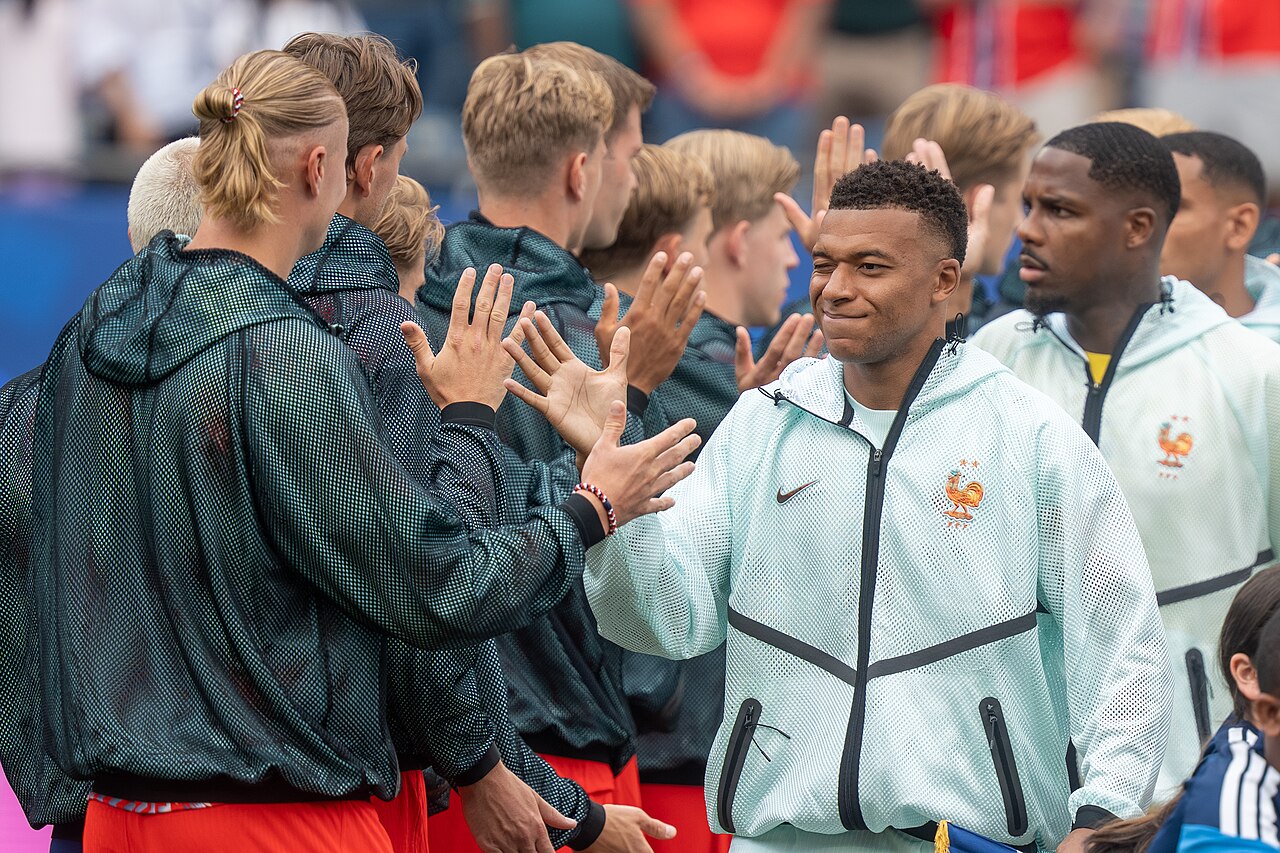
On 18 September 2026, Swiss sportswear brand On announced its entry into football by signing Kylian Mbappe as the global face of a new division, ending the player’s association with Nike that had run since he was a child. Thierry Henry was confirmed as On’s Director of Football, having worked on the project quietly since late 2025, and Swiss international Sydney Schertenleib of FC Barcelona completed the founding athlete group. The announcement was marked with a Juergen Teller shoot at On Labs in Zurich, and the first commercial boots, built using On’s robotic LightSpray manufacturing process, are scheduled for 2027.
Read purely as a boot deal, this is a headline. Read as a piece of commercial strategy, it is one of the most instructive moves in athlete marketing for years, and almost every element of it points somewhere the industry has been heading for some time.
The Deal Structure Is the Story
The financial terms have not been disclosed, but On has confirmed that the agreement includes both cash and equity components, with reporting indicating Mbappe becomes a shareholder in the company on a deal understood to run around ten years. That single detail is more commercially significant than any fee could be.
That single detail is more commercially significant than any fee could be.
This is not a new idea at On. Roger Federer became an investor in the brand in 2019, and that partnership is widely regarded as one of the most successful athlete equity arrangements in modern sport, contributing to On’s transformation from a niche Swiss running label into a genuine global competitor. Mbappe is being brought in on a version of the same model, and the logic is symmetrical on both sides. On gets a marquee athlete aligned to the company’s long-term valuation rather than to an annual invoice, which means his incentive is to build the football division rather than simply appear in its advertising. Mbappe gets exposure to the upside of a fast-growing public company, on terms that could outperform a conventional endorsement fee by a wide margin if the football entry succeeds.
It also reflects something we have written about repeatedly in this series: the most commercially sophisticated players of this generation are moving from rented fame toward ownership. Harry Kane building an equity portfolio across sportswear, hospitality and food brands. Jude Bellingham taking a stake in Birmingham Phoenix. Mbappe himself already owning 80 percent of Stade Malherbe Caen through Coalition Capital. What is different here is the scale and the visibility. This is the single most valuable individual football endorsement position in the market being restructured around equity rather than fee, and once the biggest deal in a category adopts a structure, every negotiation beneath it starts anchoring to the same terms.
Why Henry’s Appointment Matters More Than It Looks
Thierry Henry’s role is the detail most likely to be underestimated. He is not a figurehead ambassador with a title attached. On has appointed him Director of Football with direct oversight of player strategy, athlete relationships and product direction, and he had been working on the project behind the scenes for the better part of a year before the announcement. Reporting suggests he was instrumental in recruiting Mbappe, pitching a vision built around athlete empowerment and collaborative design rather than a conventional sponsorship proposition.
There is a real commercial lesson in that. The thing that moved the most sought-after athlete in football was not the largest cheque available. It was a credible offer of influence over what gets built, delivered by someone whose football authority is unquestionable. Henry’s own framing was explicitly player-first, centred on listening to players and understanding what they need. Brands attempting to enter categories where incumbents have decades of relationships consistently underestimate how much credibility, rather than budget, determines whether elite talent will take the risk of moving.
The thing that moved the most sought-after athlete in football was not the largest cheque available.
It also gives On something the established boot brands cannot easily replicate: a founding narrative. Nike and Adidas own football’s history in this category. On cannot compete on heritage, so it is competing on the promise of building the next chapter with the players themselves. Henry, Mbappe and Schertenleib as a founding trio is a story about creation rather than continuation, and that is the only angle a challenger can credibly own.
The Schertenleib Signing Is Not an Afterthought
Including Sydney Schertenleib in the founding group, with a specific remit to help pioneer and test products engineered for the women’s game, is a deliberate structural choice rather than a gesture. The historic failure of boot manufacturers in women’s football has been to adapt men’s products retrospectively rather than design for the women’s game from the start, and the criticism of that approach from players and sports scientists has been sustained and well evidenced.
By embedding a women’s product testing pathway into the division at launch, On positions itself to avoid a legacy problem its competitors are still working through. Commercially, this matters because women’s football is the fastest-growing rights and consumer market in the sport, and a brand entering the category now has the rare advantage of building for it natively. A challenger brand’s best opportunities are usually in the places where incumbents have accumulated the most structural debt, and this is one of them.
LightSpray and the Case for Technology as Differentiation
On’s product proposition rests on adapting LightSpray, its proprietary robotic manufacturing process, to elite football. The system uses a robotic arm to spray a continuous thermoplastic filament that forms a seamless, one-piece upper, producing an exceptionally lightweight fit and substantially reducing the carbon emissions associated with conventional footwear production. Prototype boots were revealed alongside the announcement, with commercial release scheduled for 2027 following extensive athlete testing.
The commercial value of this is that it gives On a story that is not about marketing. Football boot launches have for years been fought on colourways, athlete rosters and campaign budgets, because the underlying construction methods across major brands are broadly similar. A genuinely different manufacturing process is a harder thing for a competitor to answer, and it gives the brand something concrete to talk about in a category where most messaging is atmospheric. It also carries a sustainability dimension at a moment when that is becoming a procurement consideration for clubs and a purchase consideration for younger consumers.
The timeline is worth noting honestly. Boots take longer to develop and validate than almost any other category of footwear, and a 2027 commercial release means a long runway of prototype visibility before anything is on shelves. On has handled that intelligently by putting the product story out now, with Mbappe expected to wear blackout prototypes in Real Madrid training and matches in the coming weeks, converting the development period itself into a sustained marketing asset.
What This Means for Nike
The timing is uncomfortable for Nike. Mbappe had been with the brand since childhood, and losing him arrives while the company’s shares sit near a twelve-year low and chief executive Elliott Hill works through a set of problems that includes consumers moving toward trendier challengers, On among them. This is the second time in recent years that On has taken a defining athlete relationship in a category Nike dominated.
The strategic exposure here is worth understanding precisely. Nike’s model in football is built on breadth: hundreds of athletes, club kit deals, federation partnerships, and category ubiquity. That breadth is enormously powerful and it is not under threat from a single departure. But it also means individual relationships can feel transactional to the athlete, and a challenger offering equity, product influence and founding-partner status is attacking exactly the seam where scale is weakest. Mbappe did not leave because Nike could not match a fee. He left for a proposition that a market leader with hundreds of comparable athletes structurally cannot offer to all of them.
Mbappe did not leave because Nike could not match a fee.
The Wider Signal for Sports Commerce
Three things about this deal are likely to influence how the market behaves over the next few years.
The first is that equity is becoming the expected structure at the top of the athlete market rather than an exotic one. Federer set the template, Messi’s Inter Miami arrangement extended it into club football, and Mbappe moving the most valuable boot contract in the sport onto the same basis effectively settles the argument. Agents representing elite talent will now open negotiations expecting an ownership component, and brands without a mechanism to offer one will find themselves competing on cash alone against rivals offering upside.
The second is that challenger brands can now enter football’s most entrenched category and win immediately, provided they lead with credibility and product rather than budget. On has not outspent anyone into this market. It has assembled a founding group with real authority, a manufacturing process nobody else has, and a story about building something new. That is a repeatable playbook, and other categories in football should expect to see it used.
The third is that the athlete has moved from endorser to collaborator in a way that is now contractual rather than rhetorical. Mbappe will work directly with On’s design and engineering teams in Zurich. Henry runs product direction. Schertenleib tests and guides the women’s range. Every one of those roles was, in the traditional model, a marketing description. Here they are job functions, and the commercial relationship is structured to reward the athletes for doing them well.
Whether the boots succeed is a question for 2027 and beyond, and the football footwear market has punished well-funded entrants before. But as a piece of commercial architecture, this deal reads as a blueprint for how the next generation of athlete partnerships will be built: fewer athletes, deeper involvement, shared ownership, and a product story that can carry the marketing rather than the other way around.