
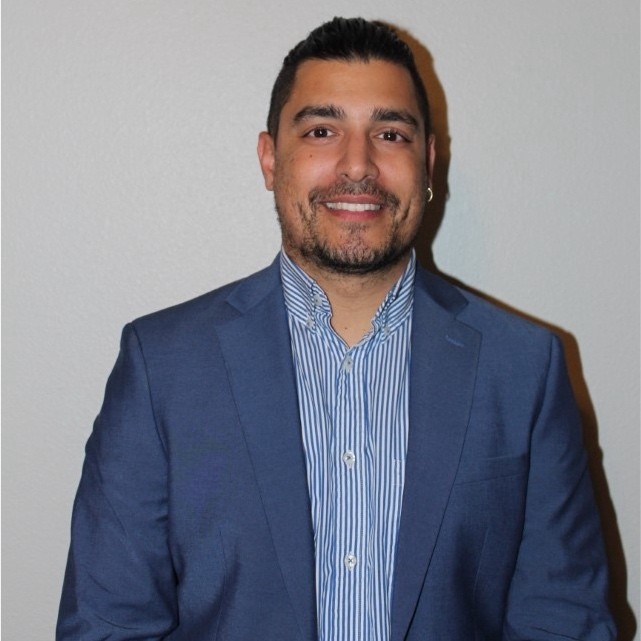
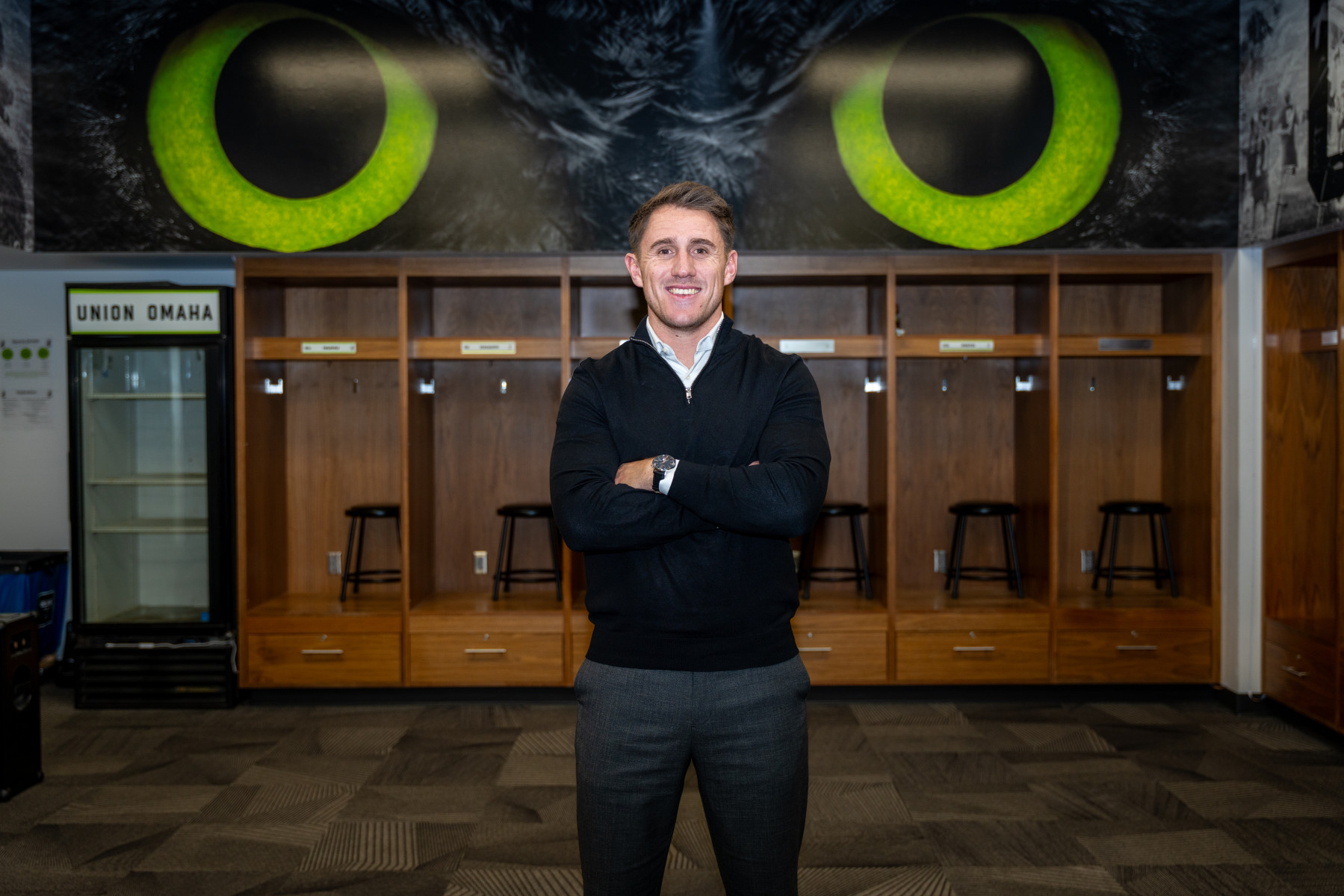
Profile
Role: Sporting Director Union Omaha
Specialisation: player development, analysis and scouting
Experience: Doncaster Rovers, Lincoln City, Bellevue University, Toronto Lynx, Papillion Soccer Club, Hudl, Atlanta United and Union Omaha
Focus Areas: sporting strategy, recruitment, player development and long-term direction
Jamie Henderson’s football journey is a story of crossing borders both geographically and professionally. Born in Lincoln, England, Henderson came through the youth systems at Doncaster Rovers and Lincoln City before making a life-changing move across the Atlantic to continue his education and football career at Bellevue University in Nebraska.
What began as a move to play college soccer would eventually become the foundation for a career in the American game. Henderson captained Bellevue University’s men’s soccer team for three years, earned Second Team All-NSAA honors in 2015 and later spent two seasons playing for the Toronto Lynx in the Premier Development League, now known as USL League Two.
But Henderson’s future in football would ultimately be built off the pitch.
After his playing days, he became Director of Player Development at Papillion Soccer Club, where he worked with players from ages 8 to 18 and helped establish a club-wide philosophy around player development. At the same time, he became deeply involved in video analysis and technology, working with Hudl to implement its analysis tools across the country and conducting seminars on platforms including Hudl and Wyscout.
That combination of player development, analysis and scouting eventually opened the door to Major League Soccer.
In late 2019, Henderson joined Atlanta United as an international scout, spending more than five years identifying and evaluating talent through both live and video scouting. His work covered transfer targets based on the club’s philosophy and budget, homegrown prospects in collaboration with the academy, and opposition scouting. He also developed relationships with agents and external scouts around the world, gaining an inside view of what it takes to build a competitive professional roster at one of North America’s most ambitious clubs.
Then came a move that brought his career full circle.
In August 2025, Henderson returned to Nebraska to become Union Omaha’s first-ever Sporting Director. Rather than simply stepping into an existing structure, he was joining a club at an important stage of its evolution, with the opportunity to help shape its sporting strategy, recruitment, player development and long-term direction.
For Henderson, the return to Omaha is more than a homecoming. It represents the convergence of nearly every chapter of his football career from player and coach to developer, analyst, scout and now sporting director.
And the timing is significant. Union Omaha, the 2021 and 2024 USL League One champions and a club that has also captured three Players’ Shields, is entering a new era as it establishes itself in downtown Omaha and prepares for a new stadium planned for 2028. Henderson is now one of the people responsible for helping determine what that next chapter looks like.
His story is ultimately about more than scouting players or assembling a roster. It is about understanding how the different pieces of a football club, players, coaches, technology, recruitment, business and community fit together.
In this conversation, Henderson reflects on his journey from England to Nebraska, his years inside MLS scouting, what he has learned about identifying talent and the challenge of building the next chapter of Union Omaha.
Key Insights
- That combination of player development, analysis and scouting eventually opened the door to Major League Soccer.
- Preparation is key. You have to know those challenges are coming and be ready to respond to them.
- Sometimes leadership isn’t about making a big change. Sometimes it’s simply about showing up and giving people the support they need.
Our Exclusive Interview with Jamie Henderson
You’ve got 60 seconds to tell people who don’t know you who you are. What would you tell them?
My name’s Jamie Henderson. I’m originally from the UK and came to the United States in 2012 on a soccer scholarship. I attended Bellevue University, a smaller NAIA school here in Omaha, where I earned degrees in sports management and health science.
After graduation, I joined Hudl during its acquisition of Wyscout. Being involved on the implementation side across clubs in the U.S. was an amazing experience, and it gave me the platform to eventually move into Major League Soccer with Atlanta United.
An opportunity came up to join their scouting department, and I took it. I spent seven years with Atlanta, starting as a video scout and taking on more responsibilities before finishing as an international scout, where I was leading a lot of the European scouting.
Then an opportunity came up with Union Omaha, and now, nearly 13 months later, here I am as the club’s sporting director.
Every day is different. There’s no real playbook for what the day-to-day looks like. But ultimately, I’m a sporting director trying to make a positive impact on young people’s lives. I put people before football, and I believe culture is massive. Building a club that represents and reflects the Omaha community is just as important as getting three points every week.
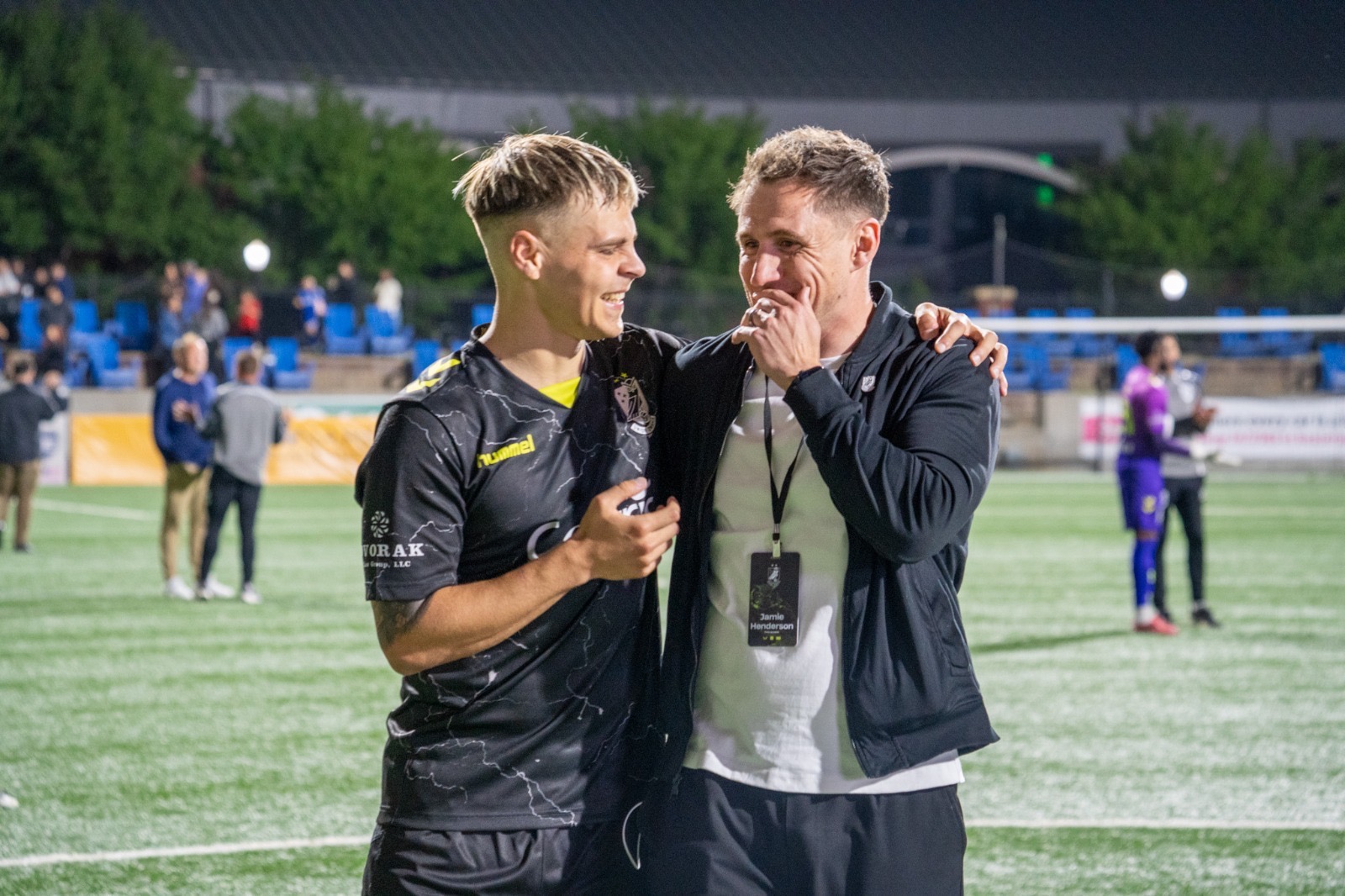
I put people before football, and I believe culture is massive.
You mentioned you’re from England. Was it Lincoln?
Yes, Lincoln, England. I’m actually a military kid, so my dad was in the military and we lived in Cyprus for three years when I was growing up. But outside of that, Lincoln was really my home base.
It’s a fantastic city in the middle of England, slightly to the east. I always tell people who don’t know the geography of the UK that if you put a pin in the middle of the country and went about 50 miles east, you’d find yourself in Lincoln.
It’s a small city with a lot of history, and it was a fantastic place to grow up. At the time, Lincoln City were playing lower-league football, in League Two and the Conference, although they’re now in the Championship.
I’m also a Manchester United fan. My family had season tickets from a young age, so a lot of my weekends were spent at Old Trafford. That was a pretty special way to grow up.
A sporting director can spend months building a plan, working with a coach and putting everything in place, only for one injury, transfer or bad run of results to seemingly blow it all up in a few weeks. How do you stay motivated and focused through those highs and lows?
Once you’ve been around professional football or really any sport, you understand that there are going to be peaks and troughs. It’s going to be up and down. That’s part of why we’re in it. When the peaks are great, it’s amazing, and when the lows are low, you have to stay even-keeled.
You can’t take the highs too high, and you can’t take the lows too seriously either.
Injuries, unfortunately, are guaranteed in sport, so from a sporting director’s standpoint, you have to be as prepared as possible for those scenarios.
For example, we came into this season with 26 players. The head coach and I looked at the squad and asked ourselves how we could build the strongest group possible. We felt we could be more effective with a smaller, tighter squad, so we took action and continued with a smaller group.
That allowed us to save some of the salary budget, knowing that injuries could happen and potentially leave us short. And they did. One of our starting central midfielders, who had never really been injured before, picked up an injury six weeks into the season.
At that point, you have to pivot. We started looking at the loan market, using relationships with other clubs and agents to find players who weren’t getting minutes elsewhere but could fit Union Omaha’s style of play.
But we don’t take shortcuts. Whether someone is coming in on loan or signing a two-year contract, they have to meet our standards as a person before we even consider them as a player. The guys we’ve brought in have made a positive impact on the field and in the community.
Preparation is key. You have to know those challenges are coming and be ready to respond to them.
Preparation is key. You have to know those challenges are coming and be ready to respond to them.
When you and your head coach disagree about a player or a solution, what does that healthy disagreement actually look like? And who gets the final word?
These are common situations. I could tell you stories for days from my time with Atlanta United, where I worked with some very opinionated head coaches, including Frank de Boer and Gabriel Heinze.
When I was younger, I remember thinking, I’ve got to go into these meetings with high-profile former pro players and coaches and explain why this player is right for us. And they would push back. You have to be confident in what you see, but you also have to be willing to listen.
Now, when Vincenzo (Head coach of Union Omaha) and I evaluate players, we’ll often watch different games. I’ll watch two, he’ll watch two. I might come away thinking a player was unbelievable, while he might say, “Well, in the two games I watched, he lost the ball this many times.”
Then we ask why.
Maybe my games were away from home, on a poor field. Maybe they were down to ten men. We look at the circumstances rather than simply saying one person’s opinion is right and the other’s is wrong.
We’re trying to understand the player’s strengths, weaknesses and, ultimately, what his middle level is going to look like. What’s the realistic level we believe he can consistently reach?
Eventually, we get to a conclusion where we can say, “I’m seeing what you’re seeing, and you’re seeing what I’m seeing. He’s either the right fit or he isn’t.”
We don’t want to make decisions based on one person’s opinion. We’re very detailed about the process.
Of course, at this level, finances also come into it. We could both absolutely love a player and still not be able to sign him. I’m fortunate to have a head coach who understands the financial side of the game and knows what we’re working with.
Recognizing talent is obviously critical, but how do you identify the player who is going to make everyone around him better?
That’s probably one of the hardest things to evaluate in a player.
When you’re looking at someone, there are four main areas: tactical, technical, physical and psychological.
The first three are relatively easy to see. Technically, you can see what a player can do with the ball. Tactically, you can see whether they understand the game in and out of possession. Physically, you can see whether they’re strong, explosive, quick over distance and so on.
The psychological side is much harder.
That’s where the research starts. Sometimes it starts with a very simple phone call with the player. You have a casual conversation about what they enjoy doing away from football and try to understand them as a human being.
Are they introverted or extroverted? Where do they like to be around their teammates? How do they interact with people?
You start building a picture of the person, not just the player.
If it’s someone already playing in the league, I also want to see how they behave during a game. What are they like when they’re losing? How do they interact with the referee? Are they encouraging teammates?
All of those details build a portfolio that helps us understand whether this person is going to raise the standard.
Raising the standard isn’t just about what you do on the pitch. It’s about what you do in the locker room, too.
We’re fortunate that we’ve built a locker room that’s almost self-managed. It’s an experienced group of players who hold each other to a high standard, and that’s something we’re really proud of.
Sporting directors and coaches sometimes spend as much time managing egos as they do managing squads. How do you know when to push someone, when to protect them, or when simply to get out of their way?
I’ll always protect my players, especially from the outside. What happens inside our training facility stays inside our training facility.
Sometimes, as a sporting director, you have to play good cop. Sometimes you have to play bad cop. The head coach or assistant might do the same thing in reverse.
For me, it starts with building trust with the players. I have an open-door policy that allows them to come and talk to me, and when they’re in my office, what we discuss stays within those four walls.
Once you build that trust, you put yourself in a position where players know they can come to you, whether they need advice or simply need someone to talk to.
We’re also fortunate that our locker room almost manages itself. We have a leadership group of seven players, and if standards start to drop in training, they’ll address it themselves.
They’ll say, “This isn’t good enough. We need to fix it.”
If it doesn’t get fixed, it moves up the line to the head coach. Fortunately, this season it hasn’t had to come all the way to me.
That’s the culture piece, and it’s sometimes so undervalued at clubs. Having that level of in-house leadership and accountability is critical, especially at this level.
I also like having a balanced squad in terms of age and experience. We have a couple of former MLS players who have had full careers at that level, and they manage the locker room extremely well.
For me, that’s a massive part of what creates a solid club.
In football, there’s often a temptation to always fix something—to change the coach, sign another player or restructure the staff. How do you recognize when the smartest decision is actually to do nothing?
When I first arrived at the club, the head coach, Dom, had moved to Tampa Bay Rowdies just a week before I got there. I had been planning to work with Dom, so that obviously didn’t happen.
Vincenzo Candela was the interim coach, and immediately people were asking me, “You need to look at this coach, or this coach, or this coach.”
But I thought I had something better: an audition happening right in front of me.
I could watch Vincenzo every day. I could see how he interacted with the players, how he interacted with the community and how he handled the environment. That’s a luxury you don’t always have when hiring a coach. Often, you’re relying on recommendations and reputation.
I was extremely impressed with him, and there was no need for me to go out and find a “shiny new toy” with a great résumé.
It would have been easy to come in and say, “I’m the new sporting director. I’m getting rid of everything and bringing in my people.”
But Vincenzo was the right person for this club, and he’s done extremely well in his first full season as a head coach.
We’ve had ups and downs. We’ve lost games. That’s football. Going back to what we talked about earlier, there are going to be peaks and troughs.
The important thing is keeping everyone positive and supporting the people you’ve trusted.
I have full trust in the coaching staff and the players. Not every problem requires a change. Sometimes you simply need to provide more support.
And the first person I look at when something isn’t going right is myself. It stops with me. I’m the person responsible for the sporting side of this club, so if something isn’t working, I need to ask myself why.
We had a coach leave earlier in the season because of personal circumstances, and my first thought was, “I need to find somebody.”
Then I stopped and thought, “What can I do right now?”
So I put my training kit on and went out to training to help where I could. I’m not a coach, and I don’t want to be a coach, but my immediate responsibility was to support the coaching staff.
Sometimes leadership isn’t about making a big change. Sometimes it’s simply about showing up and giving people the support they need.
Sometimes leadership isn’t about making a big change. Sometimes it’s simply about showing up and giving people the support they need.
What’s something you’ve learned through experience that you could never have learned from a book, course or football seminar?
I used to take life very, very seriously. I cared a lot about what people thought about me, and I was extremely self-critical.
Then, about three and a half years ago, I lost my mother to a terminal illness. It came completely out of nowhere. She was an incredibly healthy woman who was diagnosed with a brain tumor, and we eventually lost her.
That experience made me step back and think differently.
Of course, I’m going to take life seriously, but I also need to relax a little more and do good in the world.
My mum was a paramedic for most of her life and spent a lot of time volunteering. Even when she was ill and going through chemotherapy, she continued giving back to the community.
I looked at that and thought, That’s the part of her I want to carry forward.
From the outside, what I do might look like a high-pressure job. But to me, this isn’t pressure. It’s a privilege.
Pressure is what my sister, who’s also a paramedic, deals with. She could be working a 12-hour night shift in the UK. That’s pressure.
This is a privilege.
The sooner you understand that, the sooner you can relay that mindset to your players. I share my mum’s story with them because one thing she always used to tell me was, “Never settle for average when you can achieve excellence.”
That’s something I carry with me, and it’s a message I give the players all the time.
When you’re going through a difficult period, don’t settle for that performance. Push yourself to achieve excellence, because you can.
It’s given me a different outlook on life, and I’m trying to bring that outlook into this job—to make the people around me feel safe, calm and able to express themselves.
Twenty or thirty years from now, what would you want the people you’ve worked with to say about you?
I’d hope they’d say I was an honest and trustworthy guy who allowed people to express themselves, especially from a player’s standpoint.
I always want to give players as much confidence as I can from the position I’m in. I won’t cross the line into coaching, but if a player needs an arm around them, I’m going to give them that.
Trust. Honesty. Transparency. Hard work. Resilience.
Those are the things I’d want people to associate with me, because they’re the things I’d expect if I were lucky enough to be a professional footballer.
I put a lot of time into this job, but I enjoy it. I genuinely want the best for the people around me, and I hope they see that as authentic and not just a load of fluff designed to make them feel good.
Winning is great. That’s what everybody wants. But only a small percentage of professional footballers in the world ever win something, and it’s incredibly difficult.
Someone might say, “Jamie was a winner,” and that’s great. But I’d rather be remembered as someone who did the right things and looked after the right people.
Rapid Fire
Coffee or tea?
Coffee.
City life or countryside?
City life. I went from Atlanta to Omaha!
Player development or winning now?
I’m sitting on the fence on this one. A good sporting director is meant to have both. But if I have to choose: player development.
Talent or mentality?
Mentality.
Beaches or mountains?
Beaches.
Sunrise or sunset?
Sunrise.
Summer or winter?
Summer.
Early bird or night owl?
Early bird. Although maybe being at Union Omaha has turned me into a bit of a night ‘owl’!
Plan everything or go with the flow?
Go with the flow.
Dinner out or cooking at home?
Dinner out.
Road trip or flying somewhere new?
Flying somewhere new.
Dogs or cats?
Dogs.
Call or text?
Call.
Win ugly or lose beautifully?
Win ugly.
Books or movies?
Books.
Five-star hotel or tent under the stars?
They’re probably going to think I’m very bougie, but I’ll take the five-star hotel.
FAQ
What is Jamie Henderson’s role at Union Omaha?
In August 2025, Henderson returned to Nebraska to become Union Omaha’s first-ever Sporting Director.
Where did Jamie Henderson work before Union Omaha?
In late 2019, Henderson joined Atlanta United as an international scout, spending more than five years identifying and evaluating talent through both live and video scouting.
What are the four main areas Jamie Henderson considers when evaluating a player?
When you’re looking at someone, there are four main areas: tactical, technical, physical and psychological.