


Some footballers pass through the game and leave behind their goals. Some leave trophies. And some leave behind an idea.
Sócrates was one of those rare people.
His full name was Sócrates Brasileiro Sampaio de Souza Vieira de Oliveira. Born in Belém, Brazil, on 19 February 1954, he died on 4 December 2011 at the age of 57. But his story began long before he became a football star.
Why was he called Sócrates?
The answer is fascinating.
His father was a self-educated man with a deep interest in books and Ancient Greek philosophy. He named his sons after figures from Greek antiquity. Two of Sócrates’ brothers were named Sophocles and Sosthenes.
So Sócrates was not given a football nickname later in life. He was born with the name of a philosopher. And he spent his life trying to live up to it.
Doctor Sócrates
Football was his profession, but it was never his entire world.
While playing for Botafogo, Sócrates studied medicine and graduated from the University of São Paulo in 1977. That alone made him an extraordinary figure in professional football.
In Brazil, he became known as “Doutor Sócrates – Doctor Sócrates.”
But his intellectual curiosity went far beyond medicine. He was fascinated by philosophy, politics, literature and art. He admired figures such as Che Guevara and John Lennon and later pursued doctoral studies in philosophy.
FIFA has described him as a doctor of medicine, political activist, newspaper columnist, painter and actor as well as one of the greatest footballers of his generation.
That combination is almost impossible to find in modern football.
He played football as if he were thinking
Sócrates was over 1.90 metres tall, yet he moved with an almost effortless elegance. He rarely looked rushed. He did not seem to run after the game. He seemed to understand it before everyone else.
A glance. A touch. A backheel. And suddenly the geometry of the pitch changed.
A glance. A touch. A backheel. And suddenly the geometry of the pitch changed.
His backheel became his signature. As captain of Brazil at the 1982 World Cup, he was the intellectual heartbeat of a team remembered as one of the most beautiful sides never to win the tournament.
Zico, Falcão, Éder and Sócrates represented a Brazil that believed football could be both art and intelligence.
His magnificent long-range goal against the Soviet Union remains one of the iconic moments of the 1982 World Cup.
Brazil did not win the trophy. But some teams win something greater than a tournament: they win a permanent place in football’s memory.
Brazil 1982 was one of those teams. And Sócrates was its soul.
When football became a fight for democracy
What made Sócrates truly different, however, happened away from the pitch.
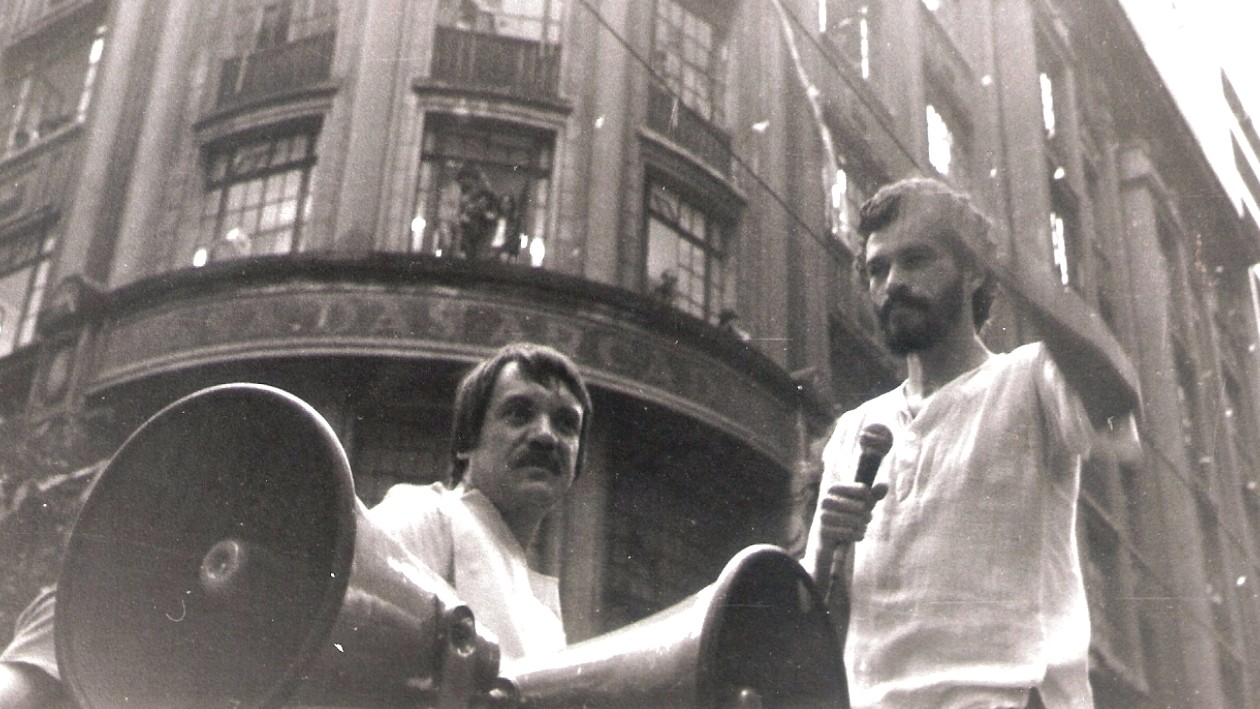
Brazil was still under military dictatorship in the early 1980s. At Corinthians, Sócrates became one of the leading figures behind the Corinthians Democracy movement.
Players demanded a voice in the decisions that affected their lives from everyday routines to pre-match concentration camps.
It was more than a football revolution. It was a political statement. Football became a mirror of Brazilian society.
In 1982, Corinthians players even used their shirts to encourage people to participate in elections.
At a time when many people were afraid to speak openly against the regime, a football captain was using his popularity to defend democracy.
That was Sócrates.
He understood that football was not only about asking: “Who won?” It was also about asking: “What kind of society do we want to live in?”
He understood that football was not only about asking: “Who won?” It was also about asking: “What kind of society do we want to live in?”
He was not perfect. That was part of his humanity.
Sócrates was no saint. He smoked. He drank beer. He openly admitted that he was hardly the model of a modern professional athlete.
But perhaps that was precisely what made him so fascinating. He had contradictions. He had weaknesses. But he also had ideas. And, more importantly, he had the courage to stand behind them.
He played for Fiorentina in Italy, later returned to Brazil with Flamengo and Santos, and represented Brazil 60 times, scoring 22 goals. He played in the 1982 and 1986 World Cups.
And in 2004, at the age of 50, he even made a brief appearance for English non-league side Garforth Town.
Because for Sócrates, football was never merely a profession. It was part of life itself.
More than a footballer
Today, footballers have millions of followers on social media. Sócrates never needed millions of followers. He had something more valuable: something to say.
He showed that a footballer could think, question, challenge and speak.
He played with his feet, but he also played with his mind. And he fought with his voice.
He played with his feet, but he also played with his mind. And he fought with his voice.
Perhaps that is why the death of Sócrates was more than the death of a footballer.
Football lost a doctor. A thinker. An artist. A rebel. And, above all, a conscience.
A Sócrates once walked this earth.
He may not have lifted the World Cup. But he left something behind that no trophy can ever replace: the idea that football can be played not only with the feet, but with the mind, the courage and the heart.