

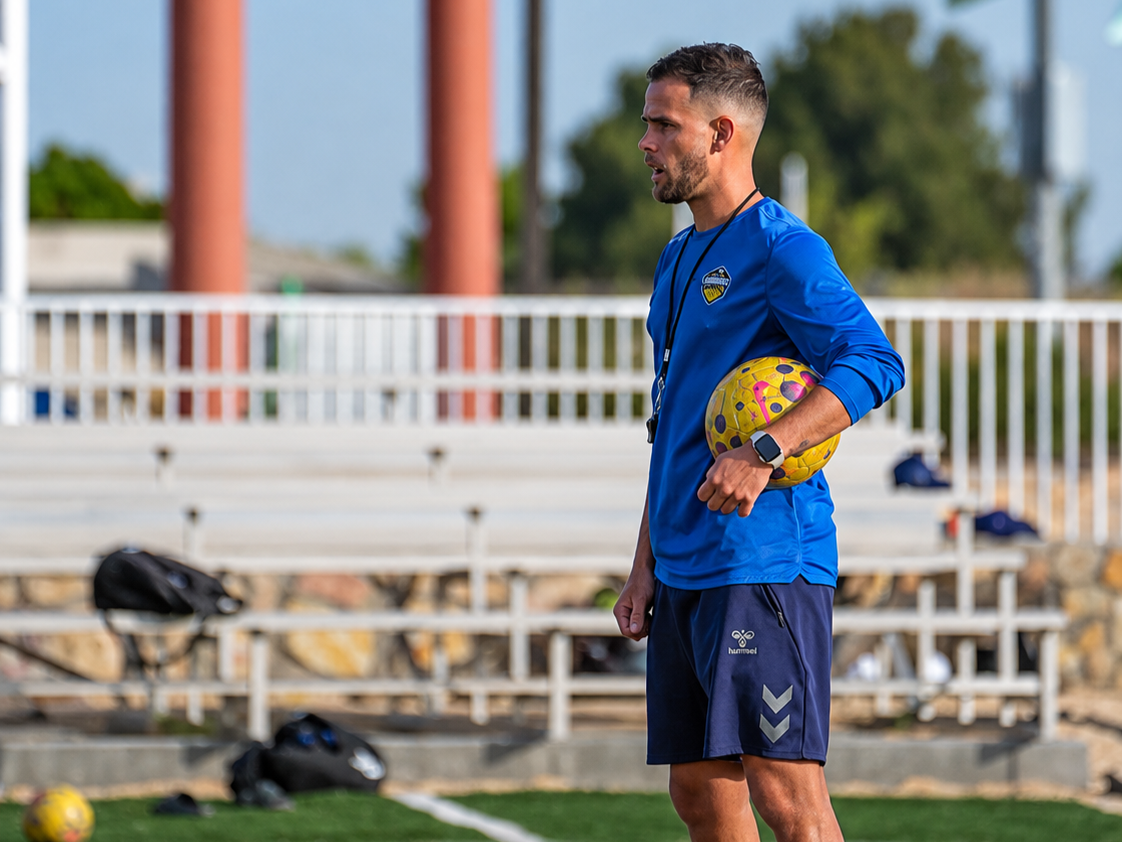
An exclusive conversation with Guilherme Henry, U20 Head Coach & Academy Director at El Paso Locomotive FC
Profile
Role: U20 Head Coach & Academy Director, El Paso Locomotive FC
Specialisation: Youth Development, Talent Pathways & High-Performance Coaching
Experience: St. Andrews University, Nona FC, One Knoxville SC
Focus Areas: Coaching, Leadership, Player Management & Talent Scouting
Guilherme Henry is a Brazilian soccer coach from Rio de Janeiro whose journey through the game has taken him from playing in Brazil, the United States and Qatar to developing the next generation of players in the American soccer system. Before becoming a coach, Guilherme spent nearly two decades chasing the dream of becoming a professional player. Along the way, he earned a college scholarship and experienced firsthand the uncertainty, sacrifice and setbacks that come with trying to make it in soccer. Those experiences would eventually shape the coach he became.
His transition into coaching began at the recreational level before progressing into academy soccer and increasingly demanding leadership roles. At just 28 years old, he became a head coach at Nona FC before moving into a Technical Director role with One Knoxville SC, where he remained until May 2025. In March 2026, Guilherme joined El Paso Locomotive FC as the club’s U20 Head Coach and Academy Director, taking on responsibility for developing young players and helping build a pathway toward higher levels of the game.
But Guilherme’s philosophy extends beyond producing professional footballers. For him, development starts with the person. He believes soccer can teach young players resilience, accountability, discipline and how to deal with adversity, lessons that remain valuable whether a player eventually signs a professional contract, earns a college scholarship or builds a career outside the game.
His own journey has given him a particular appreciation for that reality. Not every player will reach the professional level, and Guilherme believes that should not automatically be viewed as failure. The responsibility of an academy, in his view, is to help young people become prepared for whatever comes next. That philosophy is reflected in the way he coaches: emphasizing hunger, preparation, humility and personal responsibility while constantly challenging players to control what they can control. In a soccer environment increasingly influenced by social media, instant gratification and the perception that success should happen quickly, Guilherme takes a different view.
The opportunity may be outside your control. Being ready for it is not. It is a philosophy shaped by his own experience as a player, his evolution as a coach and his belief that the best development programs do more than create footballers. They help create people.
Introduction
Some coaches talk about developing players.
Others talk about developing people.
After speaking with Guilherme Henry, it became clear that, for him, the two are not separate conversations.
They are the same conversation.
Guilherme is Brazilian. Born in Rio de Janeiro, soccer became his first passion and, by his own description, perhaps his only one. He played the game in Brazil, the United States and briefly in Qatar, spending roughly two decades trying to become a professional footballer himself. Eventually, he realized that playing would not take him all the way. But instead of seeing that as the end of his soccer journey, he saw it as the beginning of another one.
The experiences he collected as a player became the foundation for a career in coaching.
He started at the recreational level. Then came a U14 team. Then greater responsibilities within an academy. At just 28, he became a head coach at Nona FC. From there came an opportunity to become Technical Director at One Knoxville SC, a role he held until May 2025. In March 2026, another chapter began. Guilherme became the U20 Head Coach and Academy Director at El Paso Locomotive FC, a USL Championship club based in El Paso, Texas. But his ambitions extend beyond producing professional footballers.
For Guilherme, soccer is a reflection of life. It teaches people how to deal with adversity. It teaches commitment. It teaches resilience. It teaches you that you cannot always control the opportunity, but you can control whether you are ready when it arrives.
It teaches you that you cannot always control the opportunity, but you can control whether you are ready when it arrives.
And perhaps most importantly, it teaches you that success cannot always be measured by whether a player eventually walks onto a professional field. A player might turn professional. Another might earn a college scholarship. Another might graduate from university and build a successful career outside the game.
Guilherme believes all of those outcome’s matter. Because the academy isn’t simply responsible for creating footballers. It has a responsibility to help create human beings.
So, who is Guilherme Henry?
Let’s find out.
Key Insights
- Development starts with the person before the player.
- Players cannot control when opportunities arrive, but they can control whether they are prepared.
- Academy success can include professional football, college, education and successful careers beyond the game.
Our Exclusive Interview with Guilherme Henry
The game gave him everything
If Guilherme Henry had 60 seconds to tell his story, what would that sound like?
He would start with Brazil. “I’m a Brazilian guy, from Rio de Janeiro, and very passionate about soccer.” For Guilherme, soccer has never simply been an activity. It has been the thread running through his life. He believes the game teaches lessons that extend far beyond the field. It forces people to face adversity, prepare for challenges and deal with situations they cannot control. In that sense, soccer becomes a reflection of life itself.
Guilherme experienced that firsthand. He spent approximately 20 years as a player, chasing the dream of becoming a professional. He played in Brazil, the United States and even had a brief experience in Qatar.
Eventually, though, he realized he would not make it all the way as a professional player.
That could have been a difficult conclusion to reach. Instead, it gave him something else.
Perspective. The years spent trying to become a professional gave him an understanding of the game, the environment and the challenges young players face. Those experiences eventually became the foundation for his coaching career. Soccer had already given him opportunities.
It had given him a college scholarship. Now he wanted to give something back.
For Guilherme, coaching became a way of passing those experiences to the next generation. The player became the coach. But the player never really disappeared.
He remains present in the way Guilherme sees young footballers, because he remembers what it felt like to be one. And that memory shapes almost everything he does.
The person before the player
There is perhaps no question that reveals Guilherme’s coaching philosophy more clearly than this:
When you’re coaching young men who are still trying to figure out who they are while simultaneously trying to become professional players, who are you really coaching, the person or the player?
His answer is immediate.
The person.
“There is no question about it.”
Guilherme remembers being a player himself and how meaningful it was when a coach cared about him beyond his performance. When a player feels that his coach genuinely cares about him as a person, Guilherme believes that relationship carries enormous value.
His philosophy is straightforward:
The better human being you become, the better you can become at whatever you choose to do professionally. That belief has become particularly meaningful in El Paso.
The city sits close to the Mexican border, and Guilherme sees firsthand the sacrifices some of his players make simply to get to training. Some wake up at three or four in the morning.
They go to school.
They travel.
They train.
And they repeat it.
For Guilherme, that is not simply a soccer commitment. It is a lesson in resilience.
He tells his players that he admires them for what they are doing because he understands that it isn’t easy. But he also believes that difficulty is part of the process.
You need hunger.
You need commitment.
You need to be willing to keep going when things aren’t convenient.
That is why Guilherme tries to connect with his players and make them understand that they should be proud of what they are doing regardless of whether the result is a win, a loss or a draw. The result is not always within their control. Their response is. “We focus on the part we can control, and that’s what matters.” That philosophy doesn’t mean tactics, metrics or data are irrelevant. Quite the opposite. Guilherme recognizes their importance.
“We focus on the part we can control, and that’s what matters.”
But he believes they come after something more fundamental. Human connection.
You can have the best tactical plan. You can have the data. You can have the metrics.
But if the human connection isn’t there first, he believes the rest simply won’t work.
The shortcut illusion
What do you think is a misconception young players have in terms of what it takes to become a professional player?
There is a particular misconception Guilherme sees repeatedly among young footballers.
They believe everything happens quickly. They see professional players on social media.
They see transfers. They see contracts. They see highlight videos.
And they begin to believe the journey is supposed to look like a straight line. Guilherme sees it differently. People are looking for shortcuts.
But meaningful things take time. One of the lessons he tries to instill in his players is simple: You don’t choose when the opportunity comes. You can choose whether you’re ready for it.
You don’t choose when the opportunity comes. You can choose whether you’re ready for it.
That distinction is enormous. The opportunity itself is often outside a player’s control.
Preparation isn’t. And Guilherme is particularly concerned about the influence of social media on young players. Social media can lie. And, in his view, it does so frequently.
The problem is that young players often don’t yet have the experience necessary to quickly distinguish reality from what they are seeing online. A highlight reel can make a career look easy. It rarely shows the years of work behind it.
A transfer announcement doesn’t show the players who never received the call.
A professional contract doesn’t show the countless training sessions that preceded it.
And a player who appears to have “made it” may have faced an entirely different journey than the one presented online. Guilherme wants his players to understand that reality.
He also wants them to understand the difference between saying you want something and actually behaving like you want it. A lot of people say they want to win.
Far fewer consistently do the things that demonstrate that desire. At El Paso, part of his job is bringing the reality of the soccer ecosystem into the academy environment.
Because talent alone does not guarantee an opportunity. And sometimes even being one of the best players in your age group isn’t enough.
When talent isn’t enough
Sometimes a player can do everything right, but it still does not end up where they expected it would, why do you think that is?
Guilherme shared one example that illustrates that reality particularly well.
A player he considers one of the best youth players he has ever seen was named ECNL Player of the Year not long ago.
The talent was obvious. The ability was obvious.
But eventually the player faced something that happens to countless talented footballers:
The opportunity did not come in the way everyone expected. He went to one of the best universities in Texas. He was one of the best youth players Guilherme had seen.
Yet he never received a minute with the first team. Now he is in college, and Guilherme and the people around him continue to root for him. To Guilherme, that player represents an important lesson. Sometimes the player isn’t the problem.
Sometimes the timing isn’t right. Sometimes the position doesn’t help. Sometimes the opportunity simply doesn’t arrive. What matters is what the player does next. Does he become frustrated? Does he lose focus? Or does he continue preparing? For Guilherme, the answer has to be the latter.
Because the opportunity cannot be controlled. Being ready can.
The player who changed the coach
Tell me about a young player who challenged you as a coach, not because he was bad, but because he made you question how you were teaching.
Interestingly, that same player mentioned previously also taught Guilherme something about coaching. Not because he was a difficult player. Quite the opposite. The player forced Guilherme to question his own approach. There was a point where Guilherme couldn’t find the right way to fit him into the system he was building. It would have been easy to view the problem as the players. Instead, Guilherme saw it as a coaching challenge. He had to become more creative. The player’s response made the difference.
When Guilherme substituted him, there were no negative reactions. No faces. No attitude.
Instead, the player remained professional and continued trying to help the team.
That patience and cooperation gave Guilherme the opportunity to rethink the problem.
Eventually, they found a better place for the player within the formation.
once they did, something changed. The player began to flourish. He played better.
He scored. He assisted. But Guilherme believes that happened because the player communicated and articulated what he was experiencing. More importantly, he partnered with his coach to solve the problem. It was a reminder that coaching isn’t always about the coach having the answer. Sometimes the answer comes from the relationship between the coach and the player. The player wasn’t simply being coached. He was part of the solution.
And, in the process, he taught his coach something too.
What does success actually look like?
This may be one of the most important ideas in Guilherme’s philosophy.
What if professional soccer isn’t the only definition of success? It is a difficult question in a sport where young players are often taught that the ultimate goal is to turn professional. Guilherme absolutely wants his players to become professionals.
He supports that ambition. But he refuses to define an entire development program by that single outcome. His current environment at El Paso Locomotive gives him the opportunity to approach development differently. During the hiring process, Guilherme says he was grateful that the club’s vision and culture were made clear to him. The goal was to create a pathway. And El Paso is an interesting market.
Many young players there don’t necessarily view college as their first option. They want to become professionals. Some look toward opportunities in the United States.
Others look toward Mexico. Guilherme understands that ambition.
But he also understands the American system because he lived it himself. He was a product of a college scholarship. And that experience taught him how important the college pathway can be. College, he argues, does not mean giving up on the dream of becoming a professional. It can simply be another path.
A player can continue pursuing professional soccer while also earning an education, developing a network and preparing for a career beyond the field. That last part matters enormously to Guilherme. Because development should not be viewed simply as an expense. At El Paso Locomotive, he sees it as an investment.
And he believes the soccer industry needs to think more seriously about that distinction.
Not every player is the next Endrick
Only 1% of the kids playing soccer make it to the pro ranks, what happens to the 99% or what should happen to the 99%?
Guilherme uses Brazil to illustrate the challenge.
Brazil has produced extraordinary academies. Clubs such as Palmeiras have developed players who eventually command enormous transfer fees. Players such as Endrick are examples of the extraordinary value that can come from elite youth development.
But Guilherme asks a different question: What happens to everyone else?
What happens to the other young players who entered that academy but were not the one extraordinary talent who eventually generated a massive transfer fee?
That is where Guilherme believes development programs have an obligation to think differently. At El Paso Locomotive, the objective is not simply to identify the one special player. They want to look at all of the strong players. They want to help as many young people as possible find a successful pathway. That changes the way success is measured.
The KPI isn’t simply: How many players turned professional? That matters. Of course it matters. But Guilherme believes the measurement needs to be broader.
How many players turned professional?
How many went to college?
How many earned degrees?
How many eventually found successful careers?
Those are outcomes too. And they are often ignored.
For Guilherme, a player who doesn’t become a professional footballer has not necessarily failed. If that player becomes a university graduate, builds a career, develops meaningful relationships and becomes a successful human being, there is still a successful outcome.
The professional dream remains important. But it cannot be the only measure of whether an academy has done its job.
Build the academy with soccer people
If you could change one thing about American youth soccer, what would that be?
His answer is direct and he knows some people may not like it. But he is comfortable with his views and willing to voice them. His analogy is simple. You build a hospital with doctors. You build a law firm with lawyers. You build a restaurant with chefs. So, he argues, you should build youth academies with people who genuinely understand, live and breathe soccer. For Guilherme, leadership positions and coaching positions within the soccer ecosystem should be occupied by soccer experts, experienced practitioners and people who understand the game deeply. It is not an argument against business expertise.
It is an argument for soccer expertise being present where soccer development decisions are being made. He also believes American youth soccer needs more collaboration between academies and clubs. He points to a recent example.
El Paso took approximately ten teams to Phoenix to play against Phoenix Rising.
The experience, he says, was valuable for everyone involved. Both teams benefited.
Both sides learned. The players were exposed to something different.
And the coaches had an opportunity to learn from one another.
That type of collaboration, Guilherme believes, can help develop players further.
But there is another ingredient he believes the American soccer ecosystem needs.
Humility.
Guilherme believes there are too many people in soccer who think they know everything.
For him, that mindset is dangerous. One example particularly stands out.
Mauricio Pochettino, one of the most prominent coaches in the country, visited academies.
And even in that situation, Guilherme observed coaches engaging with him and telling him what they believed should be done. Whether those coaches were right or wrong is almost beside the point. What mattered was that the conversation happened.
Pochettino engaged. The coaches engaged. People shared ideas.
And Guilherme sees that willingness to communicate as something the game needs more of. Because development doesn’t happen when everyone believes they already have all the answers. It happens when people are willing to listen. To question. To collaborate. To learn.
And sometimes to admit:
I don’t know.
That humility, for Guilherme, is not weakness. It is part of becoming better.
The hunger factor
Sometimes two players have the same qualities, same environments, same tactics but 1 turns pro and the other one does not, what do you think that happens?
Two players can have similar talent. They can have the same coach.
They can have access to the same environment. They can train together.
And yet, one can eventually make it while the other doesn’t. Why?
Guilherme believes the answer is a mixture of factors. Position can matter.
Opportunities can matter. Timing can matter. But there is another factor he keeps coming back to.
Hunger.
He remembers a famous saying from Brazil: “If you have a full fridge at home, you will not be hungry.” For Guilherme, hunger is the X-factor. It is about who wants it more.
Who finds a way. Who keeps chasing the opportunity. He sees it with young players.
When something is simply handed to them, some players don’t chase it. Others constantly chase the next opportunity. That difference can become enormous over time.
At El Paso, Guilherme tries to build that mentality into the everyday environment.
Players are expected to arrive 15 minutes before the required time. They receive homework.
They have to conduct their own evaluations. If they receive a red card, there are consequences and additional tasks designed to help them understand what went wrong.
The objective is not punishment for punishment’s sake. It is accountability.
Actions have consequences. Standards matter. And details matter.
El Paso recently received an invitation to the ECNL Super Cup, a prestigious tournament and a first for the program. Guilherme was proud of what the group had accomplished during its first six months. But he immediately challenged them with the next thought:
The next six months are even more important. That mindset is central to his philosophy.
In sports, you have to be grateful for what you have. But you also have to push for more.
You can complete 95% of your passes successfully. Guilherme doesn’t want the player obsessed with the 95%. He wants the player thinking about the five percent that can still improve. There is an element of obsession required. Not an unhealthy obsession with perfection. But an obsession with getting better.
“How you do anything is how you do everything”
Perhaps the most revealing question of the interview was also the most personal.
Imagine that ten years from now, one of Guilherme’s players is walking into a major stadium somewhere in the world with a jersey of a big club on him. What do you hope that player remembers?
His answer centers on a principle:
“How you do anything is how you do everything.” For Guilherme, the message is about controlling what you can control. If his players give everything they have, that is what matters. He wants them to take pride in themselves regardless of the outcome.
“How you do anything is how you do everything.”
Winning simply to feel good, he acknowledges, can become unhealthy. And he is honest enough to admit that he can be guilty of that too. But he wants his players to understand that soccer is bigger than soccer. That may sound strange coming from someone who describes himself as obsessed with the game. But that is precisely the point.
Guilherme has spent 12 years away from his family as part of the sacrifices he has made for his career. He understands pain. He understands sacrifice. And he wants his players to understand those things too. But he also wants them to be able to sleep well at night knowing they gave everything. Even if the coach doesn’t see their value. Even if the opportunity doesn’t come. Even if the result doesn’t go their way. Keep pushing.
Because ultimately, they are writing their own story. And when something doesn’t go their way, Guilherme doesn’t want their story to say that they responded poorly.
He wants them to look back and know they handled themselves the right way.
That, ultimately, is character. And character lasts longer than a soccer career.
Serving something bigger than yourself
There is one final part of Guilherme’s philosophy that sits underneath everything else.
His belief in God. And his belief in serving others. He sees humility and service as important elements of leadership. He has observed people say they are doing something for the players when, in reality, their motivation may be more connected to their own pride.
For Guilherme, there is a difference. True service means putting others first. It means acting unselfishly. It means helping people without needing recognition for doing so.
That philosophy is connected to the way he views coaching. The coach isn’t the story.
The player is. The academy isn’t the destination. It is part of the pathway.
And the ultimate objective isn’t simply to produce someone who can score goals on a professional field. It is to help young people become capable of navigating whatever comes next. Because the reality is that most young footballers will not become professional players. That doesn’t mean their development failed.
It means the responsibility of development is bigger than professional soccer.
The human behind the coach
After talking about development, sacrifice, coaching and the realities of the soccer ecosystem, there is always another question worth asking.
Who is Guilherme when the training session ends?
The answers reveal someone whose personality is perhaps exactly what you would expect from his coaching philosophy.
Coffee or tea? Coffee, 100%. Although tea occasionally makes an appearance when he is having trouble sleeping.
Beach or mountains? Beach. 100%. He’s from Rio de Janeiro, after all. He loves the ocean and, particularly, the sound of the waves.
Sunrise or sunset? Sunrise. His morning routine includes coffee, reading his Bible and getting outside before training, with the mountains in the background. For him, it is a moment to be grateful for the opportunity he has.
City life or quiet countryside? The city might have been the answer in the past. Now? Countryside.
Summer or winter? Summer. 100%. He lived in New York and was quickly reminded why he loves summer.
Early bird or night owl? Early bird. Definitely.
Plan everything or go with the flow? Go with the flow. His assistant coaches often tell him how creative he is, and he believes that creativity helps him find solutions in the moment.
Dinner out or cooking at home? If he’s not the one cooking, he’d rather cook at home.
Road trip or flying somewhere new? Flying. Living in El Paso means that many destinations are a ten-hour drive away. He’ll take the plane.
Books or movies? Books. He doesn’t believe the movie industry is producing great movies at the same level anymore, but he still finds plenty of great books.
Five-star hotel or tent under the stars? Five-star hotel. He likes simple things. But he’ll take the five-star hotel.
Money or fame? It depends what the fame is about. But ultimately, money. Not simply for what money can buy, but for what good things you can do with it, sometimes without people even knowing you were the one doing them.
Never work again or never sleep again? Never work again. He already has sleeping problems!
The coaching is the message
For Guilherme, youth development has never been simply about producing professional players. It is about preparing people for whatever comes next.
His own journey taught him that soccer can give you opportunities, education, relationships and purpose, even when the original dream doesn’t unfold exactly as planned.
Now, he wants to give the next generation that same foundation.
Some players will turn professional. Others will earn college degrees, build careers or find success away from the game. To Guilherme, those are all meaningful outcomes.
Because before the player comes the person.
Develop the player. Prepare the person. Respect the process. Control what you can control.
And when the opportunity comes, be ready.
FAQ
Who is Guilherme Henry?
Guilherme Henry is the U20 Head Coach & Academy Director at El Paso Locomotive FC.
What is Guilherme Henry’s approach to player development?
For Guilherme, development starts with the person. He believes soccer can teach young players resilience, accountability, discipline and how to deal with adversity.
How does Guilherme Henry define success in youth development?
Some players will turn professional. Others will earn college degrees, build careers or find success away from the game. To Guilherme, those are all meaningful outcomes.