

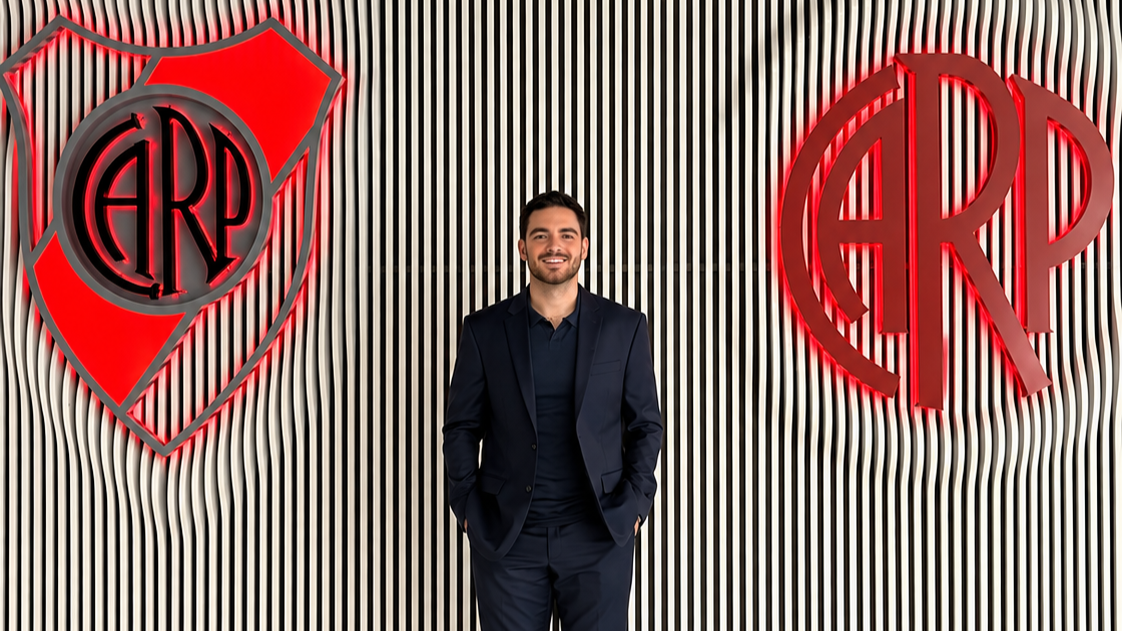
Profile
Specialisation: Talent identification, market intelligence and local access within the Brazilian player market
Experience: Grêmio, Corinthians, Athletico Paranaense, Vasco da Gama and Cruzeiro
Focus Areas: Scouting, recruitment, qualified market mapping and Brazilian market intelligence
Rodrigo Pelaipe represents a scouting profile increasingly valuable in modern football: a specialist who combines talent identification, market intelligence and local access within one of the most important player markets in world football.
Based in Brazil, Pelaipe has spent the last several years working inside some of the country’s most demanding football environments. His journey has included experiences at Grêmio and Corinthians, scouting at Athletico Paranaense, a football operations role at Vasco da Gama and, most recently, almost two years as Senior Scout at Cruzeiro. That progression has given him first-hand exposure to different recruitment structures, sporting models and decision-making environments across Brazilian football.
One of the strongest examples of Pelaipe’s scouting approach came at Cruzeiro through Kaio Jorge. His assessment supported the opportunity to bring the striker back to Brazil from Juventus at a value significantly below what the player would later command. The process went beyond statistical analysis, incorporating technical suitability, mentality, potential upside and overall profile fit. According to Pelaipe’s scouting case study, Cruzeiro subsequently received an offer worth approximately five times the acquisition value, while Kaio Jorge developed into the club’s top scorer and best player of the season.
The process went beyond statistical analysis, incorporating technical suitability, mentality, potential upside and overall profile fit.
His work also demonstrates an emphasis on what can be one of scouting’s greatest competitive advantages: identifying talent before the wider market fully recognises its value. His portfolio includes the early identification of Colombian forward Neiser Villarreal before his U20 World Cup breakthrough, with his assessment highlighting the player’s physical profile, technical qualities and mentality for an international transition. Pelaipe’s material also points to early work around profiles such as Kauã Moraes and Keny Arroyo, identifying their potential before broader international attention accelerated their market positioning.
That experience now forms the basis of the next stage of his career. Since leaving Cruzeiro, Pelaipe has moved into a consultancy model, with the objective of helping clubs outside Brazil navigate the Brazilian market more effectively. Rather than simply providing player names, the proposition is to offer qualified market mapping: understanding what a club needs, identifying suitable profiles, filtering a vast player pool and providing the local intelligence necessary to evaluate opportunities before they become obvious to the wider market.
Rather than simply providing player names, the proposition is to offer qualified market mapping: understanding what a club needs, identifying suitable profiles, filtering a vast player pool and providing the local intelligence necessary to evaluate opportunities before they become obvious to the wider market.
This is particularly relevant in Brazil, where successful recruitment requires more than access to video and data. Understanding the competitive landscape, player context, contractual situations, development environments and the networks surrounding the market can be fundamental when determining whether an apparent opportunity is genuinely the right one. Pelaipe’s experience inside multiple Brazilian clubs gives him the ability to combine scouting judgment with market intelligence and network access, the three pillars he now seeks to offer clubs internationally. His fluency in Portuguese, English and Spanish further strengthens his ability to operate as a bridge between Brazil and overseas football markets.
Alongside his practical experience, Pelaipe has deliberately built an academic background around the wider football business. He holds a Master’s in International Sports Management, has completed CONMEBOL Sports Management and CBF Academy Performance & Scouting Analysis programmes, and most recently completed postgraduate studies in Sports Law. Combined with his original background in Business and Marketing, that education gives his scouting profile a broader understanding of the sporting and commercial context surrounding recruitment decisions.
As international clubs increasingly look toward Brazil not simply for established stars but for talent that can be identified earlier and acquired more intelligently, Pelaipe’s next challenge is clear: use his experience, network and understanding of the Brazilian market to become a trusted recruitment resource for clubs seeking opportunities in one of football’s deepest talent pools.
Key Insights
- Pelaipe combines scouting judgment, market intelligence and network access within the Brazilian player market.
- His approach focuses on identifying talent before wider market recognition accelerates player value.
- His consultancy model aims to help international clubs navigate Brazil through qualified market mapping and trusted local intelligence.
Our Exclusive Interview with Rodrigo Pelaipe
You have worked inside several very different Brazilian football environments, including Athletico Paranaense, Vasco da Gama and Cruzeiro. What has that experience taught you about the Brazilian player market that can be difficult for clubs outside the country to understand from data, video and traditional scouting platforms alone?
People often think of Brazil as one football market, but it’s closer to several markets under one flag. A player who thrives at Vasco, in Rio, won’t necessarily thrive at Athletico Paranaense, in the south — the football culture, the pressure, even the tactical identity is different. And that same logic applies internationally: a player’s background shapes what type of league and what type of game he’ll adapt to abroad. What’s harder to capture from outside is the human layer — how a player behaves off the pitch, how he handles the environment around him. That context rarely shows up in a data report or a video clip, and it’s usually the difference between a transfer that works and one that doesn’t.
That context rarely shows up in a data report or a video clip, and it’s usually the difference between a transfer that works and one that doesn’t.
Your scouting portfolio includes players identified before their market value or international exposure accelerated. When evaluating a player early, what are you looking for beyond the obvious technical and physical qualities, and how do you determine whether that player can successfully transition into a different football environment?
The first thing I do is separate current performance from what I’d call transferable qualities — adaptability, coachability, how he reacts when things go wrong. Basically, it is his potential to achieve the next level. Technical ability tells you what a player can do today; it doesn’t tell you whether he’ll hold up under a different kind of pressure, in a different league, speaking a different language.
To determine that, I look at how he’s handled change before, and sometimes the clearest read on environment-fit comes from a case that didn’t work the first time. Kaio Jorge is a good example — he’d already shown he had the technical level, well above average for his position, but the move to Juventus, very young, didn’t go the way anyone expected. When we brought him to Cruzeiro, it wasn’t just about the football. It was his country, it was his father’s club, and it was an environment that could give him the patience and support to rebuild.
Then I match that read on the player against what a specific club actually needs, tactically and culturally — not just against a generic ‘talent’ checklist. That’s the part of the equation that never shows up in a scouting report: understanding not just whether a player is good enough, but whether the environment around him will let that quality come through.
Since leaving Cruzeiro, you have moved into a consultancy model focused on providing qualified mapping of the Brazilian market for international clubs. What should a club expect from that type of partnership, and how can having trusted local intelligence improve recruitment decisions and reduce risk when entering Brazil?
What a club should expect is simple: someone on the ground who can tell them not just who’s good, but who’s actually available, what the real conditions are, and whether a move makes sense before they invest time and resources in it. That’s the difference between recruiting from a distance and recruiting with local intelligence.
And that difference shows up in practice: it’s a common pattern in this market that a player gets mapped, a club decides not to move forward for whatever reason, and that same player goes on to succeed elsewhere. That’s not usually a failure of the assessment — it’s often just a matter of timing or internal decision-making, and it happens more than people outside Brazil realize. What qualified local intelligence changes is the quality of the information behind that decision, whichever way it goes.
For international clubs, that distinction matters more every year — because by the time a player is clearly visible in the data, the value is usually already gone.
Brazil remains one of the world’s biggest sources of football talent, but competition for emerging players is increasingly global and sophisticated. Where do you believe the next opportunities in the Brazilian market are, and what should international clubs be doing differently if they want to identify value before the market does?
I’d point to the Under-17 level as the real window. A lot of the conversation in this market still centers on Under-20 or the transition to the professional squad, but by that point — depending on the selling club — it’s often already too late. The players who end up disproportionately visible internationally usually come from a handful of specific regions that produce more talent than their market visibility would suggest. That’s where the real opportunity is: not in the players everyone’s already tracking, but in the pipeline one or two steps before that.
What I think international clubs should be doing differently is building relationships earlier in that pipeline — not just with the big selling clubs everyone already competes for, but with smaller developmental clubs, or first and second division clubs that depend on player sales to survive. Instead of waiting for a player to reach a big club and then competing with everyone else for him, a smarter approach is to establish a pathway agreement further upstream — some kind of priority arrangement with the clubs closer to where that player is actually developing. By the time he’s visible at the top, the price has already reflected all the interest.
That’s exactly the kind of work I do directly with clubs — identifying those regions and those relationships before they show up on anyone’s radar.
FAQ
Who is Rodrigo Pelaipe?
Rodrigo Pelaipe is a scouting specialist with experience at Grêmio, Corinthians, Athletico Paranaense, Vasco da Gama and Cruzeiro.
What does Rodrigo Pelaipe specialise in?
He combines talent identification, market intelligence and local access within the Brazilian player market.
What is Rodrigo Pelaipe’s current focus?
Since leaving Cruzeiro, Pelaipe has moved into a consultancy model, with the objective of helping clubs outside Brazil navigate the Brazilian market more effectively.