

Profile
Role: President of Soccer, Sporting Club Jacksonville (USL Championship)
Specialisation: Football Management, Player Development and Sporting Leadership
Experience: Watford, Brentford, Rangers, QPR and European and American football
Focus Areas: Player Development, Culture, Leadership, Sporting Environments and Elite Talent Development
Mark Warburton’s journey through football has never followed the conventional script. Born in London, Warburton began his playing career before eventually making a very different move: from the world of financial trading into football coaching.
That decision would prove transformative. After beginning his coaching career at Watford’s academy, Warburton joined Brentford in 2011, initially as a first-team coach before becoming the club’s Sporting Director. In December 2013, he stepped into the manager’s role and led Brentford to promotion from League One to the Championship in the 2013–14 season. The following year, Brentford recorded their best second-tier finish in 80 years.
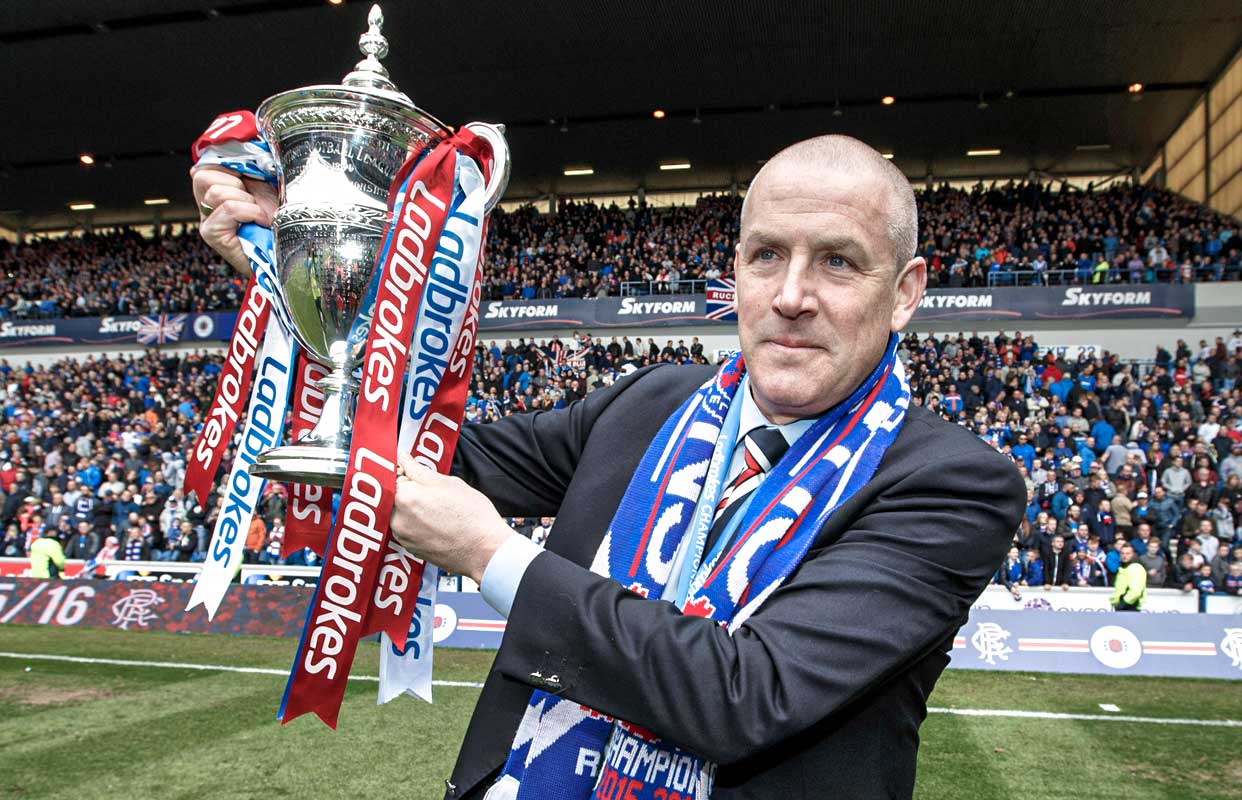
His career then took him north to Scotland, where he managed Rangers from 2015 to 2017, winning the Scottish Championship and Scottish Challenge Cup in his first season. A spell at Nottingham Forest followed, before Warburton returned to London with Queens Park Rangers, where he spent three seasons between 2019 and 2022. He later joined West Ham United as a first-team coach, gaining further experience within a Premier League environment.
But perhaps the most interesting chapter of Warburton’s career is the one being written now.
In 2025, he crossed the Atlantic to become Sporting JAX’s first Head of Soccer and Sporting Director, taking responsibility for the club’s technical direction across its professional and developmental programs. In March 2026, as Sporting JAX entered a landmark year with both its women’s and men’s professional teams, Warburton was promoted to President of Soccer, placing him at the center of the club’s sporting vision, player development, recruitment and international partnerships.
For Warburton, the move to Jacksonville represents more than a change of scenery. It is an opportunity to take decades of experience from European football and apply it to a club being built almost from the ground up in a rapidly developing American soccer landscape.
His story is therefore about more than wins, promotions and famous club names. It is about changing careers, building environments, developing people, understanding the business of football and, ultimately, discovering that leadership in the game is as much about people as it is about tactics.
In this conversation, Warburton reflects on that journey, the lessons learned along the way and what it takes to build something lasting in football.
Key Insights
- Mark Warburton’s career has taken him from the City and trading markets into academy development, technical direction and first-team management.
- His approach to leadership is built around consistency, honesty, integrity, care and creating environments where people can develop.
- At Sporting JAX, he is helping build a football environment from the ground up while adapting his experience to the realities of American soccer.
Our Exclusive Interview with Mark Warburton
If someone who had never met Mark Warburton sat down next to you in a pub and asked, “So, who are you really?” what would you tell them that they wouldn’t find on your résumé?
Someone who cares passionately about the projects he gets involved in. I’ve been fortunate to have some success in the City, in the trading markets and in football, but I’d say I’m someone who follows his dreams. I have two delightful kids who I care passionately for. I believe you have to commit properly to whatever you do. Either commit fully or don’t commit at all. That’s probably what sums me up.
I believe you have to commit properly to whatever you do. Either commit fully or don’t commit at all.
You didn’t follow the traditional route into football management. You went from playing semi-professionally to working in the City before eventually finding your way into coaching. Looking back, do you think football needed you to come through that unconventional route or did you need to leave football for a while to become the person who could eventually succeed in it?
Everyone’s route is different. I loved sport as a kid and was fortunate to be good at it, but I never had the distinguished playing career of someone like Steven Gerrard or Wayne Rooney. Working in the City gave me something completely different. I was running trading desks from the age of 27, dealing with huge amounts of money you’re talking about billions of dollars daily, managing people and working under enormous pressure and it was highly competitive. There were so many similarities between a dealing room and a dressing room.
The work ethic was probably one of the biggest aspects I took with me. I was never a nine-to-five person. When I moved into football, that work ethic allowed me to do more and adapt quickly. I also knew my football education wasn’t deep enough, so I started cold calling for opportunities and I remember it well, it was the 43rd call where I was able to connect and do something meaningful. So I travelled around Europe and spent time at clubs like Dortmund, Ajax, Barcelona, PSV, Sporting Lisbon and Marseille. That completely changed the depth of my knowledge. I wanted to be the best I could be in the academy system, developing players. After two years I was made academy director at Watford.
Eventually, an opportunity at Brentford opened the door to professional football, and from there I became technical director and then first-team manager. I never really envisioned it happening, but once I was in the management seat, I absolutely loved it. I think the key to it all is how you treat people, you have to be consistent, honest, have integrity and I am a firm believer of what goes around comes around. I have been fortunate that I worked with many players at various clubs and we still stay in touch. They call me, talk to me, chat about football or seek advice, its always a pleasure to talk with them.’
There were so many similarities between a dealing room and a dressing room.
You’ve spent a huge part of your career developing young players and building environments around them. What do you think football gets wrong about development because we’re so obsessed with asking, “How good is this player?” instead of asking, “What kind of person can this player become?
I think clubs have become so much better at taking a holistic approach to development, and there’s some outstanding work being done. But every player is different. You have to understand where they come from, how they think, what issues they face and what makes them tick.
You look at England, and the EPPP the Elite Player Performance Plan, implemented in 2012 as a good example of how much player development has evolved. But every player is different, and different countries and cultures have their own ways of doing things. Someone once said to me about Americans, ‘They look like us, they speak like us, but they’re completely different to us.’ I’ve got great relationships with Americans, but there are cultural differences. You can say something that seems completely clear to you, yet it can be interpreted very differently by the other person and, of course, it works both ways.
The biggest thing is that players need to know you care. Your staff need to know you care. You still have to be disciplined, set standards and make clear what you expect from the environment, but they have to see that you care.
If they know you care, they’ll give everything for you. That’s true whether you’re working in a factory, driving a taxi, laying bricks or playing professional sport. It’s a results-driven environment, and people have to give everything.
If they know you care, they’ll give everything for you.
You’ve often spoken about creating an environment that players actually enjoy being part of. Why does that matter so much to you? And where is the line between creating a happy environment and creating an environment that is too comfortable?
You have to enjoy going to work. I spent more than 20 years in the City, and although it was highly competitive and highly pressurized, I loved going to work.
One of the first things I tell players when I go into a new club is that they must enjoy coming to work. They should drive through the training-ground gates and enjoy being there, and hopefully drive out as a better person and a better player.
That doesn’t mean being casual or comfortable. It’s about creating an environment where people enjoy working, learning and developing alongside like-minded people who share a goal and a vision. If you don’t enjoy the environment, it’s very difficult to deliver what you need to deliver.
Football can be brutal. Managers get sacked or they find out they resigned apparently, players lose form, careers change overnight, and sometimes you can do almost everything right and still lose. What has football taught you about dealing with things you simply cannot control?
You have to understand that football comes down to the finest of margins. I’ll give you an example; At QPR, we were playing really well but couldn’t score. We had games where our expected goals were extremely high, yet we still lost. I knew I could be one game away from the sack. We had a meeting with the players and I made it really clear, this is how football works, but my relationship with them was solid and they understood it was not about me or an individual but the collective and we will be broken up if we don’t win.
We eventually went to Norwich, who were top of the league, played superbly and should have won, but missed a penalty. From that point on, things changed. Over the following year, only Manchester City accumulated more points than QPR.
What changed? Sometimes it’s the ball that hits the post and goes out instead of in, or an offside decision that usually goes against you now is in your favor. The higher you go in sport, the finer the margins become. It was the same in the city. You may be sitting there with a news that comes out and if you are on the wrong side of that news that shatters the market and the exchange, you realize you have to hope to do the right thing.
You can’t control all of that. You have to control the controllables, work hard, make sure everything is in place, make the necessary adjustments and then accept that some things are simply outside your control. Control the controllable. Over time, you hope those margins even themselves out.
You’ve spent much of your career inheriting football environments. Sporting JAX is different, you are helping create the environment itself. What is the main advantage in such a scenario where you have the ability to create and heavily influence the environment?
It’s a completely blank canvas. People think it’s a great advantage and yes that’s a fantastic opportunity because you can establish the environment, the culture, the work ethic and the standards from the beginning. You can bring in the right people and build something the way you believe it should be built, but a blank canvas also means everything has to be done. You’re operating in a market you don’t yet know, so you have to apply your experience while also accepting that there are many things you don’t understand yet.
America is a vast market. It’s exciting, but it’s spread out, it can be difficult to scout and difficult to monitor, to get reliable data etc.. There are positives and frustrations. Ultimately, though, it’s a fantastic opportunity, particularly with the men’s team, the women’s team and a sizeable academy structure. The opportunity to help develop elite talent here is enormous. I had a conversation the other day with someone who asked me what I did. When I told him I worked in professional soccer, he said, ‘That’s not proper sport, like the NFL or NBA.’ Of course, to me and to millions of people around the world, soccer is a global sport and the world’s game. But you also have to recognize the reality of the American market. There’s still a long way to go in terms of getting more people engaged with the sport, following it consistently and making it part of their sporting culture.
You’ve spent your career inside European football. Now you’ve moved across an ocean and into American soccer. What is one thing you arrived here expecting to find that simply isn’t true, or what is one thing about American soccer that surprised you in a good way?
Facilities. I expected there to be more. In the UK and Belgium as you know, you drive around and football pitches are everywhere. Here, I’ve spoken to clubs in Colorado, Ohio and New York that don’t own their own facilities, they rent them.
That surprised me. But I’ve also been encouraged by how quickly the love of the sport is growing.
The bigger challenge is building a dedicated fan base. In the UK, football is generational. Grandfathers, fathers, sons and daughters all go to matches together. I remember a game with the Rangers and we had an away game for a midweek cup game in terrible weather, with the match on television, and one of our security guys told me only 13,000 supporters were coming. He said, ‘Only 13,000?’ and that was because of the availability, if they had the availability to have 20,000, they would have been there. That tells you everything about the culture.
Here, there are more event fans, people who come for a playoff, a big game or a friendly against a major club that’s tied to an event. We need to develop dedicated fans who say, ‘It’s match day. Who are we playing this week? Who are we playing next week?’ That takes time. You have to earn their trust and build that tradition. I believe in the States or in Florida people have options between sports clubs and other events, but we can get there
You’ve already had a career that most football executives would be proud of. But if we removed every trophy, promotion, playoff appearance and managerial job from the equation, what would you actually want people you worked with to say about you twenty years from now?
I’d like them to say that I knew how to treat people and that I treated my people well. That doesn’t mean being naïve or simply giving away bonuses. It means being consistent in your behavior, showing integrity and demonstrating that you care.
We used to do small things at clubs that made a real difference. During the Christmas period in England, players can be away from their families for almost the entire holiday. We would send their partners a bouquet of flowers, worth around £100, with a simple message thanking them for sharing their partner with the club during that period and wishing them a happy Christmas.
These were players earning thousands of pounds a week, so it wasn’t about whether they could afford to buy their own flowers. It was about showing that we understood the sacrifice their families were making as well. And it went down a storm. Their partners were happy, the players were happy, and ultimately it made the player’s life a little easier. Their partners become part of the story too, they’re involved, they feel valued, and you get even more support from them. Those small gestures can have a much bigger impact than people realize.
If people know you’ve got their back, they’ll give everything for you. But you also have to be willing to discipline them when they step out of line. They need to know you’re consistent and fair. I have heard of managers who slam the door, don’t eat with the staff and you cannot be that way, at the end there will be divide and you’re only 3 games away from a crisis and you have to understand as the manager you are one of them, there is no “I” in team.
So if, years from now, people remember me as someone who looked after his staff and treated his people well, I think I’d be in a good place.
THE RAPID FIRE
Coffee or tea?
Coffee.
London or Jacksonville?
London.
City life or countryside?
A combination of both.
Player development or winning now?
They always coexist. I don’t see them as one or the other.
Talent or mentality?
mentality.
Beach or mountains?
Good question… Mountains.
Sunrise or sunset?
Sunrise.
Summer or winter?
Summer. I’ve lived in Chicago, so I know what winter can be like.
Early bird or night owl?
Early bird. You can’t hoot with the owls and soar with the eagles.
Plan everything or go with the flow?
Planning.
Dinner out or cooking at home?
Cooking at home.
Road trip or flying somewhere new?
Flying. David Weir a great player and my colleague who’s a great individual, he could just fall asleep like that and wake up when we land in Miami, I could not do that, I am not one of them. I hate long coach journeys. I fidget, can’t sit still and I like getting things done.
Dogs or cats?
Dogs.
Call or text?
Calling. Always.
Win ugly or lose beautifully?
Win ugly. At the highest level, you have to win. The scoreline might say 1–0; it doesn’t tell you whether the performance was horrendous.
Books or movies?
Books. I love a good movie, but I enjoy reading because there’s always something new to learn.
Five-star hotel or tent under the stars?
Five-star hotel. I’ve seen people ‘slumming it’ around in different parts of the world with cockroaches, no sheets, no towels. I’d rather wait until I can do it properly. Give me a Ritz-Carlton. I’ll take the luxury and when you win, it’s right to do so.
FAQ
What is Mark Warburton’s current role?
Mark Warburton is President of Soccer at Sporting Club Jacksonville in the USL Championship.
What experience did Mark Warburton have before working in football management?
He worked in the City, running trading desks and managing people under significant pressure before moving into coaching and football management.
What does Mark Warburton emphasise in his approach to leadership?
He emphasises consistency, honesty, integrity, care, discipline and creating an environment where people enjoy working and developing.