
Przemysław Łagożny: A Coaching Journey Across Europe
Profile
Role: Assistant coach at Apollon Limassol
Specialisation: Tactical and individual analysis, player meetings, training and set pieces
Experience: Poland, Spain, Latvia, Belgium and Cyprus
Focus Areas: Adaptability, communication and modern coaching
A Coaching Journey Across Europe
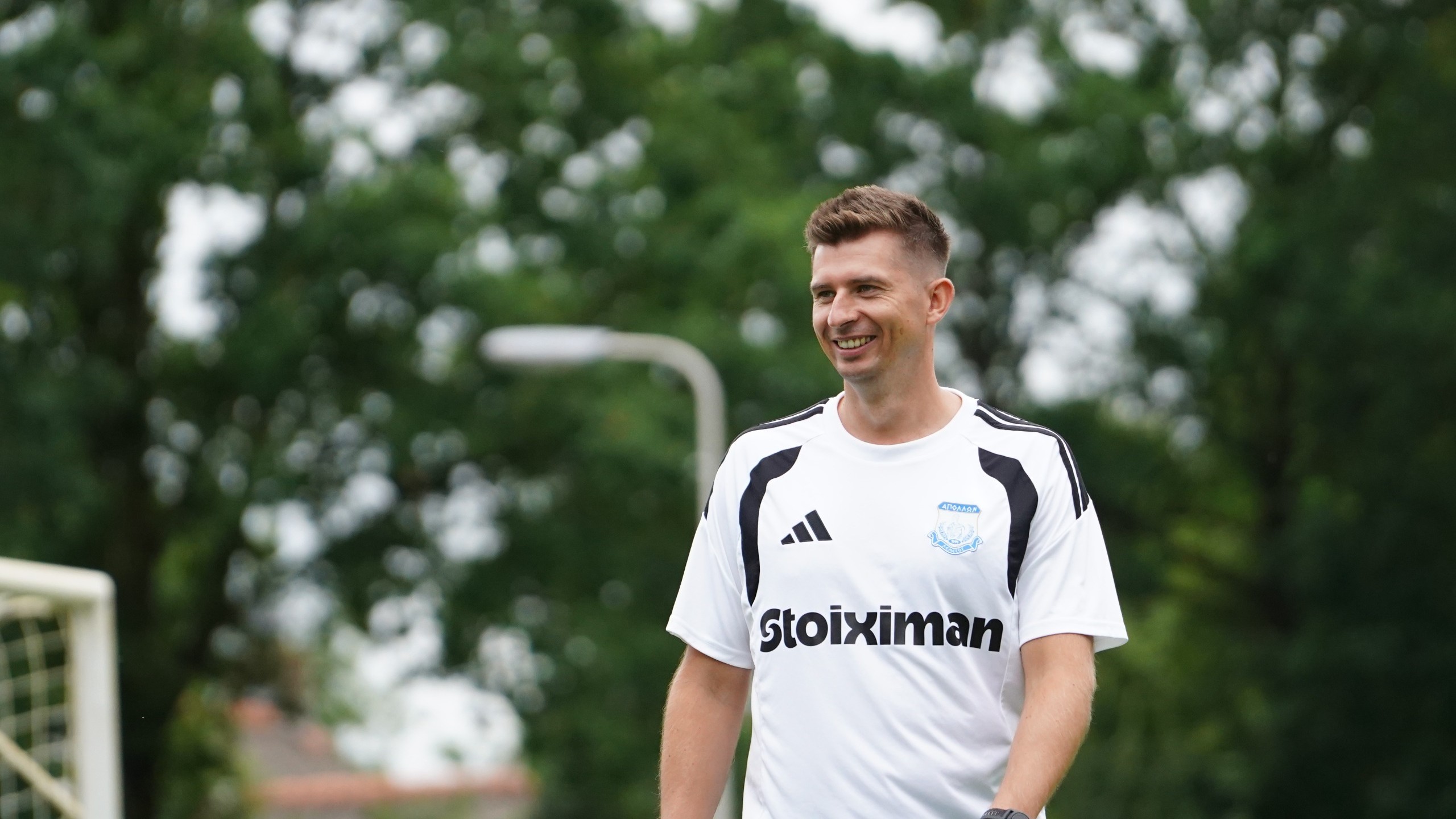
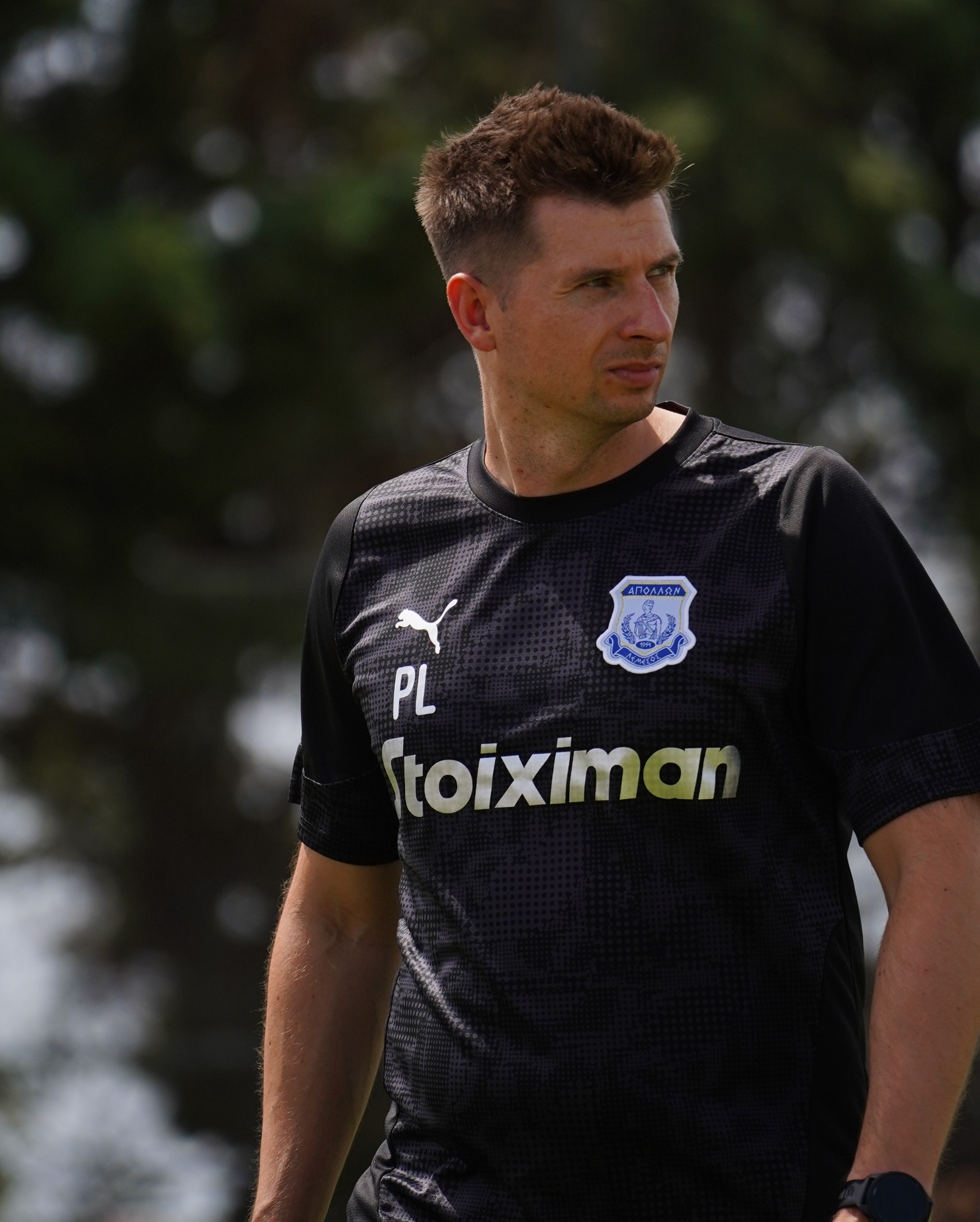
Przemysław “Chema” Łagożny is currently assistant coach at Apollon Limassol, working alongside Hernán Losada in the Cypriot First Division. After helping Apollon reach the cup final and qualify for Europe, he is looking to build on that progress.
His coaching journey has taken him through Poland, Spain, Latvia, Belgium and Cyprus. After playing academy football at SMS Łódź, he earned his first coaching licence at 18 before graduating from the University of Physical Education in Warsaw.
A major part of his development came at Legia Warsaw, where he progressed from academy coaching and scouting to first-team analysis, working under five head coaches and contributing to two Polish titles and a Polish Cup. His philosophy was further developed at Málaga CF in 2016–17, which he describes as a “football university” for Spanish coaching methods.
His first opportunity as head coach came at Spartaks Jūrmala in the Virslīga at just 29, where he refined his tactical and leadership approach. Spartaks finished fifth, produced three Latvia U21 players and the league’s top scorer.
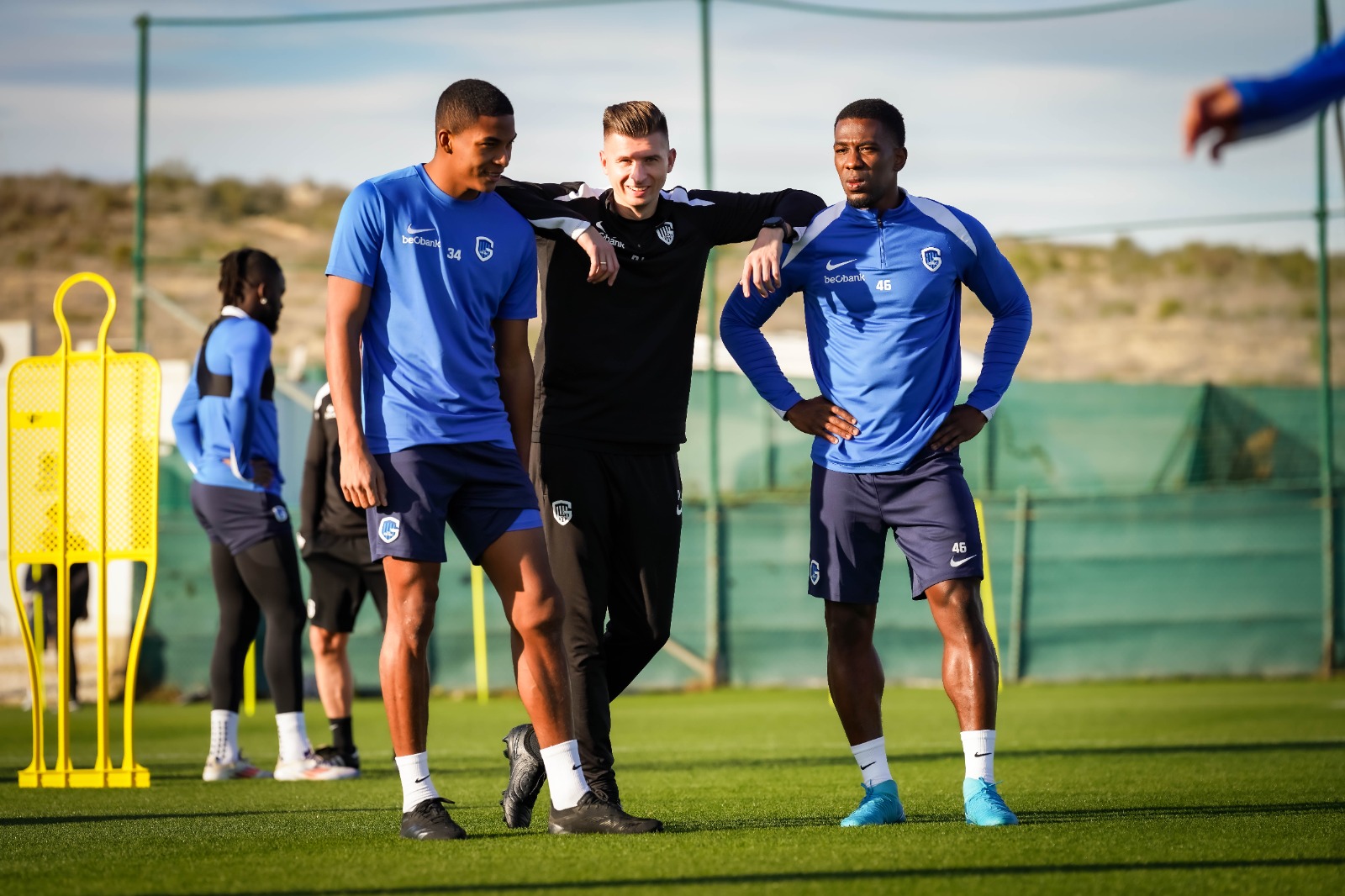
In 2024, Łagożny joined Thorsten Fink’s staff at KRC Genk, working across tactical and individual analysis, player meetings, training and set pieces. Genk’s trust in young players and Fink’s man-management and attacking philosophy further shaped his approach.
Alongside his coaching career, Łagożny worked as an analyst on Polish TV, including Champions League broadcasts, further broadening his football education and network.
Having worked in five countries and speaking four languages, Łagożny sees adaptability and communication key to modern coaching. For now, his focus is firmly on Apollon and a philosophy that reflects his career: “Don’t limit your ambition.”
Key Insights
- His coaching journey has taken him through Poland, Spain, Latvia, Belgium and Cyprus.
- His first opportunity as head coach came at Spartaks Jūrmala in the Virslīga at just 29.
- Łagożny sees adaptability and communication key to modern coaching.
Our Exclusive Interview with Przemysław Łagożny
How did your football journey begin?
Like many young boys, I started out playing football for my local hometown club with the dream of becoming a professional player. Later, I earned a chance to join a professional football academy in Łódź, where I spent a couple of years. Around that time, one of my coaches suggested I take my first step into coaching, so at 18, I completed my first coaching license.
That was the moment I realized I could achieve much more as a coach, so I decided to focus completely on my coaching education. I graduated from the University of Physical Education in Warsaw, and that’s how my coaching career really started…
You began your career as both a coach and scout at Legia Warsaw, one of Poland’s biggest clubs. What was that experience like, and how did it shape your development as a coach?
It meant a lot. Thanks to my time at Legia Warsaw, I was able to work in various positions within a professional football club structure.
I started in the academy, working across all stages from U7 to U17 as a coach or assistant coach, as well as in the youth scouting department. This period gave me a lot of knowledge on what a professional development path for young players should look like, how we should create an environment where a football player can make progress, and many other things.
Later, I worked as a staff member with the Legia first team under five different coaches from different countries. My role evolved depending on what the head coach needed, but most of the time I was responsible for various areas linked to the analysis department. That period was extremely important for me, as I had to adapt quickly to different circumstances. I had the opportunity to learn from other people while also developing myself through my daily work, analysing teams, trends, and principles in a Polish Ekstraklasa team, as well as in European competitions.
My time at Legia was a wonderful chapter in my career. At the end of the day, I can proudly say I added my own small piece to the puzzle to help my team become two-time champions of Poland and Polish Cup winners.
At the end of the day, I can proudly say I added my own small piece to the puzzle to help my team become two-time champions of Poland and Polish Cup winners.
You also had the opportunity to work with Málaga CF in Spain. How did Spanish football influence your coaching philosophy?
I grew up watching Spanish football, and it was always my dream to learn the Spanish language and one day become part of this amazing football community. My first contact with Spanish football was in 2014, when I did a short coaching internship at Málaga CF. That experience, and especially one of my first mentors, José Manuel Casanova (who sadly passed away), paved the way for me to return to the club in 2016 and spend a few months working in the academy.
For me, it was a fantastic “football university” where I could observe every single training session, meeting, and game. I learned not only from the coaches, but from everyone working at the club, from the first team down to the youngest age groups. I spent entire days participating in and watching two or three sessions a day, while supporting coaches across different categories. I remember very well the professionalism and training sessions managed by Sergio Pellicer and Manolo Sánchez. I was thrilled to be able to join them during training sessions and video meetings. They were very open-minded coaches, and we exchanged many ideas during our daily conversations. It came as no surprise to me that a few years later, they both made it to the first team.
In conclusion, my time at Málaga laid the foundation for my coaching philosophy and showed me the direction I wanted to follow in my career.
At Legia’s first team, you were responsible for opponent analysis, live coding and supporting the scouting department. How has that analytical background influenced the way you coach today?
These days, there is no doubt that analysis has become an integral part of modern football. Every coach uses it in their daily work. By doing a lot of analysis work, I learned to more quickly identify key moments across every game phase. I really enjoyed live-analysis tasks, where I could feed key details from the top of the stands to the bench. Conducting individual player analyses also gave me great insight into comparing the coach’s and the player’s perspectives on the same action.
Secondly, I developed my technical skills by working with a wide range of analytical software. Today, every field, not just football, relies heavily on technology, with AI making an increasing impact on modern sport. Having these kinds of skills is crucial in my daily routines.
You then moved to Latvia, first as assistant coach at FK Tukums 2000 before becoming head coach of Spartaks Jūrmala. What were the biggest lessons from your first experience leading a men’s first team.
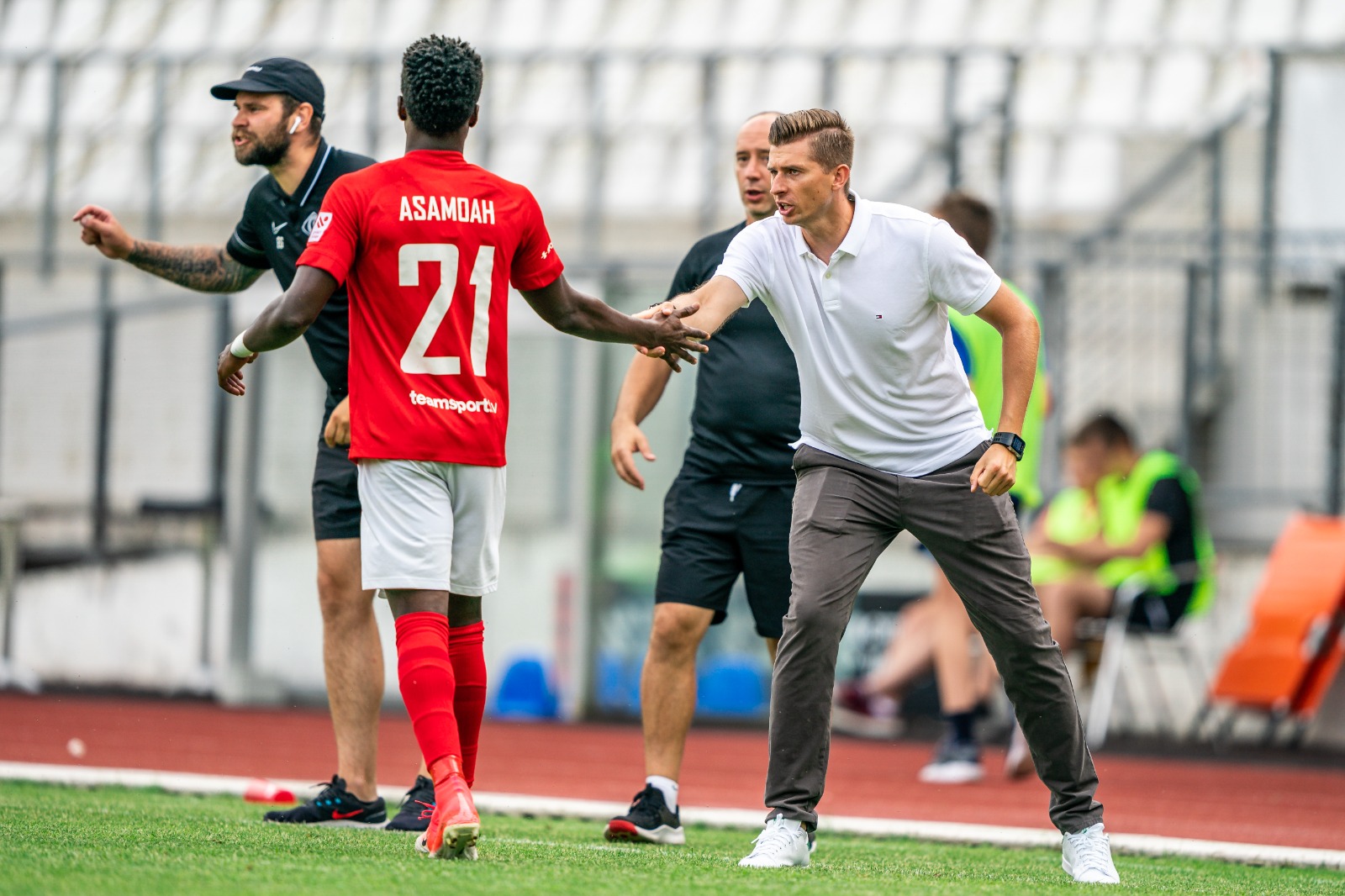
In Jūrmala, I had the chance to test myself… to find out whether my “football ideas” were realistic to plan, train, convey to the players, and execute on the pitch. I used this period as a “football laboratory” to evaluate what works and which elements I needed to change. In my first season in Jūrmala, we finished in 5th place. Three of our players debuted for the U21 national team, and our striker became the top scorer in the league, which opened up an opportunity for him to move to a higher-level league.
The second lesson was learning how to manage players. Nobody can really teach you this, and you can’t learn it from a book, you have to experience it firsthand. For a young coach, I was only 29 at the time, it was a crucial lesson in how to communicate with players who were older than me, or who had played for the national team or in European competitions. If you want to succeed in this area, you first need to know yourself and understand which soft skills are your greatest strengths.
Overall, by the end of that first season, we had built a strong foundation for the next step. Unfortunately, our plans fell through just before the start of the new season due to the unstable political situation and the war in Ukraine, which directly impacted our club and the league.
How would you describe the Latvian football league?
Football isn’t the number one sport in Latvia, basketball and ice hockey were higher in the national sports hierarchy during my time there. Nevertheless, the league makes steps forward every year. For example, RFS played in the group/league stage of European competitions, and more and more players who started their professional careers in the Latvian league are making moves to stronger European leagues. Players like Arokodare (Ajax), Yokota (Rangers), Vergara (Gent), Ilić (Union), or Niang (Union SG) all made their first steps there.
Another interesting factor is the weather conditions during the winter time, which force you to be prepared to play on both natural and artificial turf. Finally, in terms of competition, I would say the league is split into two groups: the top 4 or 5 teams are on a significantly higher level than the rest of the league.
You then joined KRC Genk, a club renowned for developing elite talent. What impressed you most about Genk’s player development model, and are there lessons other clubs could learn from it?
It’s really a big football factory! They know exactly what to do! The business model works well that’s why every year they make good outcoming transfers. A lot of things work well but if I must choose something crucial for me I can say: DEVELOPMENT > RESULT, I could observe it during academy games and discussion with academy board and second BELIEVE in young players. They really want to give talent a chance. First through the second team and then first team. If you have enough quality, they don’t care about age! People who have created this club for many years exactly know when you are ready to take the next step forward.
I think one of the best examples from recent years is Konstantinos Karetsas who made his first full season in the first team during my period in the club, then he got experience not only in Belgium league but in European competition and a couple of weeks ago was transferred to BVB.
You are currently Assistant Coach for Apollon Limassol. How has your experience at the club been so far, and what are your ambitions for the season?
Cyprus is the 5th country I’ve lived in, thanks to my football journey. The first crucial lesson for me has been about understanding the local culture, communication styles, building relationships, and all the human aspects that are unique to each nation and directly impact your daily work in a foreign club. Today, I feel confident that I understand people from Cypriot and Greek cultures much better.
On the pitch, I’ve been really pleased with my 9 months at the club so far. First, I started working alongside our Argentinian Head Coach, Hernán Losada. It was our first time working together, but we clicked immediately and shared the same vision, which allowed us to quickly implement our tactical principles. When we arrived at Apollon, the club was 7th in the league table. A few months later, we finished in 3rd place and reached the Cup final (which we unfortunately lost to Pafos FC). These results earned us a spot in the Conference League qualifiers, opening up exciting new opportunities to represent the club and the country on the European stage.
You’ve built relationships with figures such as Carlos Planchar, Xavi and Luis de la Fuente. What have you learned from these interactions?
Carles Planchart helped me at the very beginning of my analytical journey. Thanks to his involvement, I received invaluable feedback on my daily work. He reviewed my analysis and reports, provided personal feedback, and showed me world-class examples. I’m really grateful that despite working for Manchester City at the time, he still found the time to support a young Polish coach in his football education. This shows not only what a top expert he is, but above all, what a great person he is.
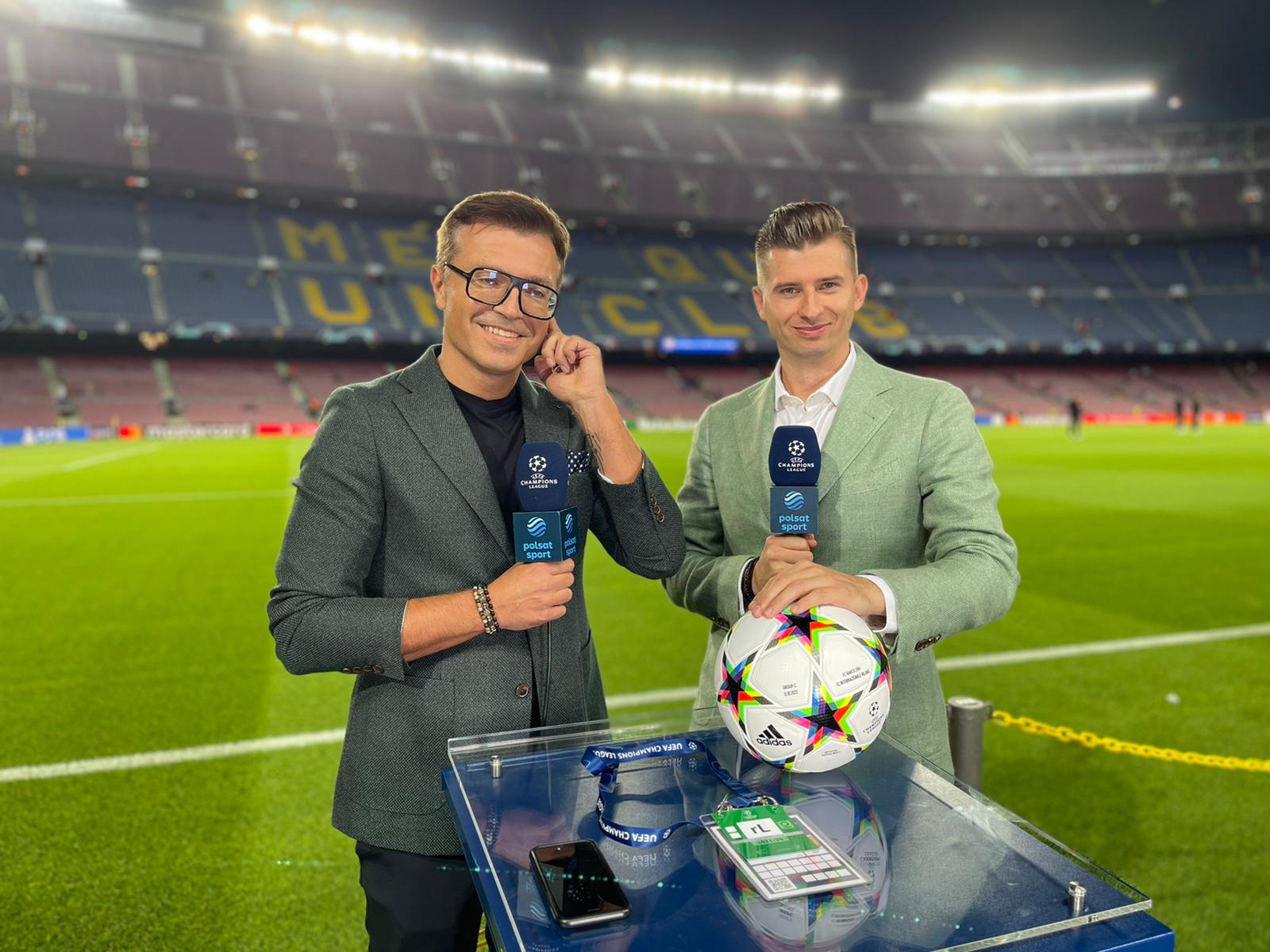
I had the opportunity to meet Xavi during my time with Polsat Sport. I was working as an expert on Champions League broadcasts and happened to know one of Xavi’s staff members. Thanks to that connection, I was able to visit the first team, spend some time with the entire Barça staff, and exchange ideas about football. On top of that, after Champions League games, I would often invite Xavi for short interviews for the Polish audience. I always tried to ask questions not as a journalist, but as one coach talking to another. I remember his smile when I brought up specific nuances of his game model, he was always happy to go deeper into detail and share his perspective.
I met Luis de la Fuente when he was leading the Spain U21 National Team, and I was able to assist them with opponent analysis before a European U21 Championship. I had in-depth knowledge about one of their opponents, so his staff reached out to me.
But you know what? In football, you can learn from anyone. It’s not about famous names, careers, or the size of the clubs people work for. It’s about you and how open-minded you are. There are so many people working behind the scenes who do incredible work, even if they never make the front pages of football magazines.
In football, you can learn from anyone.
You became one of Europe’s youngest head coaches when you took charge in Latvia. How did that responsibility accelerate your development as a coach?
As I mentioned earlier, I used that opportunity to test my coaching model, ideas, and principles on the pitch. It was a hands-on experience that gave me crucial answers ahead of my future roles.
Secondly, that experience directly opened the door for me to work in Belgium. While working as a head coach in Latvia, I met a fantastic coach and person, Thorsten Fink. A few years later, he offered me a job as part of his staff, which was another huge step forward in my coaching career.
Thorsten Fink has spoken highly of your work and brought you into his coaching staff at KRC Genk after your time together in Latvia. What aspects of his management style would you like to incorporate into your own career as a head coach?
I think he is exceptional at man-management and delegation. He has no fear of giving real responsibility to his staff members for crucial tasks in the daily training process. He genuinely trusts the people around him.
From a tactical perspective, there are two main aspects I really admire. First, he is definitely an attack-minded coach who instills courage and strong tactical organization in his players on the pitch.
Second, I love his methodology when it comes to high pressing. Instead of over-complicating things, he uses game-based scenarios and “pressing games” to build automatic pressing triggers, such as immediate counter-pressing within seconds of a turnover. Most importantly, these training habits translate seamlessly into league matches.
Alongside coaching, you became a well-known football analyst on Polish television. How has analysing matches for a broad audience influenced the way you now prepare teams and evaluate performances?
I consider this area to be one of my main strengths, which is why the Polish UEFA Champions League broadcaster gave me such a great opportunity. While there are clear differences between presenting analysis for TV viewers versus professional football players, one fundamental rule applies to both: BE UNDERSTOOD AND GET STRAIGHT TO THE POINT. A clear message, accessible language, and strong visualizations are essential when delivering information effectively.
Very often, “less is more.” As coaches, we naturally try to cover a million different details, but you have to select the key ones that truly impact the overall team organization. The rest of the details are better saved for smaller group, positional, or individual meetings.
Your role at Genk combines tactical analysis, opposition preparation, training design, individual meetings with players and set-piece work. How do you approach balancing these different responsibilities during a typical week?
In any area of life, good organization is essential to being effective. Having a clear plan, a structured schedule, and core principles is crucial to successfully covering all these different areas.
Another key factor is teamwork within our coaching staff. When we distribute tasks efficiently in the office, we can evaluate everything collaboratively before making the final decisions. For example, when it comes to set pieces, I work closely with two other staff members. During our meetings, we decide exactly what, how, and when we will present, train, and execute on the pitch.
Having worked in Poland, Spain, Latvia, Belgium and Cyprus, and with experience as both a head coach and assistant, where do you see the next stage of your coaching career?
I view my coaching path as a continuous journey rather than a race to build a high-profile CV. Having worked in various countries, I’ve had the chance to experience almost every role within a coaching staff. Speaking four languages isn’t just a personal achievement for me, it’s a vital practical tool that allows me to connect directly with players from different cultures without any barriers.
As an open-minded person who draws inspiration from many fields beyond football, I often recall the words of Heraclitus: “The only constant in life is change.”
I’m truly enjoying my work at Apollon and will continue to give my absolute best until my very last day here. At the same time, I focus on executing my work at the highest possible standard every single day so that I’m fully prepared whenever life presents the next challenge.
What are your ambitions for the upcoming seasons?
Building on last season and our recent moves in the transfer window, our goal is to be a competitive team in both the league and the cup. Before our first game at Apollon, the players were told in the pre-match meeting: “Don’t limit your ambition,” and we are a group that always wants more. I truly believe that with this group of players and staff, we can enjoy many special moments in the upcoming season.
Before our first game at Apollon, the players were told in the pre-match meeting: “Don’t limit your ambition,” and we are a group that always wants more.
FAQ
What is Przemysław Łagożny’s current role?
Przemysław “Chema” Łagożny is currently assistant coach at Apollon Limassol, working alongside Hernán Losada in the Cypriot First Division.
Which countries has Przemysław Łagożny worked in?
His coaching journey has taken him through Poland, Spain, Latvia, Belgium and Cyprus.
What is Przemysław Łagożny’s coaching philosophy?
For now, his focus is firmly on Apollon and a philosophy that reflects his career: “Don’t limit your ambition.”