
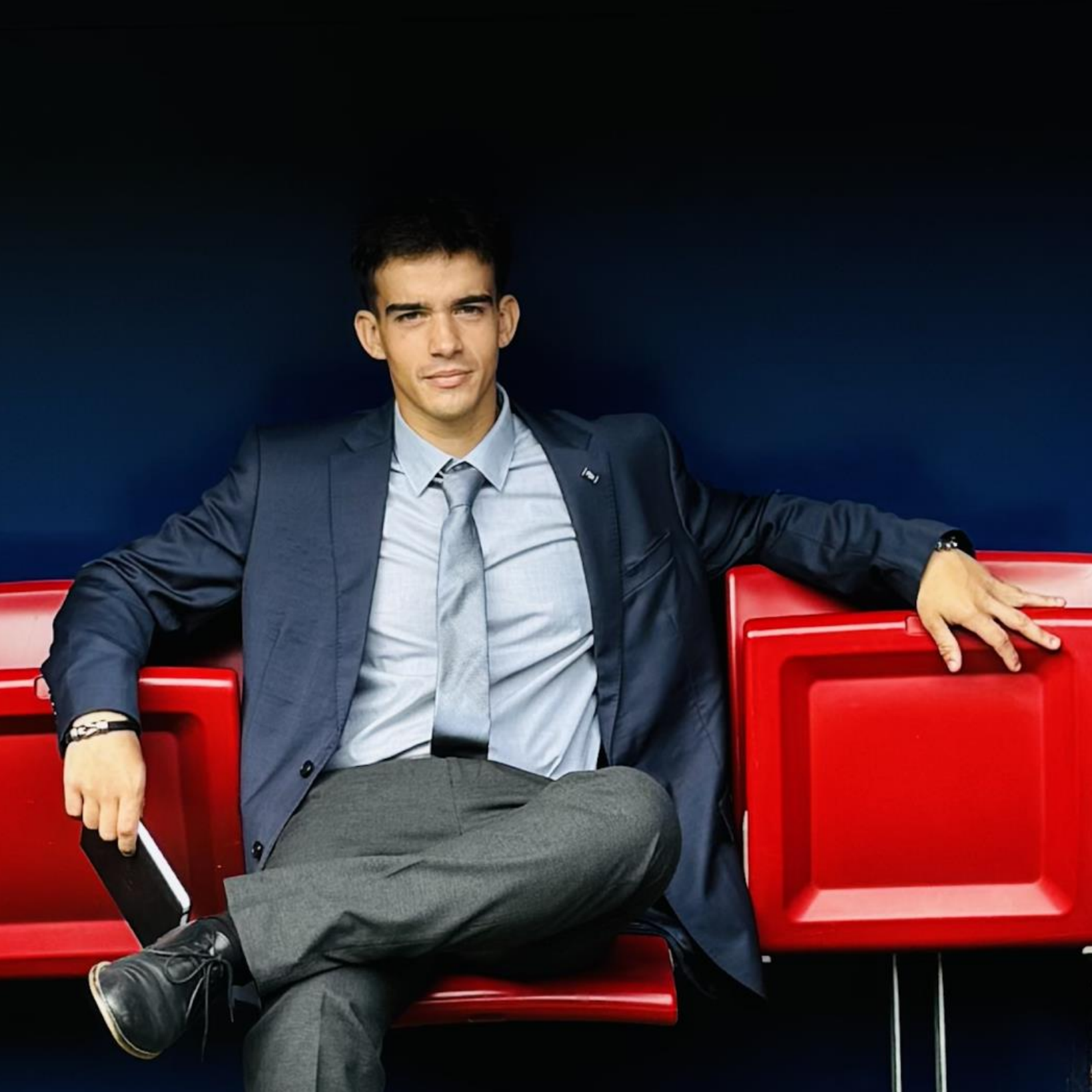
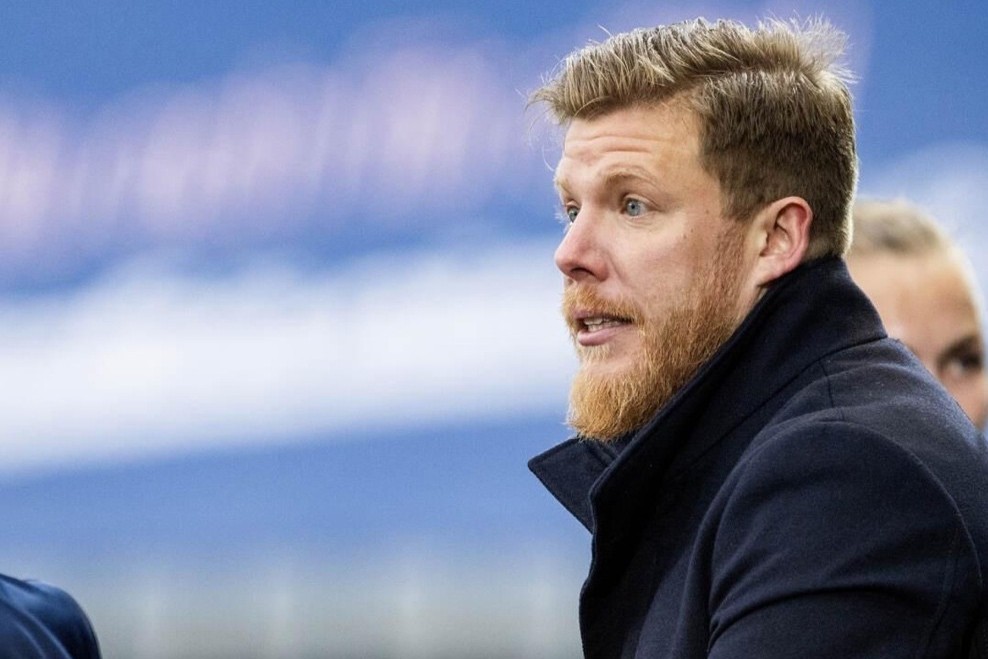
Profile
Role: Football Coach
Specialisation: Coaching, Analytics, Psychology & Periodisation
Experience: Eleven years abroad across three countries, including Östersunds, Hammarby Women and Linköping
Focus Areas: Player Development, Team Leadership, Women’s Football & Coaching Development
Career Highlights: Damallsvenskan Champion & Swedish Cup Winner
Current Development: Studying for a Master’s and writing a book about how head coaches can use psychology and periodisation to support their everyday lives
It started on a lunchtime pitch in Montoro, when a teacher handed a ten-year-old the job of picking the team. It ended up, decades later, with a Damallsvenskan title and a Swedish Cup on the other side of Europe.
In between came eleven years away from home, three countries, and a string of choices most coaches wouldn’t make. Rafael turned down many contracts and joined Hammarby Women instead, not for the money, not for the recognition, but because he believed in what was being built. That same instinct never left him.
The trophies tell part of the story. The rest is in what they cost. Weeks before winning the Damallsvenskan, he learned his contract wouldn’t be renewed and said nothing until the title was already won. It’s in eleven years as the outsider everywhere he went, Spanish in Scandinavia, the one who left back home. It’s in a coach still chasing a master’s degree, still convinced the job isn’t finished still willing to learn and grow, still with same hunger, ambition and desire.
Rafael is exactly the coach a club serious about building something lasting should be looking for.
Key Insights
- Rafael Roldán Bermudez built much of his coaching career outside Spain, working across three countries and developing experience in different football cultures.
- He chose opportunities for growth and responsibility over greater financial rewards, including his decision to join Hammarby Women.
- His career reflects a continued commitment to learning, with Rafael still studying for a Master’s and seeking a stable project with clear goals.
Our Exclusive Interview with Rafael Roldán Bermudez
Before the licences, titles and years on the touchline, was there a moment when you realised coaching might become your life?
There are two moments that come to mind, separated by several years.
The first was when I was 10 or 11, at primary school in Montoro. We had a tradition of playing a football league during lunch breaks, and one day the teacher in charge unexpectedly chose me as captain. Not because of my qualities as a footballer, which were very limited, but to lead the whole class by choosing the starting players, making substitutions and managing the team. Perhaps he saw something in me that I could not see at the time.
The second came in my late teenage years. My friends were playing futsal in the junior league and, during a difficult period for the club, they suddenly found themselves without a coach for a weekend game against La Granjuela. Out of nowhere, I found myself on the team bus, ready to lead my friends, manage substitutions, read the game and decide on the game plan.
Something magical happened. We won the game with a last-minute goal. I think that was when I decided I wanted to make coaching my everyday life.
You have spent much of your career outside Spain, learning new languages and football cultures. What does it feel like to repeatedly start again as the outsider?
That is probably the most difficult part of having spent so many years away from Spain. At times, I feel like an outsider everywhere. In Scandinavia, I am the Spanish guy. In Spain, I am the person who left, and not many people know what I have achieved during those years. I know that can be a handicap, and it is not always easy to accept.
But it is also very motivating. You learn to show people that it does not matter where you come from or what your background is. What matters is working together towards a clear set of goals for the club.
I now see having worked in so many different countries as an advantage. It allows me to understand different perspectives, create an environment where everyone feels at home and, importantly, communicate with players in their own language.
You moved from Head of Analytics in men’s football at Östersunds to becoming a head coach in women’s football. What changed in the way you saw the game?
This is a question colleagues working in men’s football still ask me today, and my answer has always been the same. The game is the game. The rules, tactics, training principles and preparation are fundamentally the same. There are differences in the physical characteristics of the players, but you can see differences within men’s football too, from the elite level to the third tier of any major European country.
As coaches, we simply have to understand those differences and train our teams accordingly.
What I noticed immediately was the lack of resources in women’s football, resources that were often taken for granted in men’s football. But that also makes you grow as a coach because you have to achieve the same objectives with fewer resources.
Fortunately, we have been able to change that, and we are still taking steps towards creating equal opportunities and resources. I am very happy to have played even a small part in that progress.
You chose to build much of your career in women’s football at a time when it offered less money, recognition and certainty. What did you see in it?
I focused more on the opportunity to grow, develop and be part of building something, not just for the moment but for generations to come.
At the time, I was looking for the best project for me to become a better coach and take on more responsibility within a coaching staff. Hammarby Women gave me that opportunity. I had offers that were more than 50 percent better financially, but I still chose to join the women’s team.
I cannot point to one specific thing I saw. It was more a feeling that something global was happening in women’s football, and I wanted to be part of it. Money and recognition have always been secondary when I choose my projects.
Money and recognition have always been secondary when I choose my projects.
As a man trusted to lead women’s teams, was there a moment when you had to listen, reflect and change your approach?
There are always moments as a coach when you have to listen, reflect and change, regardless of whether you are a man leading a women’s team or a woman leading a men’s team.
Since I started working in top division football, I have always worked with both men and women in coaching staffs. For me, that is normal and very valuable because we make each other better.
Of course, as a man coaching a women’s team, there are certain things that are different and need to be taken into consideration. One example is entering the locker room at half time for the team talk.
What has probably made me reflect the most is understanding how hard many of these players have worked to reach the top. Many have not grown up in supportive environments or had the best opportunities available to them.
Their passion and dedication have taken them to the highest levels of football. That has made me want to help change the system and give girls better opportunities from a young age so they can fulfil their dreams.
Every relocation and new club also meant disruption for the people at home. What has been the hardest part of that?
One of the most important things for anyone choosing this career path is having the support of their family.
At first, I had the support of my parents when I moved to Norway for what was supposed to be only nine months. It eventually became six years. Along the way, relationships are affected, not only with partners but also with friends. You can spend two or three years sharing almost every day with someone and then suddenly not see each other for years.
Now, probably the most difficult conversations are still ahead. I have my own family, and with this career someone in the family needs to compromise. That is not easy when my partner is also successful in her own profession.
People might imagine that football coaches earn a lot and can simply take their families wherever they go. That might be true at the very top, but the reality is not always like that. Sometimes we have to say no to a job. Other times we take the job and leave our families behind for months.
Often, these decisions have to be made within days or even hours, so it is impossible to prepare for them. A huge shout out also goes to the families of coaches, who are often the most patient with us.
Is there a season in your career that tested whether you wanted to continue?
Probably 2023, the season when we won the double.
After such a successful season, I was ready to renew my contract, continue developing the team and enjoy the opportunity to play in the Champions League against the best teams in Europe. But I was not offered a renewal, which meant I would be without a job at the end of the season.
There were a few weeks of doubt after that decision. After 11 years away from home and achieving those titles, it felt as though all the effort had been meaningless.
Despite that, something inside me pushed me to keep believing. Then, unexpectedly, the opportunity to become head coach at Linköping came along, and everything aligned again.
Between the Damallsvenskan title and the Swedish Cup, which victory meant the most to you personally?
Winning the Swedish Cup in our own stadium, with the stands full of our supporters and my friends there, was truly special. But if I had to choose one, it would be the Damallsvenskan.
Apart from the fact that a league title recognises the best team over an entire season, it connects directly to the previous question.
A few weeks before winning the title, I was told that my contract would not be renewed. Despite that, I continued to work as professionally as always, maintaining the same standards without any of the players noticing what I was going through.
That proved something to me. Even in what was probably one of the most devastating moments of my career, I could still help the team raise the bar, perform at its absolute best and win the league on the final day.
Even in what was probably one of the most devastating moments of my career, I could still help the team raise the bar, perform at its absolute best and win the league on the final day.
You are still studying for a Master’s at this stage of your career. What are you looking for in the classroom that years on the touchline have not already taught you?
Probably the day I feel I no longer need to study, gain new knowledge or be inspired by others will be the day I stop coaching.
Probably the day I feel I no longer need to study, gain new knowledge or be inspired by others will be the day I stop coaching.
There are always new ways of seeing things, new tools, new methodologies and people with different ideas who can make you think and improve.
I also think coaches should be much better at connecting with colleagues, not only to share ideas about training and tactics but also to support each other through difficult moments.
Courses, studies and conferences create opportunities for those interactions, and I think that is just as valuable as the knowledge itself.
Strip away the badges, leagues and titles. Who is Rafael when nobody is asking about football?
I always say that badges, titles and where you come from do not define you. I hope people see me simply as Rafa, a normal guy, a husband and a dad who is there for his family and friends, ready to help when needed or simply have a good time together.
When you meet new people, it can be difficult for them not to see you as the football guy, and conversations naturally revolve around football. But I prefer to talk about other things, learn about people’s interests and hobbies, and build deeper relationships.
That is also why it is great to be back home. Here, I am and always will be Rafa, the son of Ana and Jesús. My friends are the same people I knew in primary school.
And the man I want to become? I simply hope to be a good person who takes care of the people he loves.
What are you looking for in your next project?
I am ready to be part of a project with clear goals and a stable organisation that can move the club and women’s football forward.
I am eager to bring my experience and knowledge to the team, lead a coaching staff and help players improve every day and perform to the best of their abilities.
In the meantime, I have also started an interesting project with Raheb Muftee, writing a book about how head coaches can use psychology and periodisation to support their everyday lives.
FAQ
Who is Rafael Roldán Bermudez?
Rafael Roldán Bermudez is a football coach whose career has included eleven years away from home, three countries, and success including a Damallsvenskan title and a Swedish Cup.
What experience does Rafael Roldán Bermudez have in women’s football?
He moved from Head of Analytics in men’s football at Östersunds to becoming a head coach in women’s football and later joined Hammarby Women.
What is Rafael Roldán Bermudez looking for in his next project?
He is ready to be part of a project with clear goals and a stable organisation that can move the club and women’s football forward.