


Why the 2027 U.S. Open Cup Could Be More Important Than It Looks
There is something wonderfully strange about American soccer.
You can have a club that exists because a group of friends started playing together on weekends.
You can have a semi-professional team.
You can have a professional club playing in the second division.
And then, somewhere at the top of the pyramid, you can have a Major League Soccer team worth hundreds of millions of dollars, playing in front of tens of thousands of people.
In most football cultures, those worlds exist in different universes.
In the United States, they can meet on the same field.
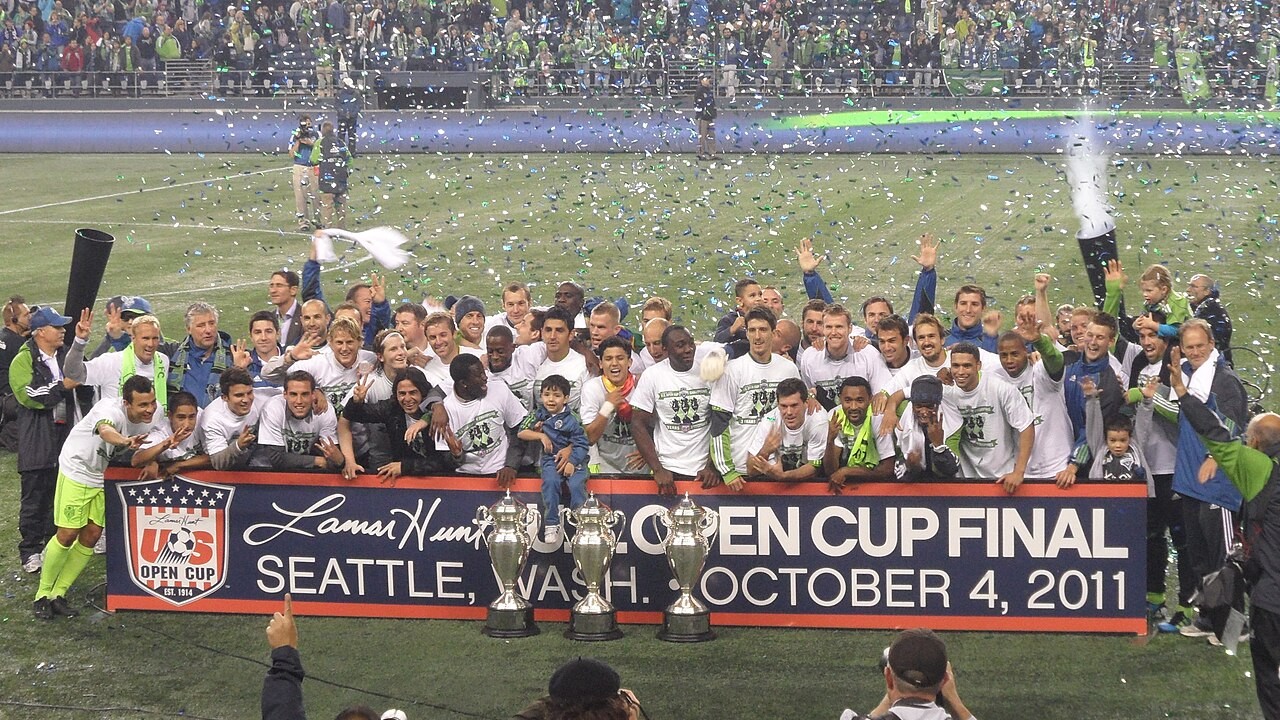
That is the idea behind the Lamar Hunt U.S. Open Cup.
And in 2027, that idea is getting another chance to prove why it matters.
U.S. Soccer has confirmed the format for the 112th edition of the competition, and for the first time since MLS began pulling back from the tournament, all 27 U.S.-based MLS clubs will participate.
The tournament will feature 96 clubs.
MLS.
USL Championship.
USL League One.
MLS NEXT Pro.
Amateur clubs.
One trophy.
One knockout competition.
And, potentially, one very uncomfortable evening for a club that thought it was too big to lose.
That is where the beauty begins.
First, for Those Who Don’t Live Inside American Soccer
If you are reading this from Europe, South America, Africa, Asia or anywhere else where football is organized around a familiar pyramid, the American system can be confusing.
Very confusing.
In England, you understand the basic idea.
Premier League.
Championship.
League One.
League Two.
Then the levels continue downward.
Clubs can move between them through promotion and relegation.
In Spain, Germany, France, Italy and elsewhere, the same basic principle exists, with variations.
The United States doesn’t work that way.
The country’s major professional leagues operate as largely separate competitions rather than as divisions connected through promotion and relegation.
At the top sits Major League Soccer, the country’s Division I professional league.
Below that sits the USL Championship, classified as Division II. (USL has announced a division 1 league to be added which is expected to operate in 2028 or later)
Then there is USL League One, along with MLS NEXT Pro, both classified as Division III.
And beneath the professional structure is a vast collection of amateur and semi-professional competitions.
This is where the U.S. Open Cup becomes interesting.
Because unlike the regular league season, the Open Cup isn’t asking:
Who finished first?
It asks:
Who survives?
One game.
Lose, and you’re finished.
A Trophy Older Than MLS
There is an important detail that can easily get lost in the modern conversation.
The U.S. Open Cup is not an MLS competition.
MLS didn’t create it.
MLS didn’t give it its history.
The competition was already 82 years old when MLS played its first season in 1996.
The first U.S. Open Cup was played during the 1913–14 season, when the competition was known as the National Challenge Cup.
The United States was a very different country then.
There was no MLS.
There was no USL.
There wasn’t even a modern American professional soccer structure.
Yet clubs were already competing for a national championship.
The competition has continued for more than a century, with only the COVID-19 pandemic forcing a two-year pause in 2020 and 2021.
In 1999, it was renamed the Lamar Hunt U.S. Open Cup, honoring one of the most important figures in American sports and soccer history.
Lamar Hunt was involved in the creation of the American Football League, owned the Kansas City Chiefs and became one of the founding figures of MLS.
The trophy itself, the Dewar Challenge Trophy, is one of the oldest nationally contested trophies in American team sports.
So when an MLS club walks onto the field in the Open Cup, it isn’t entering an MLS side competition.
It is entering American soccer’s national championship.
It is entering American soccer’s national championship.
That distinction matters.
The Beautiful Chaos of an Open Cup
The premise is almost ridiculously simple.
Professional clubs and amateur clubs can compete against each other.
There is no salary-budget comparison.
No transfer-value comparison.
No guarantee that the bigger club gets the better day.
Just ninety minutes, extra time if necessary, and penalties if nobody blinks.
And because the United States is enormous, geography becomes part of the story.
A professional club can suddenly find itself traveling to a smaller market.
A modest stadium.
A different surface.
A different atmosphere.
A club whose players may have completely different day jobs.
For the smaller team, this isn’t simply another Tuesday night.
It can be the biggest game in its history.
For the professional club, it can become the night everyone remembers for the wrong reasons.
That is the magic of the cup.
It doesn’t care about your résumé.
The 2027 Reset
Now we get to the reason this particular edition matters.
For several years, MLS participation in the U.S. Open Cup became increasingly complicated.
The league argued that its clubs were facing an overloaded calendar and competing priorities, particularly with the growth of international competitions such as the Concacaf Champions Cup and Leagues Cup.
MLS significantly reduced its participation beginning in 2024, using a limited number of first-team clubs while many other MLS organizations were represented through their MLS NEXT Pro affiliates.
That decision created plenty of debate.
Critics saw it as a threat to the identity of the competition.
The argument was straightforward:
If the country’s biggest clubs aren’t willing to play in the country’s national cup, what exactly makes it a national cup?
The 2027 format provides a different answer.
All 27 U.S.-based MLS clubs will enter.
And they won’t enter at the beginning.
They will enter in the Round of 64.
Joining them will be five seeded USL Championship clubs.
That means the lower levels will have to fight their way toward the giants.
And suddenly the possibility exists again.
A small club can earn its way into a match against an MLS opponent.
A professional second-division club can draw one of the country’s biggest teams.
And an MLS club can once again be eliminated by someone it was never supposed to lose to.
That is the point.
How the 2027 Tournament Actually Works
The tournament will feature 96 clubs:
27 MLS clubs.
Five seeded USL Championship clubs.
32 additional Division II and III professional clubs.
32 Open Division amateur clubs.
That is important.
The tournament deliberately creates professional-versus-amateur matchups at the beginning.
For the amateur clubs, just reaching this stage is already an achievement.
For the professional clubs, it is where the danger begins.
The winners move forward.
Eventually, the surviving clubs reach the Round of 64.
That’s when the MLS teams arrive.
All 27 U.S.-based MLS clubs enter at that stage, alongside five seeded USL Championship clubs.
And there is another important rule:
One club, one entry.
An MLS organization cannot send its reserve team instead of its first team.
The highest-level professional team represents the club.
There is no numerical cap on how many eligible players from that club can be used, and matchday rosters will expand from 18 to 20 players.
In other words, the Open Cup is once again asking the actual club to put something on the line.
Why the American Version Is Different
There is a temptation to look at the U.S. Open Cup and simply call it America’s version of the FA Cup.
That isn’t completely wrong.
But it misses something.
The American soccer landscape is still developing.
There isn’t a century-old hierarchy where the identities of clubs and their positions in the pyramid have been established through generations of promotion and relegation.
The Open Cup therefore provides something that the regular league structure doesn’t naturally provide:
a shared competition.
The MLS club and the amateur club may live in completely different parts of the American soccer ecosystem.
The Open Cup puts them in the same room.
Or, more accurately, the same stadium.
And that is valuable in a country where soccer has historically been fragmented across leagues, regions, ownership models and levels of play.
The $1 Million Question
There is also money involved.
The 2027 competition will carry a $1 million purse.
But perhaps more importantly, there is something sitting at the end of the tournament that cannot simply be purchased.
A place in the Concacaf Champions Cup.
For an American club outside MLS, that opportunity can be enormous.
The Champions Cup is the premier continental club competition in Concacaf.
It brings together the best clubs from North America, Central America and the Caribbean.
And the Open Cup gives an American club a direct route into that world.
Imagine being a lower-division club.
You enter a competition with 95 other teams.
You eliminate an MLS club.
Then another.
Then another.
Suddenly you’re playing for a national championship.
And if you win it, you’re not just holding a trophy.
You’re walking onto the continental stage.
That possibility is one of the reasons the Open Cup deserves more attention than it sometimes receives.
The Small Club’s Dream
This is where the tournament becomes less about structure and more about people.
Every country has stories about giant clubs being knocked out by someone nobody expected.
But in America, those stories carry a slightly different weight.
Because the gap between clubs can be enormous.
A small amateur team might train on a public field.
Its players might work full-time jobs.
Its coach might have another career.
Then suddenly the draw produces an MLS opponent.
The professional club arrives with players who may have played internationally.
The stadium fills.
People who have never heard of the little club suddenly know its name.
And for ninety minutes, nobody cares about the size of the league.
That is what cup football does.
It temporarily destroys the hierarchy.
It temporarily destroys the hierarchy.
The Problem With the American Calendar
Of course, there is another side to this.
American professional soccer has a scheduling problem that European football fans may underestimate.
The United States isn’t simply running one domestic league calendar.
MLS clubs can be involved in MLS competition, the Leagues Cup, Concacaf Champions Cup, international windows and other competitions.
Travel distances are enormous.
A trip that looks harmless on a European map can mean thousands of miles in America.
And stadiums are often shared with other sports and events.
The calendar is therefore not simply a football problem.
It is a logistics problem.
This is partly why the 2027 format has been constructed differently.
The first round will take place in April.
The Round of 64 is scheduled for July.
The final five rounds will take place after Labor Day.
The final is scheduled for December 15.
It is not perfect.
It is a compromise.
But it is an attempt to make the Open Cup fit into the increasingly complicated American soccer calendar rather than asking the entire ecosystem to stop everything for it.
The Geography of American Football
There is another uniquely American ingredient here.
Distance.
The United States is roughly the size of Europe.
But unlike Europe, one country contains all of these markets.
Boston.
Miami.
Los Angeles.
Seattle.
Phoenix.
Chicago.
Portland.
New York.
And everything in between.
That means geography will influence the Open Cup draw.
U.S. Soccer has confirmed that matchups will be geographically structured wherever possible.
It makes sense.
If two clubs are 200 miles apart, why send them 2,000 miles away to play somebody else?
But geography can also create something special.
Regional rivalries.
Road trips.
Supporters traveling across state lines.
A club discovering another part of the country’s football culture.
The Open Cup can become a map of American soccer.
One Country, Many Football Cultures
This may ultimately be the most important part.
American soccer isn’t one thing.
It is Mexican-American communities in Texas and California.
It is immigrant communities in the Northeast.
It is college towns.
It is supporters’ groups.
It is former professionals.
It is teenagers dreaming of professional contracts.
It is amateur clubs created by friends.
It is USL clubs trying to establish themselves in cities without major-league sports.
It is MLS franchises playing in enormous stadiums.
All of these communities have their own relationship with the sport.
The Open Cup is one of the few competitions where those identities can collide.
That makes it more than a tournament.
It becomes a snapshot of American soccer itself.
The Question of Prestige
There is still a question hanging over the competition.
Can the Open Cup become important enough that clubs genuinely want to win it?
Because that is the difference between a cup that exists and a cup that matters.
American sports culture has traditionally been built around leagues.
The regular season.
The playoffs.
The championship.
That is the familiar American sporting narrative.
Football culture elsewhere often places enormous emotional weight on cups precisely because they can produce the unexpected.
A club can have an average league season and still have a magical cup run.
One night can change everything.
The United States has that mechanism.
The question is whether it can make people care about it as much as they care about the leagues.
The Return of the Giants
For 2027, at least, the giants are coming back.
All 27 U.S.-based MLS clubs will participate.
And perhaps the most interesting part isn’t simply that they are returning.
It is when they enter.
The amateur clubs get their chance first.
The lower-division professionals get their chance.
The tournament narrows.
And then the MLS clubs arrive.
That creates the possibility of something football understands better than almost any other sport:
the upset.
The David versus Goliath story.
The tiny stadium.
The giant club.
The impossible result.
The player who becomes a cult hero because of one goal.
The supporters who talk about one night for the next twenty years.
That is why cup competitions survive.
Not because they are efficient.
Because they create memories.
Because they create memories.
What American Soccer Is Really Trying to Build
There is a larger story underneath the 2027 U.S. Open Cup.
American soccer is still figuring out what it wants to become.
There is the European influence.
There is the American sports model.
There is MLS.
There is the USL.
There is the amateur game.
There are arguments about promotion and relegation.
There are arguments about salary structures.
There are arguments about schedules, ownership, stadiums and commercial models.
And somewhere in the middle sits a trophy that predates almost all of them.
The U.S. Open Cup doesn’t require the American soccer system to become European.
It doesn’t require promotion and relegation.
It doesn’t require MLS to disappear.
It simply asks the different parts of American soccer to play each other.
That’s a pretty powerful idea.
The Cup Still Has a Story to Tell
Maybe the U.S. Open Cup doesn’t need to become America’s FA Cup.
Maybe it doesn’t need to imitate England, Spain or Germany.
Maybe it needs to become something uniquely American.
Something that reflects the strange, sprawling and sometimes contradictory football landscape of this country.
A competition where an amateur club can dream about knocking out an MLS team.
Where a second-division club can become a national story.
Where an MLS club can add another trophy to its cabinet.
Where a $130 million stadium and a modest local ground can both become the setting for the same competition.
And where, for a few months each year, the hierarchy disappears.
The 2027 tournament will begin with 96 clubs.
It will end with one.
But the real question isn’t simply who wins.
It is whether American soccer can make the journey matter again.
Because the Open Cup has something the rest of the American sporting system rarely offers:
a game where everybody starts with the same score.
And sometimes, that’s enough to create a little football magic.
2027 U.S. Open Cup at a Glance
- Teams: 96
- MLS teams: 27 U.S.-based clubs
- USL Championship: Five seeded clubs enter in the Round of 64, with additional Championship clubs entering earlier
- USL League One / MLS NEXT Pro: Professional clubs enter in the First Round
- Open Division: 32 amateur clubs
- Format: Single-elimination
- First Round: April 13–14 and April 20–21, 2027
- Round of 64: July 8–11, 2027
- Round of 32: September 14–15, 2027
- Quarterfinals: November 23–24, 2027
- Semifinals: December 1, 2027
- Final: December 15, 2027
- Prize purse: $1 million
- Continental prize: Qualification for the Concacaf Champions Cup
- National champion: One club.
- The dream: Anyone can be that club.