

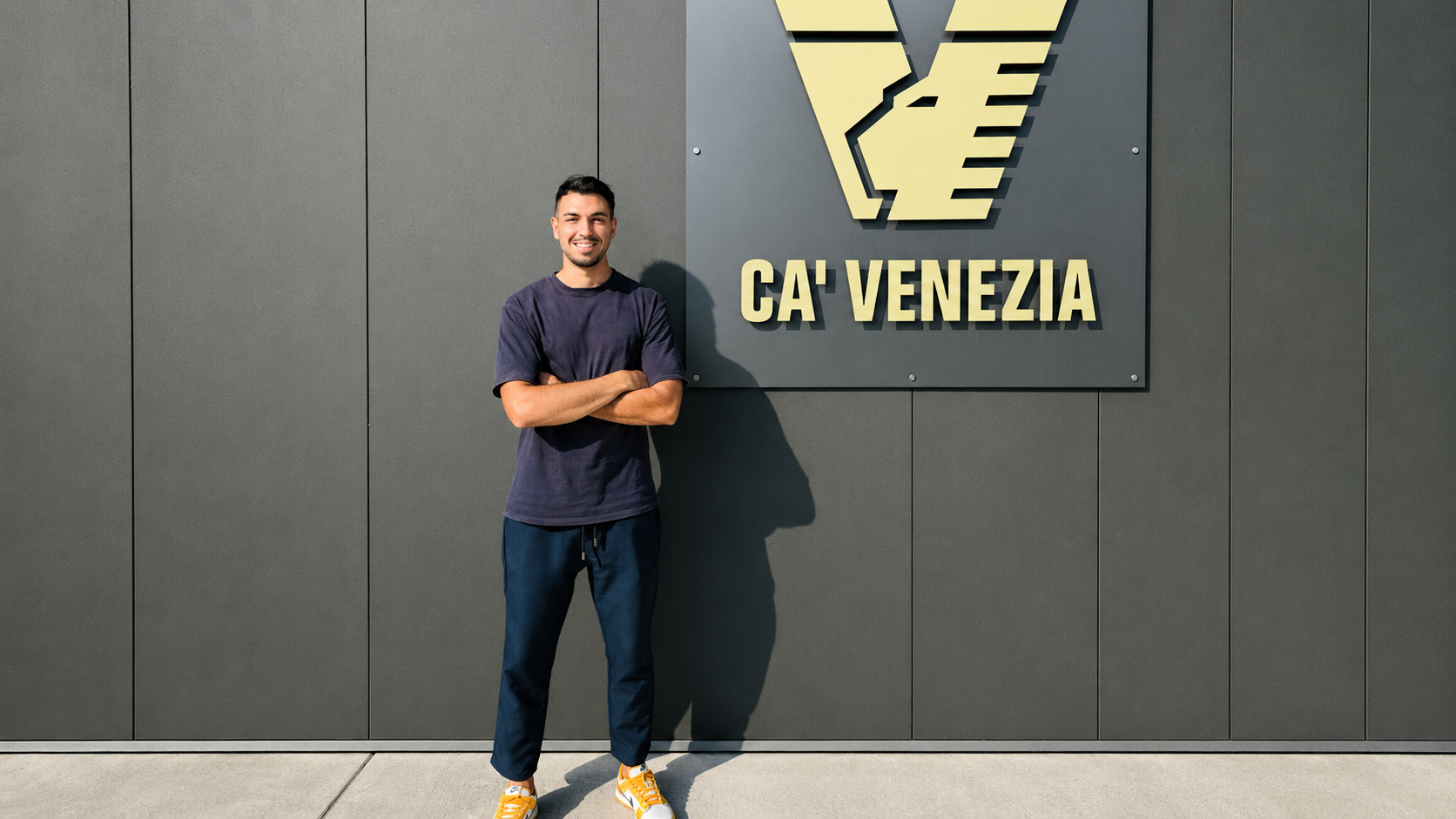
From professional academy football to first-team recruitment, Riccardo Marulli has built an unconventional path through the game – combining a player’s understanding of football with international education, recruitment expertise and a strong interest in methodology, governance and sporting management.
Profile
Role: First Team Recruiter & International Scout, Venezia FC
Specialisation: Recruitment management, international scouting and sporting strategy
Experience: Three years at Venezia FC across first-team and academy recruitment, preceded by an international experience at Double Pass in Belgium
Focus Areas: Recruitment strategy and methodology, international markets and networks, talent identification, sporting governance, technology and football management
Biography
Riccardo Marulli is a First Team Recruiter & International Scout at Venezia FC, but his route into professional football extends well beyond scouting.
After developing as a player within the professional youth academy system and continuing into senior football, Marulli chose to build an academic and managerial background alongside his knowledge of the game. He studied Economic Development and International Cooperation before completing a master’s degree in International Relations, and later completed the Professional Master in Football Business at The FBA, which is based in Geneva.
His first professional experience in football came in Belgium with Double Pass, working in a project-management environment within one of the game’s recognised specialists in club development, academy methodology and organisational assessment. It was there that Marulli was first exposed to the creation of football methodologies, governance structures and organisational models – an experience that would strongly influence the way he later approached recruitment.
He joined Venezia FC in 2023 as an International Scout within the professional academy. Scouting gave him an operational understanding of players and international markets, but his progression quickly moved towards management. After his first season he became Head of Scouting, taking responsibility for the department’s structure and processes, before expanding his responsibilities into academy recruitment and the wider organisation of the player-acquisition model.
In January 2026, Marulli moved into Venezia’s first-team structure as First Team Recruiter & International Scout, combining international talent identification with recruitment responsibilities and direct exposure to senior squad-building decisions.
The progression reflects the broader direction of his career. Scouting represents an important part of Marulli’s expertise, but his professional interests increasingly centre on the structures behind it: how recruitment departments are built, how club strategy becomes recruitment methodology, how information moves through an organisation and how sporting decisions are ultimately made.
That interest has also taken his work outside the club environment. Marulli has contributed as a speaker and lecturer within international football and academic settings, presenting ideas around recruitment methodology, organisational models and modern sporting management. In Serbia, at an international football event hosted at the Serbian Football Association’s National Training Centre, he presented a framework for building a club recruitment model – connecting sporting vision and methodology with talent identification, evaluation, decision-making and player development.
Technology is another part of that approach. Alongside experience with modern scouting, data and AI platforms, Marulli has designed and developed from scratch his own next-generation football management platform for scouting, recruitment and sporting direction. Rather than simply collecting player reports, the system is conceived as an integrated environment for organising information, workflows and decision-making across a sporting department.
For Marulli, technology and data are therefore tools rather than an identity: their value lies in how effectively they can support people, processes and football judgement.
For Marulli, technology and data are therefore tools rather than an identity: their value lies in how effectively they can support people, processes and football judgement.
His profile is completed by an increasingly international network across European football, developed through recruitment, education and professional relationships with clubs, agents, executives and other decision-makers. He works across Italian, English, Spanish and Serbian, giving his approach an international dimension that extends beyond simply scouting foreign markets.
Marulli is a qualified FIGC Direttore Sportivo, holds the UEFA C coaching badge and FIGC qualifications in professional scouting, and completed the Executive Programme in Management del Calcio at SDA Bocconi in Milan.
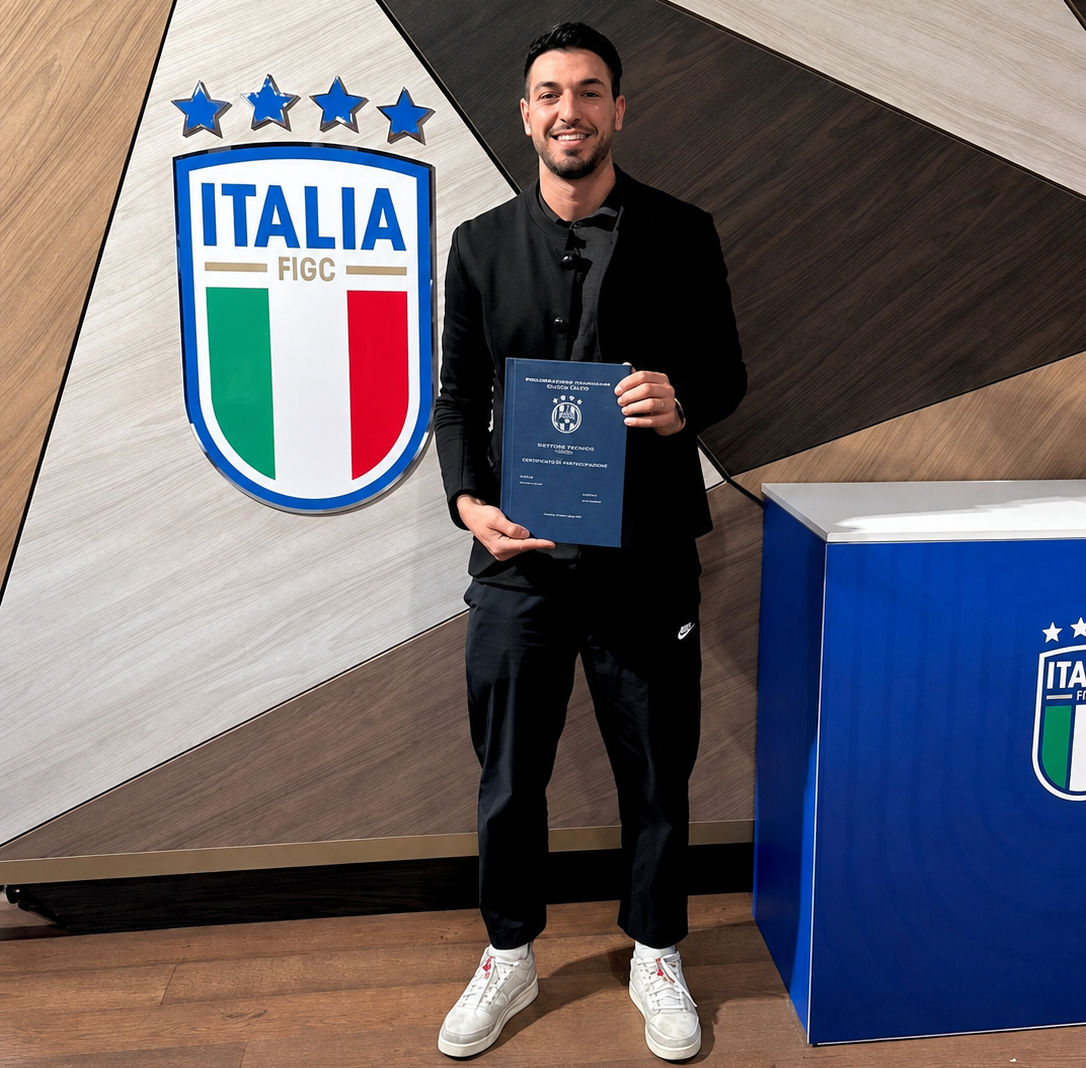
Taken together, the path is increasingly coherent: from playing the game to studying organisations, from methodology and governance to scouting, from scouting to recruitment management, and from academy leadership into the first-team environment. The long-term direction is towards sporting leadership – building and eventually leading recruitment departments, academies and sporting structures as part of the next generation of football executives.
The long-term direction is towards sporting leadership – building and eventually leading recruitment departments, academies and sporting structures as part of the next generation of football executives.
Key Insights
- His pathway from international scout to Head of Scouting, academy recruitment and first-team recruitment reflects a progression from player identification towards sporting management and decision-making.
- His background in economics, international relations and football business – together with early exposure to methodology and governance at Double Pass – gives his recruitment work a broader organisational perspective.
- His international network, work as a speaker on recruitment methodology and development of his own sporting-management platform underline a profile focused not simply on scouting players, but on building the structures through which clubs identify, recruit and develop them.
Our Exclusive Interview with Riccardo Marulli
Your career in football began as a player before moving through economics, international relations and football business. How has that unconventional route influenced the way you understand football organisations today?
Having experienced football first as a player, I have always had an instinctive understanding of the sporting side of the game. My academic background then gave me a different perspective: economics, international relations and football business taught me to look at clubs as organisations, not only as teams. Today I naturally try to connect those two dimensions, looking at players and performance but also at structures, decision-making and sporting strategy.
Your first professional experience came at Double Pass, where you were exposed to methodology, governance and organisational development. How much did that experience shape the professional you later became?
A lot. Double Pass was my first professional experience in football and introduced me immediately to methodology, governance and organisational development. It taught me to ask not only whether something works, but why it works, whether there is a methodology behind it and whether it can be sustainable over time. That approach has stayed with me and later influenced the way I built scouting and recruitment processes at Venezia.
It taught me to ask not only whether something works, but why it works, whether there is a methodology behind it and whether it can be sustainable over time.
You joined Venezia as an International Scout but moved quickly into leading scouting and then academy recruitment. When did you realise your future was more likely to be in sporting management than exclusively in talent identification?
In reality, that ambition was there from the beginning. Scouting was an important opportunity to enter professional club football and develop a deep understanding of players and markets, but I was always attracted by management and decision-making. Moving from International Scout to Head of Scouting and then into recruitment confirmed that direction: I enjoyed evaluating players, but I was even more interested in building the process around those evaluations.
What changes when you move from evaluating individual players to designing and managing an entire recruitment process?
The perspective becomes much broader. Evaluating a player is one part of recruitment; managing recruitment means understanding what the club actually needs and why. You have to connect sporting identity, squad planning, financial parameters, player profiles, scouting, data and internal decision-making. The objective is to create a coherent and repeatable process aligned with the club’s strategy.
You recently presented your approach to building a recruitment model at an international football event hosted at the Serbian Football Association’s National Training Centre. What does an effective recruitment structure need to get right before a club even starts discussing individual players?
It has to start with the club, not with the player. Before discussing names, a club needs to understand its identity, sporting vision, objectives and resources. From there you can define the playing model, positional profiles, recruitment markets and decision-making process. Recruitment should be the consequence of a clear sporting strategy; identifying good players alone cannot compensate for an organisation that does not know what it wants to become.
Your current role as First Team Recruiter & International Scout has brought you into senior recruitment. What are you learning at first-team level that you could not experience within academy football?
The biggest difference is the immediacy of the decision. In academy recruitment you are often projecting what a player could become over several years. At first-team level, the sporting, financial and strategic consequences are much more immediate. You evaluate not only quality and potential, but readiness, squad fit, contractual situation, market dynamics and risk.
You have developed your own management platform for scouting, recruitment and sporting direction. What problem were you trying to solve, and where do you see AI and technology genuinely improving sporting decision-making?
The idea came from wanting to connect information that is normally fragmented across different tools and departments. I wanted an environment built around the complete recruitment and sporting-management process rather than simply another player database. Technology and AI can organise information, identify patterns and make processes faster and more consistent, but they should support football judgement rather than replace it.
Your work and education have allowed you to develop relationships across different European football markets. How important are international networks and cultural understanding for a modern recruitment executive?
They are fundamental. Football is increasingly international, but every market still has its own culture, relationships and way of doing business. Speaking different languages and building direct relationships with clubs, agents and football professionals allows you to understand much more than what appears in a database. A strong network is ultimately about trusted relationships and understanding context.
You are already a qualified FIGC Direttore Sportivo. Looking ahead, what kind of sporting organisation would you ultimately want to build and lead?
I would like to build an organisation with a clear sporting identity and a methodology that connects every level of the club. Recruitment, scouting, data, academy development and first-team strategy should not operate as separate areas, but as parts of the same model. My ambition is ultimately to take responsibility for that kind of sporting structure and build something sustainable, international and capable of creating value both on the pitch and for the club.
FAQ
Who is Riccardo Marulli?
Riccardo Marulli is an Italian football recruitment professional and emerging sporting executive, currently working as First Team Recruiter & International Scout at Venezia FC.
What is Riccardo Marulli known for?
He has developed an interdisciplinary profile combining international scouting, recruitment management, sporting methodology and football governance. His progression at Venezia FC has taken him from academy scouting to departmental responsibility and ultimately into first-team recruitment.
What makes Riccardo Marulli’s profile different?
His background combines experience as a player with studies in economics and international relations, international football-business education, recruitment leadership and first-team experience. He has also developed recruitment and governance methodologies and created his own management platform for scouting, recruitment and sporting direction.
What role does Riccardo Marulli currently hold?
He is First Team Recruiter & International Scout at Venezia FC, having moved into the senior structure in January 2026 after previously holding scouting and recruitment responsibilities within the club’s professional academy.
Where is Riccardo Marulli’s career heading?
His professional trajectory is oriented towards sporting leadership, with the ambition of building and leading recruitment departments, academy structures and, ultimately, the sporting direction of a professional football club.