

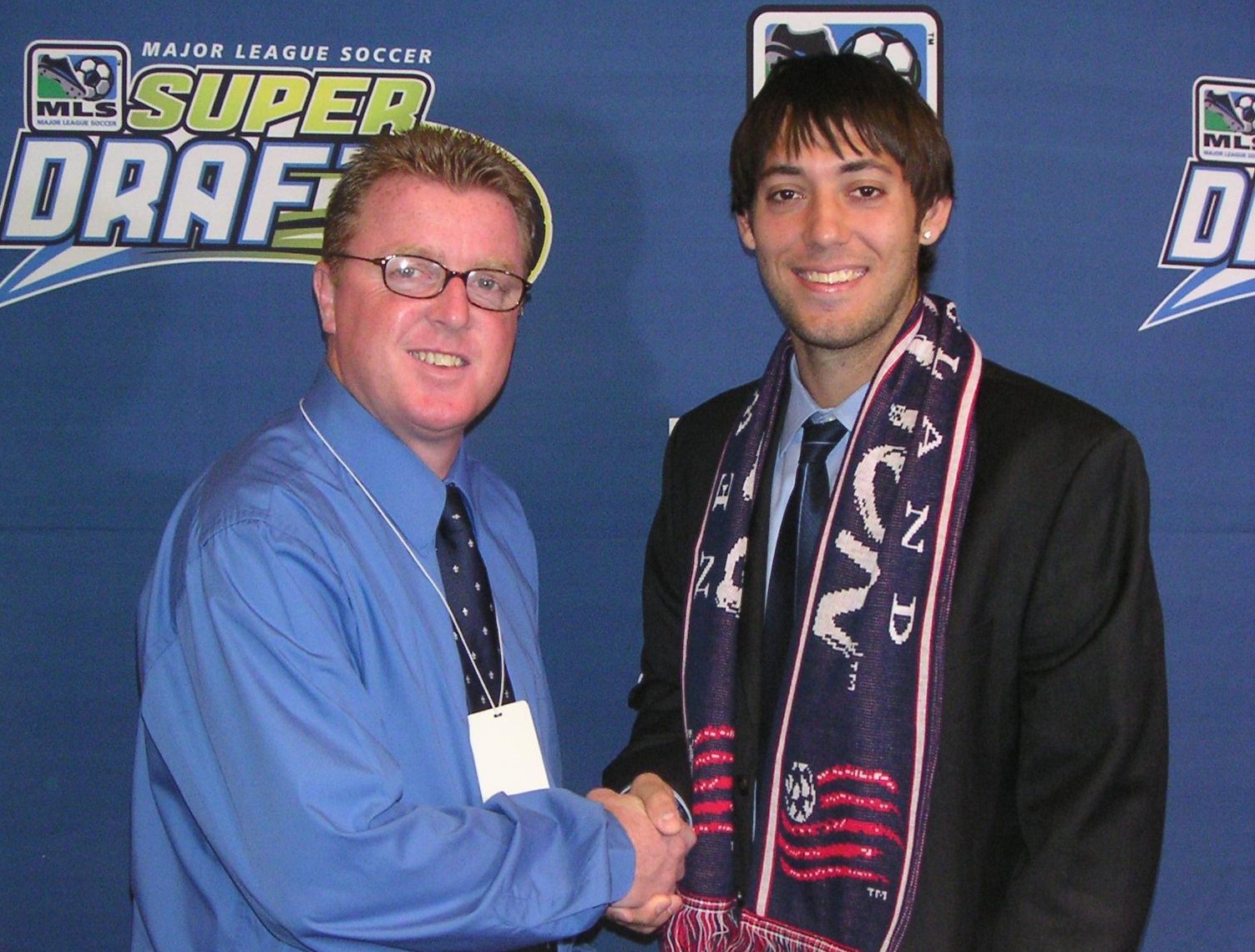

Every December, MLS clubs gather, virtually these days, to run through the SuperDraft: three rounds, a handful of minutes per pick, and a list of college standouts and young prospects hoping to hear their name called.
But what actually happens to a player once he’s drafted is far less straightforward than the moment itself. Some join their new club right away. Some get loaned out to develop further. Some never sign at all, at least not immediately, and head back to finish their degree while a club quietly holds onto his rights for up to two more years. And increasingly, the draft’s biggest names were never really “drafted” in the traditional sense at all, they were signed before the draft even happened.
Here’s how the whole system actually works, and why more people in the sport are asking whether it’s still serving the purpose it was built for.
Here’s how the whole system actually works, and why more people in the sport are asking whether it’s still serving the purpose it was built for.
What Is the MLS SuperDraft?
The SuperDraft is a three-round selection process, meaning each club can make up to three picks, one per round, assuming it hasn’t traded any of them away. Draft order runs in reverse order of the previous season’s final standings, with new expansion clubs picking first regardless of anyone’s record.
Clubs get a short clock to make each selection, four minutes in Round 1, three minutes in Rounds 2 and 3, and each club gets exactly one timeout per draft. Importantly, a club isn’t obligated to use all three of its picks. If a club passes on a selection, it’s actually removed from making any further picks in that draft entirely, so passing is rare and usually only happens when a club has genuinely run out of players it wants.
Who’s Actually Eligible?
The pool of eligible players is narrower than people often assume, and it’s shrinking for a reason we’ll get into below. The SuperDraft List can include:
- College players who are sophomores or above
- Generation adidas Players, a joint MLS-adidas program covered in more detail below
- Players who left college early, with remaining eligibility, to turn professional domestically (in leagues like USL or NISA)
- Other players the league specifically decides to make available, including certain pre-signed internationals
One group is notably absent from this list entirely: any player who’s already academy-eligible for Homegrown signing. If an MLS club has already established Homegrown Priority over a young player through its own academy, he’s simply not available in the draft at all, his club signs him directly. This matters more than it might seem, and we’ll come back to it.
Generation adidas: Drafted, But Already Signed
Generation adidas Players are the draft’s most confusing wrinkle for newcomers. These are top college underclassmen and elite youth prospects that MLS and adidas jointly identify and sign to contracts before the SuperDraft even takes place. They then get made available to clubs through the draft, but they’re already professional players at the moment they’re picked, not amateurs hoping for a shot.
This is why you’ll often see the very best names in a given draft class attached to Generation adidas status. The program exists specifically so MLS can lock in its most promising prospects early, rather than risk losing them to a foreign club or a full four years of college eligibility before they ever reach the draft board.
The College Showcase: Scouting Before the Draft
Before any club makes a pick, there’s a lesser-known event that shapes almost everything leading up to it: the adidas MLS College Showcase, held annually in December, recent editions have taken place in the Phoenix, Arizona area. Over four days, several dozen of the country’s top draft-eligible prospects train, undergo athletic testing, sit for interviews, and play matches directly in front of scouting staff from every MLS club at once.
Not everyone eligible for the draft attends. Players whose college teams are still alive in the NCAA College Cup semifinals or final are still competing for a national championship at that point in the calendar, so they simply aren’t available for the Showcase that year. Everyone else on the eligible list gets a rare chance to be seen, tested, and interviewed face-to-face by every club’s technical staff in one place, all before a single pick is made.
The Showcase isn’t the only scouting MLS clubs do, though. Every club maintains dedicated college scouting staff who track prospects throughout the entire NCAA season, well before December. What happens at the Showcase, and later at the draft table, is really the final step of a year-long evaluation process, not clubs meeting these players for the first time. The SuperDraft itself typically follows just days after the Showcase wraps up, also in December.
What happens at the Showcase, and later at the draft table, is really the final step of a year-long evaluation process, not clubs meeting these players for the first time.
What Happens After a Player Is Drafted?
This is where the real nuance lives, and where a lot of fans get the mechanics wrong. Being drafted doesn’t mean a player automatically joins the club’s roster. Three different paths can follow:
- He signs and joins the club. The most straightforward outcome. He’s invited to preseason training with the club’s first team, and once signed, he occupies a normal roster spot like any other player, subject to the usual Senior or Supplemental Roster rules.
- He doesn’t sign right away, and the club simply holds his rights. If a drafted player isn’t offered a contract, particularly a college underclassman who still has eligibility remaining and intends to return to school, the drafting club doesn’t just lose him. He goes onto that club’s SuperDraft Priority List, and the club retains exclusive signing rights over him through the end of the following calendar year, effectively up to two more college seasons. He can keep playing college soccer, and the club can revisit signing him once he’s ready, without any other MLS club being allowed to approach him in the meantime.
- He signs, but gets loaned out to develop further. A club might sign a drafted player immediately but still feel he needs more minutes and physical development before he’s ready for MLS-level competition. In that case, he can be loaned to a lower-division domestic side, an MLS NEXT Pro affiliate or a USL club, to keep playing regularly while the parent club monitors his progress.
If a drafted player is never signed at all and his SuperDraft Priority eventually expires, he doesn’t just disappear from the system, he becomes a Discovery Player like any other prospect, and any club can pursue him from that point on.
Trading Draft Picks (and Why GAM Shows Up Everywhere)
Draft picks are fully tradable assets in MLS, and clubs use them constantly to reshape their draft position. A few things make this more flexible than it might seem:
- Picks can be traded years in advance. A club can trade away a future SuperDraft pick up to three years ahead of that draft actually happening.
- Clubs can trade “best” or “worst” picks rather than a specific round. A club might agree to send its “best” 2027 SuperDraft pick without knowing yet which of its own picks that will turn out to be, that gets determined 24 hours before the relevant draft actually starts.
- General Allocation Money is almost always part of the conversation. Since GAM functions as tradable currency across the league, it’s routinely attached to draft-day trades, a club might send $150,000 in GAM to move up in Round 1, or receive GAM in exchange for moving down or passing on a pick entirely.
- Trades happen live, in private “breakout rooms” during the draft itself, verified and approved by the league before being announced, and player identities involved in any trade aren’t revealed publicly until those players have actually been contacted.
The Bigger Question: Is the SuperDraft Still Necessary?
This is genuinely one of the more debated topics in American soccer right now, and it comes down to where MLS actually gets its young talent from today.
When the SuperDraft was the league’s primary pipeline for young players, college soccer made complete sense as the main feeder system. But that’s changed. Nearly every MLS club now operates its own academy, a setup that barely existed in the league’s earlier years, and academy graduates enter as Homegrown signings, never touching the draft process at all. Many USL clubs have followed suit with their own academies too, and the MLS NEXT Pro league now gives young players a genuine professional environment, regular competitive games against other developing players, well below the college level. Between club academies, USL academies, and MLS NEXT Pro, there are now several well-established pathways into professional soccer that simply didn’t exist when the draft was the league’s main entry point, and that alone has steadily shrunk the pool of meaningful prospects the SuperDraft actually produces.
Between club academies, USL academies, and MLS NEXT Pro, there are now several well-established pathways into professional soccer that simply didn’t exist when the draft was the league’s main entry point, and that alone has steadily shrunk the pool of meaningful prospects the SuperDraft actually produces.
Layered on top of that is a genuine structural criticism of the college pathway itself, and it isn’t limited to the calendar. NCAA Division I soccer programs often have outstanding facilities and well-compensated coaching staff, in some cases better resourced than lower-tier professional environments. But the competitive calendar is one problem: a college season runs for roughly one semester, concentrated in the fall, followed by long stretches with little to no meaningful competitive fixtures. The other problem is simply geography. The country is large, and strong programs are scattered unevenly across it, which means which conference a player happens to land in matters enormously. Being at a well-resourced Division I program is no guarantee of facing strong weekly competition; a talented player in a weaker conference can spend four years playing mostly overmatched opponents, regardless of how good his own team or facilities are. Professional development, by contrast, depends on a year-round rhythm of training and genuinely competitive matches, something neither a short season nor an inconsistent conference schedule reliably provides. Critics argue that combination simply doesn’t prepare players for what full-time professional soccer actually demands.
That’s led to a real conversation within the sport about whether the college pipeline needs structural reform, extending the competitive calendar closer to a full year, for the SuperDraft to keep producing MLS-ready talent the way academies already do. Some in the sport have gone further, suggesting that if that reform doesn’t happen, MLS could eventually deprioritize the draft altogether in favor of academy and Discovery-based pathways that already better reflect how the rest of the world develops players.
The Bottom Line
The SuperDraft still matters, but its role inside MLS’s overall player pipeline has genuinely shifted. What used to be the league’s main entry point for new talent is increasingly one option among several, competing with a Homegrown academy system that didn’t meaningfully exist when the draft was created. Understanding the mechanics, who’s actually eligible, what happens after a pick, and how trades work, matters less for predicting a club’s whole roster strategy than it once did, and more for understanding a genuinely interesting structural debate about how American soccer should be developing its next generation of players.
MLS Explained | The Football Week
The MLS Explained series breaks down the rules, mechanisms and structures behind Major League Soccer for anyone who wants to understand how the league actually works.