

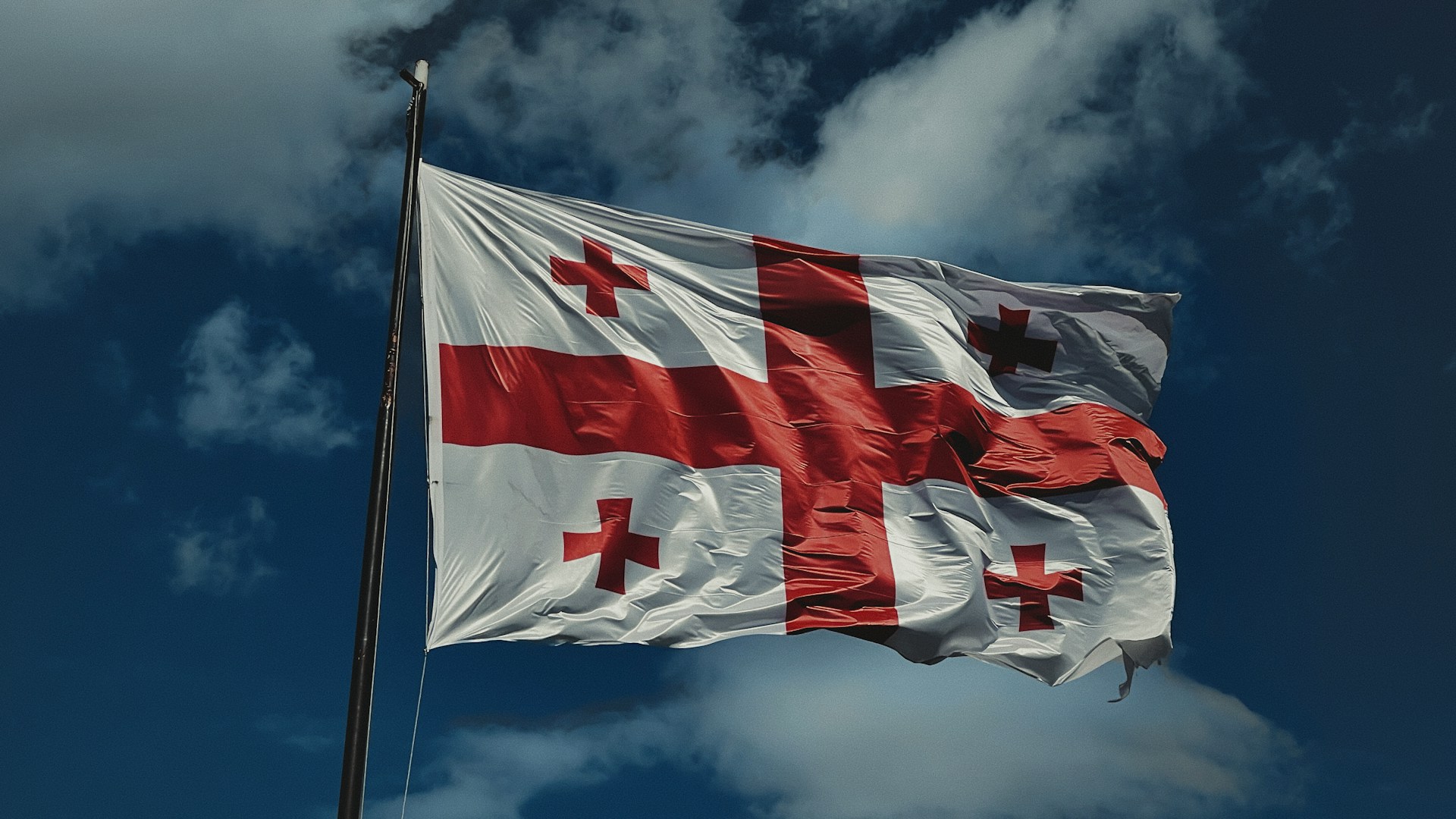
€175 million in four years: the anatomy of a talent export model the market hasn’t fully priced in yet.
Thirteen Georgian players in professional European leagues. Over €175 million in transfer fees in four years. This isn’t a cycle. It’s a system.
This isn’t a cycle. It’s a system.
In 2018, Georgia’s most valuable player was worth €5 million on Transfermarkt. In 2025, Kvaratskhelia alone is valued at €90 million, and Georgia has active representation in the Premier League, La Liga, La Liga 2, Ligue 1, Bundesliga, Primeira Liga, the English Championship, 2. Bundesliga, Ligue 2, the Polish Ekstraklasa and the Romanian Liga I.
For any scouting or sporting director professional, that map has one reading: a system is operating here, not isolated players.
The transfer volume: what’s documented
No single source compiles the aggregate total of Georgian transfer income over the past decade. The individually verified movements of the last four years alone sum to more than €175 million:
| Player | Move | Year | Fee |
|---|---|---|---|
| Kvaratskhelia PSG · Ligue 1 |
Napoli → PSG | 2025 | ~€70M |
| Mikautadze Villarreal · La Liga |
Lyon → Villarreal | 2025 | ~€31M |
| Mamardashvili Liverpool · Premier League |
Valencia → Liverpool | 2024 | €30M |
| Mikautadze Lyon · Ligue 1 |
Metz → Lyon | 2024 | €18.5M |
| Kvaratskhelia Napoli · Serie A |
Dinamo Batumi → Napoli | 2022 | €11.5M |
| Kochorashvili Sporting CP · Primeira Liga |
Levante → Sporting CP | 2025 | €5.5M |
| Davitashvili Saint-Étienne · Ligue 2 |
Bordeaux → Saint-Étienne | 2024 | €5M |
| Mamardashvili Valencia · La Liga |
Dinamo Tbilisi → Valencia | 2022 | €3.9M |
| Total verified | +€175M | ||
Sum calculated from individually verified fees via Transfermarkt, Soccerway and official club announcements. No aggregated figure has been published by any official source.
What the table allows us to analyse is the scaling logic: Georgian clubs export to intermediate European leagues, the Portuguese Primeira Liga, Ligue 2, the Austrian Bundesliga, the Ekstraklasa, where players consolidate their level before the second jump. The routes of Kvaratskhelia (Dinamo Batumi → Napoli → PSG), Mamardashvili (Dinamo Tbilisi → Valencia → Liverpool) and Davitashvili (Dinamo Batumi → Bordeaux → Saint-Étienne) are not individual career coincidences. They are the development pattern that the Georgian market has normalised.
The active map: Georgians in professional European leagues (2025-26 season)
Elite continental and first divisions
- Khvicha Kvaratskhelia → PSG (Ligue 1). Champions League winner in 2025, scored in the final.
- Georges Mikautadze → Villarreal CF (La Liga). 15 goals in his first season. ~€31M, the most expensive signing in the club’s history.
- Giorgi Mamardashvili → Liverpool FC (Premier League). First Georgian in the club’s history.
- Giorgi Kochorashvili → Sporting CP (Primeira Liga). €5.5M in January 2025.
- Otar Kiteishvili → Sturm Graz (Austrian Bundesliga). Player of the Season 2023-24.
- Budu Zivzivadze → FC Heidenheim (Bundesliga). Centre-forward, full international.
Second divisions and other professional leagues
- Iuri Tabatadze → Cádiz CF (La Liga 2). Top scorer at the club in 2025-26. Arrived in August 2025 directly from Georgian football.
- Zuriko Davitashvili → Saint-Étienne (Ligue 2). 10 goals in 2025-26.
- Giorgi Chakvetadze → Watford FC (EFL Championship). Contract until 2029.
- Luka Lochoshvili → 1. FC Nürnberg (2. Bundesliga). Joined in July 2025 following his Serie A stint with Cremonese.
- Saba Goglichidze → Watford FC (EFL Championship, on loan from Udinese). Centre-back born in 2004, with previous experience at Empoli and in Serie A.
- Lasha Dvali → CSKA 1948 Sofia (Bulgarian efbet Liga). 30 years old, 45 caps, contract until 2028.
- Otar Kakabadze → Wisła Kraków (Polish Ekstraklasa). Right-back, regular in the national team squad.
- Giorgi Abuashvili → Metz (Ligue 1, on loan from Kolkheti 1913). Full international since 2025.
- Anzor Mekvabishvili → Universitatea Craiova (Romanian Liga I). Full international since 2022.
The comparative framework: Uruguay as a structural reference
Georgia is not the first case of talent export disproportionate to its population. Uruguay, with 3.5 million inhabitants, practically the same as Georgia, has been the canonical model for over a century.
According to CIES Football Observatory data: Uruguay ranks among the 13 largest global exporters of footballers in absolute terms, with more than 750 professional players active outside its borders, and leads the Americas in export density, 112 players per million inhabitants, exceeded in absolute volume only by countries with populations between 13 and 60 times larger.
Uruguay’s squad for the 2026 World Cup illustrates the model at full maturity: Valverde (Real Madrid), Araujo (Barcelona), Giménez (Atlético de Madrid), Ugarte (Manchester United), Bentancur (Tottenham), Olivera (Napoli). A national team built entirely on players from Europe’s top divisions.
Georgia today has Kvaratskhelia at PSG, Mamardashvili at Liverpool, Mikautadze at Villarreal, Kochorashvili at Sporting. The underlying structure is the same: a small country with an efficient detection system, two or three formative clubs acting as filters, and an escalation chain into Europe that operates with normalised market logic.
The defining difference between the two models is time and method: Uruguay built its system organically over generations. Georgia has compressed that into a decade, with one additional element Uruguay never had: external institutional funding and structure through UEFA, which allowed it to design the process with explicit timelines, metrics and objectives rather than letting it evolve spontaneously. What both demonstrate, without exception, is that the size of a domestic market does not determine the capacity to export elite talent. What determines it is the quality of the detection, development and channelling system.
What both demonstrate, without exception, is that the size of a domestic market does not determine the capacity to export elite talent.
Georgia: two academies, a structured plan, and a paradox it shares with Uruguay
When Kvaratskhelia arrived at Napoli in 2022, it was easy to read him as an exceptional player emerging from an unlikely context. What wasn’t visible from the outside is that that context had been deliberately constructed for years.
Georgia’s talent development system rests on two institutional pillars, not one, and a national plan with UEFA funding that launched before any of the players we know today had made their professional debut.
The national plan: GFF and UEFA as architects
The Georgian Football Federation (GFF) and UEFA designed a four-year strategic plan covering detection, development and infrastructure across the country. The operational architecture works across three levels:
Level 1, Regional detection: players from age 14-15 are evaluated in academies distributed across the territory, jointly funded by UEFA’s HatTrick programme, the GFF and the Georgian government. Georgia operates six national academies in various locations, including Rustavi, Zugdidi and Kutaisi.
Level 2, Rustavi national campus: from each evaluation cycle, up to 60 players compete in a 20-day trial campus. Only 22 make the cut and are integrated into the national academy, where they receive accommodation, schooling, meals, equipment, medical care and psychological support. It is Georgia’s equivalent of the high-performance boarding academy, with a selection rate below 37%.
Level 3, Infrastructure: since 2016, more than 37 pitches have been renovated across the country. There is an expansion project for the main Dinamo Tbilisi academy with 12 new pitches and a budget of $15 million.
GFF Secretary General David Mujiri described it in statements to UEFA: “The HatTrick programme has allowed us to open the Rustavi Technical Centre, which houses our main academy.”
The two real epicentres: Dinamo Tbilisi and Saburtalo
A player-by-player analysis of Georgians active in European leagues reveals that the development system does not have a single epicentre. It has two academies with differentiated profiles.
Dinamo Tbilisi is the country’s primary exporter of elite talent. Verified across the active map players:
- Kvaratskhelia → Dinamo academy from 2012 (age 11). First-team debut at 16.
- Mamardashvili → Dinamo academy from 2012 to 2018. Two loan spells in Georgia before Valencia.
- Kiteishvili → Dinamo Tbilisi academy product, won four titles there before moving to Austria.
- Davitashvili → Dinamo Tbilisi from 2013 to 2017. First-team debut at 16.
- Chakvetadze → Dinamo academy from 2010 to 2016. Stood out at the 2017 U-19 European Championship.
- Lochoshvili → Developed at Dinamo Tbilisi, first-team debut in 2016, before moving to Dynamo Kyiv.
- Abuashvili → Dinamo academy, debuted at 16, transferred to Porto at 18.
- Vakhtang Salia → Dinamo academy until 2025. Signed by Newcastle at 17.
- Saba Kharebashvili → Dinamo academy. Eligible for transfer from September 2026.
The Dinamo exit pattern is consistent: technically-oriented profiles with early competitive exposure, first-team debutants between 15 and 17, with real Erovnuli Liga minutes before 18, oriented towards positional systems and with a strong capacity to adapt quickly to higher-demand environments. This is the profile that best fits clubs in the top division looking for talent with competitive mileage, not raw potential.
Saburtalo Tbilisi operates as a second export node with a more physical and tactical profile:
- Kochorashvili → Developed at Saburtalo. Accumulated just 44 minutes in the Georgian top flight before moving to Girona’s system at 18, demonstrating the club’s speed of identification and channelling.
- Gocholeishvili → Entirely a Saburtalo Tbilisi academy product.
The Saburtalo exit profile differs from Dinamo’s: greater emphasis on off-ball work, defensive intensity and tactical maturity before departure. It is a channelling model that prioritises maturity over playing time.
It is worth noting that the methodology of both academies was not built in isolation. Andrés Carrasco, a Catalan coach with eleven years at FC Barcelona’s La Masia, worked at both: first in the Dinamo Tbilisi youth categories in 2011-12 and then as Saburtalo’s academy director in 2013-14, before returning to Dinamo as academy director and first-team head coach between 2022 and 2024. Carrasco documented the transfer effect himself: the Georgian coaches he developed during his first spell at Dinamo were the ones he later brought into Saburtalo. A direct causal attribution between his time there and specific players cannot be established, but Barcelona-origin methodology was present in both system epicentres during the exact years when the generation now being exported by Georgia was developing.
The third vector: the diaspora as an underdeveloped resource
Georges Mikautadze illustrates a lever Georgia has activated on an ad hoc basis but has yet to systematise. Born in Lyon, developed entirely in the French system, FC Gerland, the Olympique de Lyon academy, the Metz academy from 2016, he never set foot in any Georgian academy. His inclusion in the national team is to the credit of the GFF and Sagnol, who built a project compelling enough for him to choose to represent Georgia. But it is an isolated case, not a programme.
The contrast with more mature models is instructive. Spain has spent decades systematically managing the recruitment of second and third-generation players from beyond its borders. Morocco has turned its European diaspora, concentrated in France, Belgium and the Netherlands, into a structural competitive advantage that largely explains the step change in quality its national team has achieved in recent years. Uruguay maintains active scouting networks in its principal historical emigration markets.
Georgia has a diaspora distributed across Europe, primarily in Greece, Germany, Italy and Spain, with communities in some cases settled for decades. Developing it proactively, with the same structure it applies to its national academies, would be the logical next step for a model that has already demonstrated its capacity to build systems where none existed before.
Of the 13 Georgian players active in European professional leagues documented in this article, at least 9 have verified origins in Georgian academies, with Dinamo Tbilisi as the dominant epicentre.
The structural paradox Georgia and Uruguay share
Dinamo Tbilisi has won eight of the last ten Georgian U-15 championships. It is the country’s dominant development institution in absolute terms. And yet almost none of its top products compete today in Dinamo’s first team. The Erovnuli Liga is the greenhouse, not the destination.
The Erovnuli Liga is the greenhouse, not the destination.
This is precisely the same structural tension as Uruguay: Nacional and Peñarol develop players they cannot economically compete for with Europe. The best leave between 17 and 19. The club bears the development cost, the European market captures the value, and the country recovers a portion of that value through transfer fees and international reputation.
Georgia is managing that tension with greater institutional awareness than Uruguay had in its early decades. The fact that the GFF has a four-year plan with UEFA, with objectives and a budget, means the paradox is understood and built into the model: export is not the system’s problem, it is its expected output.
The Georgian pipeline: three profiles, three time horizons, one conclusion for the market
The Georgian pipeline is in an acceleration phase that market data from the last two years documents clearly. What follows is a differentiated analysis by situation: what already has a confirmed destination, what is in active decision phase, and what the market will need to process between 2026 and 2028.
Profile 1: Inside the European system, pending consolidation
Vakhtang Salia, Newcastle United (Premier League)
A Dinamo Tbilisi academy product. He debuted in the Erovnuli Liga at 16 and accumulated five goals in 24 league matches at 17, with real first-team minutes and competitive pressure. He joined Newcastle in August 2025 on his 18th birthday, following a loan back to Dinamo to maintain competitive rhythm during the regulatory waiting period.
What makes the Salia case a relevant market reference is not the player in his current state, still in the Newcastle U21 setup, with a current market valuation of €750K, but the nature of the recruitment process that preceded it. Newcastle beat Real Madrid, Bayern Munich, Borussia Dortmund, Napoli, Manchester City and Arsenal. That level of competition for a 17-year-old profile from the Erovnuli Liga is an objective indicator of the status Georgia has reached as a scouting market. Then-Sporting Director Paul Mitchell framed it in unambiguous terms in the official announcement: “Scouting and recruiting emerging talent are an essential part of building a sustainable future, particularly within the current PSR framework. The market is fiercely competitive.”
Profile 2: Decision window open, eligible from September 2026
Saba Kharebashvili, Dinamo Tbilisi
Born 3 September 2008. Left-back with capacity to operate on both sides. A Dinamo Tbilisi academy product. The youngest player in the club’s history and the youngest to appear in UEFA competition, at 15 years and 10 months. 28 first-team appearances with three assists. Liverpool, Real Madrid and Barcelona have been identified as clubs in active monitoring.
FIFA regulations prevent the transfer until September 2026, when he turns 18, but negotiation processes are already underway. The technical profile described by specialist analysts includes positional versatility, above-average physical parameters for the position, and adaptability to high-press and fast-transition systems.
Profile 3: 2028 horizon, FIFA regulations active
Tornike Kvaratskhelia, Dinamo Tbilisi
Born 7 February 2010. Winger, two-footed. Younger brother of Khvicha. Promoted to Dinamo Tbilisi’s first team in May 2026, making his official debut that same month at age 16. Also in May 2026, he completed a training stint at the Bayern Munich Campus, taking part in a session with the U-17 squad where he scored in a friendly. Bayern’s Sporting Director Christoph Freund confirmed the club’s interest publicly at a press conference.
The obstacle is regulatory, not sporting: FIFA rules prevent a non-EU player from signing for a foreign club before turning 18, placing any transfer at 2028 at the earliest. Bayern is evaluating intermediate options through its partner club network.
Bayern’s interest is verified as of May 2026 through public statements by Christoph Freund. No agreement has been confirmed.
Market reading
Georgia has moved in a decade from a peripheral market to one where Europe’s biggest clubs compete actively for 17-year-old profiles. That transition has practical implications for scouting:
The cost of access has multiplied. Fees associated with young Georgian profiles have escalated consistently in each market cycle, with multipliers that in some cases sit between two and four times the reference value of four or five years ago. The early identification window narrows every season.
The development system produces technically homogeneous profiles. The concentration in two academies, Dinamo Tbilisi and Saburtalo, with stable methodologies facilitates the prediction of exit profiles. A scout with direct knowledge of both academies operates with significant informational advantage over one who accesses only performance data from the Erovnuli Liga.
The diaspora is the vector with the most runway left to develop. This is not uncharted territory: Spain has spent decades systematically working the recruitment of second and third-generation players beyond its borders, and Morocco has turned its European diaspora into a structural competitive advantage that largely accounts for its national team’s quality step-change in recent years. Georgia has that same space available and, for now, unsystematised. The Mikautadze case, developed entirely in France, incorporated by the Georgian national team, is proof that the mechanism works when activated. What remains is converting it from exception into programme. For those who work that segment before the GFF formalises it, the cost of access is still low and the potential return, significant.
Georgia took ten years to build this. Uruguay took a hundred. In both cases, the competitive advantage sat with those who understood the system before the market priced it in.
Methodological note
Transfer data are individually verified fees from Transfermarkt, Soccerway and official club announcements. The €175M sum is a proprietary calculation, not a figure published by any official source. Academy origin verified player by player via Wikipedia, UEFA and specialist sources. Active clubs confirmed as of June 2026: Dvali at CSKA 1948 Sofia (distinct entity from historic CSKA Sofia), Kakabadze at Wisła Kraków, Zivzivadze at Heidenheim, Tabatadze at Cádiz CF. Mikautadze: developed entirely in France (FC Gerland, Lyon academy, Metz academy); did not pass through the Georgian development system.