
The countdown to the FIFA Women’s World Cup Brazil 2027 has officially begun. For the first time in history, the tournament will be hosted in South America, with Brazil welcoming the world’s biggest women’s football event.
In this special monthly series, we will bring you the latest updates, behind-the-scenes stories and insights from professionals and key figures in the game, through the perspective of our exclusive correspondent in Brazil, Elena Mueller.
The FIFA Women’s World Cup Brazil 2027 will take place from 24 June to 25 July 2027 across eight host cities: Belo Horizonte, Brasília, Fortaleza, Porto Alegre, Recife, Rio de Janeiro, Salvador and São Paulo. The tournament will feature 32 national teams competing in 64 matches.
Brazilian Expectations Around the 2027 Women’s World Cup
Football has always been at the heart of Brazilian culture. In 2027, as Brazil prepares to host its first FIFA Women’s World Cup, the country has a unique opportunity to turn that passion into a new era of growth for the women’s game. The excitement surrounding the tournament is already becoming visible.
Following the conclusion of the 2026 FIFA World Cup, Instituto QualiBest conducted a survey to understand Brazilians’ expectations for the 2027 FIFA Women’s World Cup, which will be the first edition of the tournament ever hosted in South America.
The results are encouraging.
According to the research, 64% of Brazilian internet users say they are excited or very excited about the 2027 Women’s World Cup, which will be hosted in Brazil.
According to the research, 64% of Brazilian internet users say they are excited or very excited about the 2027 Women’s World Cup, which will be hosted in Brazil.
And the interest goes beyond simply watching the tournament from home.
35% of respondents say they are likely to attend a match at a stadium, while another 24% have not yet made up their minds. This suggests that the tournament has the potential to create a strong in-person connection between fans and the women’s game.
When it comes to following the competition, traditional television remains a powerful platform. Open television was identified as the main way respondents expect to follow the tournament, at 61%, followed by YouTube at 51%.
This combination is particularly interesting. It reflects the changing way Brazilians consume football, bringing together the reach of traditional broadcasting with the accessibility and engagement of digital platforms.
There is also a strong sense of belief in the home team. More than half of those surveyed believe the Brazilian women’s national team can win the World Cup on home soil. That optimism comes at a time when Brazilian women’s football is experiencing one of the most exciting periods in its history, with growing visibility, investment and international recognition.
A New Chapter for Brazilian Women’s Football
For Brazil, this tournament represents much more than another major sporting event. Hosting the Women’s World Cup creates an opportunity to bring women’s football closer to a wider audience, strengthen its commercial potential and build a lasting legacy beyond the month of competition.
And there are already signs that Brazilian women’s football is entering this new phase. One of the clearest examples is the recent transfer of Brazilian international Kerolin from Manchester City to FC Barcelona. The 26-year-old forward joined the Catalan club in a deal worth around €1.5 million, including potential variables, making her the most expensive signing in Barcelona Women’s history and a record transfer involving a Women’s Super League club.
The numbers are significant, but the story behind them may be even more important. Kerolin’s career reflects the evolution of Brazilian women’s football itself. She began her journey in Brazil, emerging through the country’s domestic football system before moving abroad and building her career internationally. After spells with Madrid CFF and the North Carolina Courage, where she was named the NWSL MVP in 2023, she moved to Manchester City in 2025. Just one year later, she completed another major step in her career by joining Barcelona.
Her trajectory illustrates how Brazilian talent is increasingly becoming part of the global football economy. Although the fee is considered high, according to the Spanish press, Barcelona’s board recognizes that the figures are proportional to the forward’s technical level.
Her trajectory illustrates how Brazilian talent is increasingly becoming part of the global football economy.
Kerolin’s transfer to Barcelona is the biggest in Brazilian women’s football, surpassing the deal that saw Amanda Gutierres leave Palmeiras for Boston Legacy for US$1.1 million (approximately R$5.9 million). For Manchester City, the transfer represents the biggest sale in the history of its women’s team, while for Barcelona, Kerolin has become the club’s most expensive signing in women’s football.
CBF and FIFA: Preparing for 2027
Back to preparations for the international tournament, the Brazilian Football Confederation (CBF) has confirmed that domestic football will be suspended during the 2027 FIFA Women’s World Cup, which will be hosted by Brazil. The suspension will affect both men’s and women’s competitions, making room for the organization of the biggest international tournament in women’s football.
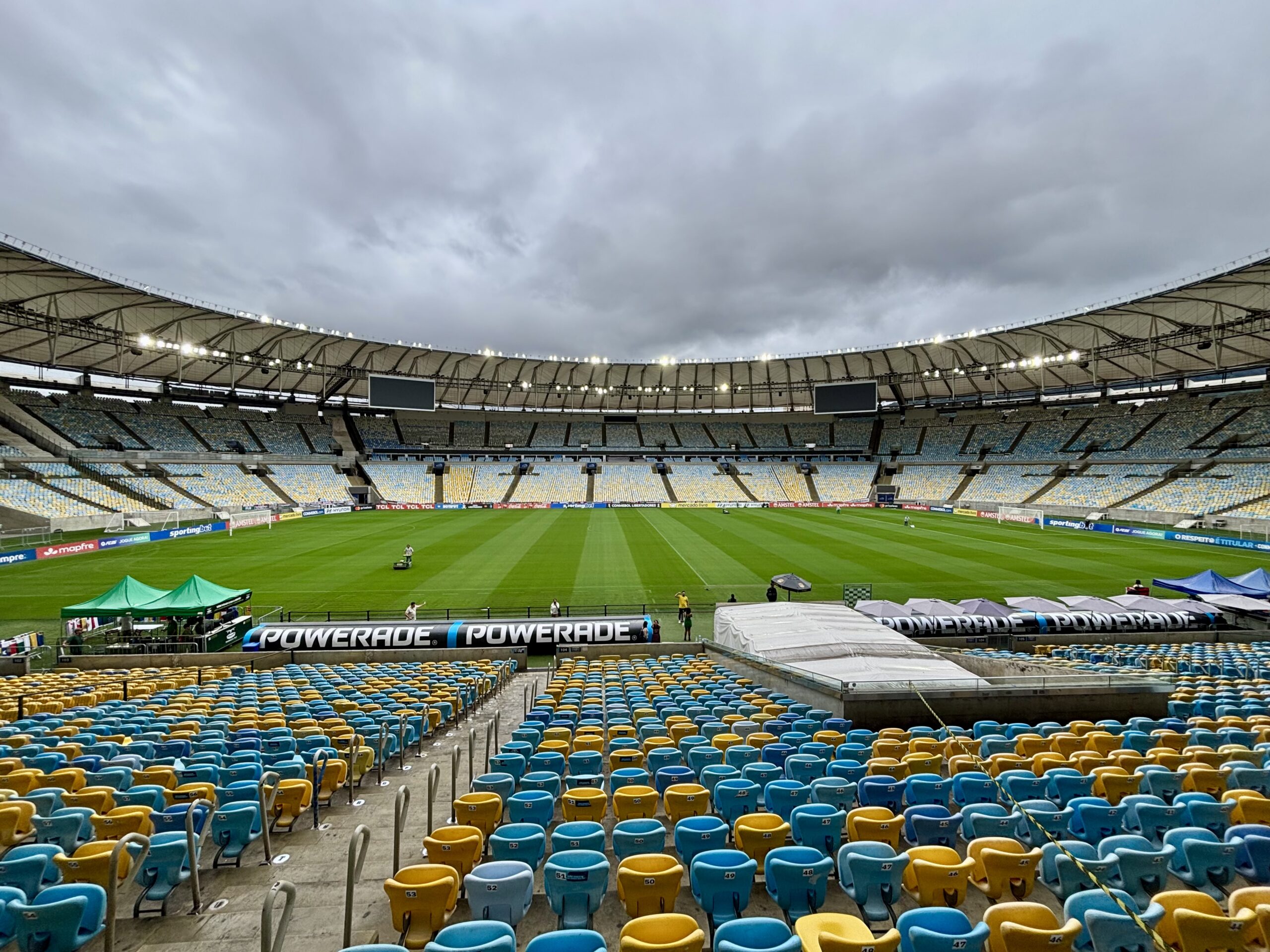
One of the main challenges will be the use of stadiums during the World Cup. Some of the venues selected to host World Cup matches are also home grounds for clubs competing in Brazil’s top-flight Série A and will have to be handed over to FIFA in advance, remaining at the event’s disposal for several weeks. The country’s football governing body is still assessing the adjustments needed to fit domestic competitions around the World Cup, but details of the new schedule have yet to be announced.
FIFA has launched and published its sustainability and human rights strategy for the 2027 FIFA Women’s World Cup in Brazil. The strategy comprises 15 targets and 27 initiatives focused on environmental and economic responsibility, governance strategies, and measures to combat harassment and discrimination. The document guides the tournament around four key pillars: social, environmental, economic and governance.
At the end of July, FIFA opened the registration of interest for the World Cup volunteer programme. Volunteers are the heart of every FIFA tournament, bringing energy, passion and commitment, while helping to provide a first-class experience for players, fans and everyone else involved in the event. For the FIFA Women’s World Cup Brazil 2027™, approximately 6,000 volunteers will be recruited to work across the tournament’s eight host cities: Belo Horizonte, Brasília, Fortaleza, Porto Alegre, Recife, Rio de Janeiro, Salvador and São Paulo. During the FIFA Women’s World Cup Brazil 2027, volunteers will work across more than 20 functional areas, including Media, Technology, Transport, Competition Management and Workforce Operations. There will be more than 30 different volunteer roles at competition and non-competition venues, from stadiums and airports to training sites and hotels.
Looking Beyond the Tournament
The momentum surrounding the 2027 FIFA Women’s World Cup goes beyond the numbers. From growing public interest and record-breaking transfers to the preparations being made by FIFA and the CBF, there are clear signs that women’s football in Brazil is entering an important new chapter.
But the real measure of the tournament’s success will be what remains after the final whistle. The investment in infrastructure, professionalization, player development, sustainability, human rights and the overall visibility of the women’s game could help shape the future of football in Brazil for years to come.
But the real measure of the tournament’s success will be what remains after the final whistle.
As Edson de Lima, journalist and founder of Vitrine do Futebol Feminino, a Brazilian media outlet dedicated to women’s football for more than 13 years, puts it:
“Brazilian women’s football is going through a period of growth and transformation, but we are still in a process that needs to be consolidated. There have been important advances, with clubs investing more and the game gaining significantly greater visibility, but inequalities, a lack of long-term planning and a continued reliance on isolated initiatives remain challenges. The key now is to turn growth into structure and opportunity into continuity. Brazil has history, talent and potential; it also needs organization and a long-term commitment.”
For him, the World Cup represents an opportunity to take that next step:
“My expectation is that the World Cup in Brazil will be much more than a major sporting event. I hope it leaves a legacy of infrastructure, player development, investment and professionalization, and, above all, a lasting memory. I want women’s football to be treated with the same naturalness, depth and responsibility that it deserves, not only during the competition, but long after the final whistle.”
And while Brazil prepares to welcome the world, the list of teams heading to the tournament is already taking shape. As of now, 18 national teams have already secured their place at the FIFA Women’s World Cup Brazil 2027:
Brazil (hosts), Argentina, Colombia, Australia, China, Japan, North Korea, the Philippines, South Korea, New Zealand, Denmark, France, Germany, Spain, Algeria, Cameroon, Malawi and Morocco.
With preparations already well underway, the countdown to the FIFA Women’s World Cup Brazil 2027 is officially on. At The Women’s League, we’ll be following every step of the journey, bringing you the latest developments, exclusive interviews, behind-the-scenes stories and key updates directly from Brazil.
We’ll be back next month with more news and updates, so keep an eye on it.
FIFA Women’s World Cup Brazil 2027 … GO EPIC!