

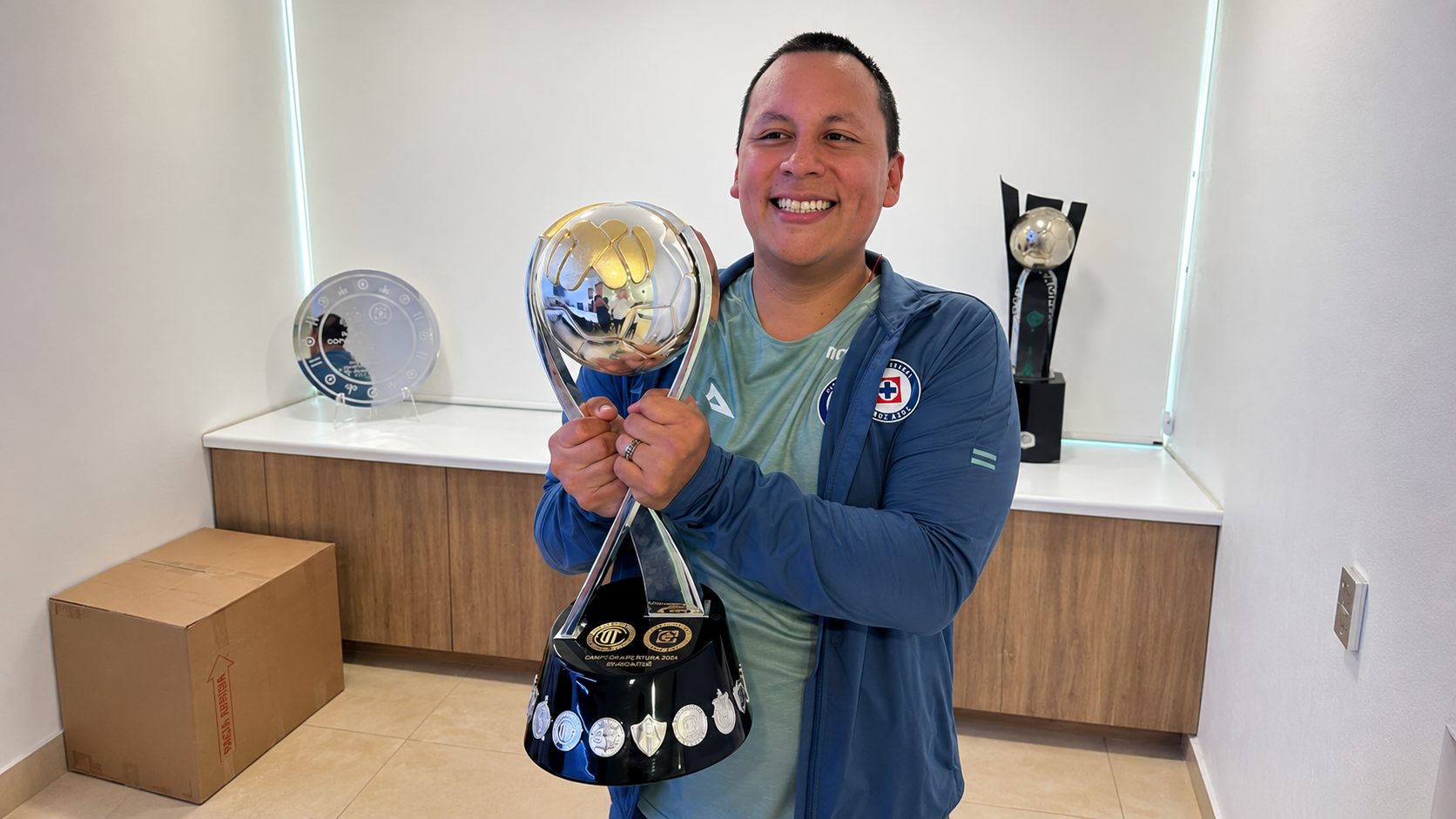
Profile
Role: Sports Intelligence Analyst at Cruz Azul
Specialisation: Sports intelligence, performance analysis and data science
Experience: Sporting operations and organizational management at Cruz Azul
Focus Areas: Player and team performance, tactical analysis, match preparation, data infrastructure, recruitment and strategic planning
Bridging Football Analytics and Decision-Making
Romel Alejandro Hernández Reséndiz represents a new generation of football data analysts who bridge the gap between advanced analytics and practical decision-making on the training ground. Combining expertise in sports intelligence, performance analysis, and data science with hands-on experience inside one of Mexico’s biggest football clubs, he has built a profile focused on transforming complex information into competitive advantages for coaches, sporting directors, and performance departments.
Sports Intelligence at Cruz Azul
Currently serving as Sports Intelligence Analyst at Cruz Azul, Hernández works at the heart of the club’s sporting operations, analyzing both player and team performance while delivering actionable insights that support technical staff and executive decision-makers. His responsibilities extend beyond reporting, contributing to match preparation, performance evaluation, tactical analysis, and the modernization of the club’s data infrastructure within the first team’s performance department. His work has coincided with one of Cruz Azul’s most successful periods in recent history, including Liga MX, Campeón de Campeones, and CONCACAF Champions Cup titles.
From Organizational Analysis to Football Intelligence
Before transitioning into football analytics, Hernández developed experience in organizational management and operational analysis within Cruz Azul’s Human Resources department, strengthening his understanding of how data can improve both sporting and organizational performance. This combination of operational management and football intelligence allows him to approach decision-making from multiple perspectives.
Technical and Academic Development
Academically, Hernández has continuously invested in his development, completing specialist education in football tactical analysis, machine learning, sports analytics, and data science through institutions including Barça Innovation Hub, StatsBomb, and BEDU. With advanced knowledge of Python, SQL, Excel, Looker Studio, and machine learning, he combines technical expertise with the communication skills required to translate data into practical football solutions.
The Future of Data-Driven Football
As football continues to embrace data-driven decision-making, Hernández represents a modern football analyst capable of integrating performance analytics, sporting intelligence, and technological innovation into high-performance environments. His ambition is to continue helping clubs improve recruitment, performance, and strategic planning through intelligent use of football data.
Key Insights
- Hernández combines advanced data analysis with practical football decision-making inside Cruz Azul.
- His work focuses on translating complex information into tactical and performance insights that coaches and decision-makers can use.
- He sees future opportunities for football analytics in player development and the psychological and social aspects of team management.
Our Exclusive Interview with Romel Alejandro Hernández Reséndiz
Football clubs generate more data than ever before, yet many still struggle to turn information into better decisions. In your experience, what separates clubs that truly use data as a competitive advantage from those that simply collect it?
The initiative of the key figures of the organization, such as Head Coaches, General Managers, and/or Shareholders, is what pushes forward or backward with the data. As analysts, we can foster a more data-driven culture by working on our relationships with these key figures and backing our findings with results—given that football is a sport that gives the big spotlight to the winner’s record: victory hides what defeat highlights.
As analysts, we can foster a more data-driven culture by working on our relationships with these key figures and backing our findings with results—given that football is a sport that gives the big spotlight to the winner’s record: victory hides what defeat highlights.
At Cruz Azul, you work closely with both technical staff and decision-makers. How do you translate complex data into practical insights that coaches can immediately apply on the training ground and during matches?
At Cruz Azul, I have pushed to translate data into KPIs that make sense in a tactical language, but even with that simplification, the need for ultra-contextualization of these findings pushes us to keep overfitting the language and concepts, crafting a very personalized suite of reports and key insights for each head coach and staff member.
At Cruz Azul, I have pushed to translate data into KPIs that make sense in a tactical language, but even with that simplification, the need for ultra-contextualization of these findings pushes us to keep overfitting the language and concepts, crafting a very personalized suite of reports and key insights for each head coach and staff member.
With advances in artificial intelligence and machine learning, how do you see the role of the football data analyst evolving over the next five years, and which areas of the game do you believe remain underexplored through data?
AI plays a key role in ALL work nowadays, so I have pushed to integrate data in the most organic and practical way possible, always trying to make it “make sense” to our context and polishing each area where the over-contextualization needed for useful insights might get lost. We need to evolve as analysts to be able to offer a suite of leads to ease the tactical side of coaching and maybe explore ways to start accounting for the psychological or social aspects of management and chemistry within the team, the staff, and the head coach.
We need to evolve as analysts to be able to offer a suite of leads to ease the tactical side of coaching and maybe explore ways to start accounting for the psychological or social aspects of management and chemistry within the team, the staff, and the head coach.
Having contributed to one of the most successful periods in Cruz Azul’s recent history, what type of sporting project would most excite you in the future, and how do you believe data analysts can play a more strategic role within modern football organizations?
The development of players is what currently takes up much of my time—all the factors that might or might not be key for a youngster to become a 1st division player. I am always pushing to try to find what qualitative aspects may be within our reach to start playing a big role in supporting the more human aspects of management for the head coaches, boosting their decision-making.
FAQ
Who is Romel Alejandro Hernández Reséndiz?
Romel Alejandro Hernández Reséndiz is a Sports Intelligence Analyst at Cruz Azul whose work combines performance analysis, sports intelligence and data science.
What does Romel Alejandro Hernández Reséndiz do at Cruz Azul?
He analyzes player and team performance and contributes to match preparation, performance evaluation, tactical analysis and the modernization of the club’s data infrastructure.
What technologies does Romel Alejandro Hernández Reséndiz use?
His technical knowledge includes Python, SQL, Excel, Looker Studio and machine learning, alongside specialist education in football tactical analysis, sports analytics and data science.