

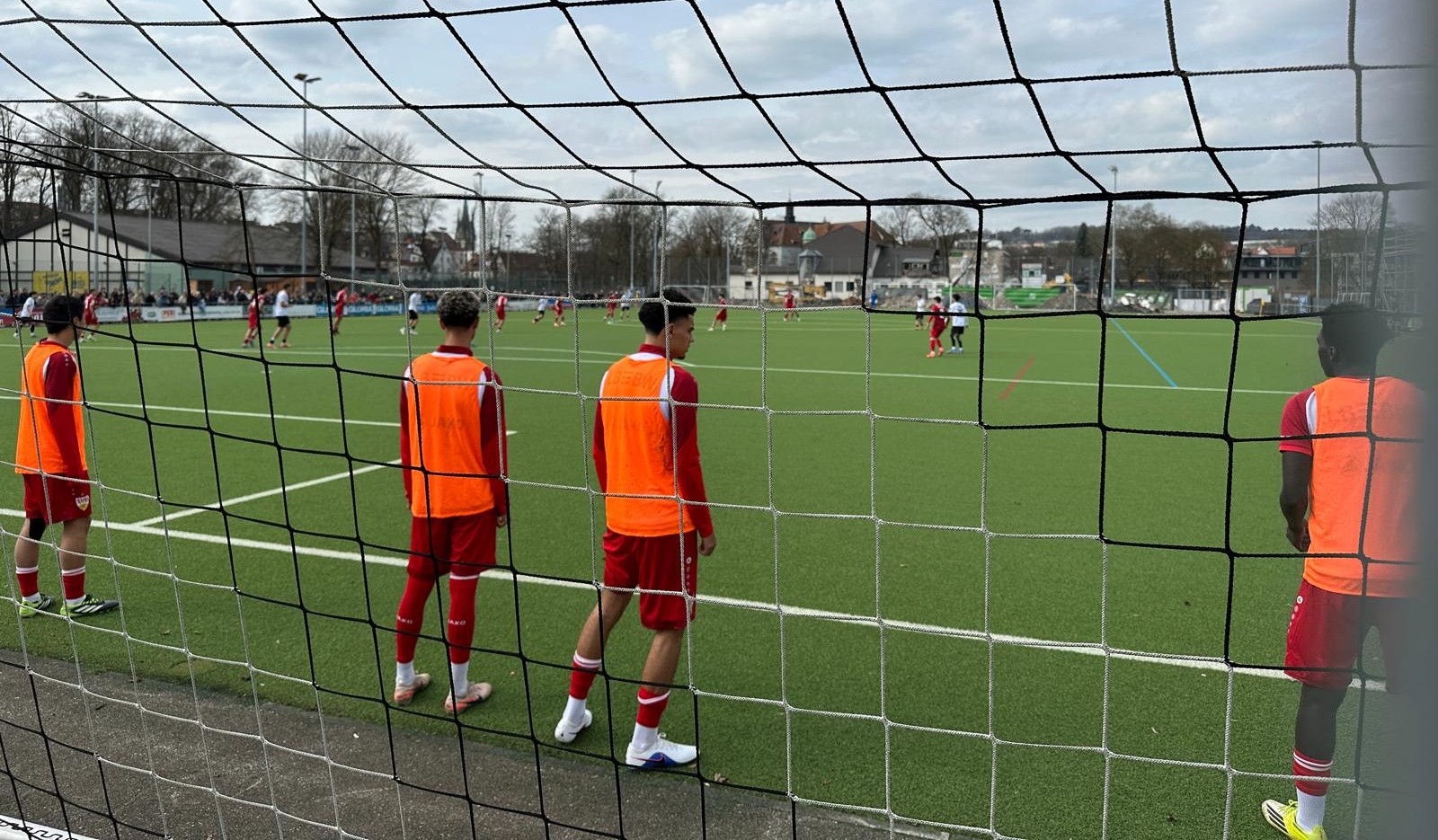
Turkish football invests heavily in development.
Facilities are modernised. Training technology improves. Coaches collect new licences. Clubs invest in performance data, video analysis, strength and conditioning and increasingly sophisticated scouting structures.
Yet one area of player development still receives nowhere near the same structural attention: psychological and mental performance support.
This is not an argument against the work already being done inside Turkish academies. Nor is it a claim that the Turkish Football Federation or individual clubs are unaware of psychology. In fact, the TFF continues to organise education in Psychological Performance Consulting for football professionals, including a course for the 2026/27 season.
The problem is different.
Awareness is not the same as institutionalisation.
Awareness is not the same as institutionalisation.
If psychological development is considered as fundamental as technical, tactical and physical development, then mental performance professionals cannot remain peripheral to the academy structure. They must become part of the everyday development environment.
And the data gives Turkish football strong reasons to take this seriously.
The Pressure Already Exists Before Players Enter the Academy
Before discussing football, it is important to understand the environment in which young Turkish players are growing up.
According to the OECD’s PISA 2022 data, Türkiye recorded an average life satisfaction score of 4.9 among 15 year olds, ranking 73rd out of 73 participating countries and economies with available data.
The same OECD database places Türkiye 5th out of 76 countries and economies for mathematics anxiety, with an index score of 0.59.
The OECD’s Türkiye country report provides another striking number. In 2022, 44 percent of Turkish students reported that they were not satisfied with their lives, compared with 34 percent in 2018.
Mathematics anxiety is obviously not the same thing as a clinical anxiety disorder. Nor does PISA measure the psychological condition of football academy players specifically.
But these figures matter.
They describe the broader emotional and performance environment of the same generation from which football academies recruit their players.
These young people do not leave their lives at the academy entrance.
They bring school pressure with them.
They bring family expectations.
They bring uncertainty about their future.
They bring social media.
They bring comparison.
And then football adds another layer.
Selection.
Competition.
Playing time.
Contracts.
Injuries.
Expectations.
And the permanent possibility that one decision from a coach or academy can change the direction of their career.
The Broader Mental Health Picture Is Equally Concerning
The AXA Mind Health Study 2024, conducted with Ipsos, surveyed 16,000 adults across 16 countries. The global study found that 32 percent of respondents reported currently experiencing a mental health condition, while younger respondents were disproportionately affected. Among 18 to 24 year olds, 39 percent showed severe or extremely severe levels of depression, anxiety or stress.
Country level reporting from the same study placed Türkiye particularly high. Thirty eight percent of respondents in Türkiye reported living with mental health conditions such as depression, anxiety or eating disorders. Türkiye ranked second among the 16 countries examined, and the reported figure had increased by eight percentage points compared with the previous year.
Again, this does not mean that 38 percent of Turkish academy players have a mental health disorder.
That conclusion would be scientifically incorrect.
But it gives us important context.
The environment surrounding young footballers is already carrying considerable psychological strain before elite sport adds its own demands.
Then Add Elite Youth Football
In February 2026, Sport Sciences for Health published one of the most comprehensive systematic reviews to date on mental health and wellbeing among youth football players.
Researchers analysed 25 studies involving 7,123 footballers between the ages of 12 and 19.
The findings were significant.
Across the included studies, elevated symptoms were reported in:
- 8 to 21 percent for anxiety
- 6.5 to 40 percent for depression
- up to 37 percent for psychological distress
- 17 to 30 percent for impaired wellbeing
- 11 to 17 percent for disordered eating
The authors emphasised that these numbers represent screening based symptoms rather than clinical diagnoses, and because only a limited number of studies provided prevalence figures, they should not be interpreted as pooled global prevalence rates.
That distinction matters.
But so does the conclusion of the review.
The researchers explicitly called for regular mental health screening, coach education, psychological skills training and multidisciplinary support within youth football.
In other words, psychological development is not an optional addition to modern player development.
It is part of it.
In other words, psychological development is not an optional addition to modern player development.
The Environment Can Develop a Player or Damage Him
Football itself is not the problem.
Sport can provide belonging, discipline, confidence, friendships, identity and resilience. Research consistently demonstrates the positive psychological and social effects that organised sport can have on children and adolescents.
But the environment determines whether those benefits are realised.
The 2026 youth football review identified several risk factors associated with poorer mental health and wellbeing. These included perfectionistic concerns, irrational performance beliefs, sleep problems, increased training load and, importantly, disempowering coaching climates. Conversely, empowering environments, transformational leadership, healthy motivation and the satisfaction of basic psychological needs were identified as protective factors.
Development Goes Beyond Training Methodology
This is where academy development becomes much bigger than formations and training methodology.
How does a coach communicate after a mistake?
What happens when a player loses his starting position?
How is criticism delivered?
What does a 15 year old believe being dropped from the squad says about his value as a person?
How are parents managed?
How does a player cope when his teammate receives a professional contract and he does not?
Who prepares a player psychologically for release?
These are development questions.
The Influence of Coaching Behaviour
Research in youth football also shows that coaching behaviour can influence whether players even want to remain in the sport. A longitudinal study involving 552 young footballers found that increases in autonomy supportive coaching were associated with stronger autonomous motivation and lower dropout intentions. More controlling coaching behaviour was linked with greater controlled motivation and amotivation, which in turn was associated with stronger intentions to leave football.
The difference between an environment that develops players and one that slowly destroys their confidence is not always visible during a training session.
But psychologically, it can be enormous.
The Modern Academy Player Is Dealing With More Than Football
A young academy player today is not simply learning how to become a better footballer.
He is simultaneously trying to understand who he is.
He is attending school.
He is navigating adolescence.
He is managing relationships with parents, coaches and teammates.
He is comparing himself with thousands of other players online.
He watches players his own age signing professional contracts.
He sees transfer announcements, luxury lifestyles and success stories every day.
And somewhere in the background sits one persistent question:
What happens if I do not make it?
When Football Becomes an Identity
For some young players, football gradually becomes more than something they do.
It becomes who they are.
That makes every setback more dangerous.
Being released is no longer interpreted simply as the end of one academy journey. It can feel like the loss of an identity.
Research involving academy players who experienced deselection has documented anxiety, depression, identity difficulties and longer term psychological challenges following release from elite football environments.
A serious academy therefore cannot prepare players only for success.
It must also prepare them for uncertainty.
Turkish Football Does Not Need Another Luxury Position
Mental performance professionals should not be viewed as another expensive specialist reserved for the richest clubs.
Their work can touch almost every stage of development.
They can help players build confidence without making their self worth dependent on selection.
They can develop routines for pressure situations.
They can teach emotional regulation.
They can support players during injury.
They can work with coaches on communication and motivational climates.
They can educate parents.
They can help young players cope with social media, comparison and expectations.
They can support transitions between age groups and towards professional football.
And they can recognise when a player’s difficulties exceed the boundaries of mental performance coaching and require referral to a qualified psychologist, psychiatrist or other clinical professional.
Mental Performance and Clinical Support Are Not the Same
That final distinction is essential.
A mental performance coach is not a replacement for a clinical psychologist.
A serious academy structure needs clear responsibilities, professional boundaries and referral pathways. The objective should be a multidisciplinary environment in which technical development, physical development, education, psychological performance and mental health support work together.
That is exactly the direction contemporary research recommends.
The Question Is No Longer Whether Mental Support Matters
Turkish football has talent.
That has never been the fundamental problem.
The more important question is whether the system surrounding that talent is complete enough to convert potential into sustainable performance.
We invest in pitches.
We invest in gyms.
We invest in GPS systems.
We invest in cameras.
We invest in analysts.
We invest in coaching education.
But the most sophisticated training facility in the country cannot compensate for a young player who is terrified of making a mistake.
The best physical development programme cannot solve a player whose confidence has collapsed.
And tactical education alone cannot prepare a teenager for family expectations, social media pressure, school responsibilities, selection decisions and the possibility that the career he has imagined since childhood might suddenly disappear.
Technical development without psychological development is an incomplete model.
Technical development without psychological development is an incomplete model.
Changing the Conversation in Turkish Academies
Türkiye’s young players are growing up in an environment where the OECD already records exceptionally low life satisfaction and exceptionally high mathematics anxiety among 15 year olds. International football research simultaneously shows significant psychological challenges within youth football itself.
Those two datasets cannot simply be added together to calculate the mental health of Turkish academy players.
But they should be enough to change the conversation.
The clubs that understand this first will not simply produce healthier young people.
They will create better learning environments.
Better decision makers.
More resilient players.
And ultimately, better footballers.
Mental performance support is not a luxury for elite football academies. It is part of the infrastructure of serious player development.
Sources
- OECD, PISA 2022, Türkiye Student Performance and WellbeingOECD Education GPS. Türkiye ranked 73rd of 73 for average student life satisfaction and 5th of 76 for mathematics anxiety.
- OECD, PISA 2022 Results, Country Note: TürkiyeThe OECD reported that 44 percent of students in Türkiye rated their life satisfaction between 0 and 4 out of 10 in 2022, compared with 34 percent in 2018.
- AXA, 2024 Mind Health Report, conducted with Ipsos16,000 respondents across 16 countries. The report found that 32 percent of respondents globally reported a current mental health condition and that younger adults were disproportionately affected. The Türkiye specific figure of 38 percent and second place among participating countries was reported from the country level results of the study.
- Praisan et al., “Mental health and well being in youth football players: a systematic review”, Sport Sciences for Health, 202625 studies, 7,123 players aged 12 to 19. DOI: 10.1007/s11332-026-01677-x.
- Fabra et al., “Motivational Antecedents of Young Players’ Intentions to Drop Out of Football during a Season”, 2023Longitudinal research examining coaching behaviour, motivation and dropout intentions among 552 young football players. DOI: 10.3390/su15031750.
- Domínguez González et al., research on empowering and disempowering coaching climates in football, 2024The 2026 systematic review identified disempowering coaching climates as a risk factor associated with anxiety and insecurity among young footballers. DOI: 10.1177/17479541241269315.
- Turkish Football Federation, Psychological Performance Consulting Education, 2026/27 seasonThe TFF continues to provide dedicated education in psychological performance consulting, demonstrating that the discipline is formally recognised within Turkish football.