
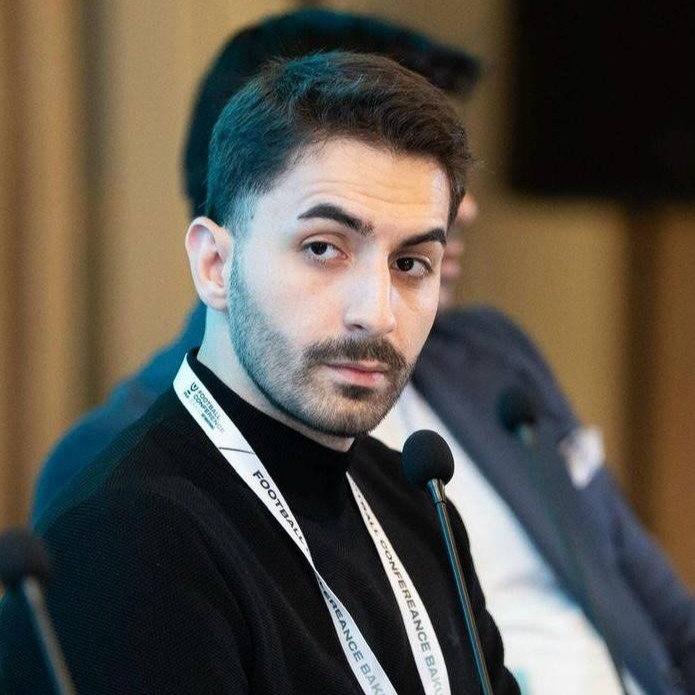
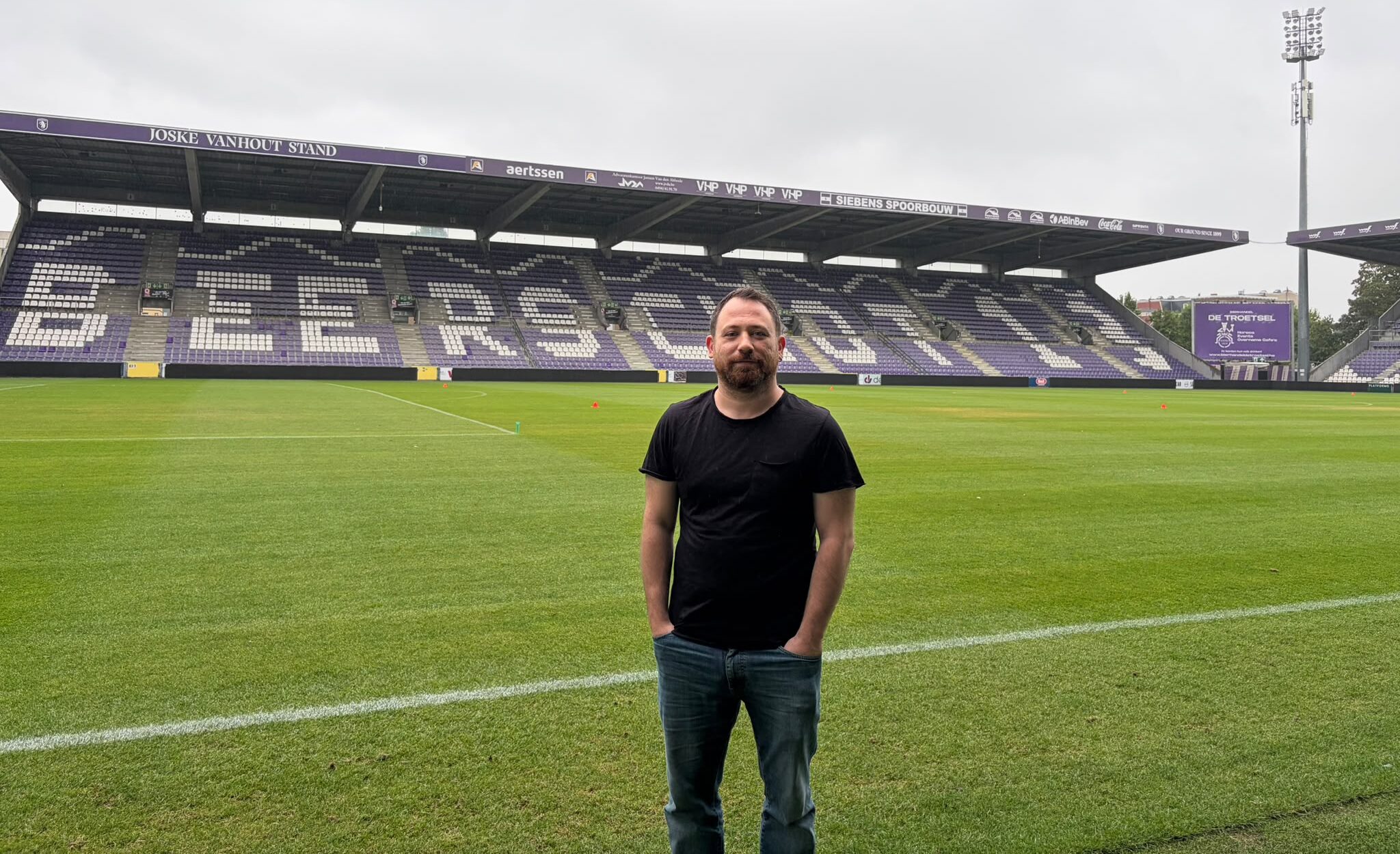
Profile
Role: Chief Scout, Beerschot
Specialisation: Scouting technology, recruitment structures and player identification
Experience: Beerschot, Sport Republic, Besiktas, Fenerbahce, Nike scouting operation in Turkey, Wyscout, SportsTec, Hudl and Comparisonator
Focus Areas: Recruitment technology, player identification, scouting structures, multi club scouting and talent development
Bringing Modern Scouting Technology to Turkish Football
Dehan Ögetbil belongs to a small group of professionals who did not simply adopt modern scouting technology in Turkish football, but actively brought it into the country. Long before data platforms and video analysis tools became standard equipment at Turkish clubs, he was the person introducing them, supporting them, and teaching clubs how to use them. That early position has given him a perspective almost nobody else in the market holds, because he understands recruitment technology from inside the industry that builds it and from inside the clubs that work with it every day.
His career began on the technology side of the game. Between 2012 and 2016 he worked in scouting with gutto.biz while serving as the Turkey support representative for Wyscout and SportsTec, the platforms that would go on to define how clubs across the world watch, filter, and evaluate players. He later worked as sales and support representative for Hudl before moving into consulting for Comparisonator. Few scouts anywhere have this depth of fluency across Prozone, SportsCode, Wyscout, Hudl, Opta, and Comparisonator, and fewer still have spent years teaching other professionals how to work with them.
Leading the Nike Scouting Operation in Turkey
Between 2016 and 2018 he led the Nike scouting operation in Turkey as Chief Scout, delivered through gutto.biz. The role placed him at the head of a talent identification structure carrying the name of one of the most recognisable brands in world football, responsible for scouting and evaluating players across the Turkish market and for the standards by which that work was carried out. Running a project of that visibility, in the same years he was scouting for a club competing at the top of the Turkish league, required both volume of work and consistency of judgement.
Working at Besiktas and Fenerbahce
That technical foundation became genuinely valuable when he moved fully into club scouting. At Besiktas he served as senior team scout from 2016 to 2018 and returned as Chief Scout between 2020 and 2021, periods that coincided with two Turkish championships. Between those spells he worked as senior team scout at Fenerbahce, making him one of the very few recruitment professionals trusted inside both Istanbul giants. Working at rival clubs of that scale, with the scrutiny and pressure that comes with them, requires not only technical ability but discretion, judgement, and a reputation that survives the intensity of Turkish football.
Sport Republic and the Multi Club Environment
From 2023 to 2024 he worked as senior team scout within Sport Republic, the multi club group that owns Southampton, Goztepe, and Valenciennes. That period produced two promotions in a single season, Goztepe to the Turkish Super Lig and Southampton to the Premier League, placing him inside one of the most modern and structurally ambitious ownership models in European football and extending his experience beyond the Turkish market into an international group environment.
Leading Recruitment at Beerschot
Since January 2025 he has served as Chief Scout at Beerschot in Belgium, a step that moved his career fully into the European market. Belgium is one of the most respected development and selling environments in world football, a league built on identifying talent early, improving it, and moving it on to bigger competitions. Leading the scouting department of a club in that ecosystem places him exactly where his combination of technical fluency and recruitment instinct is most valuable, and it confirms that his methodology transfers well beyond the market where he built his reputation.
A Profile Built on Technology and Recruitment Judgement
What defines Dehan Ögetbil is the combination of two things that rarely sit together. He has the technical command of a specialist who taught the tools to others, and the club instincts of a scout who has worked under real pressure at institutions where every decision is examined publicly. He is a native Turkish speaker with advanced English and upper intermediate Spanish, holds a TFF C coaching licence alongside certification across the major analysis platforms, and has spent more than a decade building a picture of how recruitment genuinely works in one of Europe’s most demanding football cultures. In an era where clubs increasingly buy the tools but struggle to use them properly, he represents the profile that turns recruitment technology into actual decisions, which is the problem most departments have still not solved.
Key Insights
- Ögetbil helped introduce and teach modern scouting technology to Turkish clubs before these tools became widely adopted.
- His experience spans major Turkish clubs, a multi club ownership structure and the Belgian development market.
- He believes effective scouting depends on combining technology with professional judgement, structure and patience.
Our Exclusive Interview with Dehan Ögetbil
Scouting Technology, Recruitment Structures and Player Identification
You were introducing platforms like Wyscout, SportsCode, and Hudl to Turkish clubs at a time when very few people here understood what they were for. What was the resistance like in those early years, and what finally convinced clubs that these tools were worth taking seriously?
In the beginning, most clubs were reluctant to use these tools because of a lack of knowledge. And I am not talking only about smaller budget clubs. Even the big budget clubs were hesitant. They saw these platforms as unnecessary expenses.
The reaction of board members was understandable because they were not necessarily experts in the football business. But even football professionals were sometimes reluctant to use these platforms. There was not enough education at the time to broaden people’s vision, and many professionals were simply afraid to enter a new world and leave their comfort zone.
I realised that I needed to change my approach. Instead of just explaining what the platforms could do, I started showing clubs analysis of their own teams, their strengths, weaknesses, and the areas they could improve. My main goal was to make them understand that these tools could genuinely help them and, more importantly, that they were not as difficult to learn and use as they might have thought.
My main goal was to make them understand that these tools could genuinely help them and, more importantly, that they were not as difficult to learn and use as they might have thought.
With the growth of technology in our daily lives, the new generation naturally became much more comfortable with these kinds of tools. It did not happen rapidly, but over time clubs started to change their perception. Another factor was seeing the biggest clubs in Europe using the same products. That gave these platforms much more credibility in the eyes of Turkish clubs.
Eventually, clubs started inviting me to their facilities and asking me to spend several days with their professionals, training them to use these tools. The challenge was still there with some old school coaches, who were resistant to technology even when analysts and scouts were already using it effectively. But that is changing as a new generation of coaches comes through.
Today, some Turkish clubs are making serious investments in technology, and I think they are gradually closing the gap with European clubs.
Having worked on both sides, selling and supporting the technology and then using it daily inside clubs, what do you see clubs consistently get wrong about these platforms? Where does the gap between owning a tool and actually extracting value from it appear?
When I was working as a support and trainer, the main problem I saw was a lack of knowledge among professionals. They were entering a completely new world and had to learn many new things. Some adapted very quickly, while others needed more time and training because they did not yet understand what they could actually extract from these tools.
With those professionals, I always tried to go from simple to advanced. I would first ask them to do a very basic analysis, make sure they understood the logic behind it, and then gradually push them towards more advanced work. The important thing was not just teaching them which buttons to press, but helping them understand how the information could actually support their work and decision making.
What I can say today is that there are many talented and knowledgeable professionals working in Turkish football. Especially the new generation is very eager to learn, improve themselves, and push their limits. I have even seen professionals who did not have access to some of the most well known platforms but were still producing excellent work with very limited resources. That was always something that made me happy to see.
The new generation of coaches is also giving much more importance to technology. I think if club boards understand the value of these tools and recognise that investing in technology also means investing in their people, the new generation of professionals can produce some really impressive work.
Ultimately, that can raise the overall quality of Turkish football.
You have worked as a scout at Fenerbahce and as both scout and chief scout at Besiktas. What changes about the job when you are working inside clubs of that size, where every signing is debated publicly before the player has even arrived?
I made a decision when I started my professional career that I would not use social media, because it can take a lot of time and there can be very harsh, and sometimes uninformed, comments about the decisions you make. That decision may not be ideal in the era we live in today, but it helped me stay focused on my work and avoid being influenced by outside opinions.
Of course, I am human, so from time to time I would still check what people were saying about some of my decisions.
There is one particular example from my career that I remember well. At one of the clubs I worked for, I strongly insisted on signing a particular player, and eventually the club decided to bring him in. Before the player arrived, I happened to see some of the public discussions and social media comments about the transfer. Around ninety per cent of them were negative.
But I did not allow those comments to affect my professional judgement. I believed in the player and I stood behind my recommendation. In the end, he had a great season with us and became a very popular figure among the fans.
But I did not allow those comments to affect my professional judgement.
When you work at a big club, you have to understand that every decision you make will be scrutinised. You cannot let that determine your judgement. You have to remain professional, make the decision you believe is right, and be willing to take responsibility for it.
The step from scout to chief scout is not only about seniority. What changed in your daily work and in your thinking when you became responsible for the department rather than for your own reports?
As a scout, you have responsibilities, but at the end of the day your main focus is on watching and analysing players, writing your reports, and completing your assignments. You are primarily responsible for your own work. You are not necessarily the person making the final decisions or sitting in regular meetings with the sporting director, coach, or board.
When I became chief scout, it was a completely new world for me.
I still had to scout players, analyse them, and write reports like every other scout. But at the same time, I had to assign scouts to different tasks, review their analysis and reports, hold regular meetings with them to optimise the workflow and improve efficiency, and sometimes even support them with personal issues that could affect their work.
I was also suddenly in direct and regular contact with the sporting director and board members. Instead of simply giving my opinion, I had to make decisions, stand behind them, and ultimately face the consequences of those decisions.
I think the biggest change was in my mindset. As a scout, I was often more idealistic. As a chief scout, I had to become more realistic and pragmatic. I had to consider the club’s financial situation, objectives, immediate needs, and overall strategy when making decisions.
So becoming a chief scout was not simply about having more seniority. It meant taking responsibility for an entire process and, more importantly, for the people and decisions within that process.
Working inside Sport Republic placed you in a multi club structure where Goztepe won promotion to the Turkish Super Lig and Southampton went up to the Premier League in the same season. How does scouting for a group differ from scouting for a single club, and what does that model make possible that a standalone club cannot do?
Being part of Sport Republic was a great experience, and it added a lot to me both as a scout and as a football person.
The organisation placed a lot of importance on scouting and had scouts based in different parts of the world. That allowed us to cover many regions and identify talent from different markets, something that would be extremely difficult for a standalone club to achieve on its own.
For me personally, one of the biggest advantages was being able to see the reports of other scouts, understand their perspectives, and learn how they approached different aspects of a player. That exposed me to different ways of thinking and improved me significantly.
We were constantly cross scouting players. I might watch and analyse a player from one part of the world while another scout was doing the same from a different perspective. Sometimes we reached similar conclusions, and sometimes we saw completely different things. Both were valuable because they allowed the organisation to build a much more complete picture of a player before making a decision.
That kind of structure creates a level of knowledge and information that is very difficult for a standalone club to replicate.
That kind of structure creates a level of knowledge and information that is very difficult for a standalone club to replicate.
And ultimately, it was not only about the sporting success. The organisation was also able to make significant player sales, which helped the group grow over the years. So I think the multi club model can create both sporting and financial opportunities when the scouting network is structured and used effectively.
Since January 2025 you have led the scouting department at Beerschot. Belgium is regarded as one of Europe’s strongest development and selling markets, which is a very different logic from the Turkish clubs you came from. What did you have to change in your recruitment thinking when you moved into that environment?
For most of my career I worked at big clubs in Türkiye, where the pressure to be successful every season was enormous. The budgets were significantly higher than at Beerschot, but so were the expectations. Every year we had to build a team capable of competing for the championship and in European competitions.
At the same time, a part of me always wanted to work in an environment where I could be more creative.
That is one of the things I really appreciate about Beerschot. Here we can think both short term and long term. Of course there is still a strong desire to be successful every season, but I also have the opportunity to identify young, talented players who can develop and create value for the club over the long term.
Working with a different budget and scouting leagues and markets that I had not previously worked in was a completely different challenge, but it was one I really enjoyed. It has given me the opportunity to be more creative, apply my ideas, find hidden gems, and solve problems that I had not faced during the earlier stages of my career.
That has pushed me to improve myself as a football person.
At the big clubs in Türkiye, there were often several layers I had to work through before I could implement an idea. At Beerschot I have been given much more freedom and responsibility, which allows me to be more creative and take ownership of my decisions.
And I have to say that the commitment and dedication of the Beerschot fans is not different from what you see at the big clubs in Türkiye. That passion gives me additional motivation to work harder every day.
Having now worked inside both Turkish and Belgian football, what stands out most in how the two markets approach recruitment, and what could Turkish clubs realistically take from the way clubs in Belgium identify and develop players?
In Türkiye, unfortunately, there is generally less patience for long term planning. Whether you are a board member, coach, sporting director, or chief scout, there is enormous pressure to be successful every season.
For example, even if you have had a very successful previous season, if you fall behind your objectives in the current season your position at the club can immediately come under pressure. Some clubs can even change their plans and direction several times during a single season, which makes it extremely difficult to build and execute a long term strategy.
For me, the biggest difference in Belgium is the patience.
Here, clubs are more willing to invest in young players, give them time to develop, and use them when the time is right. If a player ultimately is not good enough to become part of your team, you can still potentially create value by developing and selling him.
Interestingly, considering the budgets involved, I actually think Turkish clubs have an even greater opportunity to make these kinds of investments. The potential is there, but because of the lack of patience and the pressure for immediate results, only a few clubs are able to consistently apply this model.
There is also an environmental difference. In Belgium, I think the overall environment and level of professionalism are very suitable for young players to develop.
So I would say the potential in Türkiye is definitely there. The challenge is creating the right environment and, most importantly, having the patience to allow a long term strategy to work.
FAQ
Who is Dehan Ögetbil?
Dehan Ögetbil is a scouting and recruitment professional who has worked across Turkish and European football and currently serves as Chief Scout at Beerschot.
What scouting technology experience does Dehan Ögetbil have?
His experience includes Wyscout, SportsTec, Hudl, Prozone, SportsCode, Opta and Comparisonator, including roles supporting and training football professionals in the use of scouting technology.
Which clubs and organisations has Dehan Ögetbil worked with?
His career has included roles with Besiktas, Fenerbahce, Sport Republic, Beerschot and the Nike scouting operation in Turkey, alongside work with major scouting and analysis platforms.