

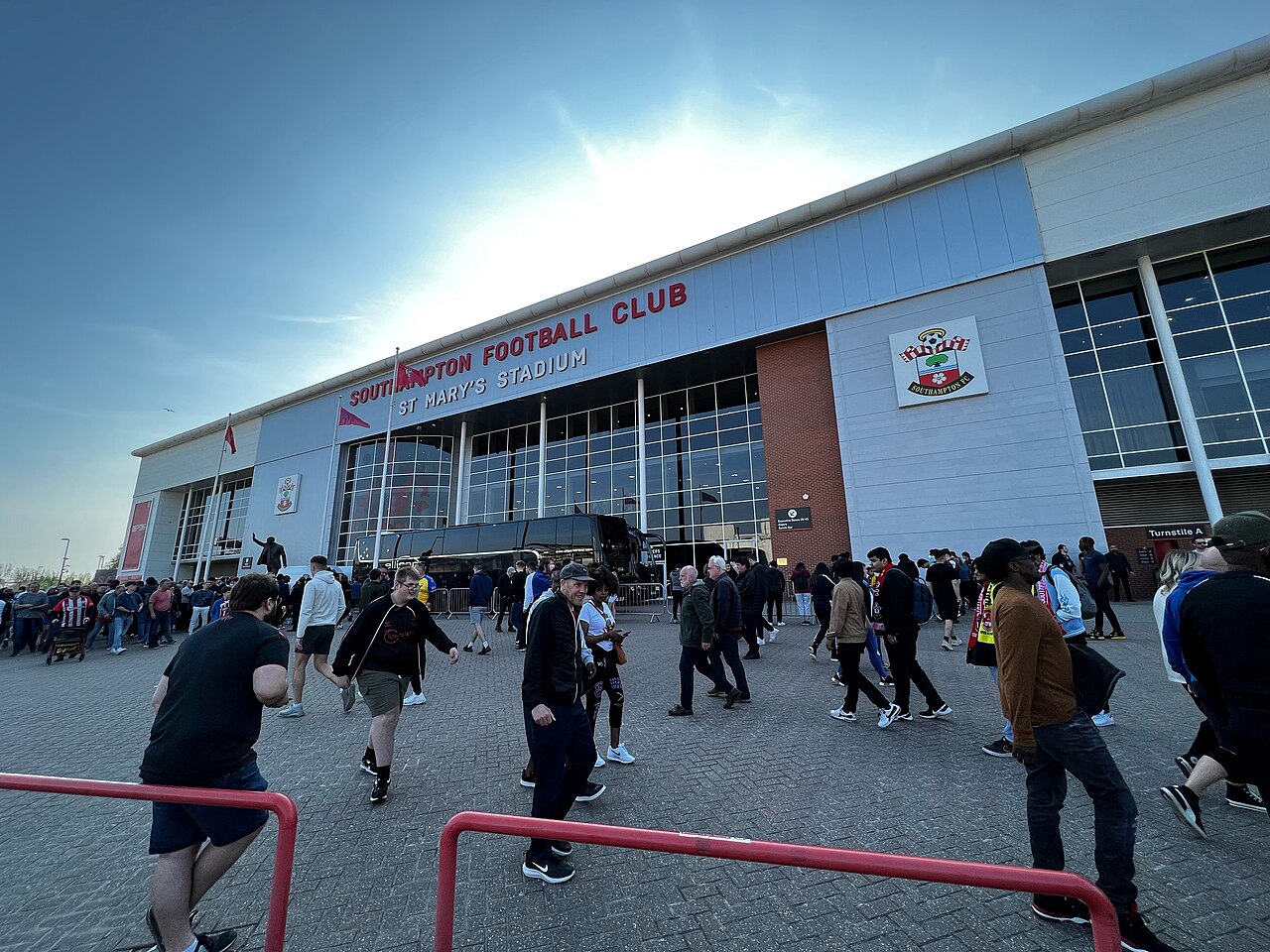

The Background
Southampton were 90 minutes away from starting the 2026/27 season in the Premier League. Now, they will begin their campaign at the very bottom of the Championship, four points behind all their competitors before a ball has been kicked.
On 7 May 2026, news in the football world was dominated by a photograph of an individual acting on behalf of Southampton Football Club (Southampton) filming on the premises of Middlesborough Football Club (Middlesborough) in advance of the Championship play-off semi-final between the teams two days later.
After a frenzied fortnight of speculation, an Independent Disciplinary Commission of the English Football League (EFL) announced their decision to expel Southampton from the play-offs on 19 May. This decision made headlines around the globe, attracting both praise and criticism as would be expected of a decision of this magnitude, with the huge financial and sporting ramifications.
Proving wrongdoing was not the key factor in this case. Southampton admitted the allegations of spying. Instead, the key factor was the determination of a sanction.
The EFL’s decision to disqualify Southampton from the play-offs has attracted criticism and controversy, however is part of a much larger trend within sports law and regulation to prioritise protecting the integrity of competition. The primary driving force behind the decision was not to punish Southampton in such an extraordinary way as to deter teams from attempting the same conduct in the future. Instead, it was a decision to correct, compensate and protect.
Instead, it was a decision to correct, compensate and protect.
This article will use a range of examples, with Southampton as the primary case study, to demonstrate the wider regulatory concepts and legal theory behind sporting sanctions.
The Rule
This article will not dwell on the facts of the event in question. Southampton admitted allegations of spying on three rival teams in advance of competitive matches against them: Oxford United in December 2025, Ipswich Town in April 2026 and Middlesborough in May 2026.
The reason this conduct ultimately led to Southampton’s expulsion from the play-offs is that it breached a rule of the EFL Regulations. The rule in question is Rule 127.1 of the EFL Regulations. Rule 127.1 states that “no Club shall directly or indirectly observe (or attempt to observe) another Club’s training session in the period of 72 hours prior to any match scheduled to be played between those respective Clubs”. The rule was introduced in 2019 after a similar situation arose in which a member of Leeds United was caught filming a training session of Derby County in advance of a Championship game between the two sides.
Unlike other regulations, there is no reference in Rule 127.1 to a specific sanction in the event of a breach. This meant that the EFL had relative freedom to determine and impose a sanction after the event. The sanction was decided by an Independent Disciplinary Commission of the EFL on 19 May 2026. Southampton were expelled from the Championship play-offs, losing their place in the play-off final against Hull City, which in turn was awarded to Middlesborough. Further, Southampton received a four-point deduction which is effective in the 2026/27 Championship season, meaning the club will begin the season on -4 points.
The Reasoning
The decision to expel Southampton was not without controversy but was made firmly within an established rationale. By examining previous EFL regulatory breaches and considering potential alternative sanctions the EFL could have constructed, a clear criteria and theory can be followed to explain Southampton’s expulsion.
In 2020, an EFL disciplinary commission in Derby v EFL (SR/017/2020) established the four purposes that a sanction against a football club should serve:
- Punishment of the club for the breach
- Vindication for other clubs not engaged in conduct that breached the rules
- Deterrence from future rule breaches, whether by the breaching club or other clubs.
- Restoration and preservation of public confidence in the fairness of EFL competitions.
The commission in the case stated that “any sanction that failed to achieve those aims would be inadequate”. Any of the potential sanctions that could have been applied to Southampton in this case should therefore be assessed through this lens.
In the absence of a pre-determined sanction for a breach of Rule 127.1, the role of the EFL commission in this case was to determine an outcome that appropriately balanced these four purposes. The pressures on the commission were numerous. Not only was there an incredibly tight deadline due to the practical requirement for the play-off final to be played on the 23 May, but there was also a complex sporting dimension whereby the interests of three teams (Southampton, Middlesborough and Hull City) had to be considered so as not to put any team that ultimately contested the final at significant advantage or disadvantage.
It would appear that expulsion does indeed achieve these aims set out in Derby v EFL. Southampton were certainly punished, Middlesborough’s vindication came from their chance to play in the play-off final, such a strong sanction would logically act as deterrence against future breaches, and immediate expulsion demonstrates the strength with which the EFL protect the fairness of their competitions.
However, due to the significance of the consequences, a deeper examination is required as to whether expulsion was the appropriate sanction in this case. Albeit in the context of a Profit and Sustainability Regulations (PSR) breach, the Commission of the Premier League’s decision in the Everton v Premier League case stated that it is “common ground that any sanction must be ‘proportionate’… to the legitimate aims pursued”. The definition of proportionality in the context of sporting sanctions was developed further in Russian Olympic Committee v International Association of Athletics Federations (CAS 2016/O/4684) (10 October 2016), in which a Court of Arbitration for Sport Panel said: “to be proportionate a measure must not exceed what is reasonably required in the search of the justifiable aim”.
If the ‘justifiable aim’ of the EFL in this case is interpreted as the satisfaction of the four criteria from Derby v EFL, the reasoning from the Russian Olympic Committee and Everton cases suggest that expulsion from the play-offs must have been a proportionate way of punishing Southampton, achieving vindication for the wronged teams and protecting the integrity of the competition. To determine proportionality, it must be identified whether expulsion went beyond what was reasonably required to punish the conduct of spying.
The question therefore becomes one of necessity. Could Southampton have been adequately punished, Middlesborough adequately vindicated, and EFL competition adequately protected, without resorting to expulsion from the play-offs. In order to answer this, a range of potential alternative sanctions must be considered.
The Alternatives
A Fine
One such sanction is a financial penalty. It was mentioned that Rule 127.1 was introduced following an event involving Leeds United and Derby County in 2019. On very similar facts, Leeds United were fined £200,000. Some spectators may feel that Southampton’s punishment vastly exceeds that of Leeds United. However, there are two crucial distinctions to be drawn. Firstly, the incident involving Leeds United took place during the Championship league season, not the play-offs. Secondly, and much more significantly, at the time that Leeds were sanctioned for their conduct, Rule 127.1 had not been implemented into the EFL Regulations. Instead, Leeds were fined for breaching Rule 3.4, which requires clubs to act with ‘utmost good faith’.
The Championship play-offs are a tournament of enormous financial magnitude. The final is colloquially referred to as “the richest game in football”. It is unlikely that a mere financial penalty would ever be enough to achieve the stated aim of punishing Southampton and providing an effective deterrent against future similar conduct. Even if it could, the value of the penalty would have to be extraordinarily high to be proportionate to the riches on offer in the play-off competition. Further, a financial penalty, if paired with continued progression in the play-off tournament, offers no vindication to the wronged team, in this case Middlesborough. It is of no consolation to an eliminated side that their rival will be fined. Considering the lack of effective punishment, deterrence, or vindication available, it would not follow to suggest that even a severe financial penalty adequately protects the fairness and integrity of EFL competition.
A Replay
Another alternative sanction that may on face-value appear more proportionate could have been to replay both legs of the semi-final. Again, the criteria from Derby v EFL will be used as a framework to assess the suitability of this option. This would be punishment for Southampton, as they would have lost, and would have had to re-earn, their place in the final. A second opportunity for Middlesborough to earn a spot in the richest game in football is reasonably clear vindication for the wrong that they suffered. The difficulty with this option is the other two criteria.
If the sanction for getting caught spying was merely a replay of the game, would that stop teams from trying to gain an unfair advantage? The options for a spying team would be simple: to either gain an advantage or not gain an advantage. The team would then either be caught or not be caught. If the team was not caught, there is no detriment to carrying out this wrongful conduct. However, the system relies on teams carrying out wrongful conduct being caught. If the sanction when caught is simply to replay the relevant game, there is no advantage to the spying team but equally there is no disadvantage. A framework that offers potential benefit to cheating without the threat of detriment provides no deterrence. In a game of such significant importance to a club’s sporting and financial future, this would undoubtedly impact the public confidence in the fairness and integrity of the competition.
A framework that offers potential benefit to cheating without the threat of detriment provides no deterrence.
A simple replaying of the affected game is not sufficient.
A Points Deduction
A sanction that will be familiar to many football fans is the points deduction. Teams that have suffered high profile deductions recently include Everton, Nottingham Forest, Derby County and Sheffield Wednesday. An observer may suggest that the familiar sanction of a points deduction is more proportionate in nature than an outright disqualification from a tournament.
In this case, Southampton suffered a deduction of four points to be applied to the next Championship season. Parallels may be drawn with the 2024 Olympics, where the Canadian Women’s football team carried out spying of a New Zealand training session in advance of a game between the two sides. In this case, the ultimate sanction was a 6-point deduction, a fine and a ban for some of the staff involved. However, a distinction must be drawn between this example and the Southampton case. The Canada case occurred in the group stage of a knockout tournament, where a points deduction can be much more easily applied.
Significantly, a points deduction cannot apply to knockout football. In a quest for proportionality, an equal of level of disadvantage to the team in breach is sought. One approach could be for the EFL to have applied a larger points deduction to the subsequent league season in respect of all the admitted breaches, including the play-off breach against Middlesborough. The clearest theoretical issue with this sanction is that it provides no vindication to Middlesborough whose position would be ultimately no different to what it would have been if no sanction had been applied. This would be a blatant failure in corrective justice. There are also clear failings in the quest to protect the fairness and integrity of EFL competition if teams consider an incentive to achieve promotion to the Premier League with the use of prohibited conduct and suffer a relatively minor points deduction as a consequence. The clearest practical issue with this sanction is that, if Southampton were allowed to continue into the play-off final and subsequently won promotion to the Premier League, the EFL would be helpless to impose a points deduction for the 2026/2027 season as Southampton would fall outside of their regulatory remit.
There are also difficulties if a points deduction was applied retrospectively to the 2025/2026 Championship league season.
The two breaches that occurred during the league season have resulted in a total points deduction of four points. If the breaches were all quantified in terms of league points, it appears that the EFL has attached a value of two points per breach. If all the breaches that Southampton admitted to were punished via a retrospective points deduction of 6 points, this would not have the desired effect in accordance with the principles from Derby v EFL.
Firstly, it provides almost no real punishment to Southampton. They would still have finished on 74 points and remain in the play-off places. They would also have still faced Middlesborough in the play-off semi-final (courtesy of Hull finishing 6th on 73 points) and therefore, if this was the chosen sanction, it would appear that the EFL would be left with one of two potential outcomes. Either the played result would stand, or the teams would replay the semi-final.
It has already been explored why this is not a desirable outcome.
If, because of the magnitude and importance of the play-off competition, the play-off breach was deemed more significant than the breaches during the league campaign and a greater points deduction was applied which threatened Southampton’s place in the play-offs altogether, this still remains an inappropriate option. If the breach occurred during the play-off tournament, the only way to nullify any advantage obtained through that breach is to apply a sanction to that specific tournament – rather than the league campaign table. This follows the same reasoning as the EFL’s request in the EFL v Derby that “any sanction imposed should ‘bite’ on a respondent in the season in which the relevant charge is upheld/guilt is established”. For the same reason that a sanction should be imposed in the same season as the breach, it follows that a sanction should be imposed in the same tournament as the breach.
Further, there are regulatory difficulties with imposing retrospective points deductions – which make a points deduction to the Championship league table unfeasible. Instead, the ‘live’ competition made more practical sense. EFL Rule 12.4 relates to financial insolvency, but reasoning by analogy can be used to evidence the regulatory barriers to a retrospective punishment within the EFL framework. Rule 12.4 explains that where a club becomes subject to an Event of Insolvency ‘outside the Normal Playing Season’ a points deduction shall apply in respect of the following Season. In the EFL Regulations 2025/26, ‘Normal Playing Season’ excludes any Play-off matches and concludes with the Club’s final fixture of the league season. If the EFL wished to apply their rules in a consistent manner, punishment via points deduction for this past season was unlikely to be a sound approach from a legal and regulatory perspective.
The Theory
In light of the alternative sanctions appearing insufficient or undesirable, there seems to be a clearer path towards the ultimate decision to expel Southampton from the play-offs. There is also a recent precedent of the EFL applying this reasoning and reaching the same outcome, albeit in a different example of administrative regulatory breach.
In January 2026, Swindon Town were expelled from the EFL Trophy when they fielded ineligible players. In that case, Luton Town, who Swindon had beaten in the match in question, were reinstated in the tournament and ultimately went on to victory in the final. The decision to expel, then, had a clear precedent and a clear theoretical reasoning.
The integral part of this theoretical reasoning is the weight that is given to each of the respective factors from Derby v EFL. Albeit in the context of PSR, the Premier League decision in Everton stated “in our view, as an aim of any sanction, punishment is far less important than maintaining the integrity of the competition and thus the sport of football, with deterrence being an important overlapping aim.” It is worth reiterating that the Premier League and the EFL are distinct bodies, and do not necessarily share identical views on these matters. However, if the EFL mirrored this stance as part of a broader synergy across the football leagues, this could be a likely reason that other types of sanctions were deemed insufficient. The priority of the EFL was not the mere punishment of Southampton, but the protection of the play-offs’ integrity and fairness. Indeed in the Commission’s report in the Swindon case it was stated that the most important of the aims was public confidence in the fairness of the EFL competitions. When viewed through this lens, it becomes clearer why the most severe response was ultimately deemed appropriate. Interestingly, it follows that protection of public confidence and fairness is a larger priority than vindication for a wronged opponent. Middlesborough’s reinstation into the play-offs was a tool through which the EFL could protect the integrity of its competition, not merely a simple fix to their lost opportunity of promotion.
In the Russian Olympic Committee case, CAS demonstrated that sporting sanctions must be proportionate. The examples above demonstrate that, whilst remaining within the bounds of proportionality, the sanction in the Southampton case had to be severe in order to meet the fundamental underlying requirements. The commission’s role can essentially be presented as identifying the least severe sanction that still adequately achieved the Derby criteria, chief among them the protection of the sport. Since protection and integrity is the key underlying motive in decision-making in this context, other seemingly sensible sanctions become inappropriate.
A useful framework to draw parallels with is the loss of a chance doctrine. In tort law, the doctrine is a principle that allows a party (the claimant) to claim damages for the loss of an opportunity, even where it cannot be proven on the balance of probabilities (i.e. a greater than 50% chance) that the opportunity or benefit would have, in reality, materialised. The golden standard for the loss of a chance doctrine is that the claimant was deprived of a “real and substantial opportunity”.
This is not to suggest that the commission directly applies tort law when making regulatory decisions. However, in a parallel system, any team seeking corrective justice in the Southampton case would have had to demonstrate a loss of a chance of success.
A complicating factor is that success in sport is subjective. Ipswich were seeking promotion to the Premier League when Southampton spied on them. They ultimately were promoted automatically end at the end of the season, and it would therefore be difficult to suggest that they lost any opportunity of success, and therefore required vindication.
Conversely, Oxford United were trying to survive a Championship relegation battle. They were ultimately unsuccessful in this quest, but they were victorious in their game against Southampton, prior to which Southampton had spied on Oxford’s training session. It therefore is an uncomfortable claim to suggest that Southampton’s wrongdoing deprived Oxford of an opportunity.
It is unlikely on this basis, then, that either of these two teams would have sought corrective justice on the grounds that they were deprived of an opportunity for success by Southampton’s conduct.
What is clear from the discussed alternative sanctions above is that the criterion of vindication plays a crucial role in determining the type of sanction that is ultimately appropriate. Where the regulatory bodies prioritise correction and protection over punishment, restoring the rights of the affected party becomes pivotal. But when a set of breaches have widespread and remote ramifications, the question becomes where the limits of corrective justice lie.
The Limit
An interesting example is Wrexham. The structure of the play-offs (prior to its format change from the 2026/27 season onwards) is simple. Four teams contest the semi-finals. The winners play in the final. The winner of that game is promoted to, in the case of the Championship play-offs, the Premier League. If a team is removed from the tournament, some may wonder why they are not replaced by the next most deserving team to maintain this four team structure.
As evidenced by the Swindon Town case, there is an EFL precedent for a team who had been knocked out of a competition being reinstated. It is a more complex concept for a team who had never qualified for a competition being instated at the expense of an expelled team. Without an EFL precedent, perhaps the most high-profile recent example is Nottingham Forest being instated into the Europa League in 2025/26 when Crystal Palace were expelled for reasons relating to UEFA multi-club ownership regulations. This is because, but for Crystal Palace’s qualification courtesy of winning the 2025 FA Cup final, Nottingham Forest would have qualified for the competition in their place.
Could the EFL have chosen to follow this footballing precedent, redrawing the play-offs after Southampton’s expulsion to include the team who finished 7th in the Championship, Wrexham, at their expense?
This would provide vindication to Wrexham. The difficulty lies in the proportionality of the measure and the remoteness of any Wrexham claim. It has been argued that the task for the commission was the identification of a sanction that was the least severe punishment without diluting any of the aims of sanctioning. Unfortunately for Wrexham, their addition to a re-drawn play-off competition does not fall under this scope.
This is predominantly due to the regulatory thresholds. With reference to Derby v EFL and using the analogy of Rule 12.4, it was argued that a sanction for a breach occurring during the play-offs had to be administered in those same play-offs. Therefore, the scope of teams requiring vindication could only be limited to those competing in the play-offs. That excludes Wrexham. Southampton qualified fairly for the play-offs. Even if the four-point deduction was applied retrospectively, which has been argued would have been inappropriate, Southampton would have still qualified over Wrexham. Wrexham were simply not a team within the scope of corrective justice in this case, because they were not competing in the competition through which it was awarded.
Another complicating factor is the remoteness of Wrexham’s claim. If the play-offs were redrawn without Southampton, Wrexham would have featured. To say they would have made the final is speculative. To say they would have won the final is even more speculative. Although anything is possible in knockout football, and unexpected results are commonplace in all tournaments, it would be difficult to accurately quantify Wrexham’s chances of being promoted to the Premier League. But for the fact that Wrexham were effectively excluded from consideration because of the reasons given above, it would have been interesting to see whether they were able to succeed in proving they had a ‘real and substantial opportunity’ of succeeding in a hypothetical re-drawn play-off tournament. As it is, the scope of corrective justice in this case does not extend to teams outside of the tournament in which the breach took place. If it did, it would risk opening the floodgates of mass litigation, as each team jostled to improve their final league positioning, and consequent financial reward.
The Conclusion
It would be simple to say that Southampton’s expulsion was a punishment. In a practical sense, that is true. When examining the reasoning behind the sanction-process, that remains true. However, the sporting sanctions explored in this article suggest something else is the driving force. As in much of tort law, where someone is left disadvantaged because of the wrongful conduct of another, the examples of Crystal Palace, Swindon Town, Derby County, and Southampton are about correction rather than punishment. What generally appears to be the case is that a team who suffers because of a breach is put into the position they would have been in had the breach not occurred. The system, and the reasoning behind it, appears to be more focused on corrective justice rather than punitive action, even if the two outcomes appear the same.
The system, and the reasoning behind it, appears to be more focused on corrective justice rather than punitive action, even if the two outcomes appear the same.
This was not a case where the EFL merely had to weigh up the interests of Southampton and Middlesborough and reach a conclusion. As has been demonstrated throughout, the EFL decision making gave significant weight to a third interest – the sport and competition itself. Ultimately, it was those interests that triumphed.
The EFL’s decision went beyond merely compensating Middlesborough through the loss of a chance doctrine in tort law, it was deliberately orchestrated through principles and precedent to protect the integrity and fairness of EFL competitions in the future. Despite the shockwaves it caused in the football world, and the severity associated with expulsion, it appears to have been a decision motivated by protection rather than punishment. It is this that appears to be the foundation of the biggest sanctions in the sporting world.