
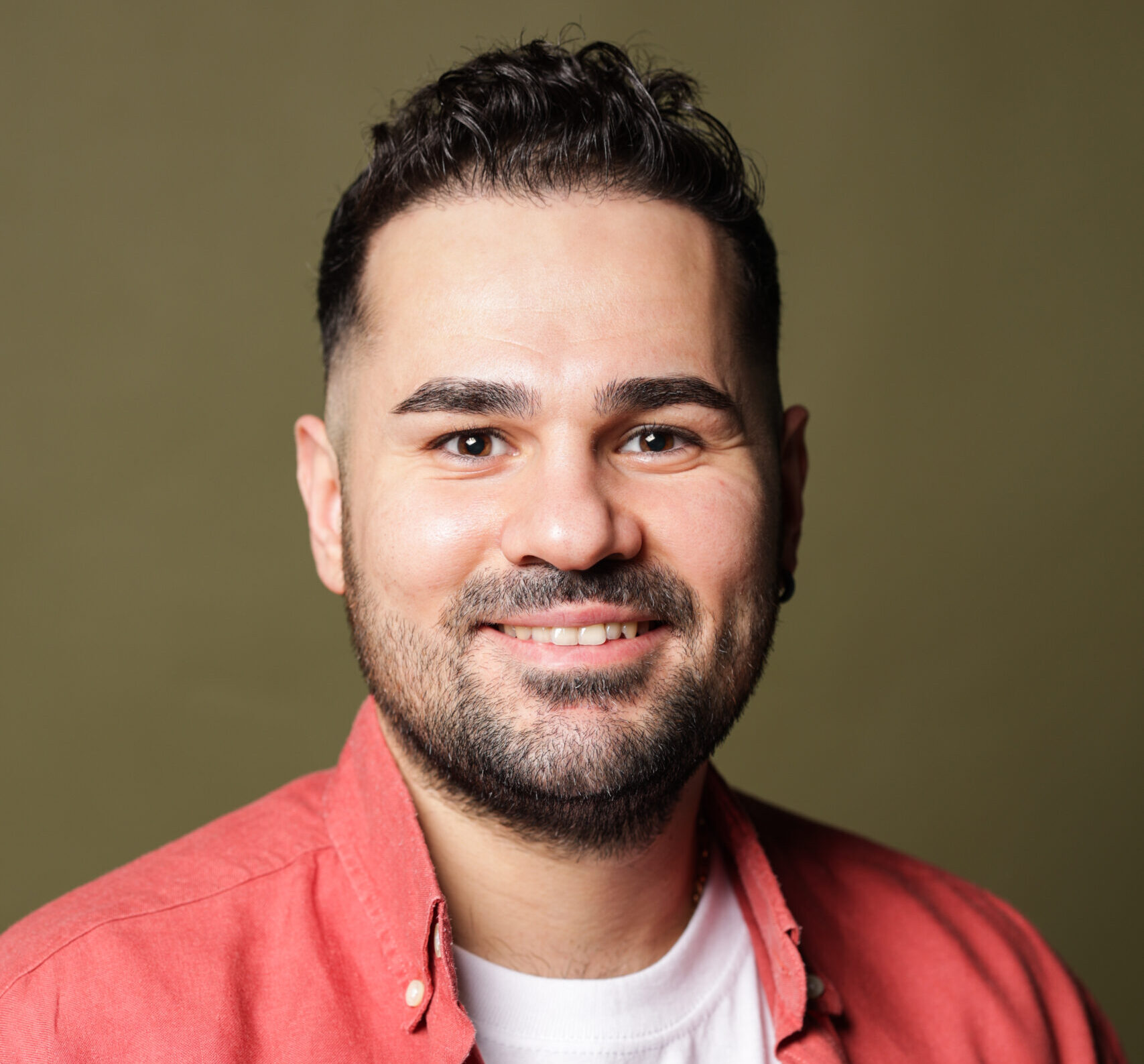
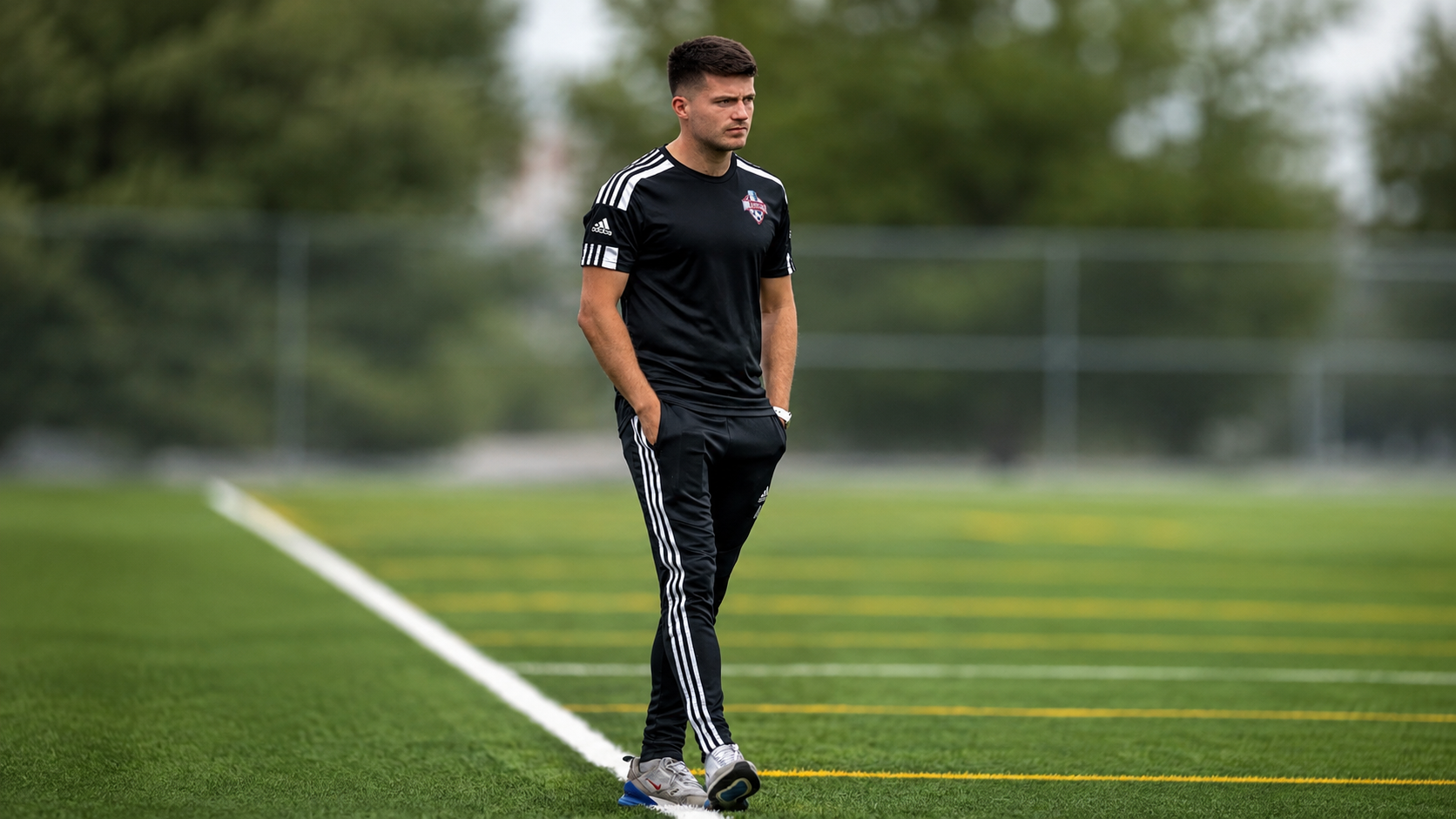
Profile
Role: Academy Director and First Team Coach, Chicago City
Specialisation: Coaching, academy development, game model development and sporting leadership
Experience: United States, Canada and Dubai
Focus Areas: Player development, coaching methodology, academy pathways, sporting structures and technical leadership
Building Across Three Continents
Conor Walsh is a 31 year old UEFA A Licence coach whose career has already spanned three continents, a rare breadth of experience for someone still relatively early in his coaching journey. Since February 2024 he has served as Academy Director and First Team Coach at Chicago City in the United States, a dual role that places him at the intersection of long term player development and first team performance, and one that has produced seven first team debuts from academy graduates during his tenure. His trajectory across Dubai, Canada and now the United States reflects a coach who has consistently sought environments where he can build structures rather than simply inherit them.
Developing a Coaching Identity at Barca Academy Dubai
Walsh’s foundation was laid at Barca Academy Dubai, where he worked as U12 to U16 Phase Lead between September 2020 and October 2022. It was there that he embedded the principles of the Barcelona methodology across a coaching group of five, guiding two players to trials at La Masia and winning U12 and U13 national titles along the way. That period shaped a coaching identity built on positional structure, forward thinking possession and a clear hierarchy of principles rather than isolated drills, an identity that has followed him through every subsequent role.
Expanding the Role at FC London
At FC London in Canada, where he served as a First Team Coach from October 2022 to January 2024, Walsh moved into a broader operational remit. The club was recognised as the third most improved nationwide in 2023 under his influence, and he was directly involved in migrating four players into professional environments across the Canadian Premier League, MLS Next and the UAE. He also played a role in developing new revenue streams through ticketing, food and beverage and merchandise, evidence of a coach comfortable operating beyond the touchline and inside the business of football.
Building the Chicago City Game Model
What distinguishes Walsh from many coaches at a similar stage is the depth of the game model he has since built at Chicago City. His internal coaching documentation lays out a possession based philosophy structured around clear team principles in every phase, forward first passing patterns, ending attacks where pressure begins, controlling central spaces while using width with intent, and a defensive framework built on proactive pressing across high, mid and low blocks. It is the kind of detailed, club wide methodology more commonly associated with senior technical directors than academy level coaches, and it signals someone building not just teams but a lasting football department.
Education and Sporting Leadership
Walsh has paired this on field development with a deliberate investment in his own football education. He holds an MSc in Sport Management from UCFB in Wembley, London, completed a BA in Law and Accounting at the University of Limerick, and is currently completing an MBA in Sporting Directorship through ASD Liverpool, due in 2026. Alongside his coaching work he hosts The Lowdown, a podcast that has recorded more than 200 episodes with football professionals from Toronto to Miami, and his own development was profiled by Modern Soccer Coach in July 2025. Between his cross continental experience, his academic grounding and his growing public platform, Walsh has quietly built the profile of a coach ready for a more senior sporting or technical leadership role.
Key Insights
- Walsh believes football principles should remain consistent while processes adapt to the culture, people and resources of each environment.
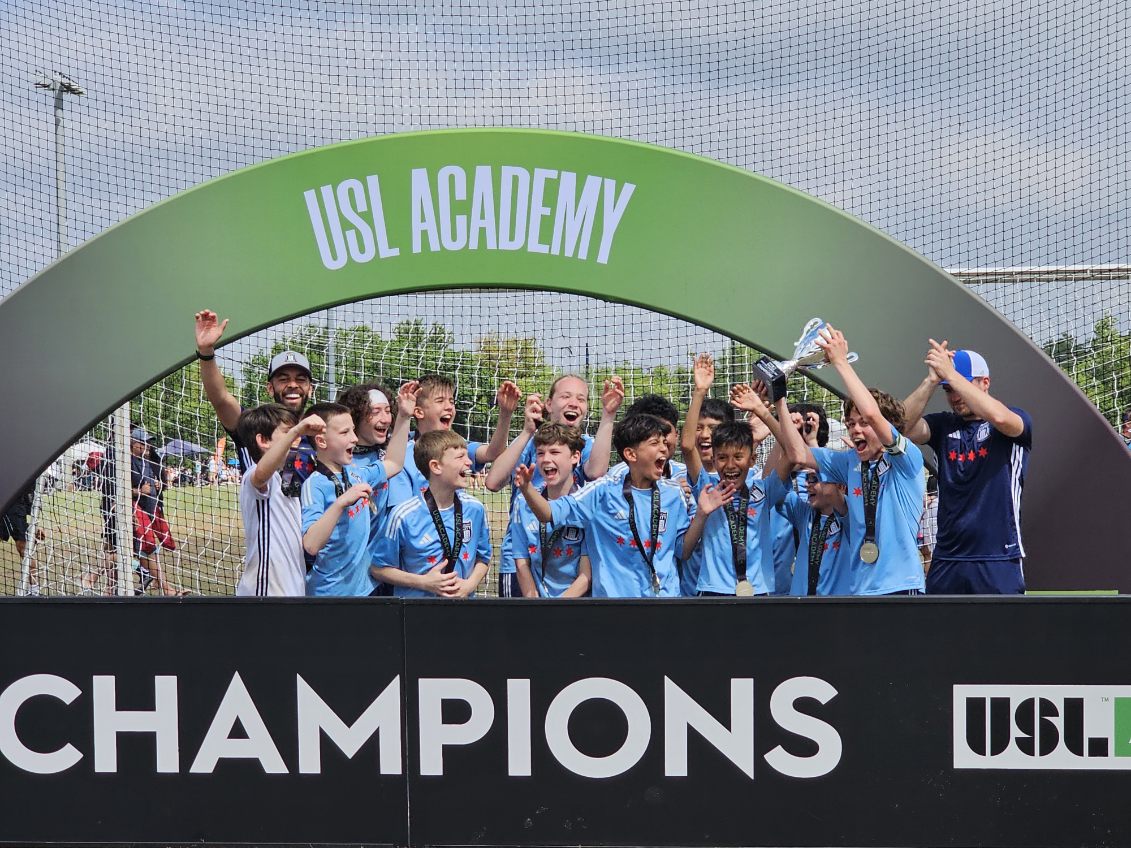
- His work at Chicago City combines academy development with first team performance and has produced seven first team debuts from academy graduates.
- His long-term focus extends beyond coaching into sporting leadership, organisational development and building sustainable football structures.
Our Exclusive Interview with Conor Walsh
You have built academy and first team structures in Dubai, Canada and now the United States. What have those three environments taught you about adapting a football philosophy to very different club cultures and resources?
One of the biggest lessons I’ve learned is that principles should be non-negotiable, but processes should always be adaptable. Whether I was in Dubai, Canada or now the United States, I never arrived trying to copy and paste a methodology. My responsibility was to understand the people, the culture and the resources before implementing a football identity.
One of the biggest lessons I’ve learned is that principles should be non-negotiable, but processes should always be adaptable.
You earn credibility by understanding the environment rather than assuming you have all the answers. That mindset has helped me build trust with coaches, players and staff in every country I’ve worked. What has remained constant is my commitment to high standards. I believe standards create culture, culture shapes behaviour and behaviour ultimately determines performance.
Your background at Barca Academy Dubai clearly shaped your footballing principles. Looking at your current game model at Chicago City, which elements have you kept faithfully from that methodology and which have you deliberately changed for the American game?
Barça Academy Dubai had a huge influence on how I see the game because it gave me a framework rather than just a style of play. People often associate Barça with possession, but what I took away was much deeper than that. It was about having a clear game model, defining behaviours in every phase of the game, creating superiority, and ensuring that every training session had a direct connection to how you wanted the team to play. Those principles have stayed with me throughout my career.
At Chicago City, we’ve remained faithful to those core ideas. We still want to dominate the ball, create numerical and positional advantages, and develop intelligent players who understand space, not just systems. Our coaching methodology is huge on creating decision-makers. Just as importantly, we’ve embedded individual player development into our game model through position-specific learning and clear individual development plans.
Where I’ve evolved is recognising that methodology must serve the environment, not the other way around. The American player pool is incredibly athletic and transition-oriented. Furthermore our weather here in Chicago is a bit more seasonal than Dubai or Barcelona! Rather than trying to recreate, we’ve adapted the principles to maximise the strengths of the players we work with. Our game has become more vertical, more aggressive in transition and far more intentional without the ball. We want to regain possession quickly, attack space with purpose and be comfortable playing at a higher tempo when the moment demands it.
Seven first team debuts from your academy at Chicago City is a strong number. Walk us through what actually needs to be in place, structurally and relationally, for that kind of pathway to work rather than remain a talking point on paper.
People often talk about pathways, but I think pathways only exist when leaders are prepared to be brave. It’s easy to say you believe in young players. It’s much harder to trust them when results matter. Having said that I have been in plenty of scenarios when there’s no other option.
People often talk about pathways, but I think pathways only exist when leaders are prepared to be brave.
For me, having seven first-team debuts wasn’t about one decision it was about building a culture where every department understood that developing players was the club’s responsibility.That required alignment between coaching, recruitment, performance staff and leadership. It required constant communication, clear development plans and, perhaps most importantly, removing ego from decision-making. Seeing academy players succeed is one of the most rewarding parts of coaching because it reflects years of collective work coming together.
You have operated as both a coach and a director, including building revenue streams at FC London. How do you personally draw the line between the football decisions and the business decisions when both are sitting on your desk?
I’ve become increasingly convinced that great football organizations don’t separate football and business they align them. My role has exposed me to coaching, recruitment, operations and commercial projects, and that’s given me a much broader appreciation for how interconnected every decision is.
Whenever I make a decision, I try to view it from a long-term perspective. Sometimes the correct football decision isn’t the easiest commercial decision, and sometimes the commercial opportunity creates better football outcomes. The role of a Sporting Director is finding that balance while never losing sight of the club’s identity.
Your game model documentation is unusually detailed for someone still early in an academy director career, covering everything from defensive blocks to specific attacking behaviours like range and 360 support. What was the process of building that document, and who did you build it with?
The document reflects countless hours of observation, coaching, reading and conversation rather than sitting down one weekend to write a philosophy.
I’ve always been committed to continuous self-reflection. Every season I revisit ideas and ask myself what I’ve learned, what I’ve changed my mind on and where we can improve. Study visits have accelerated that process enormously. Speaking with Sporting Directors, coaches, analysts and leaders from around the world has challenged many of my assumptions.
Ultimately, the document is about creating clarity. My belief is that when everyone speaks the same football language from the youngest academy player to the first team you dramatically increase the chances of long-term success.
You are completing an MBA in Sporting Directorship while working full time in a demanding dual role. What made you feel that additional academic study, rather than more coaching badges, was the right next investment in your career?
I’ve always believed in investing in the next version of myself. Coaching badges made me a better coach, but I reached a point where I realized my ambition was beyond coaching a team rather contributing to the growth of football organizations. Dan Parnell & Joel Roberts run a fantastic programme at the Association of Sporting Directors.
This year we have been fortunate to learn from senior leaders at the Premier League and Liverpool among others. I have been fortunate to be part of a brilliant cohort with leaders working in Germany, Brazil and Japan amongst others.
The MBA challenged me to think beyond the field. It introduced governance, strategy, finance, leadership and organizational design, reinforcing something I’ve become passionate about: football clubs are systems. The best Sporting Directors don’t solve every problem themselves. They build systems, empower outstanding people and create an environment where excellence becomes repeatable.
The best Sporting Directors don’t solve every problem themselves.
After more than 200 episodes of The Lowdown, what has surprised you most about how football professionals across North America describe their own career paths compared to what you experienced in Europe and the Middle East?
The Lowdown has been brilliant in terms of connecting with people from all over the world. Being able to host CEOs, Sporting Directors and First Team Coaches from all has provided unique learnings and insights. Some of them have became mentors and even good friends. Almost everybody has had a non-linear path to where they got to. The best leaders I’ve interviewed have consistently embraced discomfort. They’ve been willing to move countries, change roles, fail, learn and continually reinvent themselves.
That resonates with me because I have tried to approach my own career the same way. Every opportunity; London, Dubai, Canada, Chicago, coaching, podcasting and studying has been about broadening my perspective. I think curiosity is one of the most underrated qualities in leadership because the moment you believe you’ve figured everything out, you’ve stopped growing.
You launched the City Development Squad as an elite pathway accelerator for U13 to U19 talent. What gap in the American development landscape were you specifically trying to close with that initiative?
One of the biggest gaps I saw in the American development landscape was the lack of a true bridge between talented academy players and the demands of the next level. Too often, development is dictated by birth year rather than individual readiness. A player might dominate their own age group for months without being consistently challenged, while another late developer is overlooked because they’re not physically mature yet. We wanted to create an environment where progression was earned through performance and behaviours not simply age. It brought together players across age groups to train in a more demanding environment, exposing them to higher game speed.
It is amazing to reflect upon it now considering the first cohort 2 years ago has had huge success stories. Players who have gone on to play in England and Hungary. One kid who is now playing with Chicago Fire’s MLS Next Team. A U15 who is signing with Rayo Vallecano in Spain and another who has recently returned from a Mexican U15 Camp.
Having worked across academy phase leadership, sporting direction and now academy director responsibilities, where do you see yourself adding the most value in the next stage of your career, and what kind of project would have to be in place for you to make that move?
It sounds cliche to say but years ago I set together 10 year plan. It seemed quite naive and far fetched at the time but subsequently I have surprised myself with what I have managed to be a part of. Reflecting it was never a desired title or path rather it was working with great people and teams. Looking back over the years I have been really fortunate to work with some great CEOs, coaches and players.
Over time I have come to believe my greatest strength is connecting people, departments and supporters around a shared vision. I’ve coached players, developed coaches, built academy structures, contributed to recruitment, created development pathways, worked alongside commercial initiatives and invested heavily in understanding leadership beyond football. None of that matters if you cannot connect with the person. Connection and belonging are the foundation of anything good.
I’m motivated by building cultures where people can thrive.The project itself matters more to me than the title. that values long-term thinking, player development and organizational excellence. Environments which value long-term thinking and have player development at it’s heart are where I believe I can have the greatest impact because that’s how I’ve tried to lead throughout my career.
FAQ
Who is Conor Walsh?
Conor Walsh is a UEFA A Licence coach who serves as Academy Director and First Team Coach at Chicago City and has worked across the United States, Canada and Dubai.
What is Conor Walsh’s coaching philosophy?
His coaching philosophy is built around clear principles, possession, positional structure, individual player development and adapting processes to the environment in which he works.
What experience does Conor Walsh have in player development?
Walsh has worked across academy and first team environments at Barca Academy Dubai, FC London and Chicago City, where seven academy graduates have made first team debuts during his tenure.