
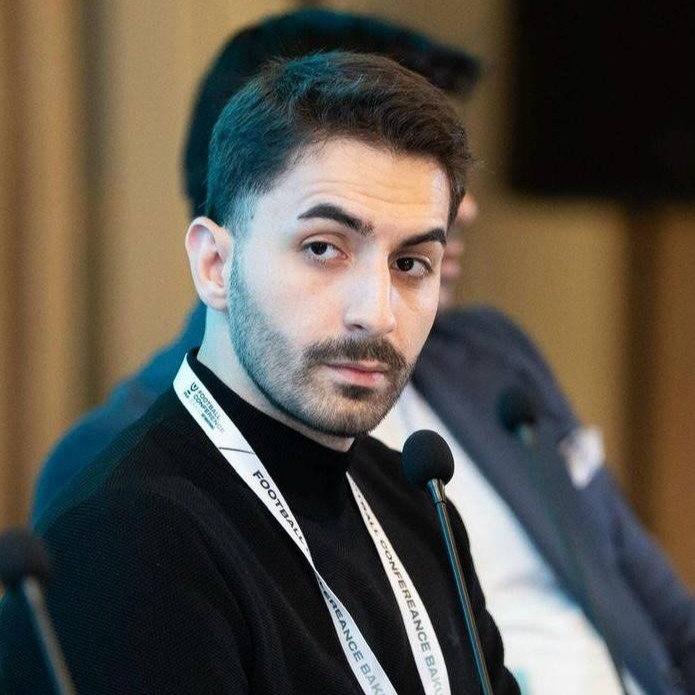
Profile
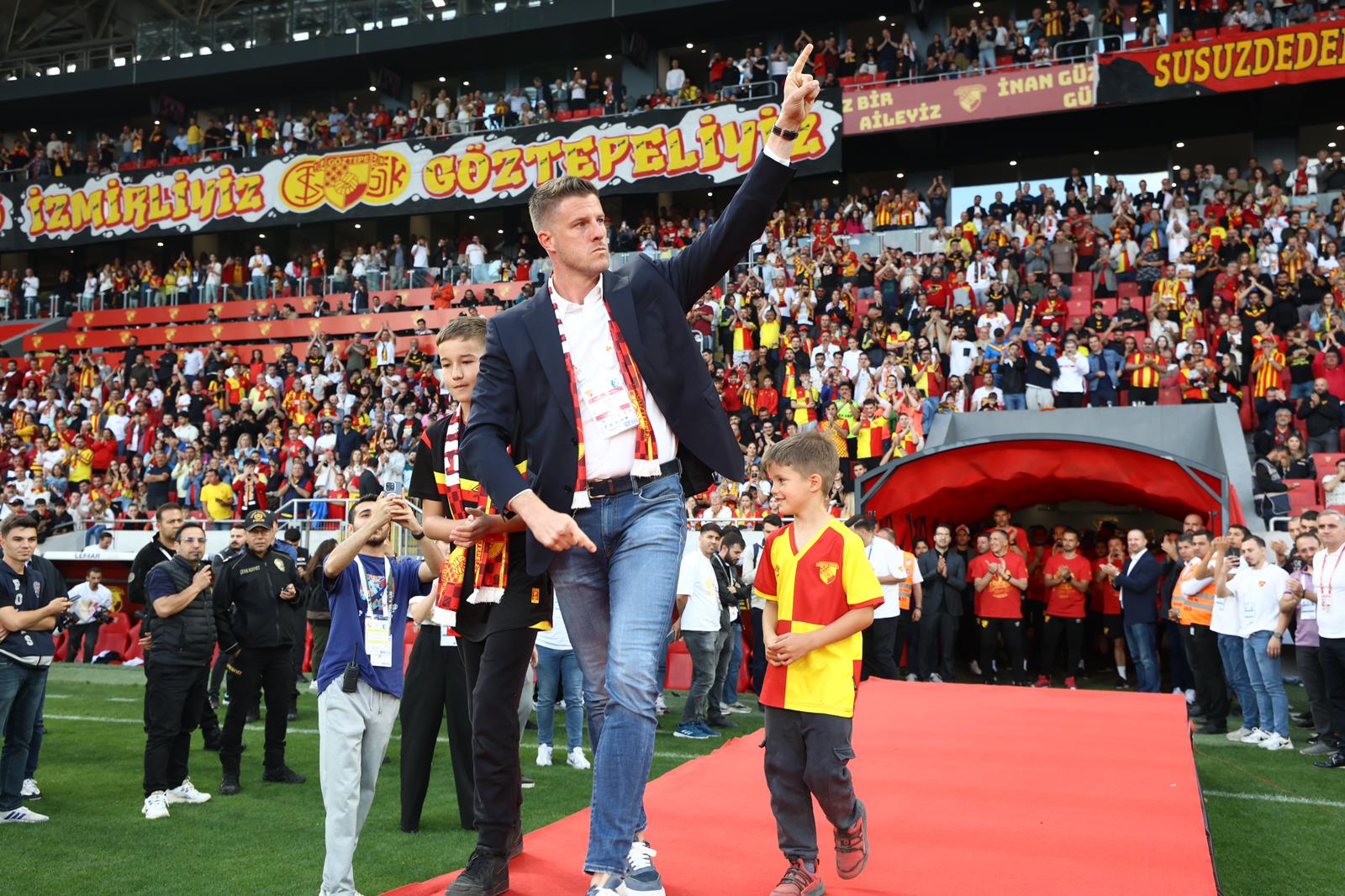
Role: Director of Football, Goztepe
Specialisation: Sporting leadership, scouting, player development and club restructuring
Experience: HNK Rijeka, Pafos FC and Goztepe
Focus Areas: Youth development, player recruitment, individual player development, transfer value and sustainable club building
Building Value in Modern European Football
Ivan Mance is one of the most effective sporting directors at building value in modern European football, a leader whose entire career reflects a single, consistent identity: building young, competitive teams on modest budgets and turning them into major sporting and financial success. Across three different countries and football cultures, he has repeatedly delivered trophies, European qualification, and some of the largest transfer surpluses seen at clubs of his size, establishing himself as a sporting executive who wins and builds value at the same time.
His profile is shaped first by the fact that he understands the game from the inside. Before moving into management, Mance spent more than a decade as a professional goalkeeper in the Croatian first division and represented Croatia at every youth level from under 16 to under 21, learning the demands of elite football under some of the most respected names in the Croatian game. That playing foundation gives his judgement of players and his management of people a credibility that a purely administrative path cannot replicate.
Success at HNK Rijeka
It was at HNK Rijeka that his executive reputation was built. Rising from Sporting Director Deputy to Director of Scouting and then to Sporting Director, he shaped and implemented the club’s development strategy across successive cycles and delivered the most successful era in its history. Under his sporting leadership the club won its first ever Croatian championship in 2017, lifted four Croatian Cups, and qualified repeatedly for the Europa League group stage with one of the youngest squads in the competition. Financially, the results were just as striking. Working with modest investment, he generated tens of millions in transfer revenue, turning players signed for a few hundred thousand euros into landmark sales such as Andrej Kramaric to Leicester and Romulo to RB Leipzig, while consistently promoting academy talent into the first eleven.
Building Pafos FC
At Pafos FC in Cyprus, he demonstrated that his model travels. Brought in to restructure the club to a European standard of organisation, he built the youngest first eleven in the league, guided the club to the championship play-off for the first time in its history, and signed and developed players who went on to become record sales after his departure. In a short period he moved a club with limited history into genuine title contention.
Goztepe and Sport Republic
His current chapter at Goztepe, as Director of Football and briefly as interim Chief Executive, has placed him inside one of football’s most modern structures as part of the Sport Republic group alongside Southampton and Valenciennes. Restructuring the club on the group’s model, he built the youngest team in the competition on one of the lowest budgets, won promotion to the Turkish Super Lig, and delivered the highest outgoing transfer in the club’s history, among the highest ever recorded in Turkish football outside the traditional giants. Across his career, outgoing transfer fees generated under his leadership now stand well beyond one hundred million euros.
Sporting Philosophy and Leadership
What defines Ivan Mance is the rare combination of ambition and discipline. He builds teams that are young, aggressive, and physically dominant, insists on individual development plans that improve players and raise their value, and does all of this while winning trophies and outperforming budgets far larger than his own. Multilingual across Croatian, English, Italian, and Spanish, globally networked, and equally comfortable in a traditional club or a data-informed multi-club environment, he is exactly the kind of proven, modern sporting leader clubs seek when they want to compete and build value at the same time. For any owner or board looking to build something sustainable and successful, Mance is a profile that stands among the most compelling available.
Key Insights
- Individual player development is central to Mance’s approach to increasing player value.
- Data supports scouting decisions, but knowledge and instinct remain decisive.
- Stability and balance between players, coaches, and directors are central to his vision of sporting leadership.
Our Exclusive Interview with Ivan Mance
Building Value, Youth Development and Sporting Leadership in Modern Football
Throughout your career you have built teams that both win and generate large transfer surpluses while spending relatively little. What is the actual discipline behind consistently turning modest investment into major sales, and where do most clubs get that balance wrong?
The key is individual player development. Today everyone thinks short term and looks for fast success, and this is the main problem. Owners want success tomorrow, fans wanted it yesterday, and players expect everything to come to them because of their talent. All three are wrong, together with the coaches who believe that a player of twenty or twenty four is finished with his individual development. Players keep learning until the end of their careers. If you want to increase their value, you have to open their eyes to these simple and basic improvements that perhaps they never received in the academy.
Players keep learning until the end of their careers.
You have fielded some of the youngest teams in every league you have worked in, including a promotion-winning side at Goztepe. What convinces you to trust young players at decisive moments where others hesitate, and how do you manage the risk that comes with it?
I did not field anyone. The coaches did. I never interfere with the coach’s job. I also have to say honestly that I do not care about a player’s age. If you are good, you are good, and if you are not, you are not. Of course, given the strategy of the clubs where I worked, it was important to have young players we could sell later. It also makes me happy when I see how they grow and develop their careers after playing for my clubs and move on to better leagues.
Your record includes turning players signed for a few hundred thousand euros into multi-million sales. When you assess a player, what do you look for that the market has not yet priced in, and how much of that is data versus instinct?
We use data as a filter and also as a control mechanism for our eyes, but the final decision is based on our knowledge and our instincts. The most important thing is to know what you want for your team and what you need to improve in the player. That is the key.
We use data as a filter and also as a control mechanism for our eyes, but the final decision is based on our knowledge and our instincts.
Working inside a multi-club group such as Sport Republic is very different from running a standalone club. What does the group environment allow you to do that a single club cannot, and where does it create the most tension?
I cannot say that we are very closely connected, but we help each other. Scouting is connected on a daily basis and we use each other a lot. The people at all of the clubs are great professionals and they are very committed to their work in helping the teams become better.
At both Pafos and Goztepe you were brought in to restructure a club to a higher organisational standard. When you walk into a club that needs rebuilding, what do you change first, and how do you know the new structure is genuinely working?
First I have to collect a lot of information about the club, the league, and the mentality of the country. I speak with around ten people ( ex players ,coaches ,directors etc.) who have worked in that environment, and this helps me build a picture of the club and the league, as well as of the people living in the city. I also study the history of the club very deeply. After analysing the club for one to two months, I present my idea of development to the owners and explain what I would like to change. Then the hard work starts, and if everyone is aligned, the club begins to heal within three to six months. A little luck with results and patience from the owners and the fans is of course very helpful and important.
Your philosophy is to develop players and sell them at higher prices, yet you have also won trophies and reached European nights. How do you keep a selling club competitive and hungry when your best players are always being prepared to leave?
This is a very big challenge, to be honest. It goes completely against the logic of sport management, but if the club strategy is built this way, then we have to find a way to make it work. Scouting is very important, and so is communication with the head coach once he takes over the job. If he is on board, it becomes easy to manage and to explain it to the public. We also have to be aware that we are not selling furniture. We are selling people, and we cannot prevent them from growing and developing as footballers at a higher level. Their careers are short and they have to think about their financial future as well, so we should understand that they want to take the next step.
We are selling people, and we cannot prevent them from growing and developing as footballers at a higher level.
You came into management as a former professional goalkeeper. How does having played the game at that level shape the way you read players, manage people, and make decisions under pressure in a way a purely executive path would miss?
It certainly helped me a lot. I was part of teams for many years. I also made many mistakes in my own development and I blamed others for them. All of this helped me understand what I had to do better in order to help my clubs and my players avoid the same mistakes I made. My second helper was that I was a passionate player of the computer game Football Manager. Playing it, I learned a great deal about managing clubs and about scouting, so when I started working I was very ready for everything in my new life.
The role of the sporting director has changed enormously over the last decade, moving from transfers and negotiations toward data, multi-club structures, and long-term club building. Where do you believe the role is heading next, and what will separate the best sporting directors from the rest in the years to come?
That is hard to say. Football is changing under the strong influence of modern technology and the modern way of life. We will have to adapt to this and find a way to balance all of these changes without losing the spirit of this great game. Despite being a sporting director, I still believe the coach is the most important part of the football structure, and I think directors have to find a way to protect coaches from owners, fans, and the public. The best thing for any club is stability, and in the future that will be even more important. Whoever manages to create this balance between players, coaches, and directors will hold a strong competitive advantage over the others. In my opinion, even twenty years from now, social intelligence and loyalty will still be very important qualities for the people managing clubs. No owner needs a director who will run away after the first better offer.
FAQ
Who is Ivan Mance?
Ivan Mance is a sporting executive and former professional goalkeeper whose career has included leadership roles at HNK Rijeka, Pafos FC and Goztepe.
What is Ivan Mance’s approach to player development?
Mance believes players keep learning until the end of their careers and places individual player development at the centre of increasing their sporting and transfer value.
How does Ivan Mance use data in player recruitment?
Mance uses data as a filter and control mechanism for scouting, while the final decision is based on knowledge and instinct.