

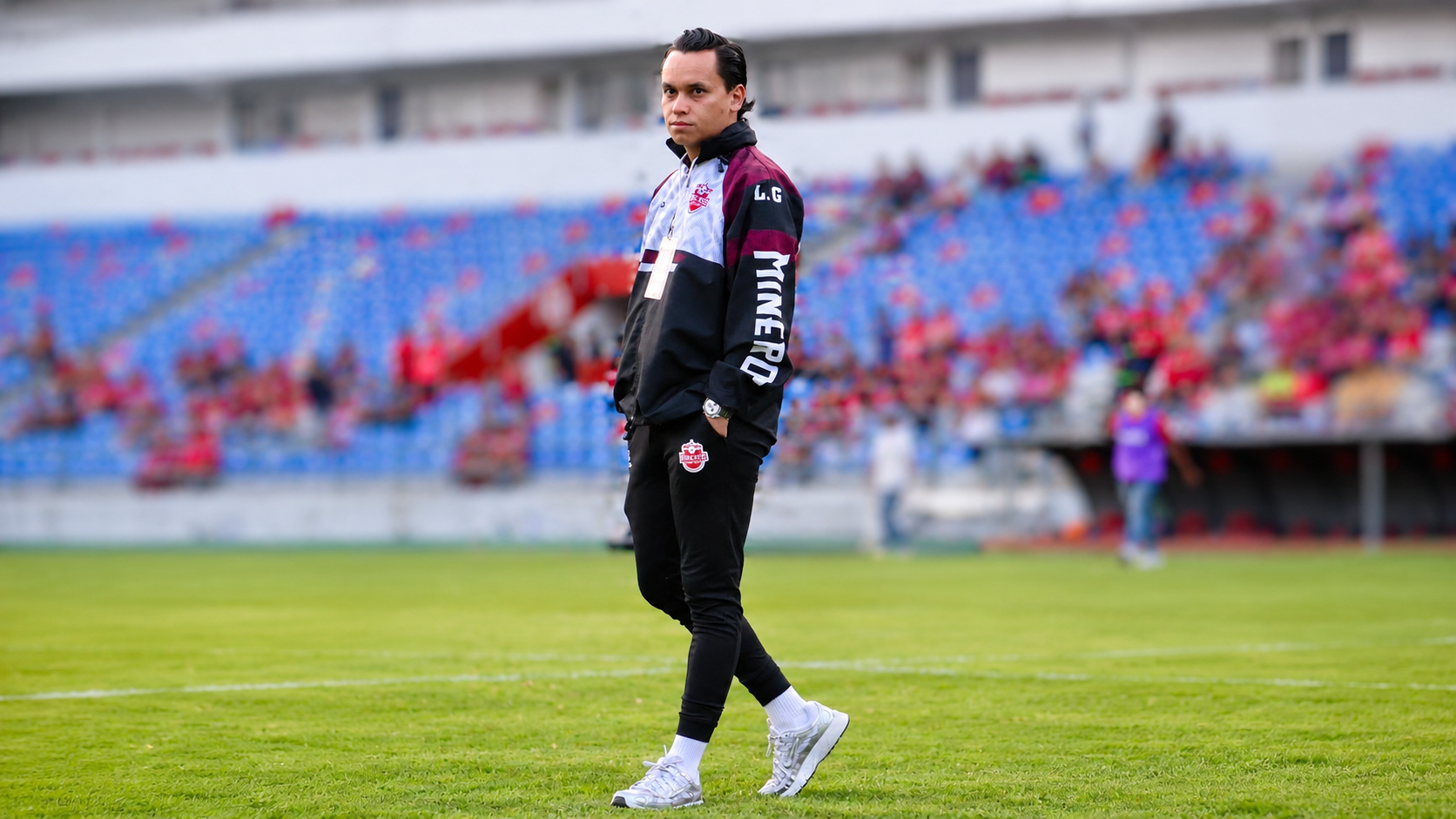
Profile
Role: Sporting Director of Mineros de Zacatecas
Specialisation: Football Methodology, Strategic Planning, Talent Identification and Sporting Intelligence
Experience: Sporting Director, Head of Methodology and Sporting Intelligence, Performance Analyst and Scout
Focus Areas: First-Team Strategy, Academy Development, Recruitment Processes, Scouting Operations and Long-Term Football Planning
Building Sustainable Football Organizations
Luis Carlos Gil represents a new generation of sporting directors who combine football methodology, strategic planning, talent identification, and sporting intelligence to build sustainable and competitive football organizations. Having progressed through multiple leadership positions inside professional football, his profile reflects a deep understanding of how successful sporting projects are built from the ground up.
Currently serving as Sporting Director of Mineros de Zacatecas, Gil oversees the club’s entire sporting structure, including first-team strategy, academy development, recruitment processes, scouting operations, and long-term football planning. Under his leadership, Mineros has established itself as one of the most stable and competitive organizations in Mexican football, consistently qualifying for the playoffs while developing a clear institutional identity.
A Modern Sporting Intelligence Model
One of the defining aspects of his work has been the integration of modern football methodologies and sporting intelligence processes. Gil has implemented club-wide training manuals, institutional game models, scouting structures, and advanced tools such as big data, GPS monitoring, and video analysis to support decision-making and player development across all levels of the organization.
Creating Sporting and Economic Value
Beyond sporting performance, his work has also delivered significant economic value. Through strategic recruitment, player development, and effective transfer management, Mineros has generated transfer revenues significantly above initial expectations while exporting more than twenty players to clubs across multiple continents. Simultaneously, the club has promoted more than thirty academy players into professional football, reinforcing its reputation as one of Mexico’s most productive development environments.
A 360-Degree Understanding of Football Operations
Prior to becoming Sporting Director, Gil served as Head of Methodology and Sporting Intelligence and earlier as Performance Analyst and Scout, experiences that have given him a unique 360-degree understanding of football operations. His academic background in Sports Management, Business Administration, Sporting Direction, and Football Methodology further complements his practical experience and reinforces his modern executive profile.
Fluent in both strategic planning and day-to-day football operations, Luis Carlos Gil represents a new generation of football leaders capable of aligning sporting success, talent development, and financial sustainability within modern football organizations.
Key Insights
- Gil combines football methodology, strategic planning, talent identification and sporting intelligence within a multidisciplinary sporting structure.
- Mineros de Zacatecas has prioritised academy development, recruitment and a clear sporting identity to support both sporting and financial sustainability.
- His approach integrates traditional football knowledge with data, GPS monitoring, video analysis and institutional game models.
Our Exclusive Interview with Luis Carlos Gil de Muñoz Coto
You have progressed from analyst and scout to Sporting Director within the same organization. How has working across every level of football operations shaped your leadership philosophy and understanding of what successful clubs need to achieve long-term sustainability?
I believe that sports management departments today must be multidisciplinary. Knowledge of the game, methodology, complementary tools, data, human resource management, administration, and finance is key to the success of a sports management operation.
Actively engaging with, surrounding myself with, and learning from all the areas I oversee allows me to maintain high standards regarding institutional manuals and processes.
Centralizing these processes has enabled us to generate both sporting and economic sustainability.
Centralizing these processes has enabled us to generate both sporting and economic sustainability.
Mineros de Zacatecas has become recognized for its player development and transfer strategy, generating significant economic value while remaining highly competitive on the pitch. What are the key principles behind building a sustainable sporting model that balances sporting success and financial growth?
I believe it all begins with consistency regarding investment and the direction of that investment. In our context, investing in youth academies is not mandatory; however, our organization has—out of conviction—chosen the path of talent development to ensure both sporting and financial sustainability. We also aim to leave a legacy in a country currently facing a crisis in talent production.
Since the organization has decided to invest in our youth system, we must make the most of it. Mexico represents a unique economic bubble where even the second division can generate sales figures that surpass those of top-flight leagues elsewhere in the world.
The key lies in having a sporting identity—a specific style of play—that guides our recruitment, signings, and player development. This makes the transition between the club’s various levels feel natural, as the environment and playing style amplify the players’ strengths and create advantageous match situations.
The key lies in having a sporting identity—a specific style of play—that guides our recruitment, signings, and player development.
In a league where promotion based on sporting merit has been eliminated, we have focused on building balanced squads that mix homegrown talent with experienced players who understand our style of play and foster strong interpersonal bonds. There must be a genuine sense of identification with what we do. This approach has allowed us to be a leading force in the league, consistently reaching the playoffs with the youngest average age—excluding reserve teams.
You have been an early adopter of methodologies, big data, video analysis, and institutional game models. How do you see the relationship between traditional football knowledge and modern sporting intelligence evolving in the next five years?
This is a very common debate. In our country, there is still some resistance to change and to new tools, although we are already seeing many first-division clubs that have modernized in this regard. I consider myself a leader of this revolution. I believe that football, like any industry, entails evolution and adaptability. I also believe that the cultural context is always fundamental when it comes to tailoring and implementing any kind of modern tool. It takes sensitivity to interpret and direct the use of new technologies. Data, for instance, can say a lot or nothing at all on its own; one must know how to interpret it and provide context to understand its value. I believe that in a sport as complex and unpredictable as football, increasing one’s information capacity is crucial for reducing uncertainty.
Data, for instance, can say a lot or nothing at all on its own; one must know how to interpret it and provide context to understand its value.
Looking ahead, what type of sporting project would excite you most, and how do you believe your experience in building structures, developing talent, and creating value could help clubs operating in larger and more demanding football environments?
I believe the key difference compared to our current context lies in managing larger organizational structures and working with superior budgets—factors that should represent a competitive advantage for me. We aim to draw inspiration from elite-level processes regarding methodology, scouting, and tactical trends. Having access to better tools and budgets should enhance everything we do in high-pressure environments. The challenge lies in managing high-level personnel, yet I am convinced that top professionals respect and defer to expertise. Finally, I consider myself flexible enough to adapt my processes and institutional objectives to the specific demands and cultural characteristics of the institution and the country.
FAQ
Who is Luis Carlos Gil de Muñoz Coto?
Luis Carlos Gil is the Sporting Director of Mineros de Zacatecas and has previously worked as Head of Methodology and Sporting Intelligence, Performance Analyst and Scout.
What does Luis Carlos Gil oversee at Mineros de Zacatecas?
Gil oversees the club’s entire sporting structure, including first-team strategy, academy development, recruitment processes, scouting operations, and long-term football planning.
What is central to Luis Carlos Gil’s sporting philosophy?
His work combines football methodology, strategic planning, talent identification, sporting intelligence, player development and financial sustainability within modern football organizations.