
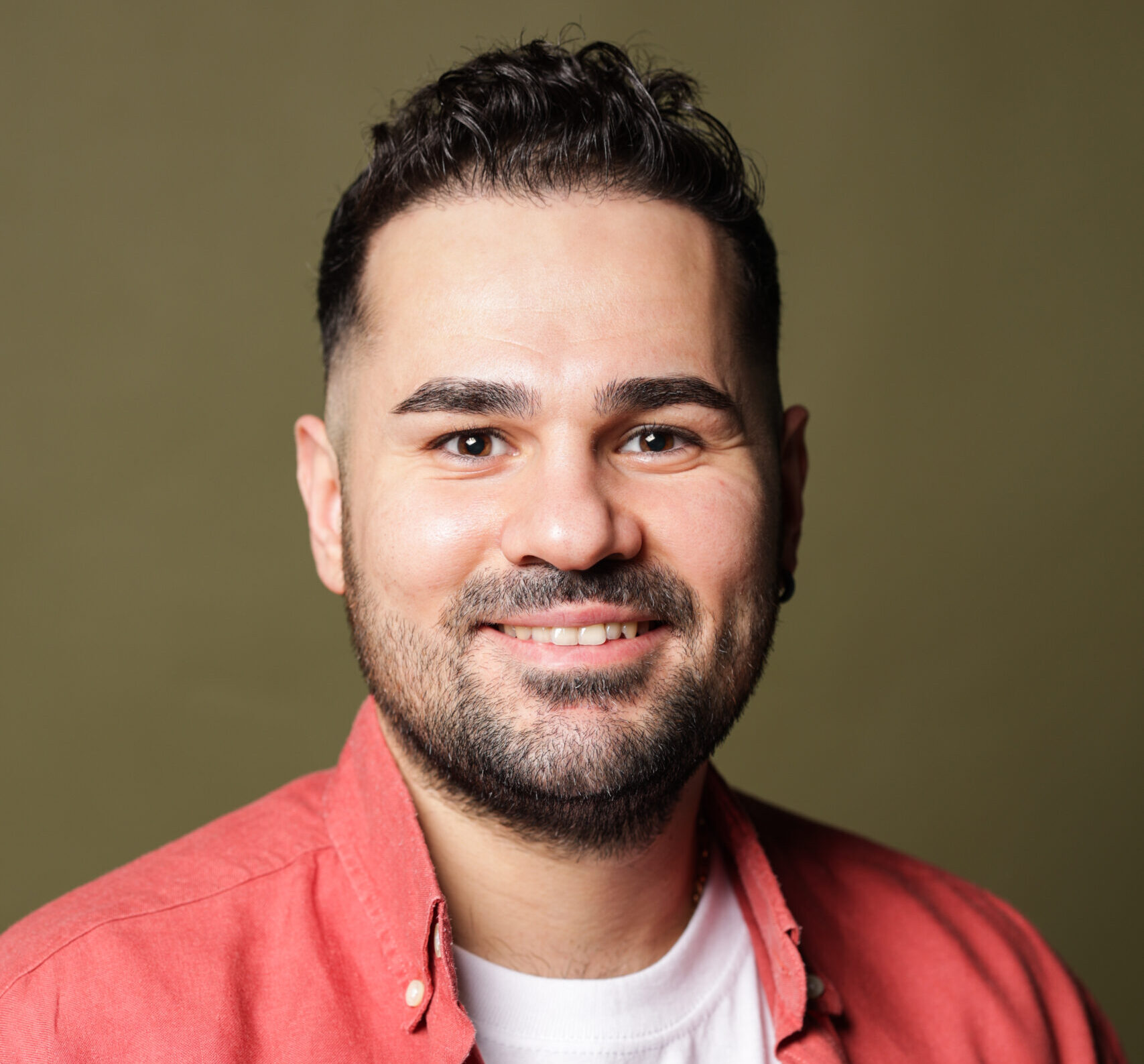
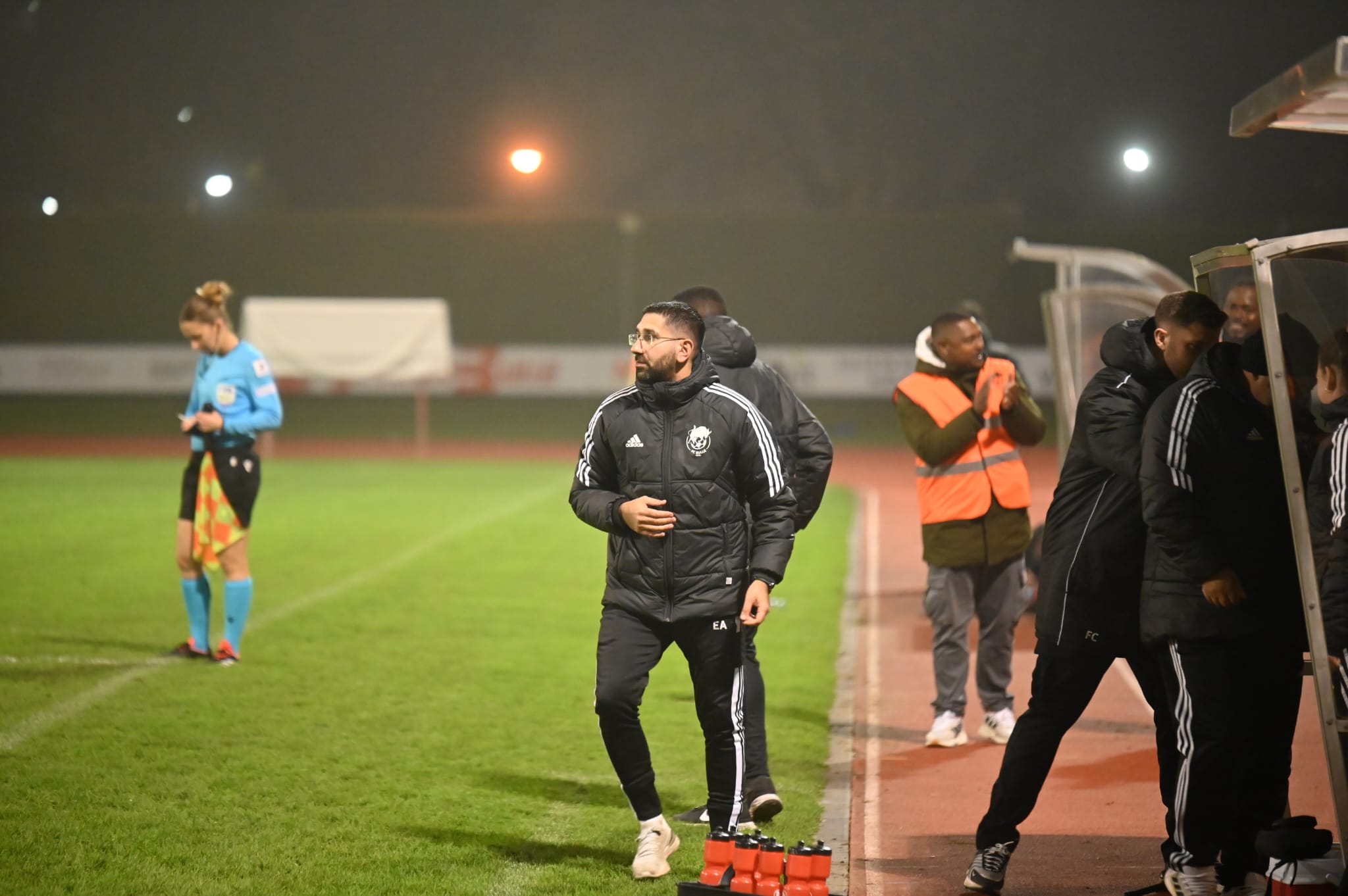
Profile
Role: Football Coach
Specialisation: Player Development, Team Building and Coaching Methodology
Experience: Swiss Youth and Senior Football, FC Bulle, Lausanne Sport M-21, FC Montreux Sport, Team Veveyse, Azzurri LS, FC Dardania and Riviera
Focus Areas: Juego de Posicion, Player Development, Collective Intelligence, Training Methodology and Coaching Education
A Coaching Journey Across Swiss Football
Ekrem Aker is a Swiss football coach whose career reflects a genuine and methodical pursuit of excellence in the craft of developing players and building teams. Over nearly a decade of coaching work across Swiss club football, Aker has combined hands on experience at youth and senior level with an unusually broad international education, seeking out demanding coaching environments and methodological frameworks to continuously sharpen his understanding of what modern football requires. His profile is defined not by the size of the clubs on his CV, but by the quality of the thinking and preparation he brings to each one.
Aker’s coaching journey began in 2016 as Head Coach of the M15 team at Riviera, before moving on to lead FC Dardania in the second inter regional league and then serving as Assistant Coach at Azzurri LS in the first league. Between 2019 and 2022 he took charge of Team Veveyse in Youth League A, followed by a Head Coach role at FC Montreux Sport in the second league. He then stepped into assistant positions at a higher competitive level, first with Lausanne Sport’s M-21 side and most recently as First Assistant Coach with the professional team of FC Bulle in Switzerland’s third division. This progression, moving fluidly between head coach and assistant roles across youth and senior football, points to a coach who values the full picture of a technical staff rather than chasing titles for their own sake.
International Coaching Education
Alongside this playing and coaching path, Aker has built an education that stands out for its international breadth. He studied Juego de Posicion through the Barça Innovation Hub, holds his UEFA B licence, and has progressively worked through the CONMEBOL pathway, from CONMEBOL B and CONMEBOL A through to CONMEBOL Pro, with completion expected in June 2026. Choosing to pursue South American coaching education alongside the European system is still a rare decision among Swiss based coaches, and it reflects a deliberate effort to study the game through more than one footballing tradition.
Learning From Elite Development Environments
His commitment to learning is further evidenced by a series of professional internships at clubs operating at the highest levels of European youth development. He has spent time within the academy structures of Villarreal FC across their U-19 and U-21 environments, worked alongside the U-21 setup at Shakhtar Donetsk, and studied the U-15 and U-19 development methodology at Olympique Lyonnais. Taken together, these experiences gave Aker direct exposure to three of Europe’s most respected youth development models, each with its own distinct approach to player formation and the transition from academy to professional football.
Ready for the Next Step
Trilingual in French, English and Spanish, Aker is well equipped to work across different footballing cultures without the friction that language barriers so often create for coaches moving into new markets. Having completed his most recent chapter with FC Bulle, he is now available for the next step in his coaching career, representing exactly the kind of profile that brings far more to a club than its league level alone might suggest, methodologically educated, internationally minded and still building toward his best work.
Key Insights
- Aker has deliberately combined European and South American coaching education to broaden his understanding of player development and the game.
- His internships at Villarreal, Shakhtar Donetsk and Olympique Lyonnais exposed him to different elite youth development methodologies.
- His coaching philosophy emphasises collective intelligence, clarity, high daily standards and helping players understand the game rather than simply reproduce patterns.
Our Exclusive Interview with Ekrem Aker
Most coaches working in Swiss lower league football build their education entirely within the European system. You added CONMEBOL B, A and now Pro to your profile alongside your UEFA badges. What drew you toward South American coaching education, and what has that pathway given you that the European system alone could not?
I didn’t turn to CONMEBOL to gain another diploma; I committed to it to broaden my perspective on the game.
Europe sets the global benchmark for organization, methodology, and structural play. Yet, a simple question stayed with me: despite this excellence, why do Europe’s top clubs continue to invest heavily in South American-trained talent?
Today, elite football is desperately searching for players capable of creating imbalance, beating defenders 1v1, and unlocking matches against increasingly organized low blocks. But the answer couldn’t be reduced to just ‘natural talent.’
What led me to CONMEBOL was looking for the underlying causes rather than just observing the results:
- Understanding the culture and environment that foster such creativity, personality, and the ability to solve complex situations under pressure.
- Analyzing the development methods that encourage these behaviors, in order to enrich my own approach to player development.
Ultimately, CONMEBOL didn’t give me ready-made answers. Above all, it taught me to ask better questions. And I believe that is probably the most essential quality for a coach who wants to keep growing
Ultimately, CONMEBOL didn’t give me ready-made answers. Above all, it taught me to ask better questions.
You studied the Juego de Posicion model through the Barça Innovation Hub while working in Swiss club football. How do you translate a high level positional play philosophy into practical daily training for players who have not grown up within that system, and where do coaches most often go wrong when they try to implement it?
In my view, the first mistake is believing that Juego de Posición is a formation or a sequence of set positions to strictly adhere to. It is neither a 4-3-3 nor a series of passing circuits. Above all, it is a way of organizing relationships between players to create the best possible conditions for making the right decision.
When I work with players who have never experienced this tactical culture, I never start by talking about structure. I start by helping them understand the ‘why.’ Why occupy a space? Why draw an opponent in? Why commit a defender before releasing a teammate? Why create an overload in a specific area of the pitch?
If players understand these intentions, they become capable of solving the problems the match presents to them. If they only memorize movements, they remain dependent on what the coach has shown them.
I am convinced that our role isn’t to build players who merely replicate patterns, but players capable of interpreting the game. This adaptability is what makes the difference at the highest level, because no pressing scheme, no opponent, and no match are ever identical.
I am convinced that our role isn’t to build players who merely replicate patterns, but players capable of interpreting the game.
That is why I attach fundamental importance to the gradual building of individual and collective reference points. Every session must allow players to gain a deeper understanding of the game, rather than simply successfully executing a drill. The principles remain the same, but the contexts constantly change. Training must therefore expose players to a variety of problems so they can develop their decision-making intelligence.
I think many coaches make a second mistake: they try to copy what they see from Guardiola, De Zerbi, or other elite teams, without always understanding the principles that make those behaviors possible. They replicate the form without conveying the substance.
For me, Juego de Posición is not an end in itself. It is a tool serving a more ambitious idea: enabling a team to control the match through a shared collective understanding of the game. When a team shares the same reference points, it becomes capable of retaining possession under pressure, baiting the opponent to open up spaces, and adapting its solutions to opposition behavior rather than reciting a pre-scripted playbook
Your professional internships took you to Villarreal, Shakhtar Donetsk and Olympique Lyonnais, three clubs with very different approaches to youth development. What is the single biggest lesson you took from each of those environments, and how have you combined them into your own way of working?
At Villarreal, what struck me most was the sheer quality of the training sessions. I discovered a remarkable standard of technical rigor, driven by coaches whose pedagogical mastery deeply impressed me. At the time, the reserve team had just been crowned champions of Spain, and that success was clearly reflected in their day-to-day work. Nothing was left to chance: there was constant attention to detail, whether in the execution of technical actions, the tempo of the drills, or the coaching points provided to players. I was also struck by the coaches’ communication—always precise, coherent, and focused on player development. This immersion reinforced my conviction that collective performance is built, above all, through high daily standards and the quality of the coaching staff.
At Shakhtar Donetsk, I was most impressed by the athletic intensity the sessions were remarkable. I also had the opportunity to observe Mykhailo Mudryk firsthand. Beyond his natural talent, what stood out to me was his daily commitment and relentless drive to improve. That experience reinforced a core belief: talent is essential, but it is a culture of high standards and hard work that allows a player to reach the absolute top level.
At Olympique Lyonnais, I discovered another side of youth development: individualized player support. Behind the collective performance, I observed a tailored focus on tracking each player’s profile, their evolution, and the strategic planning of their development pathway. This approach reminded me that developing a player isn’t just about honing football skills, but also supporting them along their journey to the elite level.
Ultimately, these three experiences taught me that there isn’t just one way to develop a player. Methods differ, but the best clubs share the exact same high standard: giving purpose to every detail of the learning process. It is this conviction that guides my approach to work today
Your career has moved back and forth between head coach and assistant coach roles, most recently stepping into an assistant position with the professional team of FC Bulle after leading your own teams for several years. What does that shift teach a coach about the game that leading a team alone does not?
Being a head coach and being an assistant coach are two different responsibilities, but they are deeply complementary. Having had the opportunity to hold both roles has made me realize that a high-performing coaching staff relies, above all, on the quality of communication and the synergy of skill sets.
As a head coach, you naturally carry the overall vision of the project as well as the responsibility for final decisions. As an assistant, you learn to observe more, to question, to challenge ideas, and to add value without seeking the spotlight.
Through these experiences, one conviction has grown stronger: performance is never down to just one person. It is the result of collective intelligence, a shared methodology, and a culture of high standards where everyone helps each other improve.
Ultimately, moving between these roles has made me better at both:
- As a head coach, I now have a far better understanding of the immense value an assistant can bring.
- As an assistant, I fully appreciate the responsibilities, constraints, and decision-making pressure a head coach faces on a daily basis.
Deep down, you don’t measure the quality of a coaching staff solely by the talent of its head coach, but by the richness of the debates and discussions that take place before the decision is made.
Speaking French, English and Spanish, you have been able to work and learn across very different footballing cultures. How much of a real advantage is that in daily coaching work, and has there been a moment where speaking the language directly changed how quickly you built trust with a group of players?
I speak French and English fluently, and I continue to develop my Spanish, which has already allowed me to complete a full training program with CONMEBOL and communicate directly with Spanish-speaking coaches. For me, speaking a language isn’t just about translating words; it’s about understanding a way of thinking about football. Every culture uses its own terminology, its own reference points, and sometimes even its own approach to the game. Being able to access these discussions directly, without relying on translation, has allowed me to broaden my perspective and better understand certain methodological nuances.
On the pitch, this is also a genuine asset. Being able to communicate with a player in their native language even imperfectly often creates a different kind of connection. It shows a willingness to bridge the gap. I’ve noticed that making this effort opens up communication, breaks down barriers, and helps build trust much faster.
In today’s increasingly multicultural dressing rooms, I believe languages are not just a communication tool; they are a key management lever. They allow us to better understand the players, their backgrounds, and how they interpret instructions. This is an aspect I continue to develop, particularly as I keep improving my Spanish.
Learning a language means accepting to become a beginner again. That experience has made me more attentive to how players learn as well. It served as a reminder that before demanding execution, you must ensure the message has truly been understood. I think that principle holds just as true in a classroom as it does on the training pitch.
Looking at the next step in your career, what type of project or club would allow you to bring together everything you have built, from your CONMEBOL education to your experience across Villarreal, Shakhtar Donetsk and Lyon, and what would a sporting director notice first when working with you?
Today, my ambition is not to replicate an existing model. It is to combine the best of these different footballing cultures to build a team capable of dominating matches through collective intelligence, ball mastery, intensity, and a continuous capacity to learn.
I deeply believe that a coach’s role goes far beyond match preparation. Our responsibility is to create an environment where every training session helps players improve, where every detail carries a clear intent, and where the daily culture naturally drives everyone to strive for excellence.
I am convinced that excellence is never a destination you reach; it is a habit you build every single day.
I am convinced that excellence is never a destination you reach; it is a habit you build every single day.
I think that is probably what a Sporting Director would notice first in me. Beyond tactical systems or principles, they would find a coach deeply committed to clarity. I place fundamental importance on ensuring every player fully understands their individual and collective reference points, both with and without the ball.
I am convinced that team performance stems from the quality of preparation. That is why I pay meticulous attention to session design, methodological consistency, and the finest details throughout the week. In my view, it is this daily rigor that allows us to approach matches with confidence, composure, and the adaptability required to handle the most complex situations.
My objective is simple: to join a project where I can help build a strong identity, develop players on a daily basis, and establish a lasting culture of performance. Results are a consequence. The quality of daily work, however, is a choice.
FAQ
Who is Ekrem Aker?
Ekrem Aker is a Swiss football coach with experience across youth and senior football in Switzerland and an international coaching education spanning European and South American methodologies.
What coaching education has Ekrem Aker completed?
He studied Juego de Posicion through the Barça Innovation Hub, holds his UEFA B licence, and has progressed through CONMEBOL B, CONMEBOL A and CONMEBOL Pro.
What type of coaching project is Ekrem Aker seeking?
His objective is to join a project where he can help build a strong identity, develop players on a daily basis, and establish a lasting culture of performance.