
What is your field? Or what kind of work are you involved in?
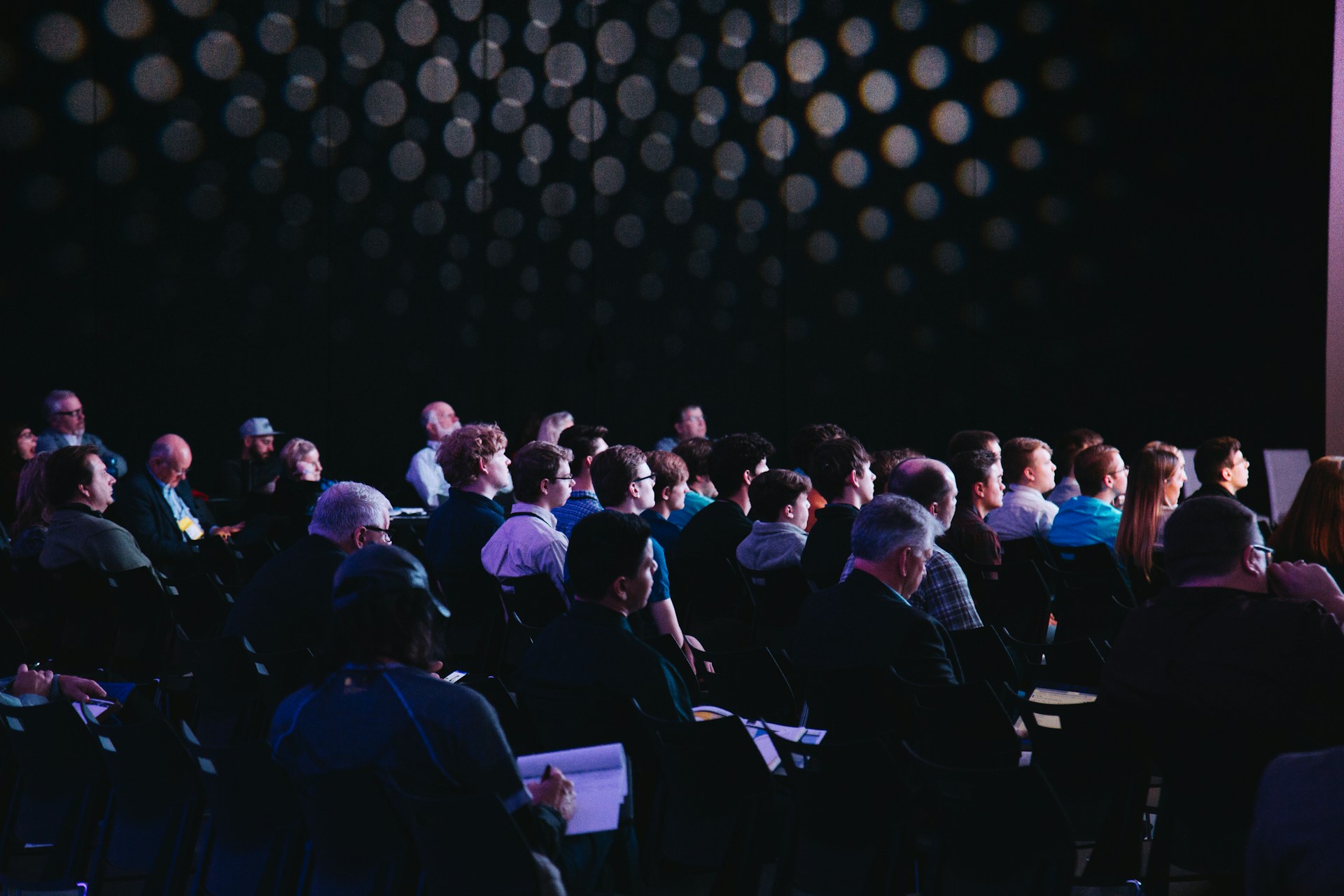
No matter your profession or field of interest, great events organized within that domain always reignite your passion. At the events you attend, the networking environment and seeing people just like you boost your commitment and, more importantly, inspire you to create.
Enjoying delicious refreshments, wearing cool name badges, and even the status of the speakers on stage make you feel proud. It is almost like a flawless picture; an environment where everything has been thought out and your presence is truly valued…
But do you know what goes on behind the scenes? Or have you ever wondered, “What if I wanted to organize an event like this myself?”
Today, I am going to walk you through what happens from A to Z in the planning stages of these events, where to start and what steps to take if you want to pull one off.
Before we begin, I should mention that everything I am about to share is based on findings from my own hands-on experience. Please feel free to share any details you feel are missing or could be improved!
Stages:
- Defining the Event Blueprint & Goals
- Building a Solid Team
- Delegating Tasks
- Social Media & Captivating Designs
- Pursuing Sponsorships Relentlessly
- Finding Speakers
- The Importance of Media & Announcements
- Embracing Local Brands with Open Arms
Defining the Event Blueprint & Goals
This is the most critical stage of any event. Every single thing you see on stage is ultimately the result of decisions made right here.
Once, while organizing an event, we faced budget constraints and made the call to cancel the name badges. At the time, it seemed like a logical decision. However, as soon as the event started, we realized what a big mistake it was. Badges aren’t just a minor detail; they are a powerful tool that makes people feel like they belong to the movement.
An individual wearing a badge isn’t just an attendee in that moment. They position themselves within the event, feel seen, and build a sense of belonging. It sends a continuous message: “I am part of this.”
An individual wearing a badge isn’t just an attendee in that moment. They position themselves within the event, feel seen, and build a sense of belonging. It sends a continuous message: “I am part of this.”
Furthermore, these details extend far beyond the duration of the event itself. People love keeping keepsakes. They take that badge home, tuck it inside a notebook, or place it on a shelf. This way, even when the event ends physically, it continues to live on mentally. Whenever they look at it, the memories come flooding back (which is why ensuring they have a great experience is highly recommended!). Therefore, when creating your event blueprint, you must carefully consider how attendees will perceive these elements and how they add value to the event overall. At this point, grab a pen and paper, and write down these prompt questions:
- What is the core purpose of this event? Why will people come here?
- What are the non-negotiable requirements? (e.g., venue, speakers, etc.)
- What are the almost-mandatory elements? (e.g., refreshments/drinks, name badges, etc.)
- What can be skipped without issue, but would level up the event if included? (e.g., giveaways, gifts, etc.)
Fill out each of these sections thoroughly.
As for the event date, it is best to target periods when universities/schools are in session, as this injects a dynamic energy into your audience. (Also, avoid exam periods! Young people love attending these events, don’t ask me how I know! And if you aren’t offering meal options, avoid scheduling during meal hours. Hungry attendees lead to early departures, aggressive energy, and a tired crowd.
Finally, once you have mapped out all these sections, conduct high-level preliminary research: What are the going prices? Will local municipalities offer support? Can you secure a venue with zero budget? Which speakers can you realistically reach?
Don’t get stuck here, though. Your goal at this stage is simply to gain a macro-level understanding as the organizer.
And most importantly, visualize your ideal event in your head: Let that be your goal, and work to align every step of the process with that vision.
And most importantly, visualize your ideal event in your head: Let that be your goal, and work to align every step of the process with that vision.
Building a Solid Team
A great team is like flowers that bring a room to life. Imagine a squad of vibrant, competent, and courageous members; they brainstorm, compete to win, produce, and transform…
The possibilities with a team like that are endless. When you build a truly great team, you often get an added bonus: they naturally attract even better talent to you, and like a separating funnel separating oil from water, they easily filter out those who don’t fit the culture.
Where can you find these team members?
Universities.
For instance, if we were organizing a football-themed event, we would start by creating a sleek, well-crafted Google Form. This form shouldn’t just be for collecting applications; it must serve as a filter to measure the applicant’s perspective, motivation, and capacity to take responsibility.
Next, we would analyze local universities. We’d pinpoint specific departments like Sports Sciences, Physical Education, Communications, and Event Management, and reach out directly to that target audience. However, avoid a critical mistake here: simply selecting people because they study in a relevant department isn’t enough to build a strong team.
Additionally, university confession pages and student club social media accounts serve as major leverage. You can reach out to them, clearly state your intent, and ask them to share your call for applications. But don’t just ask for a shoutout; create an eye-catching, professional post to support your application form. Calls to action backed by strong visuals and clear messaging directly boost application numbers.
The real challenge is finding the right people.
That’s why you should view the process in two stages: First, build a wide pool; second, narrow it down. Once applications roll in, isolate the candidates who possess a high sense of responsibility, strong communication skills, and a genuine desire to contribute.
Delegating Tasks
The goals are set, and the team is assembled. Now comes the most critical operational stage: task delegation.
The biggest mistake made here is either having an unbalanced workload or having everyone try to do everything at once. To solve this problem at its root, create specialized committees, much like organizers structuring a wardrobe:
Design & Social Media Committee:
Creates all visual content, prepares posts, and manages the digital face of the event. The “first impression” of the event comes from this team.
Sponsorship Committee:
Reaches out to brands, builds partnerships, and secures support. This is the team that turns a 0-budget event into a reality.
Communication & Support Committee:
Handles attendee communications, tracks applications, and manages crowd flow on event day. They play the most critical role during crisis moments.
Organization & Operations Committee:
Manages all physical logistics, including venue, timing, equipment, and run-of-show schedules. They are the operational backbone on the ground.
Once these committees are established, appointing standout individuals as Committee Leads is key to tracking progress and deliverables.
Holding brief weekly check-ins keeps the entire operation under control. Everyone should know their responsibilities, leaving no one floating in ambiguity.
Here is an important point: The mere fact that team members applied to work with you doesn’t automatically create loyalty. Loyalty is built over time and must be deliberately nurtured. To strengthen this bond, you must make them feel valued. Small but impactful steps make all the difference. For example, give team members small tokens of appreciation, organize a team dinner, or make gestures that highlight their hard work.
Even if you lack financial resources, you can still manage this process effectively. Creating welcome posts for new team members, making periodic check-in calls to praise their efforts, and celebrating their birthdays creates a far bigger impact than you might think.
Social Media & Captivating Designs
Visibility is everything.
During my time as a university ambassador for a local brand, I decided to organize a technology event in my city. I already had a team, but due to a noticeable lack of motivation among them, I decided to execute the initial setup solo until things were concrete. (My goal was to present them with a semi-ready project to boost their motivation for future events.)
I met with a local science center, pitched my plan, and asked if they could provide a space where we could conduct training workshops. They kindly agreed and allocated a large venue to us for 8 hours, and even offered an expert engineer from their team as an instructor. The plan: build a functional game within those 8 hours.
With the two biggest hurdles cleared, I had to execute flawlessly. The process was challenging but wildly successful. We secured a meal sponsor, a dessert sponsor, a snack sponsor, a beverage sponsor, and even a prize sponsor. All that was left was reaching our target audience, and this is where social media and design came into play.
We leveraged social media so intensely and effectively that we had to close our application form, initially capped at 40 participants, after receiving over 200 applications, eventually expanding capacity to 80. We posted in student club groups and shared stories via confession pages, successfully assembling our ideal crowd within a single week. To top it off, this took place during winter break!
If we hadn’t prioritized social media and visual design so heavily back then, I doubt we would have seen such high attendance and demand.
If we hadn’t prioritized social media and visual design so heavily back then, I doubt we would have seen such high attendance and demand.
That is precisely why you should never underestimate the social media and design aspect of any event you plan to organize; in fact, keep it active from start to finish.
After that event, our university’s Vice Rector reached out to commend us, offering full financial and moral support for our future initiatives. On top of that, we had the honor of meeting dozens of incredible people. Social media played a massive role in bringing all those valuable connections our way…
In fact, social media is the very reason I am writing these words to you right now…
- Your organization or event MUST have active Instagram and TikTok accounts. (TikTok’s advanced algorithm will push your content to broader audiences much faster.)
- Tailor your visual designs to your demographic. If your audience is 25–30 years old, opt for clean, modern, and structured aesthetics. If targeting 18–20-year-olds, leverage trending TikTok formats and lean into vibrant, cool, and culturally relevant designs. (Platforms like Pinterest and Canva templates are great starting points for inspiration.)
- Always include a clear Call-To-Action (CTA) at the end of every design or caption. Direct instructions like “Click the link in bio to apply,” “Save this for details,” “Share with a friend,” or “Drop your thoughts in the comments” directly increase conversion rates.
- Never leave engagement one-sided. Respond quickly and authentically to comments, and use polls, quizzes, and “Ask Me Anything” boxes in stories to keep your audience involved in the process.
This article is the first part of a two-part guide. The next instalment will continue exploring how to organise a successful football event on a limited budget.