

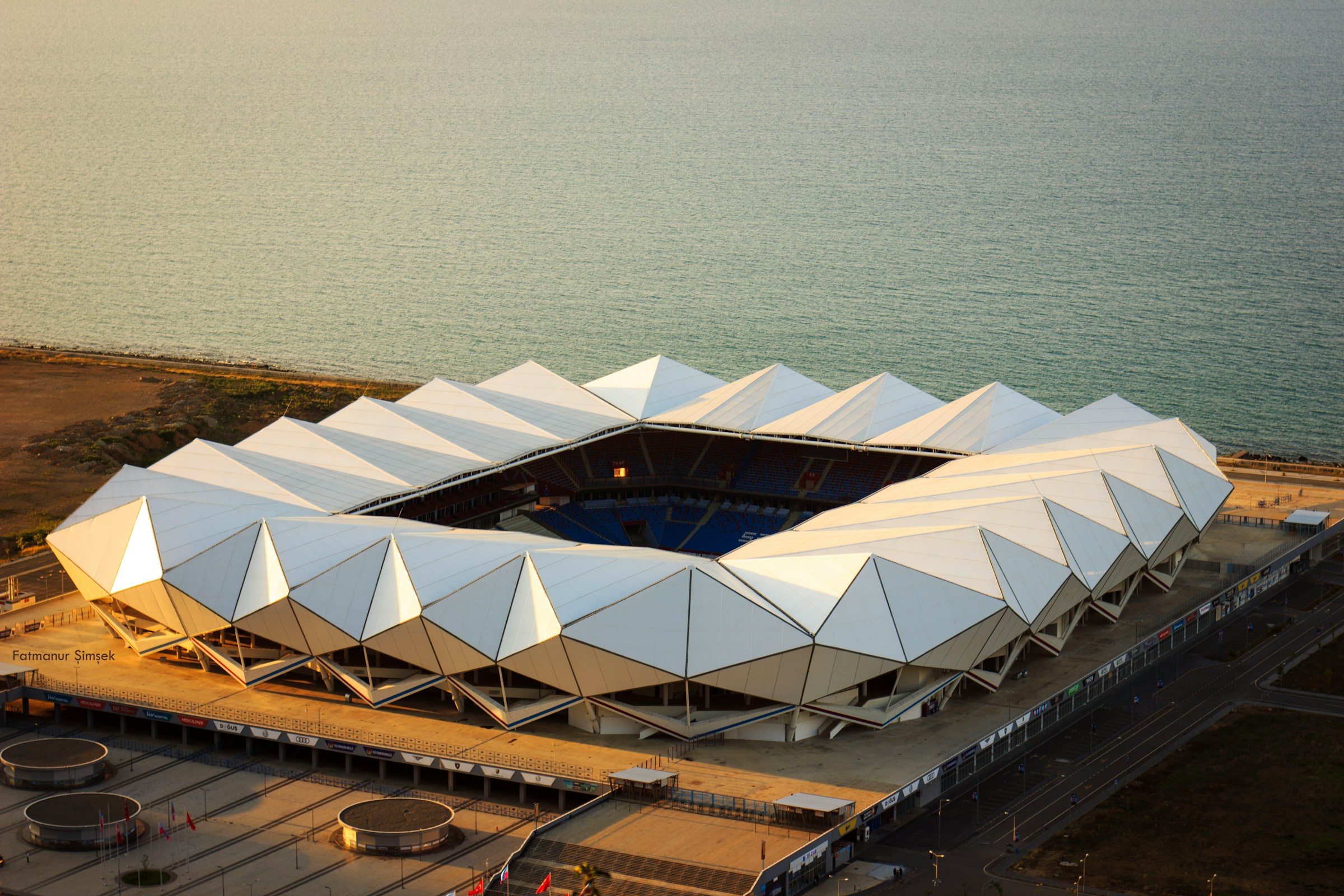
Pick any team in Turkish football, from a packed Süper Lig stadium to a dusty amateur pitch in the provinces, and you’ll find the same signature on the team sheet: at least one player whose roots trace back to Trabzon.
That’s not migration, and it’s not coincidence. It’s a generational pattern that has quietly outperformed conventional scouting logic for over a century. Ask any Turkish coach, agent, or journalist to name the country’s most reliable source of raw footballing talent, and Trabzon comes up before Istanbul, before Izmir, before any city with ten times its population. To understand why, you have to look past the trophy cabinet and into the terrain itself: at how a landscape can forge a footballer before a coach ever does.
To understand why, you have to look past the trophy cabinet and into the terrain itself: at how a landscape can forge a footballer before a coach ever does.
A Galaxy of Stars: The Fertility of the Soil
The city’s sons have shaped the game in every jersey they’ve worn. Hami Mandıralı’s long-range strikes redefined what fans expected from a midfielder in the 1990s and 2000s. Fatih Tekke’s talent was recognized on the biggest stage available to him at the time, earning Man of the Match honors in a UEFA Cup final. Tugay Kerimoğlu’s command of midfield was elegant enough to carry him to Blackburn Rovers and a decade in the Premier League, at a time when Turkish players in England were still a rarity.
The same talent pool produced Emre Belözoğlu and Okan Buruk, both of whom captained sides and represented Turkey deep into European competition, and later moved into coaching and club leadership themselves. It produced Ferdi Kadıoğlu, raised far from Trabzon in the Netherlands, who nonetheless carries the family name into a Premier League career, a reminder that this isn’t only about where someone grew up, but about a lineage that travels with a family regardless of geography.
The current generation carries the line forward. Uğurcan Çakır has become one of the more dependable goalkeepers in the Champions League, the position where composure under pressure matters more than anywhere else on the pitch. Ahmetcan Kaplan and Yusuf Yazıcı are established fixtures on Europe’s biggest stages, part of a pipeline that shows no sign of slowing. Trabzon hasn’t only exported players: it has exported footballing minds. Ahmet Suat Özyazıcı built one of the most important squads in Turkish football history, assembling a team that changed what was thought possible for a club outside Istanbul. Özkan Sümer is still spoken of, decades later, as one of the game’s great tactical thinkers in Turkey, a coach whose ideas about the sport outlasted his teams. And Şenol Güneş coached the national team to third place at the 2002 World Cup, the greatest result in the country’s football history and still, more than two decades on, the measuring stick every Turkish national team is judged against.
One detail is hard to dismiss as coincidence: in both years Turkey has qualified for a World Cup this century, a Trabzon native has held the presidency of the Turkish Football Federation: Haluk Ulusoy in 2002, İbrahim Hacıosmanoğlu in 2026. Whether that’s cause, effect, or pure statistical noise is a fair question. But it’s the kind of detail that makes you look twice at a city this size producing this much influence at every level of the sport; players, coaches, and now federation leadership.
What Geography Builds
Trabzon’s people have a natural disposition toward sports built on competition, intensity, and sheer will, and that disposition shows up well beyond the football pitch. Beyond football, the city has produced world champions in boxing and wrestling: Cemal Kamacı, Selçuk Çebi, Selçuk Aydın, and Busenaz Sürmeneli among them, spanning multiple generations and multiple combat disciplines. That’s not a coincidence either: boxing and wrestling reward exactly the traits that a punishing landscape tends to build into people who grow up in it.
Two features of the Eastern Black Sea region explain why.
The terrain builds the body.
This is a region of steep mountains, where every path is a climb and every walk something closer to a hike. Generations of navigating that terrain on foot, to school, to work, to the next village over, have given locals real physical strength, endurance, and agility, the kind that doesn’t come from a training program but from simply living somewhere unforgiving. And because flat, standard football pitches are scarce in a landscape this vertical, children learn the game on slopes, rough ground, and narrow alleys between houses: terrain that rewards close control, fast reactions, and comfort in tight spaces almost by necessity, because the alternative is losing the ball off an uneven bounce every few seconds. It amounts to an accidental academy: no coach designed it, no federation funded it, but it has been training footballing instincts for over a hundred years all the same.
It amounts to an accidental academy: no coach designed it, no federation funded it, but it has been training footballing instincts for over a hundred years all the same.
The sea and the weather build the temperament.
For centuries, people here made their living from an unpredictable sea and land with almost no flat ground to farm, a combination that leaves very little room for passivity. That builds a stubborn, determined character, one that doesn’t know how to quit, because quitting on a boat in bad water or on a hillside farm in a bad season simply isn’t survivable. The weather reinforces it: a clear sky can turn into a downpour within the hour, which leaves no room for “slowing down” or waiting for better conditions. The urgency of the kemençe and the tempo of the horon, the region’s traditional instrument and dance, are cultural echoes of that same pace: music and movement that mirror a climate that never sits still.
Growing up in homes isolated on mountainsides by deep valleys added another layer to this character: self-reliance, and a habit of taking charge in a crisis without waiting for outside help, because outside help was often a difficult, hours-long walk away. These traits belong to the whole Black Sea region, not just Trabzon: anyone from Rize, Giresun, or Ordu would recognize this description of themselves just as easily. What actually separates Trabzon from its neighbors, what turned a shared regional temperament into an actual football factory, rather than just a source of stubborn fishermen and farmers, is what came next.
How Football Gave a City an Identity
Trabzon met football early. British merchants introduced the game around 1910, arriving through the city’s historic port, and Trabzon adopted it fast enough to organize a structured amateur league with a regular fixture list by 1921, years before the Republic of Turkey was even declared.
Even before that founding moment, Trabzon wasn’t just playing football; it was thinking about it. In 1922, Süleyman Rıza Kuğu published Association Football (in the original Turkish, “Asosyeşın Futbol”, a phonetic Turkicization of the English term, at a time when the country didn’t yet have settled football vocabulary of its own), one of the earliest works of football theory written anywhere in the country. It’s early evidence that this city was producing football thinkers, not just tough players, and that the intellectual culture around the game here runs as deep as the playing culture.
Trabzonspor was founded in 1967, giving decades of accumulated regional energy a single home for the first time. The club reached the top flight in 1973/74 and won its first league title just two seasons later, in 1975/76, with a squad built entirely from local, homegrown talent: no imported stars, no Istanbul money, just the product of the city’s own streets and slopes. Beating the Istanbul clubs, which had held an effective monopoly on money, media, and power up to that point, wasn’t just a sporting upset. It read as a challenge to the established order of the entire country, a signal that success in Turkish football didn’t have to run through the capital’s traditional power centers. Trabzonspor won six championships across that decade, a run that entered football history as the “Anatolian Revolution”, a phrase that still gets used today, half a century later, whenever a club outside Istanbul threatens the old order.
What the trophies meant.
After that decade, football became something bigger than a game for the city: a way of being heard, a way of asserting itself against a country that had, for most of its modern history, treated Istanbul as the only place that mattered. It’s why claret and blue cover everything from the narrowest city streets to the highland villages above them, and why the city’s weekly mood still tracks the scoreline more reliably than any economic indicator. Kids growing up in that environment never had to look far for a role model: their heroes were the older kids down the street, the ones who made it onto the first team everyone in the neighborhood already knew by name. That proximity made the dream of playing for the city in that shirt feel achievable, not abstract, in a way that’s much harder to replicate in a city where the club feels distant or corporate.
The diaspora carried it further.
As Trabzon families emigrated over the decades, to Germany, to the Netherlands, to wherever the work was, Trabzonspor became something to hold onto: a fixed point of identity for communities adjusting to new countries, new languages, and new lives. That’s part of why the away end turns into a sellout carnival no matter where in the world the club plays, even decades and thousands of miles from home. Children of those families carried the same drive into some of Europe’s most competitive academies, arriving with a sense of what the badge meant that their teammates often didn’t share.
The clearest symbol of all this is the number 61: Trabzon’s official license plate code, familiar to anyone who’s ever driven through the region. Players of Trabzon origin overwhelmingly request it as their shirt number wherever they end up playing, from the Süper Lig to clubs across Europe. It’s not a superstition, and it’s not a marketing gimmick. It’s a visible, deliberate statement, worn on the back for ninety minutes at a time: I carry this with me, wherever I play.
The Evidence Beyond Anecdote
Anecdotes about talent pools can always be dismissed as survivorship bias: pick any city and, with enough digging, you’ll find some success stories. What makes Trabzon’s case harder to wave away is that the pattern holds up at the institutional and youth level too, not just in the highlight reels of a handful of famous names.
- World Schools Championship: Trabzon high school teams have won this twice (2003, 2015) and finished runner-up once (1978); a sustained record across nearly four decades, not a single lucky generation.
- UEFA Youth League: In 2024/25, Trabzonspor’s U19 side became the first Turkish team ever to reach the competition’s final, beating Juventus, Atalanta, and Salzburg along the way before falling to Barcelona. It was, by that point, a run without a single loss, proof that the academy pipeline that has produced generations of first-team players is still producing at the highest level available to a 19-year-old anywhere in Europe.
Closing
Tactics, positioning, and technique can all be taught later, by any competent coaching staff, at any well-funded academy. What can’t be taught nearly as easily is the willingness to keep going when it would be easier to stop, and that’s the trait this region has been building into its children for generations, long before any of them touch a ball, on hillsides and alleyways and fishing boats that have nothing to do with football at all. Trabzon didn’t get lucky. It built a machine out of a mountain range, a temperamental sea, and a century of stubborn regional pride: one storm, one championship, and one homegrown teenager at a time. And on the evidence of the last few years alone, it’s still running.
Trabzon didn’t get lucky. It built a machine out of a mountain range, a temperamental sea, and a century of stubborn regional pride: one storm, one championship, and one homegrown teenager at a time.