


When a Number Defined a Role
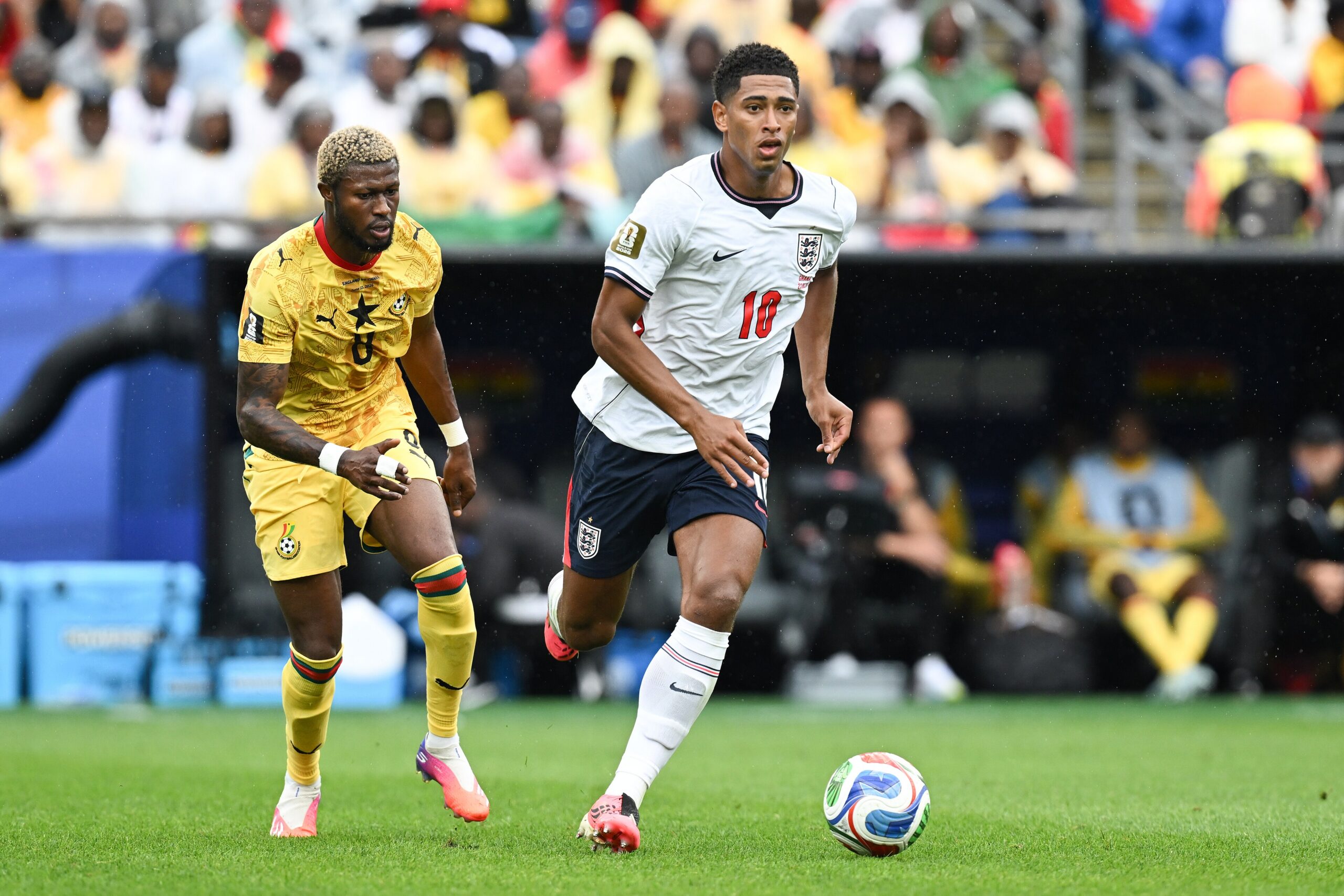
For decades, football relied upon numbers to describe responsibility. The number six protected the defence. The number eight connected midfield to attack. The number ten created chances. Full-backs defended, wingers attacked and strikers scored goals.
These descriptions were once supported by relatively rigid tactical systems. A player’s starting position usually determined the spaces they occupied and the actions they were expected to perform. In a traditional 4-4-2, each footballer belonged to a recognisable section of the pitch. The central midfielders controlled the middle, the strikers remained close to one another and the wingers provided width.
Even a player’s stronger foot could influence where they were positioned. A left-footed winger was generally expected to play on the left, beat the opposing full-back on the outside and deliver crosses into the penalty area. Ryan Giggs became one of the defining examples of that role. His speed, balance and ability to attack the touchline made him the archetypal left winger for much of his Manchester United career.
Those systems were often more dogmatic than the structures seen today. Players could still express themselves, but usually from within clearly established positional boundaries. The formation was not merely the team’s starting shape. It was also a map of where each player was expected to operate.
Modern football is steadily dismantling those definitions.
The formation was not merely the team’s starting shape. It was also a map of where each player was expected to operate.
The Patterns That Changed the Game
The move towards positionless football did not happen overnight. New tactical patterns emerged gradually as coaches began searching for ways to create different angles, open central spaces and make their teams less predictable.
The development of the inverted winger was one important stage in this evolution. Rather than placing a player on the same side as their stronger foot, coaches increasingly positioned them on the opposite flank. This allowed the winger to move inside towards goal while an overlapping full-back provided width.
Arjen Robben became the defining example. As a left-footed player starting from the right, Robben could receive near the touchline, drive diagonally into the pitch and shoot with his stronger foot. Opponents frequently knew what he intended to do, yet the combination of his acceleration, close control and timing made it extraordinarily difficult to prevent.
Robben did not invent the concept, but his success demonstrated how a player’s starting position could become a platform rather than a restriction. The right winger no longer had to remain on the right, beat his opponent on the outside and cross. He could become a goalscorer, a central attacker or even the team’s primary creative threat.
These patterns slowly spread across the pitch. Full-backs began advancing beyond inverted wingers. Number tens drifted towards the flanks. Strikers dropped into midfield while wide players attacked the space they vacated. Coaches were beginning to understand that positions could be exchanged without abandoning structure.
Fast forward to the modern game and that process has reached its logical conclusion. A player may still be named in one position, but their responsibilities can change several times during the same passage of play.
A Midfield Without Fixed Roles
The discussion often begins in midfield, where the concept of the positionless player has become increasingly apparent. Rather than assigning rigid responsibilities to individual specialists, elite sides now ask midfielders to perform several roles depending on the phase of play. Defending, progressing possession, creating opportunities and arriving in the penalty area have become shared responsibilities rather than separate job descriptions.
Perhaps no recent midfield has illustrated this better than Paris Saint-Germain’s trio of João Neves, Vitinha and Fabián Ruiz.
Nominally, one could attempt to identify a holding midfielder, a box-to-box midfielder and an attacking midfielder. In reality, those labels rarely survive once the game begins. Each player is capable of operating as the six, the eight and the ten, sometimes within the same passage of possession.
One may receive from the centre-backs before another occupies the highest central position between the opposition’s lines. Seconds later, their roles can reverse entirely. Vitinha may dictate the game from deep before advancing to combine around the penalty area. Neves can press, recover possession and then become the player progressing the attack. Ruiz can support the build-up before arriving beyond the forwards. There is no permanent hierarchy between them, only a collective interpretation of space.
The result is a midfield that becomes exceptionally difficult to press because opponents are no longer marking fixed positions. They are attempting to track constantly rotating footballers whose responsibilities change with every movement and transition.
The result is a midfield that becomes exceptionally difficult to press because opponents are no longer marking fixed positions.
That is precisely why the world’s best coaches increasingly seek players who understand every phase of the game rather than specialists confined to one role. Positionless football creates hesitation. The moment a defender pauses to decide who should follow a runner or who should occupy a vacated space can be enough to create an advantage.
The positionless midfielder, however, is only one chapter in a much broader tactical evolution. Football itself is becoming positionless.
Ferguson’s Fluid Front Three
In many respects, Sir Alex Ferguson was ahead of his time.
Manchester United’s Premier League and Champions League-winning side of the late 2000s frequently deployed Wayne Rooney, Carlos Tevez and Cristiano Ronaldo as a remarkably fluid front three. Although each had a nominal starting position, their movement constantly disrupted defensive structures.
Rooney drifted into midfield to initiate attacks. Tevez appeared on either flank before dropping between the lines. Ronaldo attacked from the left, through the middle and occasionally from the right, often finishing moves as the team’s highest player.
Opponents struggled because they were not defending fixed positions. They were defending movement. If a centre-back followed Rooney towards midfield, Ronaldo could attack the space behind him. If the defence remained in place, Rooney could receive freely between the lines. Every decision created a different vulnerability.
Years before the phrase “positionless football” became fashionable, Ferguson had assembled a front line that largely ignored traditional positional boundaries while retaining a clear collective structure. The rest of the footballing world seemed to still be operating with a 4-42- but Ferguson to some extent and Pep in 2009 adopted a fluid front three. In the champions league final against Man united in that year Pep played a front 3 of Henry, Eto and Messi.
Pep Guardiola recognised similar ideas long before becoming one of football’s defining tactical thinkers. Writing for El País after Spain’s 3-1 victory over Tunisia at the 2006 World Cup, Guardiola examined the importance of intelligent movement, the occupation of space and the ability of fluid attacking structures to unsettle organised defences.
Many of those principles resemble what has since become known as positionless football. The emphasis was never simply on where players started, but on how they interpreted and occupied space once the game began.
When Full-Backs Stopped Being Full-Backs
Nearly two decades later, that philosophy has spread across almost every position on the pitch. Even full-backs have escaped the traditional expectations attached to their role.
Achraf Hakimi and Nuno Mendes provide one of the finest modern examples.
On paper, one is a right-back and the other a left-back. During matches, those descriptions quickly become inadequate. Hakimi regularly appears in central attacking areas, arrives inside the penalty box like a forward and frequently finishes moves himself. Mendes can drive inside, overlap beyond the winger or accelerate directly through midfield during transitions.
Neither behaves like the conventional full-back football once understood. Instead, they operate as complete footballers whose starting positions provide only the first reference point before movement takes over.
This development has transformed the tactical demands of the role. A modern full-back may be required to defend as part of a back four, build possession as a central midfielder, provide width as a winger and arrive in the penalty area as an additional forward. The position has not disappeared, but its boundaries have dramatically expanded.
Freedom Within Structure
This evolution now extends across the entire team. Centre-backs initiate attacks like midfielders. Midfielders arrive as forwards. Wingers defend centrally. Strikers become creators. Goalkeepers dictate possession and sometimes position themselves outside the penalty area as additional outfield players.
Football increasingly rewards versatility over specialisation, but positionless football should not be mistaken for tactical anarchy. Players are not simply moving wherever they choose. The freedom is carefully organised.
When one player leaves a space, another usually has to occupy it. If a full-back advances centrally, a midfielder may move wider or a centre-back may shift across to protect the transition. If a striker drops towards the ball, a winger must threaten the space behind the defence. The positions remain important, but the identity of the player occupying them is constantly changing.
That distinction is essential. Modern football has not removed structure. It has separated structure from individual players. A team still needs width, depth, defensive protection and central presence, but those responsibilities no longer have to belong permanently to the same footballers.
Modern football has not removed structure. It has separated structure from individual players.
The Complete Modern Footballer
Perhaps the greatest tactical compliment a modern player can receive is that they are difficult to define. Are they a six, an eight or a ten? Are they a winger, a forward or a full-back? Increasingly, the answer is simply yes.
The positionless footballer is not replacing traditional positions altogether. Football will always require organisation, balance and an understanding of space. However, within that structure, the best players are no longer restricted by the number on their back or the label beside their name.
The game has travelled a considerable distance from the era in which a left-footed winger was expected to remain on the left. Giggs represented excellence within the traditional interpretation of wing play. Robben then became the emblem of a different possibility, attacking from the opposite side and transforming himself from a provider into a scorer. Today’s players are taking that evolution even further by performing several positional functions within the same match.
The future of elite football may not belong to those who master one position. It may belong to those capable of understanding them all.